Multiparametric Analysis of Nasal Inspiratory Pressure (SNIP) in Duchenne Muscular Dystrophy: A Case‐Control Study With Healthy Subjects
Ilsa P. Santos, Layana Marques, Jessica D. M. da Fonseca, Mario E. Dourado, Matías Otto‐Yáñez, Rodrigo Torres‐Castro, Francesca Pennati, Andrea Aliverti, Guilherme A. F. Fregonezi, Vanessa R. Resqueti

TL;DR
This study shows that sniff nasal inspiratory pressure measurements can detect early muscle weakness in Duchenne Muscular Dystrophy patients compared to healthy controls.
Contribution
The study introduces SNIP-derived parameters as a non-invasive method to detect early inspiratory muscle dysfunction in DMD.
Findings
DMD subjects had significantly lower maximum relaxation rate (MRR) and maximum rate of pressure development (MRPD) compared to healthy controls.
SNIP parameters effectively distinguished DMD from healthy subjects with high accuracy (AUC 0.94 for SNIP).
Abstract
Individuals with Duchenne Muscular Dystrophy (DMD) exhibit respiratory muscle changes leading to fatigue and weakness, and assessing relaxation rates and contractile properties may help detect early fatigue. To non‐invasively assess inspiratory muscle relaxation and contractile rates using sniff nasal inspiratory pressure (SNIP) parameters in DMD subjects and compare them with matched healthy controls. A case‐control study of 32 DMD male subjects and 32 age‐matched healthy controls (12.7 ± 5.1 years). All subjects underwent spirometry, maximal respiratory pressures, and SNIP test. We calculated the maximum relaxation rate (MRR), decay constant (τ), and maximum rate of pressure development (MRPD) from the SNIP curve. The DMD group had significantly lower MRR (5.9 [5.1–6.9] vs. 8 [6.9–10.3] %/ms, p = 0.001), lower MRPD (−0.38 [−0.47 to −0.26] vs. −0.62 [−0.52 to −0.80] cmH2O/ms−1, p =…
Genes, proteins, chemicals, diseases, species, mutations and cell lines named across the full text — each resolved to its canonical identifier and authoritative record.
Click any figure to enlarge with its caption.
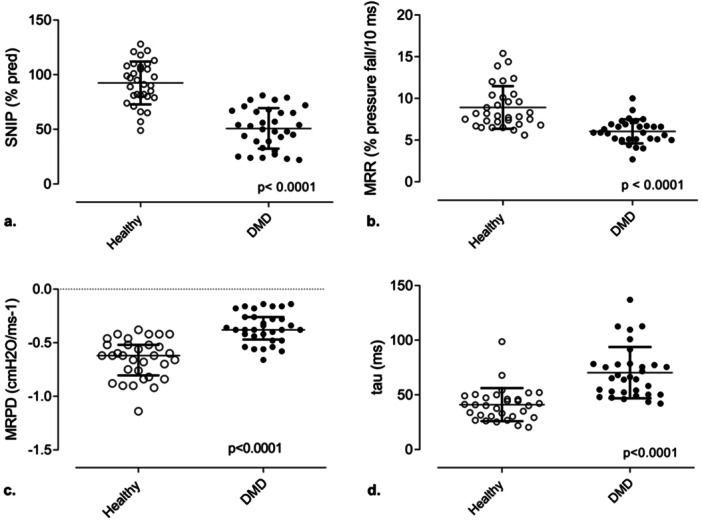 Figure 1
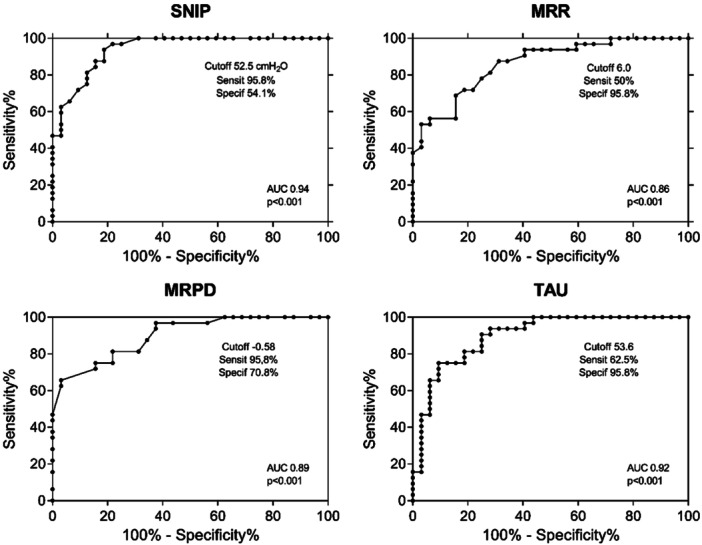 Figure 2
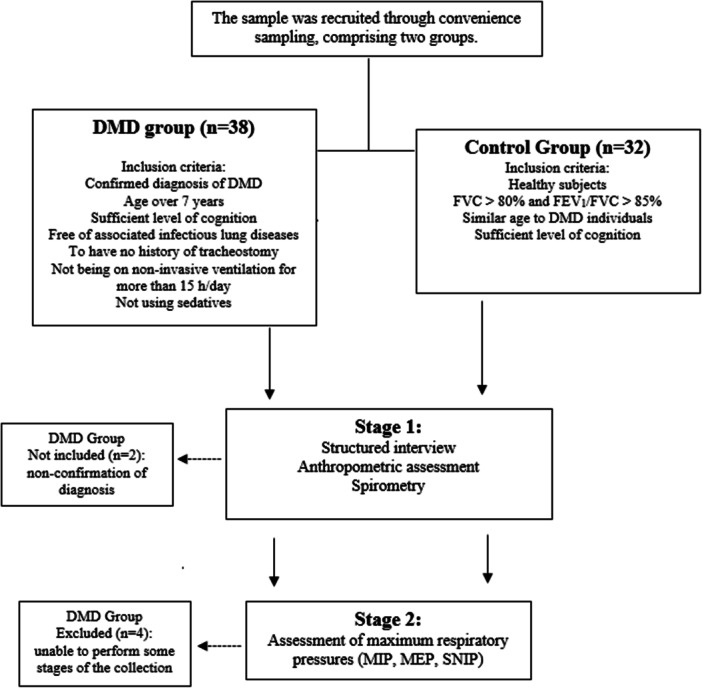 Figure 3
Peer Reviews
No public reviews on file for this paper yet. If you reviewed it on a platform where reviews are public (OpenReview, ICLR, NeurIPS, ICML), you can paste yours below so the community can read it here.
Videos
No videos yet. Explain this paper in a talk, walkthrough, or lecture? Add one.
Taxonomy
TopicsRespiratory Support and Mechanisms · Chronic Obstructive Pulmonary Disease (COPD) Research · Delphi Technique in Research