The serine protease HTRA1 targets tau fibrils and provides a proteolytic barrier against pathogenic protein conformations
Birte Hagemeier, Kamilla Ripkens, Nina Schulze, Anika Bluemke, Michal Strzala, Michelle Koci, Farnusch Kaschani, Markus Kaiser, Michael Erkelenz, Sebastian Schluecker, Melisa Merdanovic, Simon Poepsel, Doris Hellerschmied, Steven G. Burston, Michael Ehrmann

TL;DR
The protease HTRA1 breaks down tau fibrils, offering a defense against the spread of harmful protein structures in neurodegenerative diseases.
Contribution
HTRA1 is shown to degrade both soluble and fibrillar tau, revealing a novel proteolytic barrier against pathogenic protein conformations.
Findings
HTRA1 is activated by tau fibrils and degrades them in cells.
HTRA1 interacts with tau fibrils and breaks them down.
HTRA1 may prevent the spread of harmful protein conformations between cells.
Abstract
Tauopathies such as Alzheimer’s disease, frontotemporal dementia with Parkinsonism, and other neurodegenerative diseases are classified as protein folding diseases because they share amyloid fibrils as a hallmark. Typically, amyloid fibrils accumulate and spread through tissue over time. It is assumed that this process is accelerated as protein quality control becomes overwhelmed in aged tissues. However, a deep understanding of how specific protein quality control factors interfere with fibril accumulation and thereby delay disease onset is lacking. Here, we demonstrate that the widely conserved serine protease HTRA1 is activated by tau fibrils, providing quantitative, topological, and temporal insights into the proteolytic degradation of both soluble and fibrillar tau. Live cell fluorescence microscopy demonstrates the interaction of HTRA1 with tau fibrils and their proteolytic…
Genes, proteins, chemicals, diseases, species, mutations and cell lines named across the full text — each resolved to its canonical identifier and authoritative record.
Click any figure to enlarge with its caption.
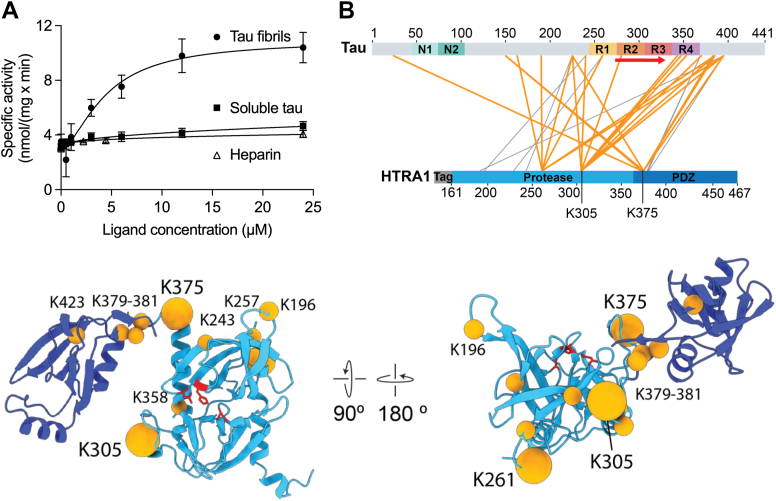 Figure 1
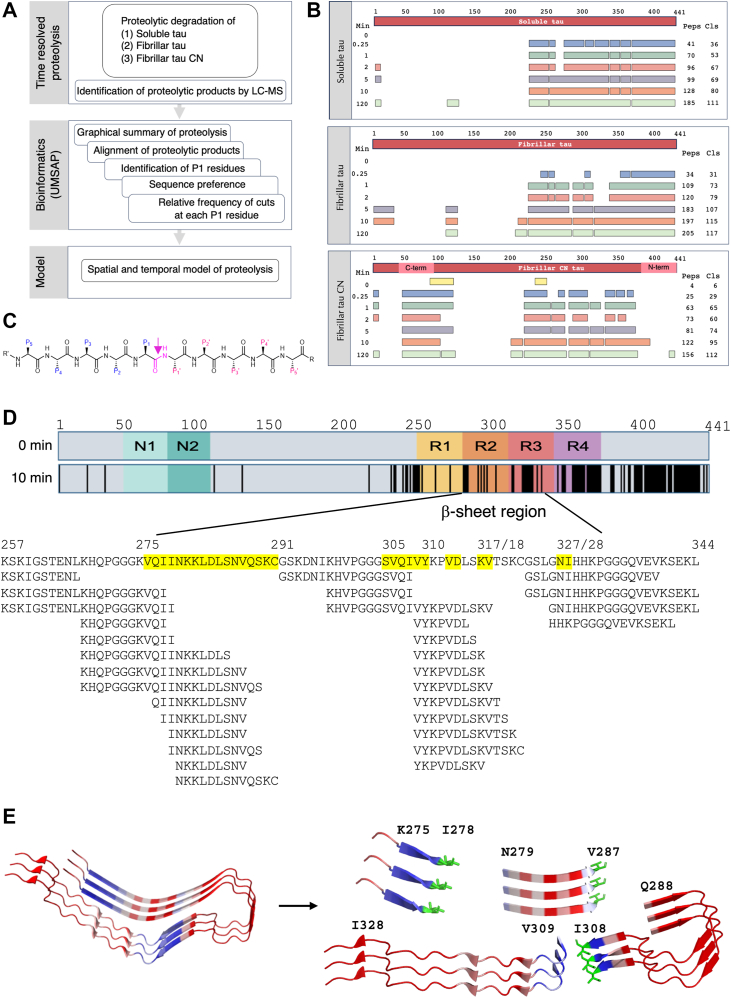 Figure 2
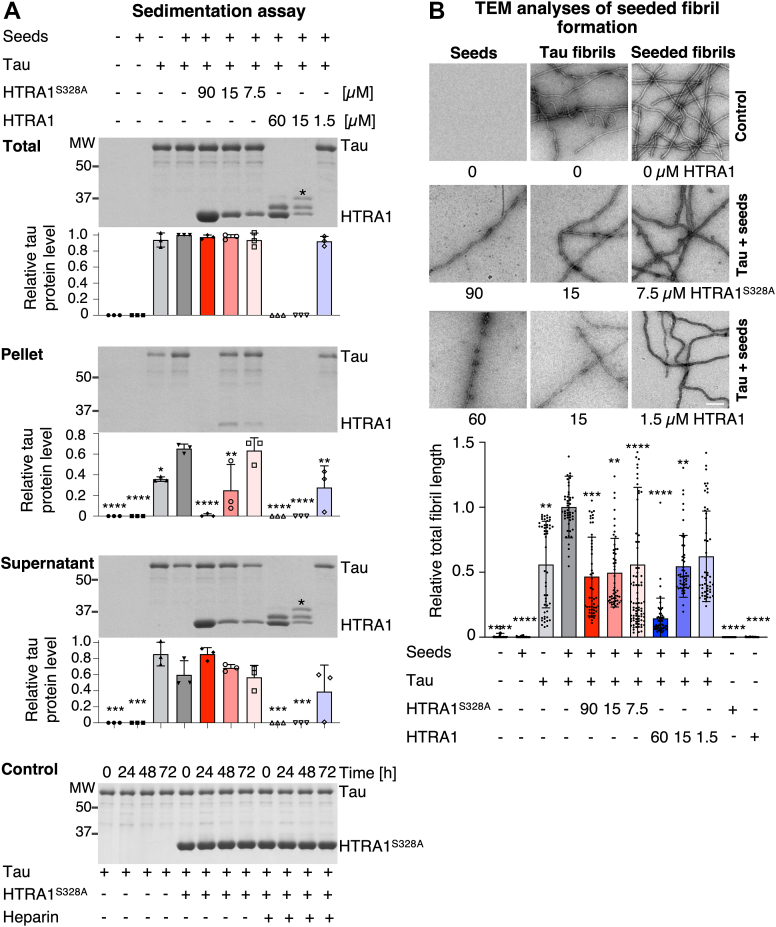 Figure 3
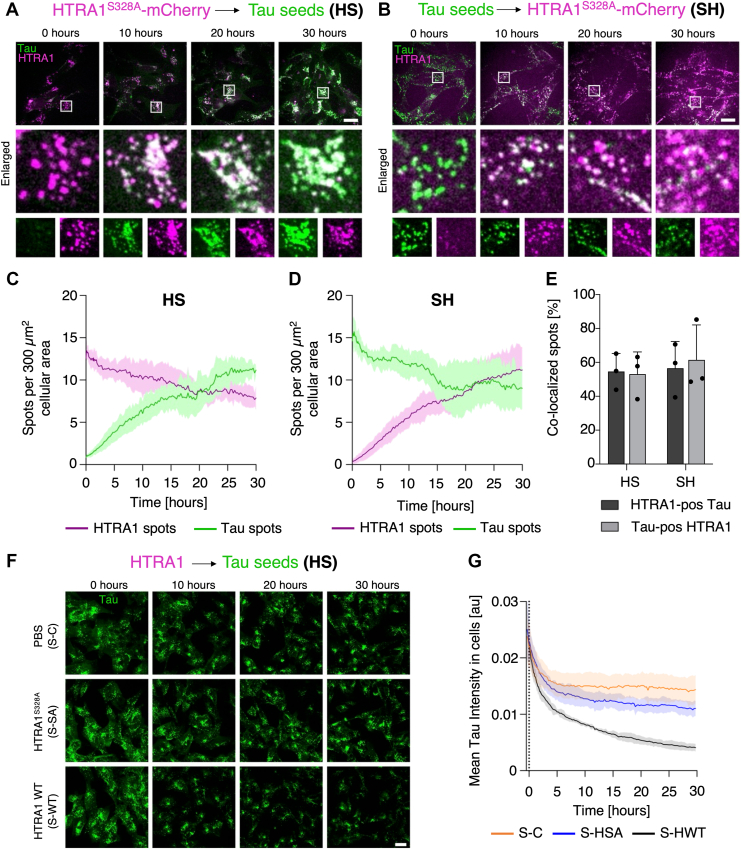 Figure 4
Peer Reviews
No public reviews on file for this paper yet. If you reviewed it on a platform where reviews are public (OpenReview, ICLR, NeurIPS, ICML), you can paste yours below so the community can read it here.
Videos
No videos yet. Explain this paper in a talk, walkthrough, or lecture? Add one.
Taxonomy
TopicsCerebrovascular and genetic disorders · Advanced Glycation End Products research · S100 Proteins and Annexins