Usefulness of the Heavy Menstrual Bleeding Diagnostic Tools SAMANTA Questionnaire and Heavy Menstrual Bleeding–Visual Analog Scale Tool for Iron Deficiency Screening: An Exploratory Analysis from the COLIBRI Study
Josep Perelló-Capó, Josep Estadella-Tarriel, Ignasi Gich-Saladich, Elisa Llurba-Olivé, Joaquim Calaf-Alsina

TL;DR
This study explores how well two tools for diagnosing heavy menstrual bleeding can also help screen for iron deficiency and assess quality of life.
Contribution
The study evaluates the potential of the SAMANTA questionnaire and HMB-VAS tool for iron deficiency screening in women with heavy menstrual bleeding.
Findings
Ferritin levels showed stronger inverse correlation with HMB diagnostic tool scores than hemoglobin.
The SAMANTA questionnaire had better sensitivity and specificity for identifying iron deficiency at a ferritin threshold of <10 ng/mL.
Both HMB diagnostic tools correlated inversely with EQ-VAS scores, indicating their impact on quality of life.
Abstract
The SAMANTA questionnaire and the Heavy Menstrual Bleeding–Visual Analog Scale (HMB-VAS) tool have been validated for diagnosing heavy menstrual bleeding (HMB). We assessed their value for screening iron deficiency (ID). Post hoc analysis of the prospective, randomized, phase 4 Cooper and Levonorgestrel Intrauterine Device (IUD) Barcelona Research Iniciative (COLIBRI) study, which assessed the bleeding profile of two intrauterine devices. We used information collected during the last follow-up visit (month 36): sociodemographics, hemoglobin/ferritin levels, SAMANTA questionnaire, HMB-VAS tool, and EuroQoL five-dimension five-level scores. The primary outcome was the accuracy of these diagnostic tools in identifying ID. We also assessed their relationship with EQ-5D-5L. We analyzed information from 57 women, 18 (31.6%) and 14 (24.6%) with HMB according to the SAMANTA questionnaire and…
Genes, proteins, chemicals, diseases, species, mutations and cell lines named across the full text — each resolved to its canonical identifier and authoritative record.
Click any figure to enlarge with its caption.
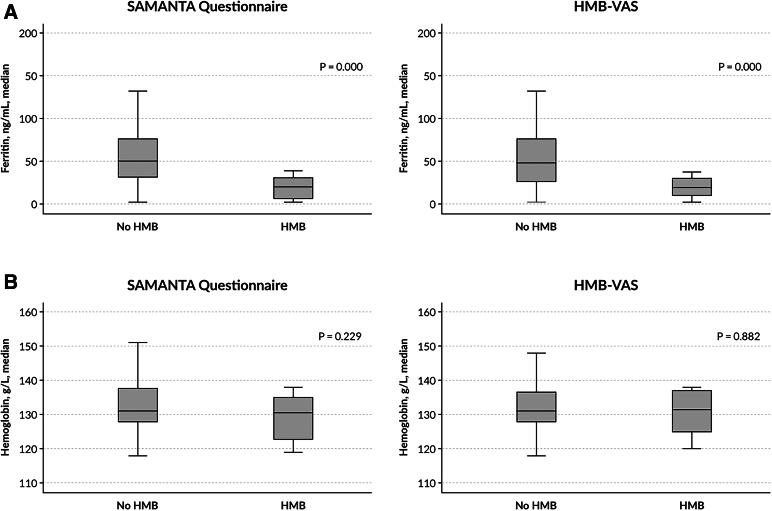 Figure 1
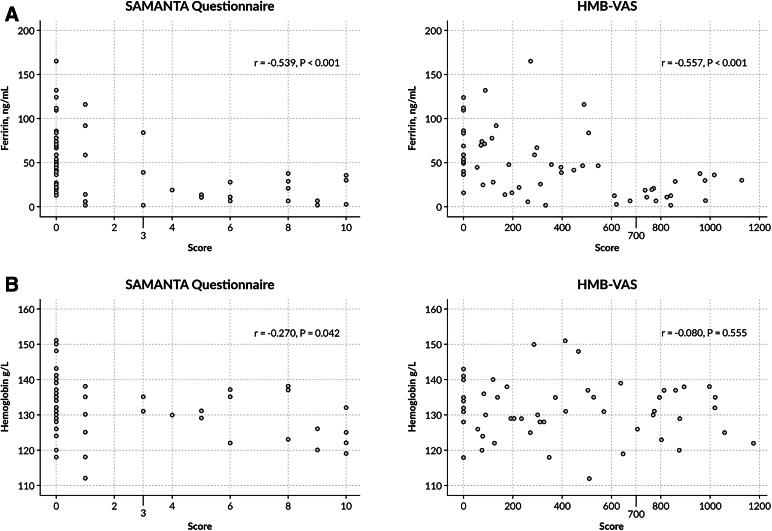 Figure 2
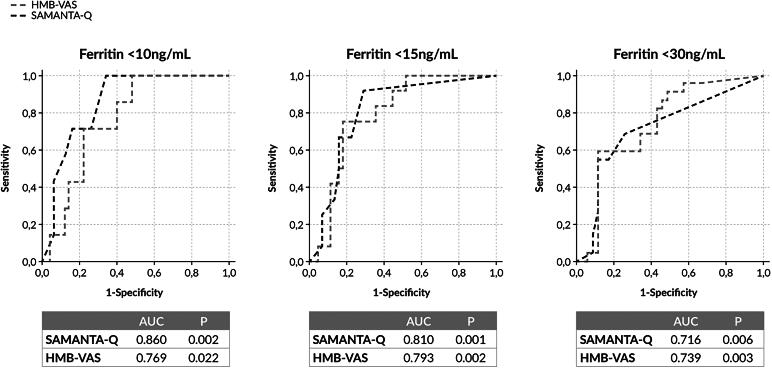 Figure 3
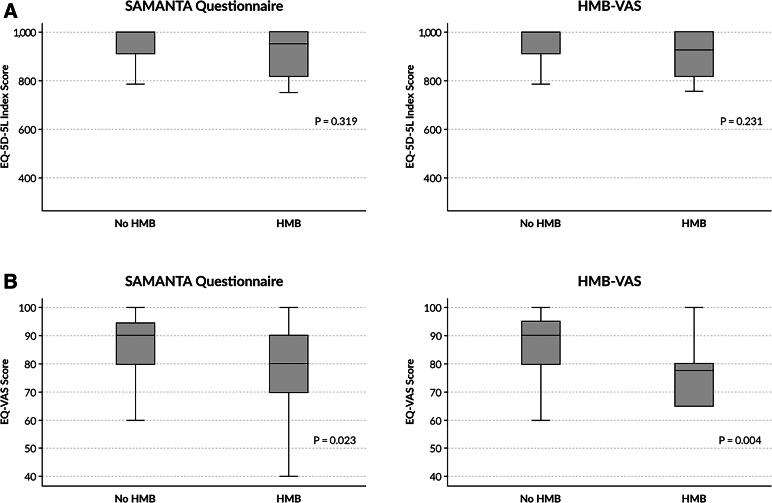 Figure 4
Peer Reviews
No public reviews on file for this paper yet. If you reviewed it on a platform where reviews are public (OpenReview, ICLR, NeurIPS, ICML), you can paste yours below so the community can read it here.
Videos
No videos yet. Explain this paper in a talk, walkthrough, or lecture? Add one.
Taxonomy
TopicsIron Metabolism and Disorders · Menstrual Health and Disorders · Uterine Myomas and Treatments