Hospital and Temporal Variations in Limitations of Care Among Hospitalized Patients with COVID-19: A VIRUS Registry Retrospective Cohort Study
Nathan Mesfin, Nitesh Kumar Jain, Anwar Khedr, Hisham Mushtaq, Abbas B. Jama, Noura Attallah, Esraa Hassan, Benjamin Langworthy, Nicholas Ingraham, Juan Pablo Domecq Garces, Thoyaja Koritala, Donna Lee Armaignac, Nicholas Eugene Perkins, Katherine Belden, Vishakha Kumar

TL;DR
This study found that the likelihood of limiting life-support for hospitalized COVID-19 patients varied significantly between hospitals but not over time during the pandemic.
Contribution
The study reveals that hospital-specific factors, rather than pandemic timing, influenced life-support limitations for COVID-19 patients.
Findings
The odds of life-support limitation varied significantly between hospitals (odds ratio 1.86) but not by pandemic period.
Older age and comorbidities like dementia were strongly associated with higher odds of life-support limitations.
Palliative care consultation rates were low at 2.3% among hospitalized COVID-19 patients.
Abstract
Life-support limits (i.e., code status), the first step in the continuum of palliation and end-of-life (EoL) care, stem from decisions made by patients and their providers to align care near the EoL with patients’ wishes. The pandemic created health care strain that may have influenced life-support limitation practices among patients with serious COVID-19. In this study, we examine variations in life-support limitations (do-not-resuscitate, DNR; do-not-intubate, DNI) depending on the hospital and period of hospitalization. We included all adults admitted to a hospital in the United States with COVID-19 from January 2020 to December 2021 using the VIRUS registry. Our outcome was any life-support limitation on admission (DNR, DNI, or both) using regression modeling. Main exposures were hospital and period of hospitalization (early vs. late pandemic). Covariates included age, sex,…
Genes, proteins, chemicals, diseases, species, mutations and cell lines named across the full text — each resolved to its canonical identifier and authoritative record.
Click any figure to enlarge with its caption.
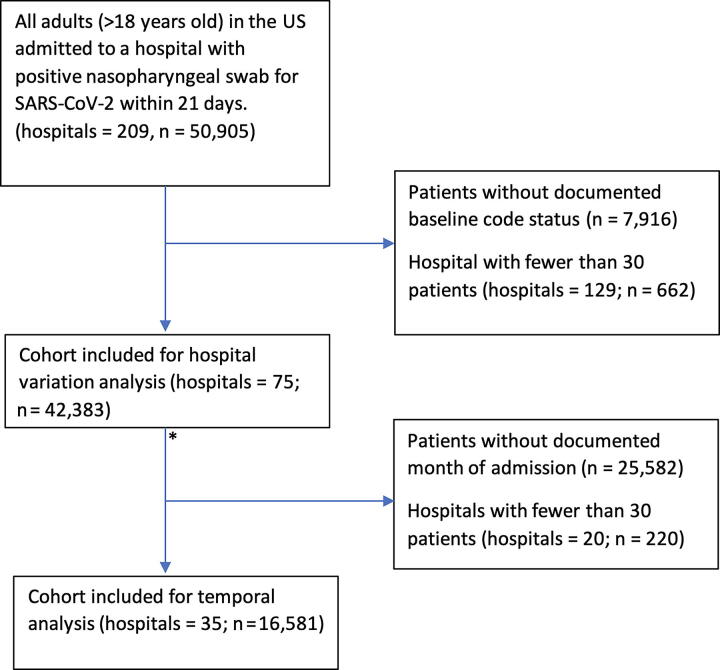 Figure 1
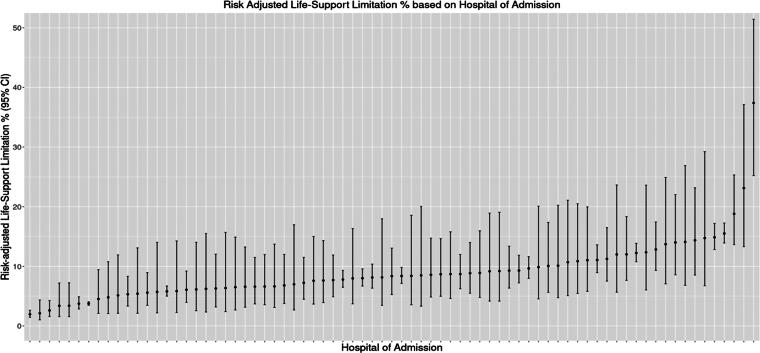 Figure 2
Peer Reviews
No public reviews on file for this paper yet. If you reviewed it on a platform where reviews are public (OpenReview, ICLR, NeurIPS, ICML), you can paste yours below so the community can read it here.
Videos
No videos yet. Explain this paper in a talk, walkthrough, or lecture? Add one.
Taxonomy
TopicsGeriatric Care and Nursing Homes · COVID-19 and Mental Health · Frailty in Older Adults