Classification and pathoanatomy of posterior malleolus fracture based on posterior malleolus-associated ligaments and ankle stability
Yongqi Li, Yi Liao, Rui Luo, Tian Zhao, Shun Wang, Yunfeng Yang

TL;DR
A new classification system for posterior malleolus fractures is proposed based on ligaments and injury mechanisms to improve clinical diagnosis and treatment.
Contribution
A novel classification system that integrates ligament anatomy, injury mechanisms, and fracture morphology for posterior malleolus fractures.
Findings
The new classification divides posterior malleolus fractures into three types based on ligament involvement and fragment patterns.
Type II fractures were the most common, with subtypes based on cartilage or die-punch injury presence.
The proposed system clarifies pathoanatomy and provides better guidance for clinical treatment than previous classifications.
Abstract
The clinical significance of previous posterior malleolus fracture classifications is limited because they are mainly based on fracture morphology. On the basis of posterior malleolus-associated ligaments and ankle stability, injury mechanism, and fracture morphology, a novel posterior malleolus fracture classification system was proposed to clarify the pathoanatomy of posterior malleolus fracture and guide clinical diagnosis and treatment. Twenty fresh frozen cadaver specimens of the lower limbs were collected, posterior malleolus-associated ligaments were dissected, and the range of their tibial insertion, average length, and direction were measured. Clinically,we retrospectively analyzed the imaging information of 296 patients with posterior malleolus fractures. Correlating the anatomical measurements of posterior malleolus-associated ligaments of fresh frozen cadaver specimens with…
Genes, proteins, chemicals, diseases, species, mutations and cell lines named across the full text — each resolved to its canonical identifier and authoritative record.
Click any figure to enlarge with its caption.
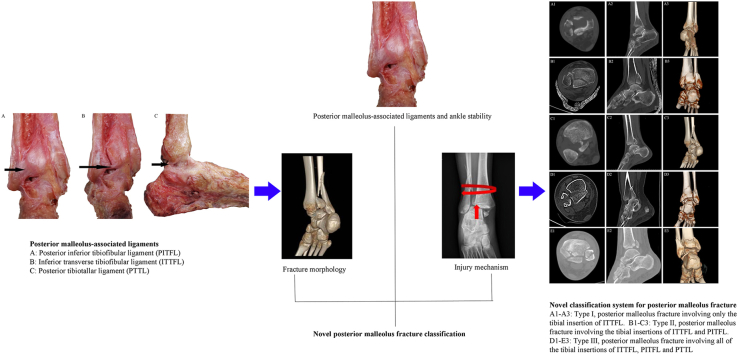 Figure 1
 Figure 2
 Figure 3
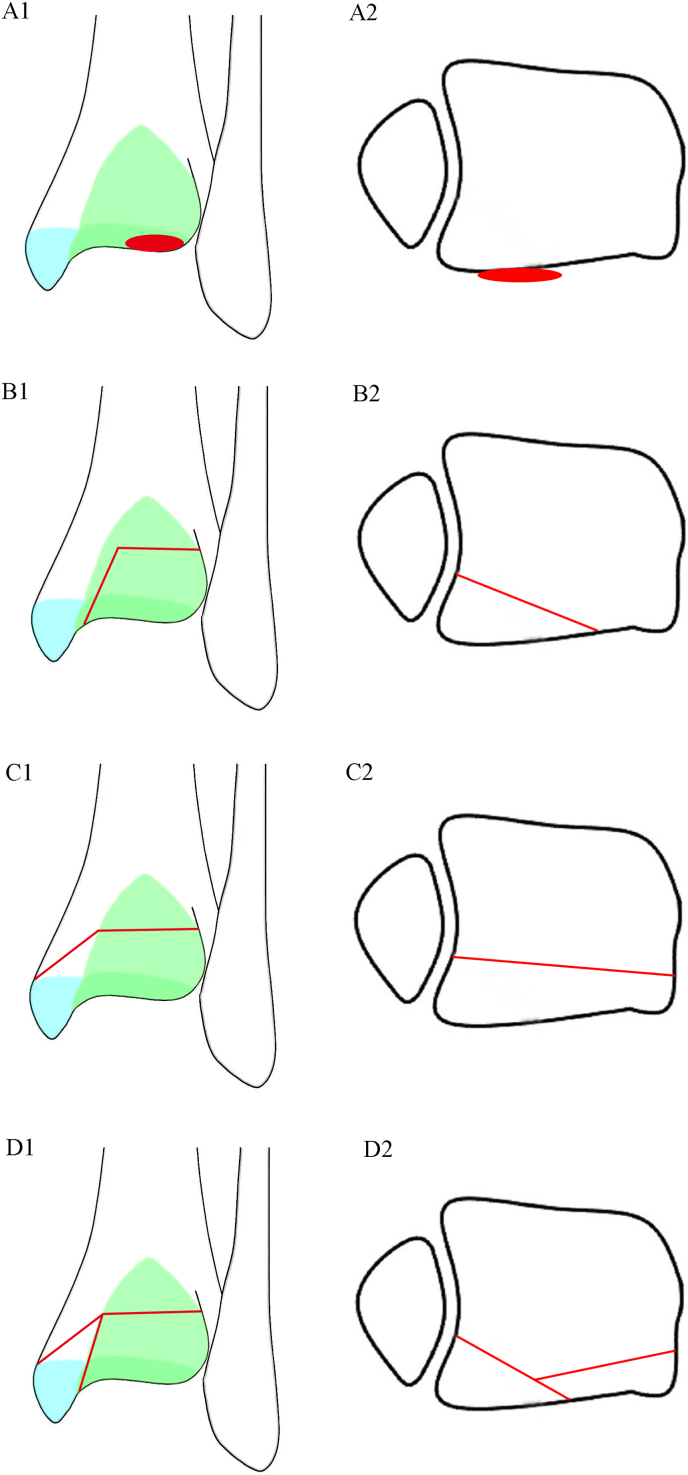 Figure 4
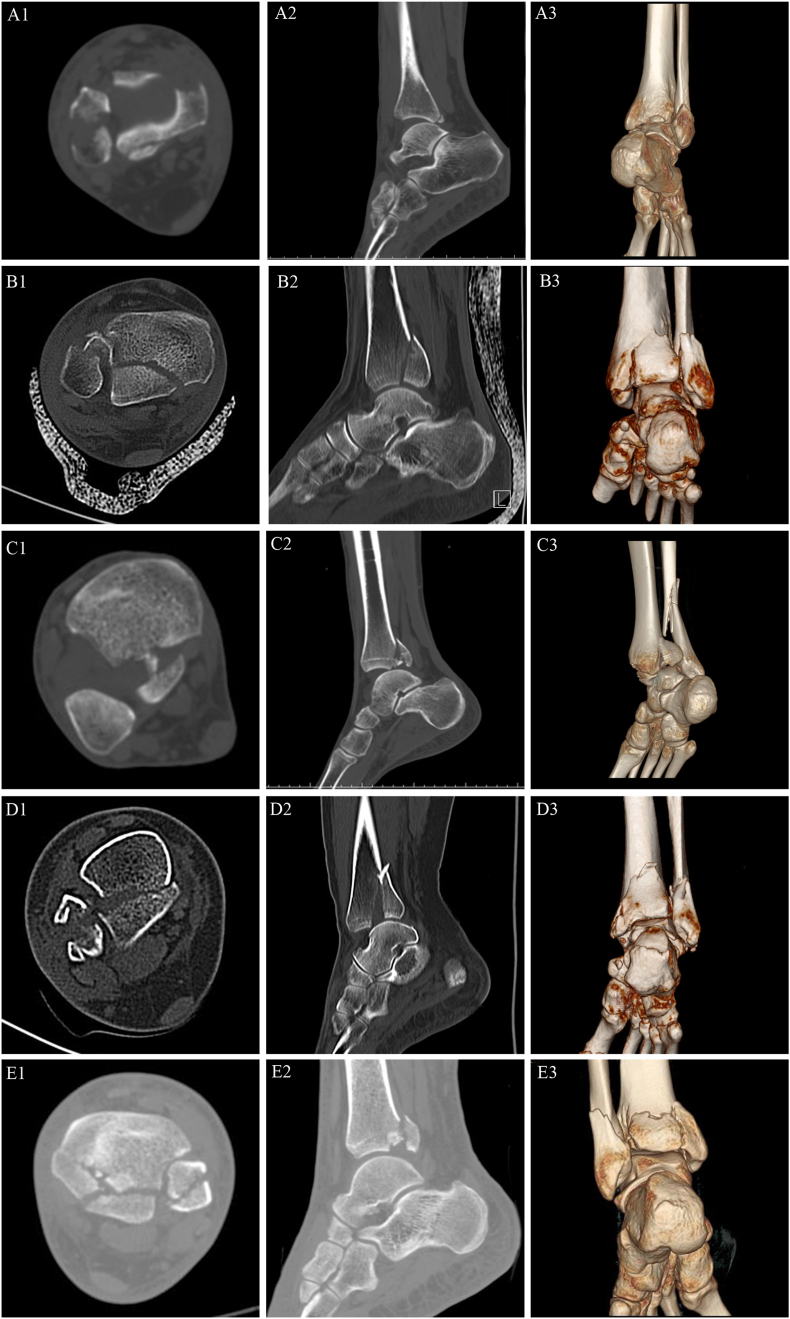 Figure 5
Peer Reviews
No public reviews on file for this paper yet. If you reviewed it on a platform where reviews are public (OpenReview, ICLR, NeurIPS, ICML), you can paste yours below so the community can read it here.
Videos
No videos yet. Explain this paper in a talk, walkthrough, or lecture? Add one.
Taxonomy
TopicsFoot and Ankle Surgery · Orthopedic Surgery and Rehabilitation · Tendon Structure and Treatment