Drug Candidate BIO101 for Spinal Muscular Atrophy as Monotherapy or Combined With the Antisense Oligonucleotide ASO‐10‐27
Cynthia Bézier, Steve Cottin, Parvin Nazari Hashemi, Mirella El Khoury, Zoé Clerc, Christine Balducci, Delphine Sapaly, Laure Weill, René Lafont, Stanislas Veillet, Pierre J. Dilda, Frédéric Charbonnier, Mathilde Latil, Olivier Biondi

TL;DR
BIO101 is a promising drug for spinal muscular atrophy that improves muscle function, either alone or combined with existing therapies.
Contribution
BIO101 is a novel SMN-independent therapy that enhances muscle performance in SMA through MAS receptor activation.
Findings
BIO101 protected motor neurons and limited muscular atrophy in severe SMA mouse models.
BIO101 improved neuromuscular junction maturation and muscle function in both severe and mild SMA models.
Combining BIO101 with ASO-10-27 significantly enhanced muscle resistance to fatigue without affecting survival.
Abstract
Spinal muscular atrophy (SMA) is a neuromuscular disease caused by loss of survival of motor neuron (SMN) protein inducing progressive muscle weakness and atrophy due to motor neurons degeneration. Despite benefits of SMN restoration therapies in patients, motor defects are still persistent. We investigated the potential of BIO101, a new drug candidate promoting muscle growth by activating the protective arm of the renin‐angiotensin system through the MAS receptor, as monotherapy or in combination with the SMN‐based therapy ASO‐10‐27 (Nusinersen). BIO101 was administrated daily on severe or mild Taiwanese SMA mouse models or diluted in culture medium of SMA patient‐derived myoblasts. The BIO101 effects were evaluated on severe SMA mouse model in vivo (growth, survival and motor function), ex vivo (motor neuron, neuromuscular junction maturation, skeletal muscle phenotype) and on muscle…
Genes, proteins, chemicals, diseases, species, mutations and cell lines named across the full text — each resolved to its canonical identifier and authoritative record.
Click any figure to enlarge with its caption.
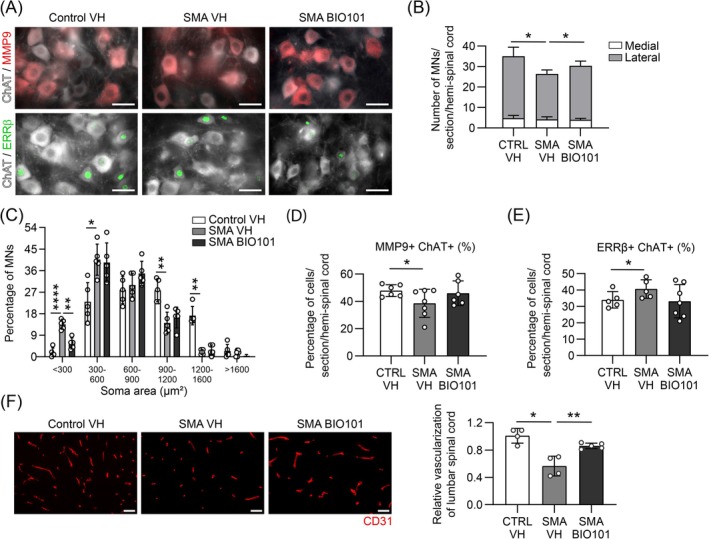 Figure 1
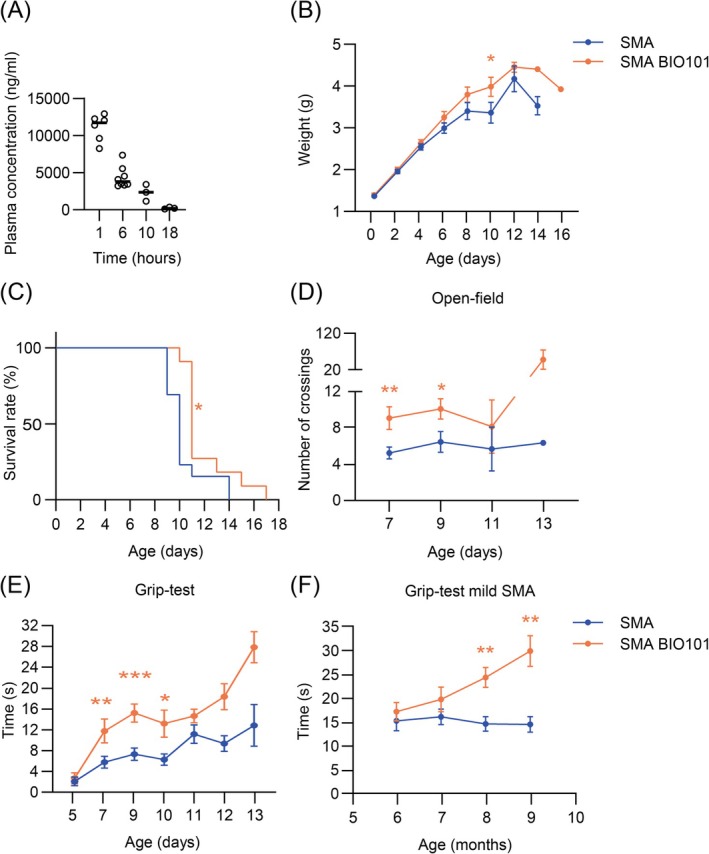 Figure 2
 Figure 3
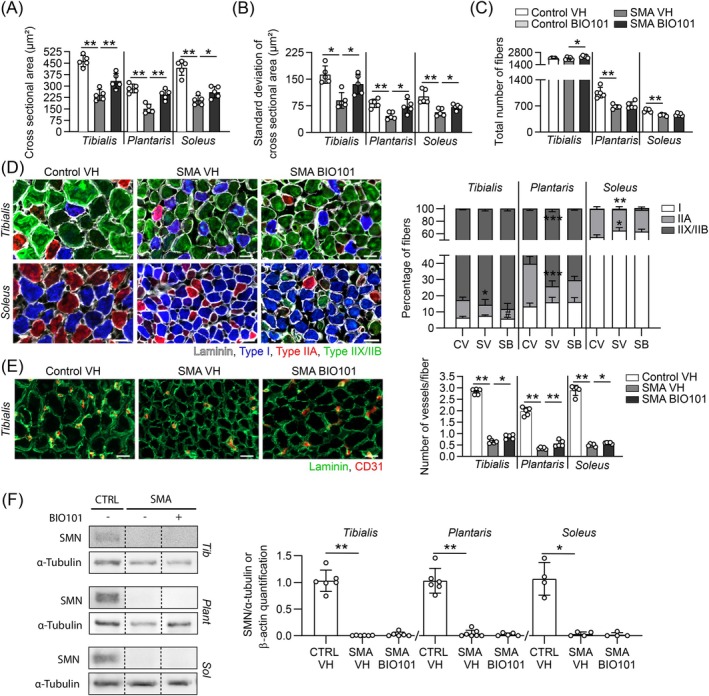 Figure 4
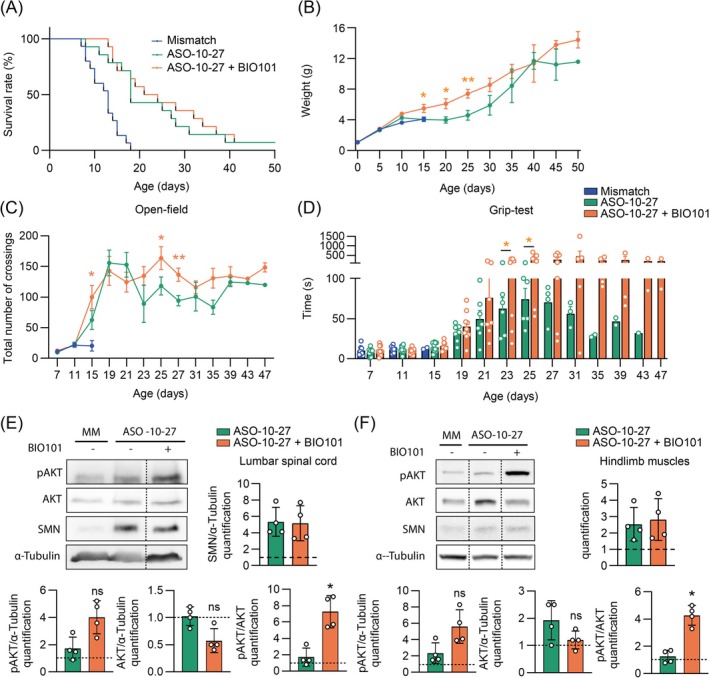 Figure 5
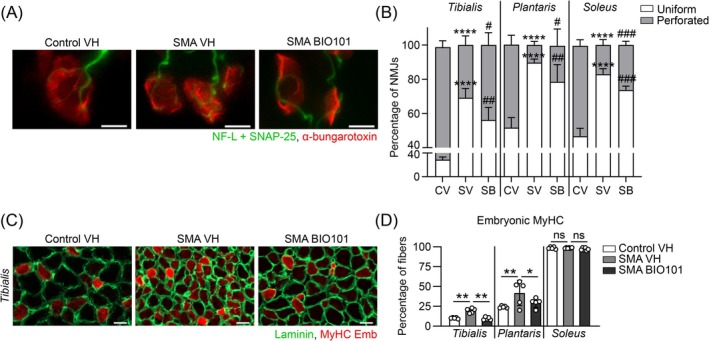 Figure 6
Peer Reviews
No public reviews on file for this paper yet. If you reviewed it on a platform where reviews are public (OpenReview, ICLR, NeurIPS, ICML), you can paste yours below so the community can read it here.
Videos
No videos yet. Explain this paper in a talk, walkthrough, or lecture? Add one.
Taxonomy
TopicsNeurogenetic and Muscular Disorders Research · DNA and Nucleic Acid Chemistry