Structure of the human nonmuscle myosin 2A motor domain: Insights into isoform-specific mechanochemistry
Robin S. Heiringhoff, Johannes N. Greve, Michael Zahn, Dietmar J. Manstein

TL;DR
This study reveals the structure of the human NM2A motor domain, explaining how differences in its sequence lead to specific cellular functions.
Contribution
The paper provides the first high-resolution structure of the human NM2A motor domain and identifies key sequence differences driving isoform-specific behavior.
Findings
The NM2A motor domain structure was resolved at 2.1 Å, revealing isoform-specific features.
Loop2 is identified as a critical region influencing functional specialization between NM2A and NM2B.
ATP binding is conserved across NM2 isoforms, but sequence variation affects actin-binding dynamics.
Abstract
Nonmuscle myosin 2A (NM2A) is the predominant myosin isoform in nonmuscle cells. Together with its paralogues NM2B and NM2C, NM2A enables tension and force generation, driving essential cellular processes such as membrane protrusion and retraction, directed migration, adhesion, and cytokinesis. The NM2 isoforms display paralogue-specific mechanochemical characteristics that support their specific cellular functions. Here, we determined the structure of the human NM2A motor domain, addressing a critical gap in understanding myosin family diversification. Based on our experimentally resolved 2.1 Å structure of the NM2A motor domain in its nucleotide-free state, we demonstrate, through integrative modeling of NM2-actin complexes and molecular dynamics simulations, how sequence differences between NM2A and NM2B underpin their functional specialization. Loop2 emerges as a critical…
Genes, proteins, chemicals, diseases, species, mutations and cell lines named across the full text — each resolved to its canonical identifier and authoritative record.
Click any figure to enlarge with its caption.
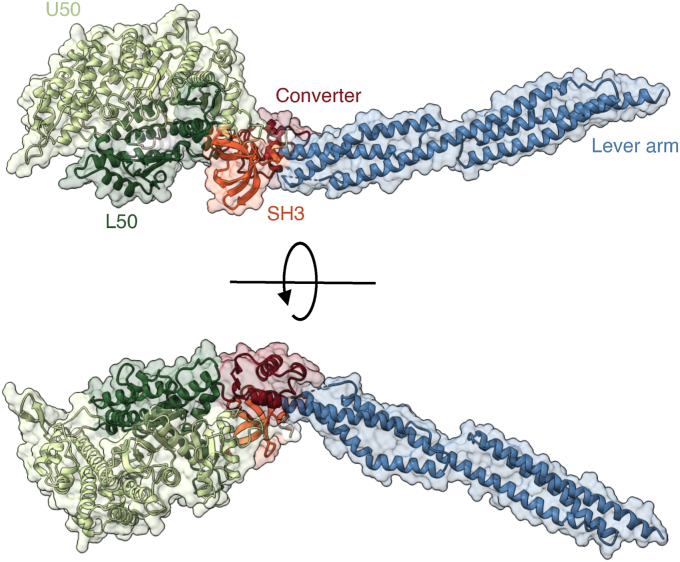 Figure 1
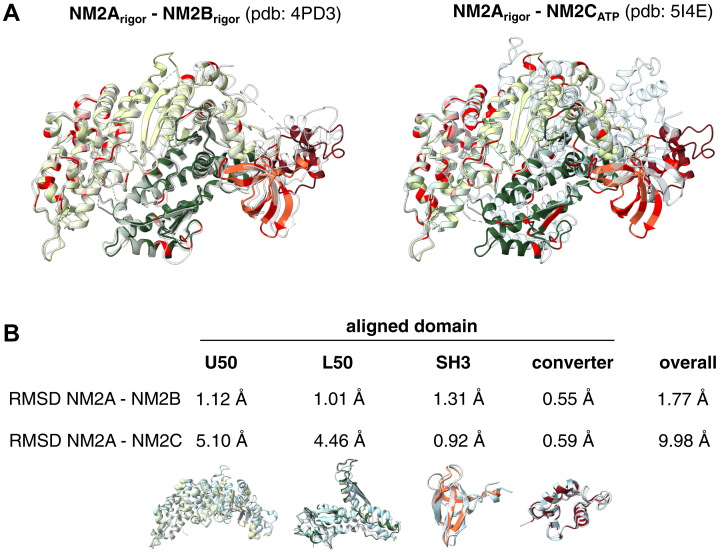 Figure 2
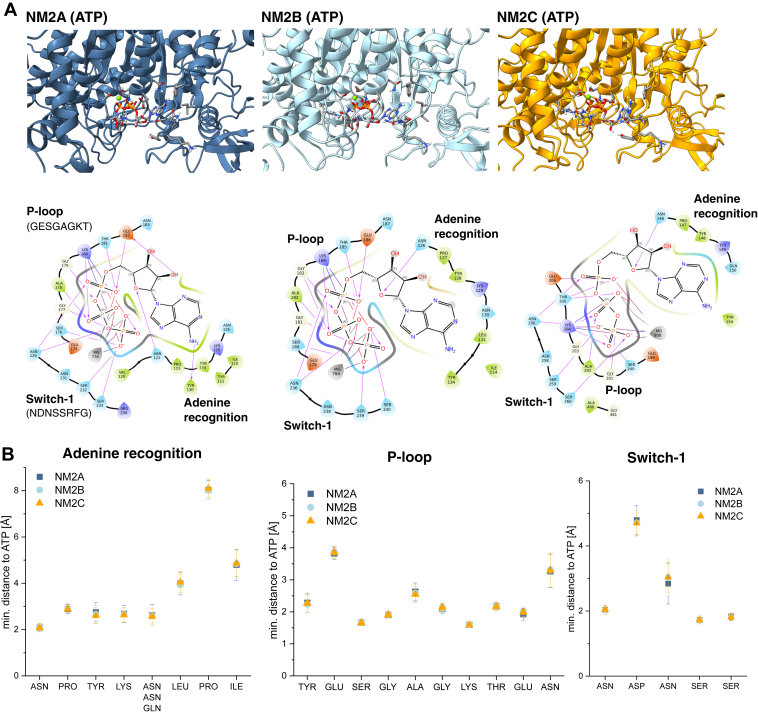 Figure 3
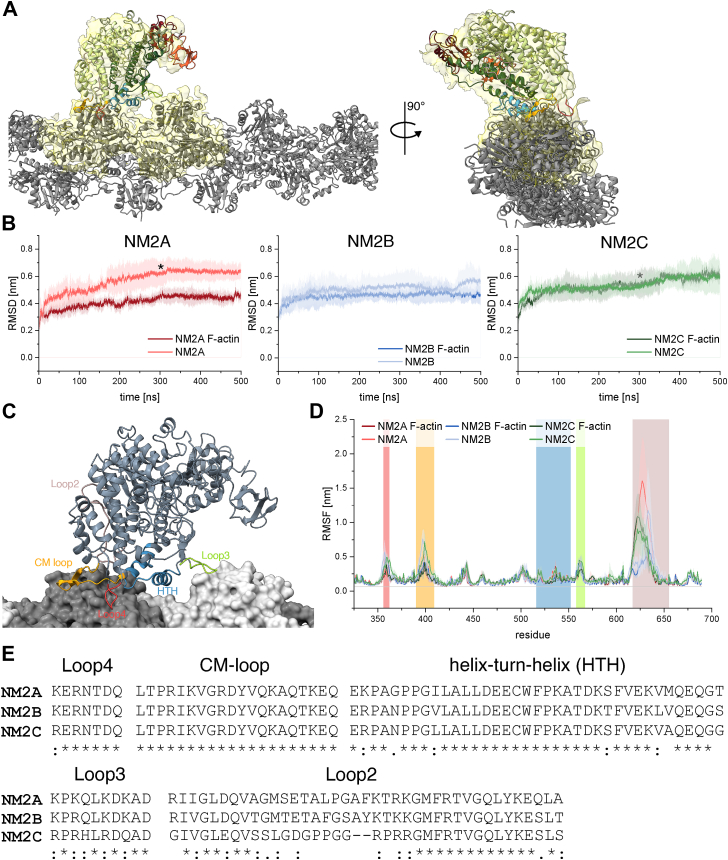 Figure 4
Peer Reviews
No public reviews on file for this paper yet. If you reviewed it on a platform where reviews are public (OpenReview, ICLR, NeurIPS, ICML), you can paste yours below so the community can read it here.
Videos
No videos yet. Explain this paper in a talk, walkthrough, or lecture? Add one.
Taxonomy
TopicsCardiomyopathy and Myosin Studies · Cellular Mechanics and Interactions · Force Microscopy Techniques and Applications