Tissue microenvironment dictates the state of human iPSC-derived endothelial cells of distinct developmental origin in 3D cardiac microtissues
Xu Cao, Maria Mircea, Sara Cascione, Atoosa Amel, Theano Tsikari, Francijna E. van den Hil, Hailiang Mei, Katrin Neumann, Anna Alemany, Konstantinos Anastassiadis, Christine L. Mummery, Stefan Semrau, Valeria V. Orlova

TL;DR
This study shows that the heart's microenvironment can reshape the identity of human stem cell-derived blood vessel cells, regardless of their origin.
Contribution
The study reveals that the 3D cardiac microtissue environment can override the developmental origin of endothelial cells to establish heart-specific traits.
Findings
hiPSC-derived endothelial cells in 3D cardiac microtissues upregulate heart-specific markers like CD36 and CLDN5.
Endothelial cells from cardiac and paraxial mesoderm acquire similar identities in cardiac microtissues.
The tissue microenvironment, not developmental origin, dictates organ-specific endothelial cell identity in 3D models.
Abstract
Each tissue and organ in the body has its own type of vasculature. Here, we demonstrate that organotypic vasculature for the heart can be recreated in a three-dimensional cardiac microtissue (MT) model composed of human induced pluripotent stem cell (hiPSC)-derived cardiomyocytes (CMs), cardiac fibroblasts (CFs), and endothelial cells (ECs). ECs in cardiac MTs upregulated expression of markers enriched in human intramyocardial ECs, including CD36, CLDN5, APLNR, NOTCH4, IGFBP3, and ARHGAP18. We further show that the local microenvironment largely dictates the organ-specific identity of hiPSC-derived ECs: we compared ECs derived from cardiac and paraxial mesoderm and found that, regardless of origin, they acquired similar identities upon integration into cardiac MTs. Overall, the results indicated that while the initial gene profile of ECs was dictated by developmental origin, this could…
Genes, proteins, chemicals, diseases, species, mutations and cell lines named across the full text — each resolved to its canonical identifier and authoritative record.
Click any figure to enlarge with its caption.
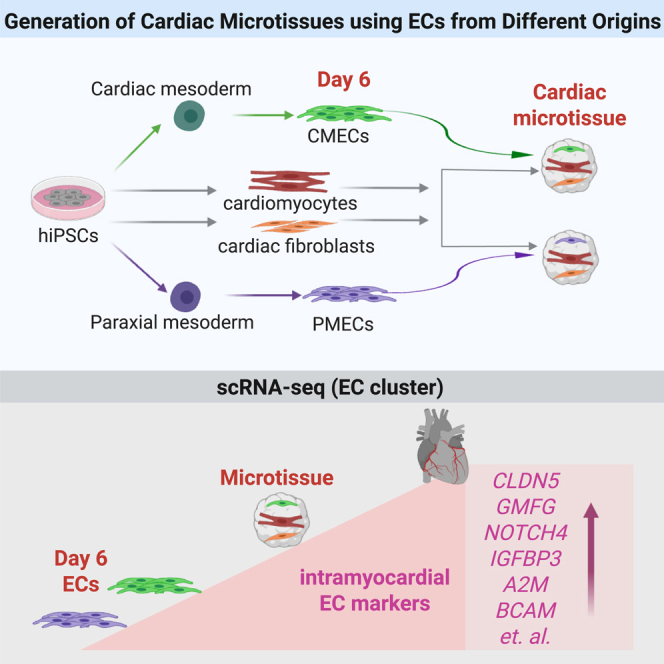 Figure 1
 Figure 2
 Figure 3
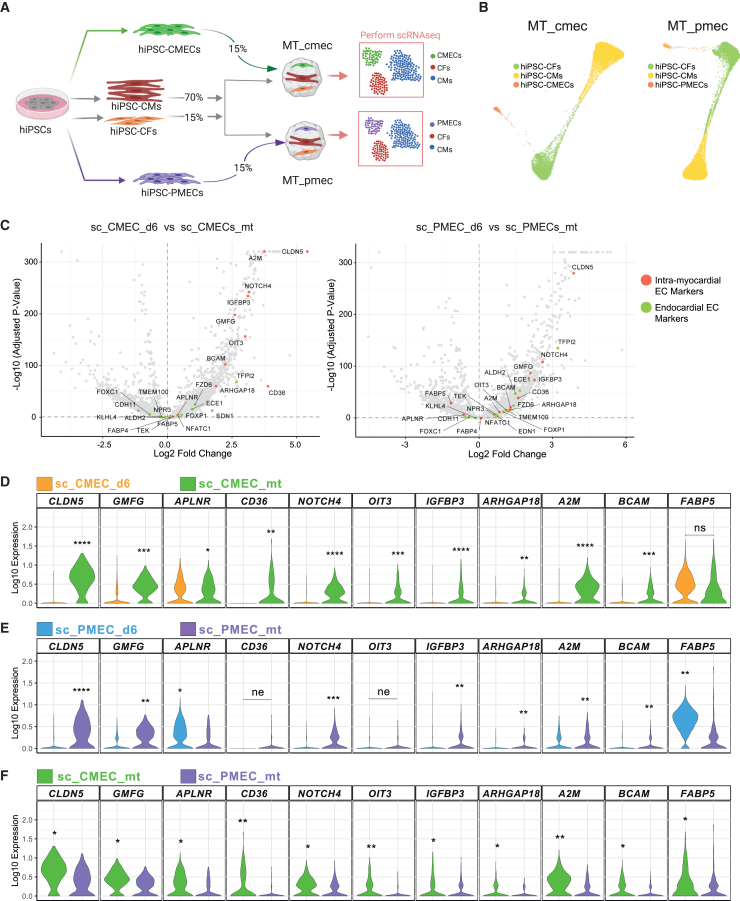 Figure 4
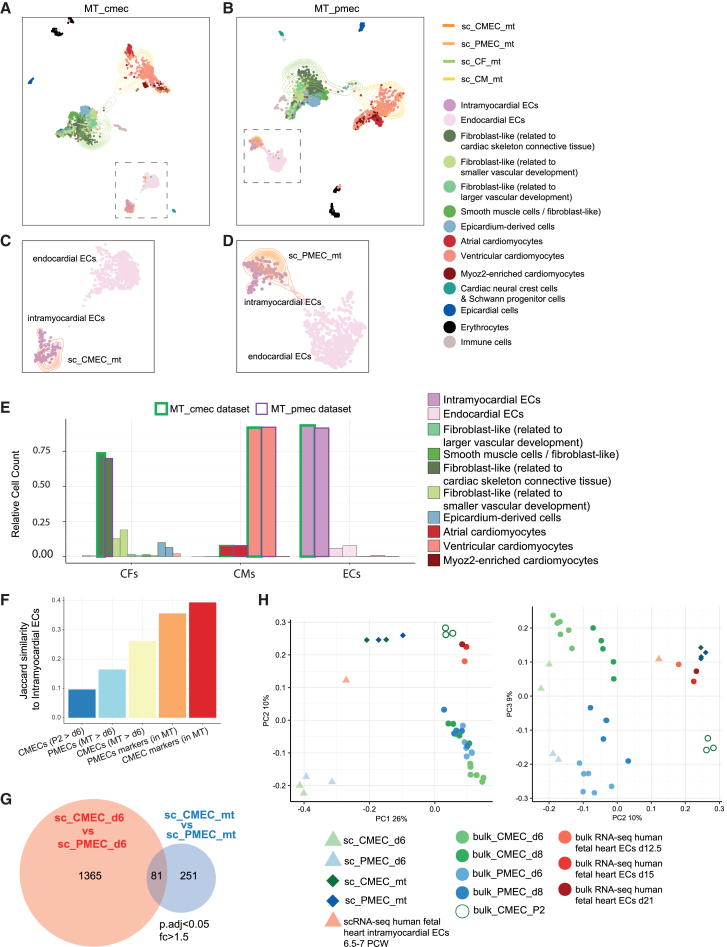 Figure 5
Peer Reviews
No public reviews on file for this paper yet. If you reviewed it on a platform where reviews are public (OpenReview, ICLR, NeurIPS, ICML), you can paste yours below so the community can read it here.
Videos
No videos yet. Explain this paper in a talk, walkthrough, or lecture? Add one.
Taxonomy
TopicsCongenital heart defects research · Pluripotent Stem Cells Research · 3D Printing in Biomedical Research