An Effective Hybrid Treatment for Persistent Sciatic Artery Aneurysm
Alessandro Ciolli, Francesco Stilo, Vincenzo Cirimele, Nunzio Montelione

TL;DR
A 61-year-old man with bilateral persistent sciatic artery aneurysms was successfully treated with a hybrid surgical and percutaneous approach.
Contribution
This case report presents a novel hybrid treatment approach for persistent sciatic artery aneurysms.
Findings
A hybrid treatment combining surgical bypass and aneurysm embolization successfully managed right-sided persistent sciatic artery aneurysm.
The patient remained free of ischemic symptoms with a patent graft at 12 months follow-up.
The left aneurysm remained asymptomatic, suggesting monitoring may be sufficient for unilateral cases.
Abstract
Persistent sciatic artery (PSA) is a rare congenital vascular anomaly that is often asymptomatic; however, it can be associated with aneurysm formation and potential complications. Here, the case of a 61 year old man presenting with bilateral persistent sciatic artery aneurysms (PSAAs) who underwent right sided hybrid treatment for rest pain and aneurysm thrombosis is reported. Hybrid treatment of the right PSAA was performed by surgical bypass using the in situ great saphenous vein, from the common femoral artery to the posterior tibial artery and staged percutaneous aneurysm embolisation with controlled release coils and a vascular plug. The post-operative course was uneventful, and computed tomography angiography at six months confirmed right PSAA exclusion and graft patency. At 12 months follow up, the bypass was patent, and the patient remained free of ischaemic symptoms. The left…
Genes, proteins, chemicals, diseases, species, mutations and cell lines named across the full text — each resolved to its canonical identifier and authoritative record.
Click any figure to enlarge with its caption.
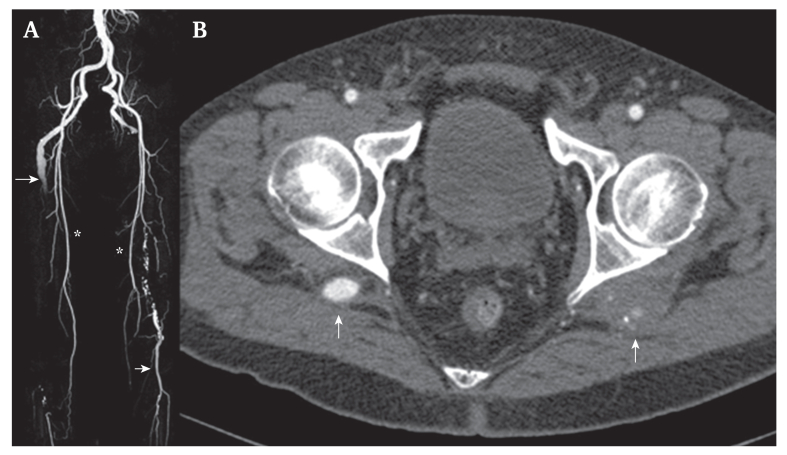 Figure 1
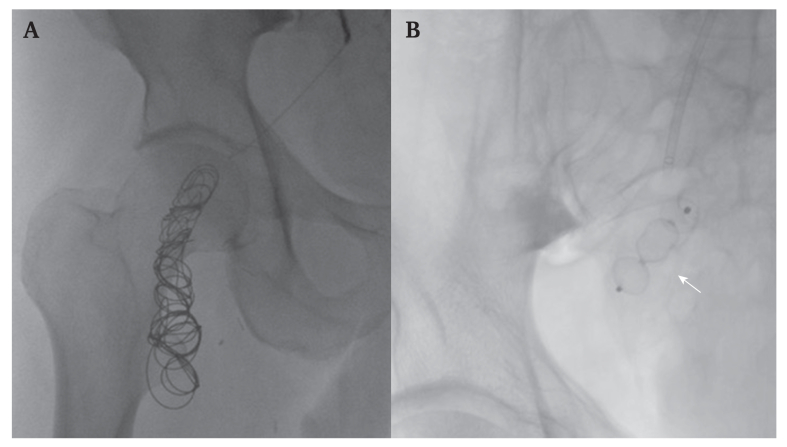 Figure 2
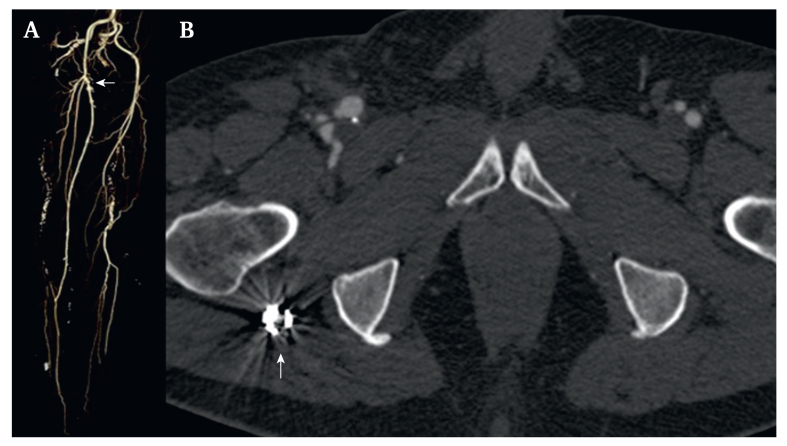 Figure 3
Peer Reviews
No public reviews on file for this paper yet. If you reviewed it on a platform where reviews are public (OpenReview, ICLR, NeurIPS, ICML), you can paste yours below so the community can read it here.
Videos
No videos yet. Explain this paper in a talk, walkthrough, or lecture? Add one.
Taxonomy
TopicsVascular anomalies and interventions