Secondary analysis of a randomised controlled trial on reducing sedentary behaviour and its effects on quality of life and wellbeing
Jooa Norha, Tanja Sjöros, Taru Garthwaite, Saara Laine, Kirsi Laitinen, Noora Houttu, Henri Vähä-Ypyä, Harri Sievänen, Eliisa Löyttyniemi, Tommi Vasankari, Juhani Knuuti, Kari K. Kalliokoski, Ilkka H. A. Heinonen

TL;DR
Reducing sedentary behavior by one hour per day may improve vitality in adults with metabolic syndrome, according to a randomized trial.
Contribution
This study demonstrates that reducing sedentary time without adding exercise can improve perceived vitality in at-risk adults.
Findings
The intervention group showed increased vitality scores compared to the control group.
Reducing sedentary behavior correlated with better social functioning and lower stress.
Aim to reduce sedentary time by one hour per day may benefit wellbeing in inactive adults with metabolic syndrome.
Abstract
High sedentary behaviour (SB) associates with poorer wellbeing among adults at increased cardiovascular risk. The aim of this study was to investigate the effects of reducing SB on perceived quality of life, depressive symptoms, stress, and workability among physically inactive adults with metabolic syndrome. Sixty-four sedentary, inactive adults [58 (SD 7) years old, 58% women, BMI 32 (4) kg/m2] with metabolic syndrome were randomised into the intervention (n = 33) and control (n = 31) groups. The 6-month intervention aimed at reducing SB by 1 h/day without adding exercise, while the control group kept their usual SB. All participants wore accelerometers throughout the study to monitor SB and physical activity. Health-related quality of life, stress, depressive symptoms and workability were assessed at baseline, at three months, and after the intervention using the RAND-36, perceived…
Genes, proteins, chemicals, diseases, species, mutations and cell lines named across the full text — each resolved to its canonical identifier and authoritative record.
Click any figure to enlarge with its caption.
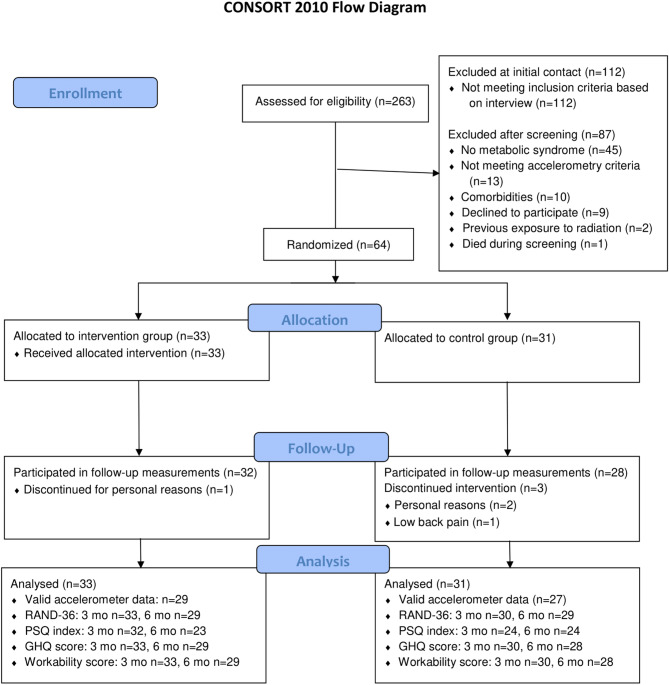 Figure 1
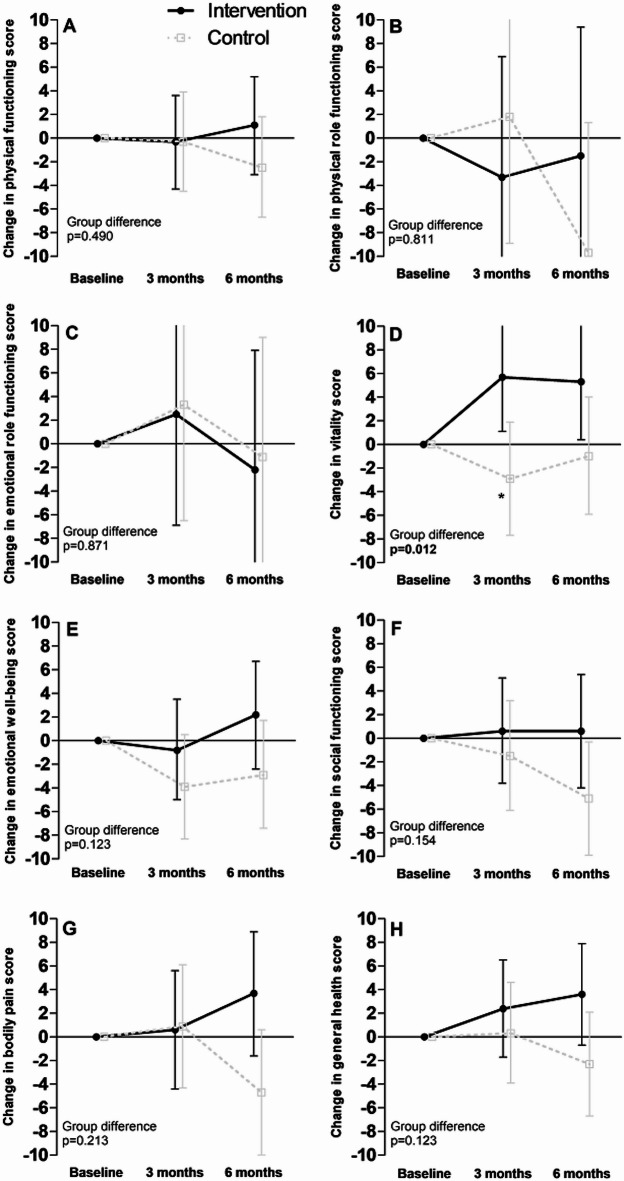 Figure 2
 Figure 3
Peer Reviews
No public reviews on file for this paper yet. If you reviewed it on a platform where reviews are public (OpenReview, ICLR, NeurIPS, ICML), you can paste yours below so the community can read it here.
Videos
No videos yet. Explain this paper in a talk, walkthrough, or lecture? Add one.
Taxonomy
TopicsPhysical Activity and Health · Health and Lifestyle Studies · Obesity, Physical Activity, Diet