Vaccination against Onchocerca volvulus induces IgG-mediated protective immunity dependent on neutrophils and complement
Nathan M. Ryan, Jessica A. Hess, Mohini Nakhale, Annabel A. Ferguson, William Stump, Sara Belko, Rachel Monane, Robert S. Pugliese, Nikolai Petrovsky, Benjamin L. Makepeace, Sean A. Gray, Darrick Carter, Sara Lustigman, David Abraham

TL;DR
A vaccine targeting Onchocerca volvulus protects mice by using IgG antibodies, neutrophils, and the complement system to kill larvae.
Contribution
The study identifies a novel IgG-mediated, neutrophil- and complement-dependent mechanism of protective immunity against Onchocerca volvulus larvae.
Findings
Vaccination with Ov-FUS-1 and Advax-CpG adjuvant induced IgG-mediated protection against Onchocerca volvulus larvae.
Neutrophils were essential for larval killing, and their depletion eliminated vaccine-induced immunity.
Complement component C3 was required for vaccine-induced protection, suggesting a role in the immune mechanism.
Abstract
Onchocerciasis remains a significant cause of morbidity and economic loss in sub-Saharan Africa. Despite the existence of effective therapeutics, a prophylactic vaccine targeting the etiologic agent, Onchocerca volvulus, is needed to control ongoing disease and transmission. Mice were vaccinated against O. volvulus with a fusion of the recombinant antigens Ov-103 and Ov-RAL-2 (Ov-FUS-1) with Advax-CpG adjuvant. Immunized mice developed protective immunity with the killing of third-stage larvae (L3) within 36 h of challenge infection. IgG from immunized mice passively transferred protective immunity to naïve mice, indicating that antigen-specific IgG mediated parasite elimination. Neutrophils were the most abundant subset of immune cells recruited to the parasite microenvironment in vivo, and treating mice with a granulocyte-depleting antibody resulted in the total loss of…
Genes, proteins, chemicals, diseases, species, mutations and cell lines named across the full text — each resolved to its canonical identifier and authoritative record.
Click any figure to enlarge with its caption.
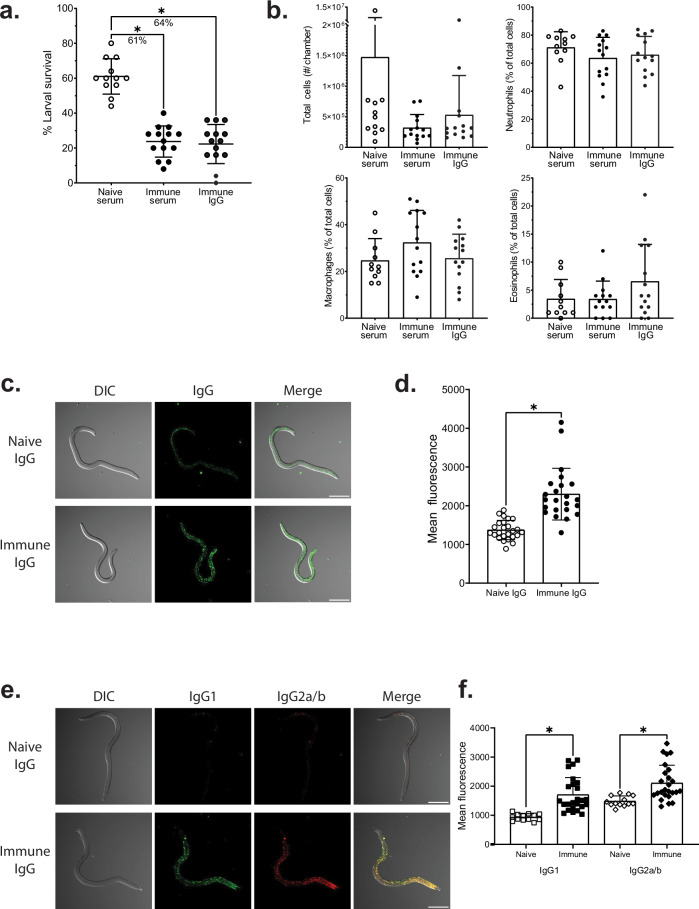 Figure 1
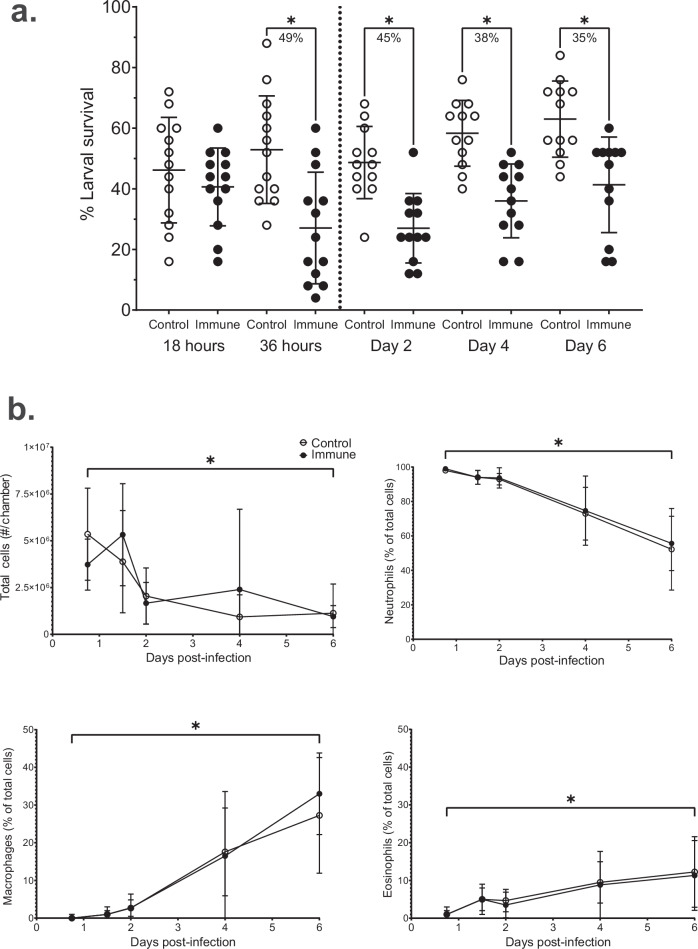 Figure 2
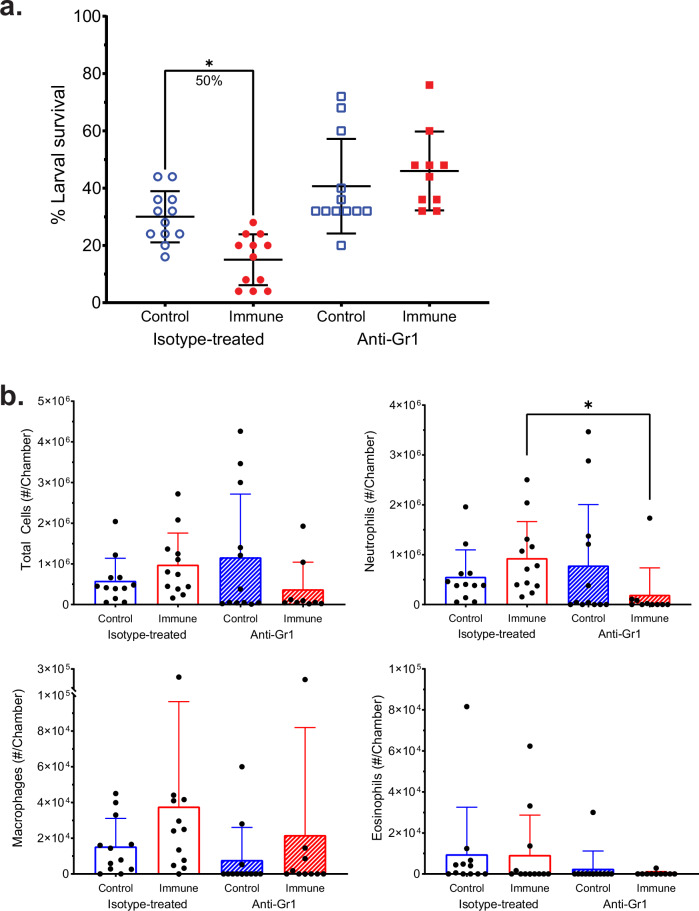 Figure 3
 Figure 4
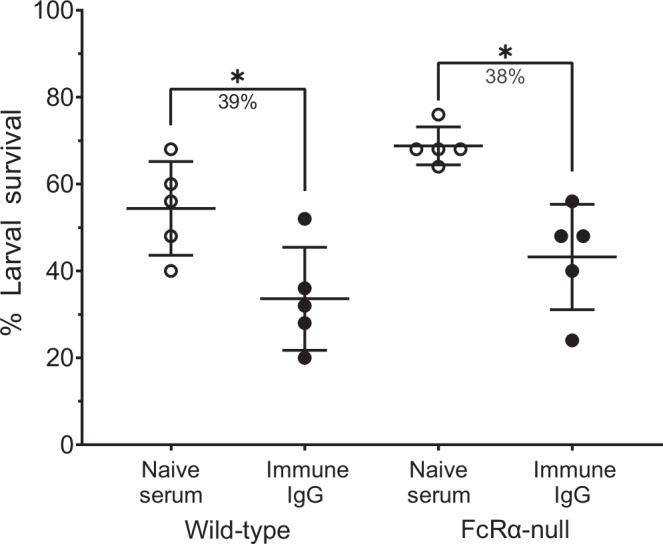 Figure 5
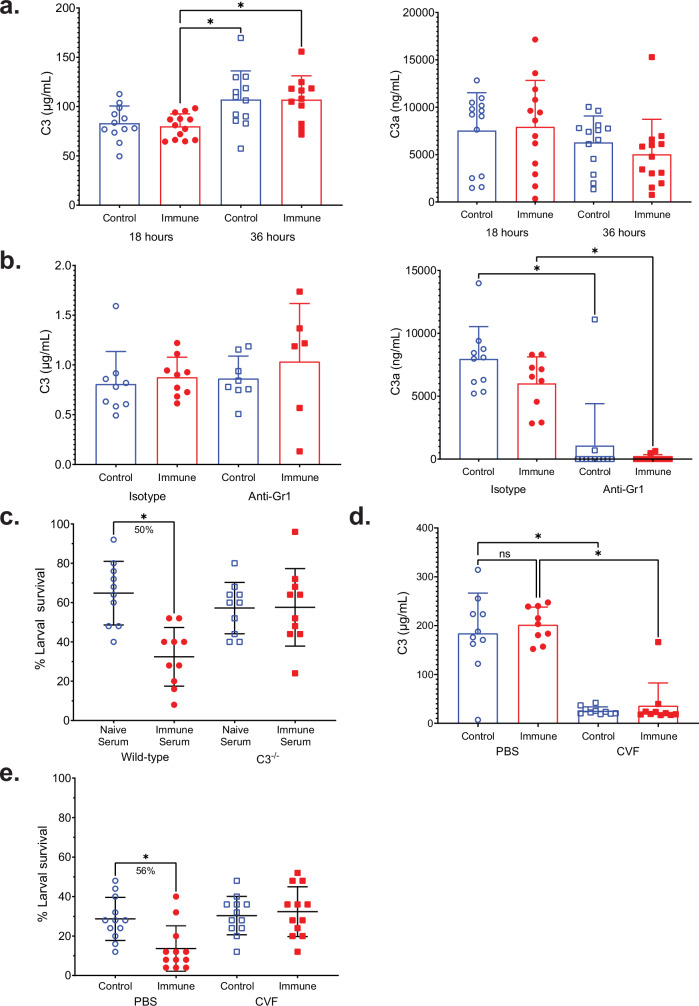 Figure 6
Peer Reviews
No public reviews on file for this paper yet. If you reviewed it on a platform where reviews are public (OpenReview, ICLR, NeurIPS, ICML), you can paste yours below so the community can read it here.
Videos
No videos yet. Explain this paper in a talk, walkthrough, or lecture? Add one.
Taxonomy
TopicsParasitic Diseases Research and Treatment · Parasites and Host Interactions · Parasite Biology and Host Interactions