Confounder-aware foundation modeling for accurate phenotype profiling in cell imaging
Giorgos Papanastasiou, Pedro P. Sanchez, Argyrios Christodoulidis, Guang Yang, Walter Hugo Lopez Pinaya

TL;DR
This paper introduces a new AI model that improves drug discovery by accurately predicting how cells respond to compounds, even when data is limited.
Contribution
A confounder-aware foundation model is proposed, integrating causal mechanisms to enhance robustness in cell imaging for drug discovery.
Findings
The model achieves state-of-the-art performance in predicting mechanisms of action and compound targets.
It outperforms existing methods for both seen and unseen compounds with high ROC-AUC scores.
The model is trained on a large dataset of cell images and compounds, enabling robust phenotype profiling.
Abstract
Image-based profiling is rapidly transforming drug discovery, offering unprecedented insights into cellular responses. However, experimental variability hinders accurate identification of mechanisms of action (MoA) and compound targets. Existing methods commonly fail to generalize to novel compounds, limiting their utility in exploring uncharted chemical space. To address this, we present a confounder-aware foundation model integrating a causal mechanism within a latent diffusion model, enabling the generation of balanced synthetic datasets for robust biological effect estimation. Trained on over 13 million Cell Painting images and 107 thousand compounds, our model learns robust cellular phenotype representations, mitigating confounder impact. We achieve state-of-the-art MoA and target prediction for both seen (0.66 and 0.65 ROC-AUC) and unseen compounds (0.65 and 0.73 ROC-AUC),…
Genes, proteins, chemicals, diseases, species, mutations and cell lines named across the full text — each resolved to its canonical identifier and authoritative record.
Click any figure to enlarge with its caption.
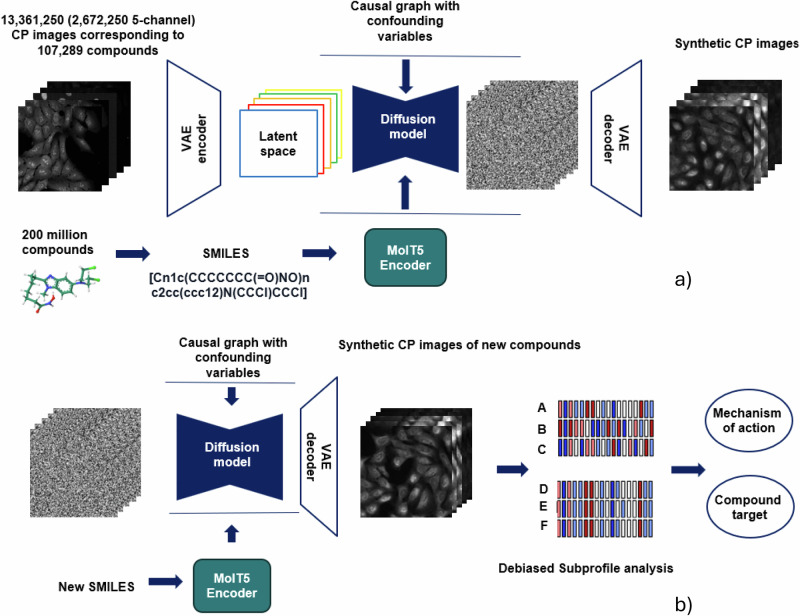 Figure 1
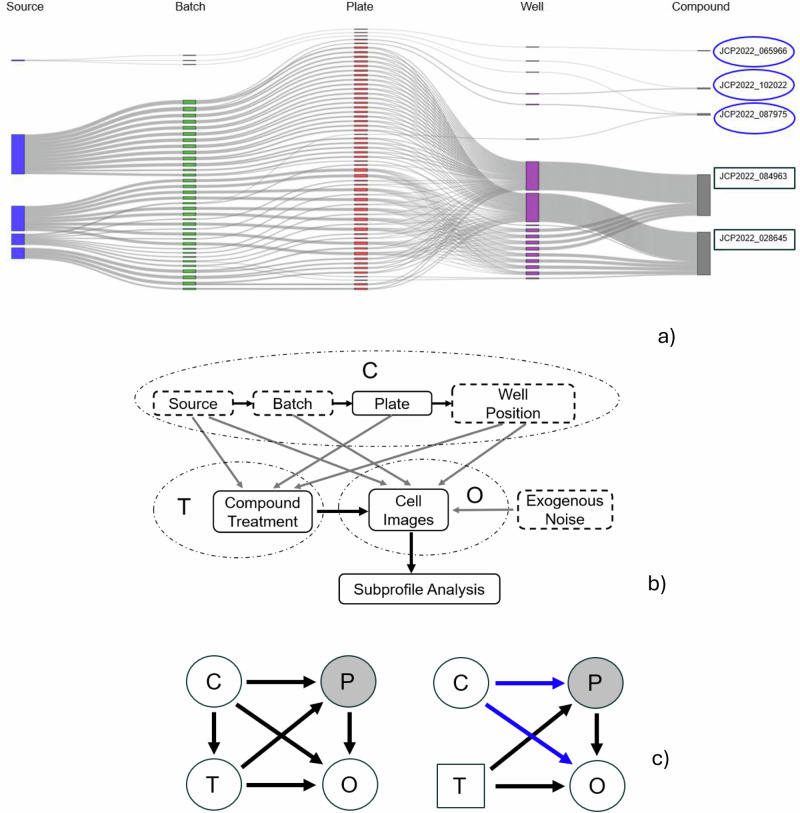 Figure 2
 Figure 3
 Figure 4
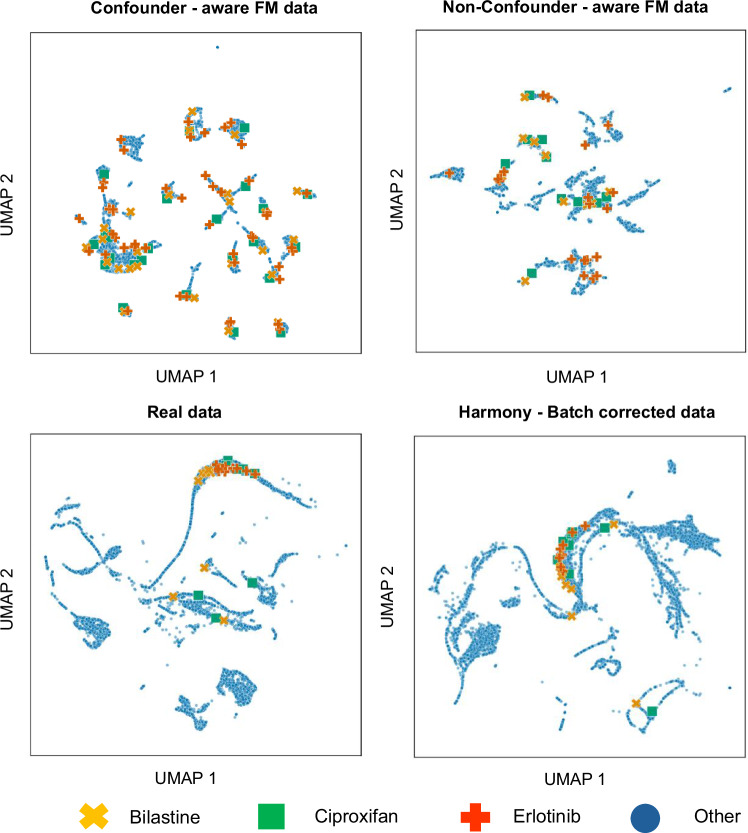 Figure 5
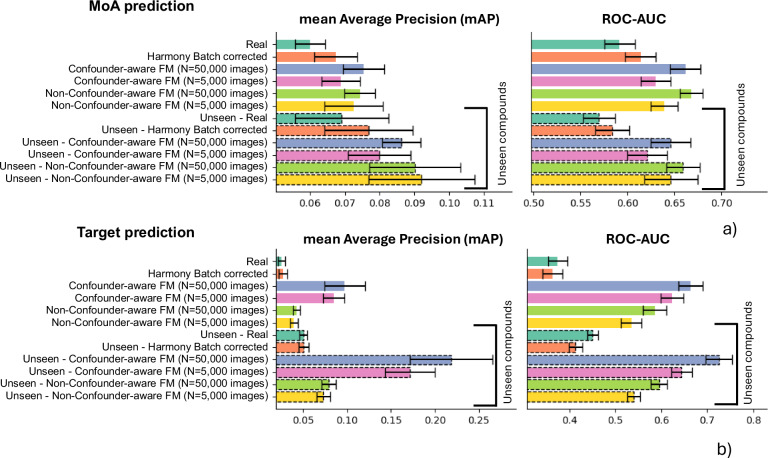 Figure 6
Peer Reviews
No public reviews on file for this paper yet. If you reviewed it on a platform where reviews are public (OpenReview, ICLR, NeurIPS, ICML), you can paste yours below so the community can read it here.
Videos
No videos yet. Explain this paper in a talk, walkthrough, or lecture? Add one.
Taxonomy
TopicsCell Image Analysis Techniques · Image Processing Techniques and Applications · Single-cell and spatial transcriptomics