Effects of cyclotide-producing plants on the development and life history parameters of Leipothrix violarius
Anna Pińkowska, Patrycja Jankiewicz, Katarzyna Wójcik, Elżbieta Wójcik-Gront, Mariusz Lewandowski

TL;DR
This study examines how two violet species affect the mite Leipothrix violarius, finding that mites perform better on V. odorata than V. uliginosa, possibly due to differences in cyclotide content.
Contribution
The study identifies cyclotides as potential mediators of plant resistance in Viola species against mite herbivory.
Findings
Mites reared on V. odorata showed faster egg development and higher population growth than those on V. uliginosa.
Population growth occurred on all tested host species, but performance varied significantly.
Cyclotides in Viola plants may influence mite performance, offering a model for studying plant-mite interactions.
Abstract
Leipothrix violarius (Acariformes: Eriophyoidea) is a phytophagous mite specialized in feeding on plants from the genus Viola. It has been recorded on five host species, including Viola uliginosa, which is rare or endangered in much of its range. Despite taxonomic revisions, little is known about the biology or host specificity of L. violarius. In this study, we compared the effects of V. uliginosa and V. odorata on the development, survival, and population parameters of L. violarius, and assessed its host range using selected ornamental and naturally occurring violets. Development from egg to adult took approximately seven days on both host plant species, with no sex-related differences. However, mites reared on V. odorata exhibited faster egg development and greater population increase per generation than those reared on V. uliginosa. Population growth occurred on all tested host…
Genes, proteins, chemicals, diseases, species, mutations and cell lines named across the full text — each resolved to its canonical identifier and authoritative record.
Click any figure to enlarge with its caption.
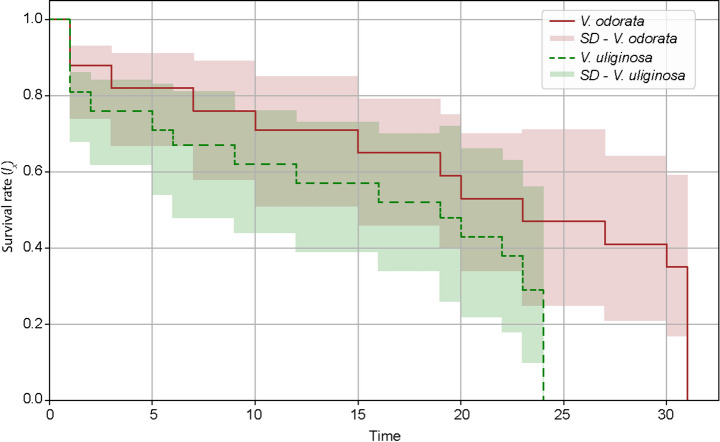 Figure 1
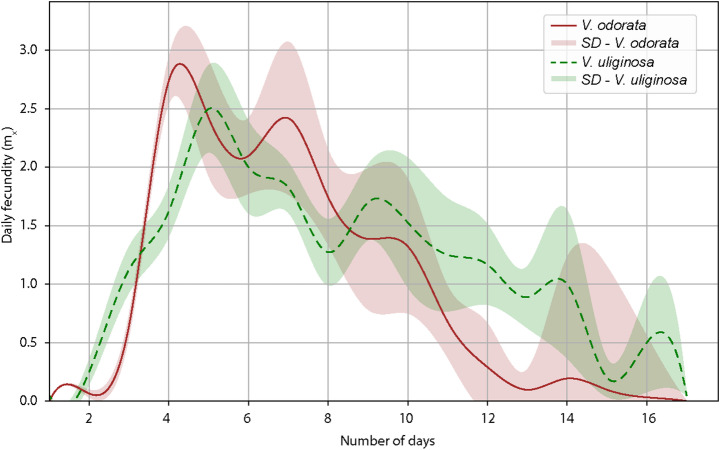 Figure 2
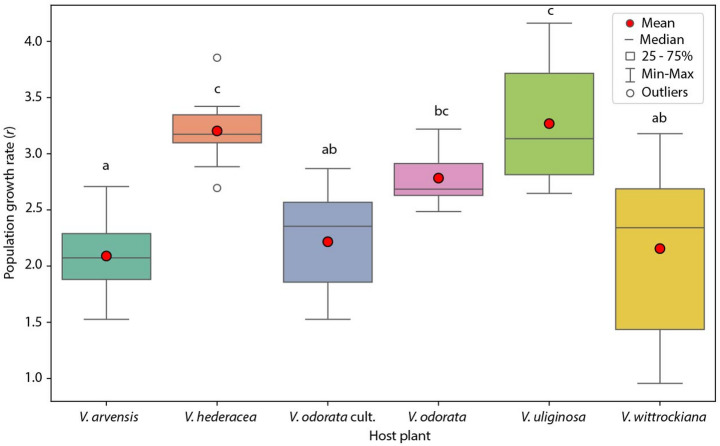 Figure 3
Peer Reviews
No public reviews on file for this paper yet. If you reviewed it on a platform where reviews are public (OpenReview, ICLR, NeurIPS, ICML), you can paste yours below so the community can read it here.
Videos
No videos yet. Explain this paper in a talk, walkthrough, or lecture? Add one.
Taxonomy
TopicsBiochemical and Structural Characterization · Phytoplasmas and Hemiptera pathogens · Toxin Mechanisms and Immunotoxins