Comparing Bayesian estimation and structural-after-measurement approaches for structural equation models with latent interactions and complex data structures
Kyle Cox, Benjamin Kelcey

TL;DR
This study compares Bayesian and structural-after-measurement approaches for estimating structural equation models with latent interactions and complex data structures.
Contribution
The paper systematically compares Bayesian and SAM approaches in multilevel and partially nested SEMs with latent interactions.
Findings
SAM approaches performed well across various latent interactions in multilevel and partially nested SEMs.
Bayesian approaches struggled with cross-level latent interactions and were not easily extended to partially nested SEMs.
SAM approaches are suggested as a versatile alternative or complement to conventional estimators.
Abstract
Bayesian and structural-after-measurement (SAM) approaches have been developed, in part, to address limitations of conventional estimators in the context of structural equation models (SEMs) with latent interactions. Although both approaches have shown promise in a variety of contexts including small-sample studies, there is very little literature systematically comparing the relative benefits, limitations, and trade-offs among these approaches. In this study, we (a) compared the performance of estimators under each approach in multilevel SEMs with a within-, between-, or cross-level latent interaction and (b) demonstrated the flexibility of SAM approaches by extending and investigating them in partially nested SEMs with latent moderated mediation. The results suggest substantial differences between estimator performance as a function of the type of latent interaction. SAM approaches…
Genes, proteins, chemicals, diseases, species, mutations and cell lines named across the full text — each resolved to its canonical identifier and authoritative record.
Click any figure to enlarge with its caption.
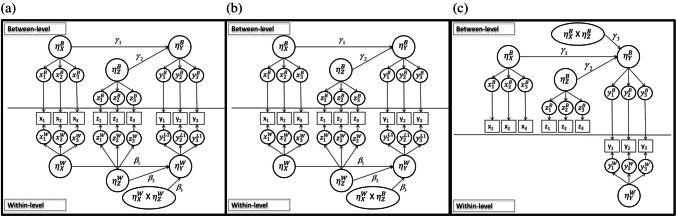 Figure 1
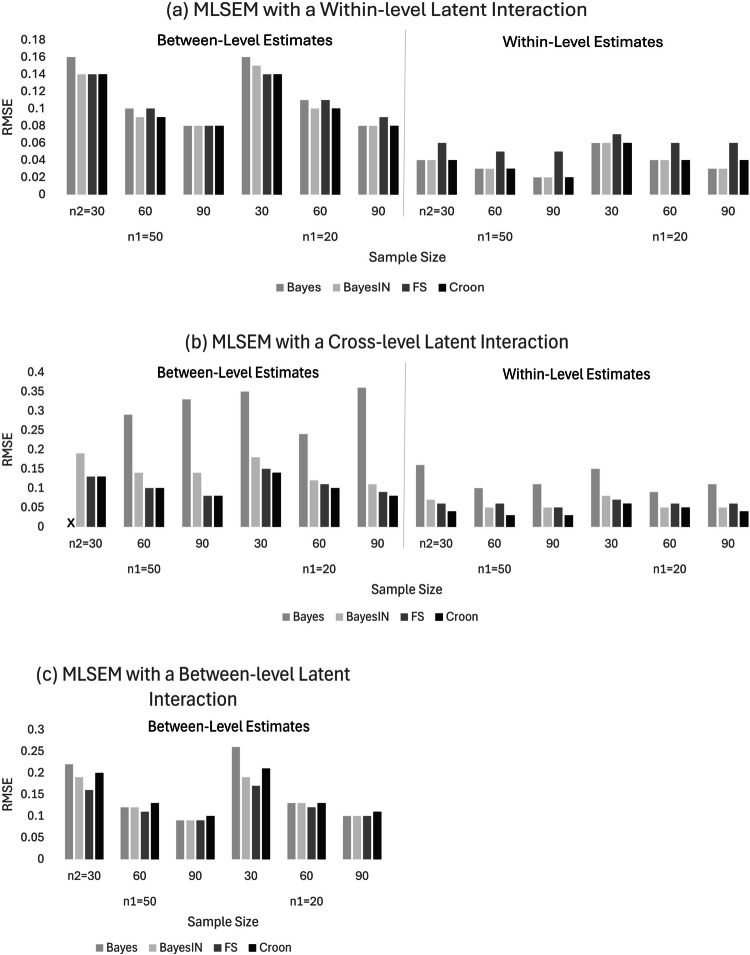 Figure 2
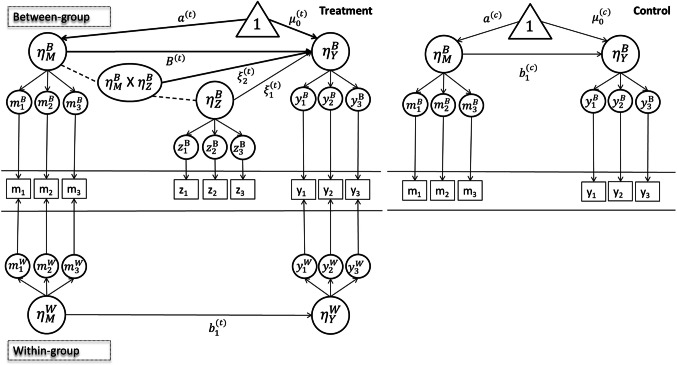 Figure 3
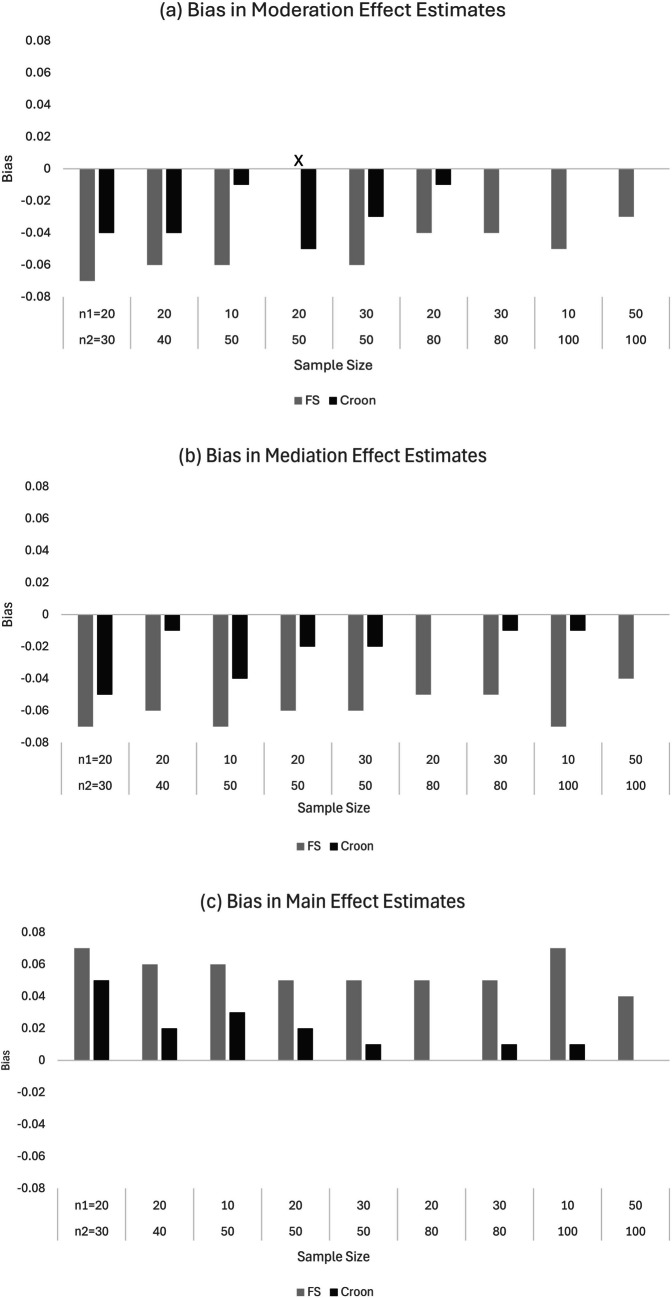 Figure 4
Peer Reviews
No public reviews on file for this paper yet. If you reviewed it on a platform where reviews are public (OpenReview, ICLR, NeurIPS, ICML), you can paste yours below so the community can read it here.
Videos
No videos yet. Explain this paper in a talk, walkthrough, or lecture? Add one.
Taxonomy
TopicsPsychometric Methodologies and Testing · Mental Health Research Topics · Advanced Causal Inference Techniques