Deep learning-driven incidental detection of vertebral fractures in cancer patients: advancing diagnostic precision and clinical management
El Mehdi Mniai, Vladimir Laletin, Lambros Tselikas, Tarek Assi, Baptiste Bonnet, Astrid Orfali Camez, Amir Zemmouri, Serge Muller, Tania Moussa, Yasmina Chaibi, Julie Kiewsky, Sarah Quenet, Christophe Avare, Nathalie Lassau, Corinne Balleyguier, Angela Ayobi, Samy Ammari

TL;DR
A deep-learning tool helps detect missed vertebral fractures in cancer patients, improving diagnosis and treatment options.
Contribution
A deep-learning application is shown to significantly reduce the miss rate of vertebral fractures in cancer patients.
Findings
The deep-learning tool achieved an 87% positive predictive value in detecting vertebral fractures.
83.5% of true positive vertebral fractures were not reported in routine radiology assessments.
Nine out of ten grade 3 fractures suitable for vertebroplasty were missed by radiologists.
Abstract
Vertebral compression fractures (VCFs) are the most prevalent skeletal manifestations of osteoporosis in cancer patients. Yet, they are frequently missed or not reported in routine clinical radiology, adversely impacting patient outcomes and quality of life. This study evaluates the diagnostic performance of a deep-learning (DL)-based application and its potential to reduce the miss rate of incidental VCFs in a high-risk cancer population. We retrospectively analysed thoraco-abdomino-pelvic (TAP) CT scans from 1556 patients with stage IV cancer collected consecutively over a 4-month period (September–December 2023) in a tertiary cancer center. A DL-based application flagged cases positive for VCFs, which were subsequently reviewed by two expert radiologists for validation. Additionally, grade 3 fractures identified by the application were independently assessed by two expert…
Genes, proteins, chemicals, diseases, species, mutations and cell lines named across the full text — each resolved to its canonical identifier and authoritative record.
Click any figure to enlarge with its caption.
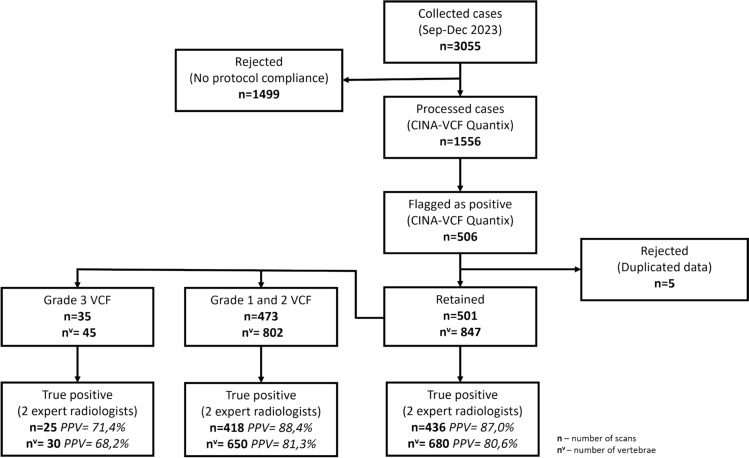 Figure 1
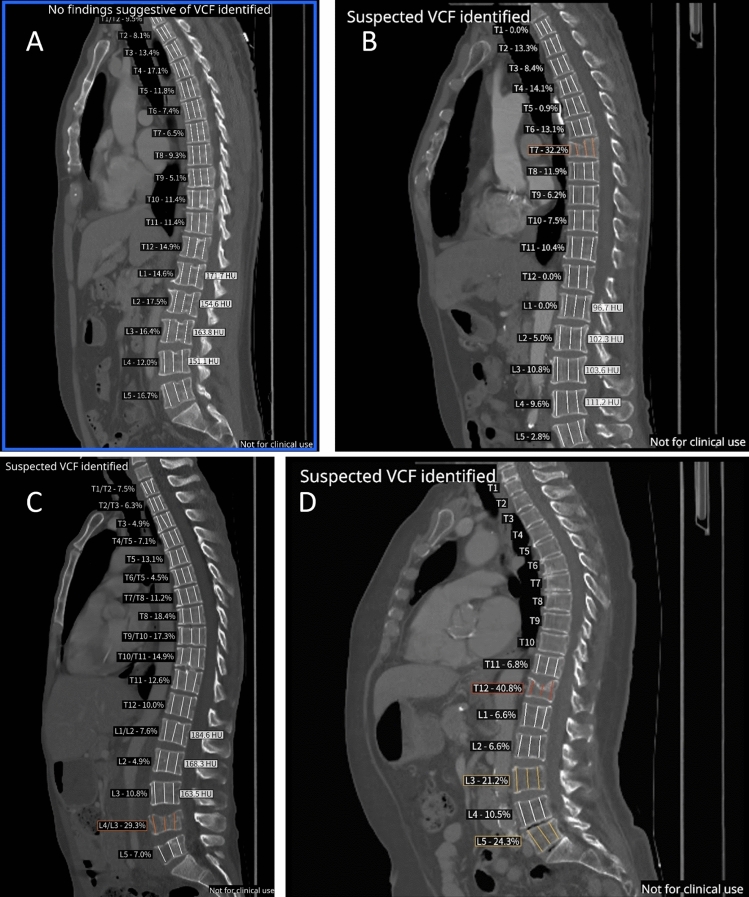 Figure 2
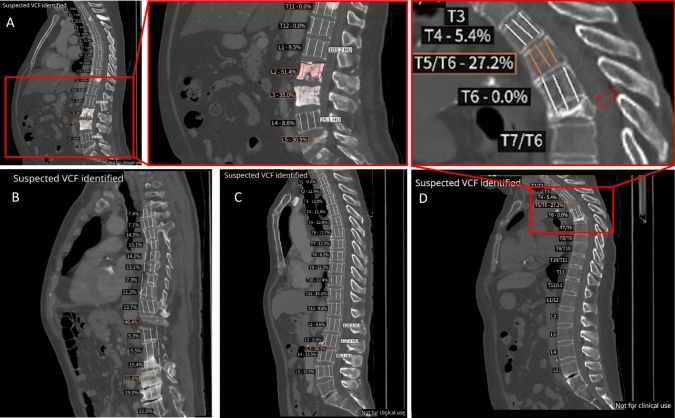 Figure 3
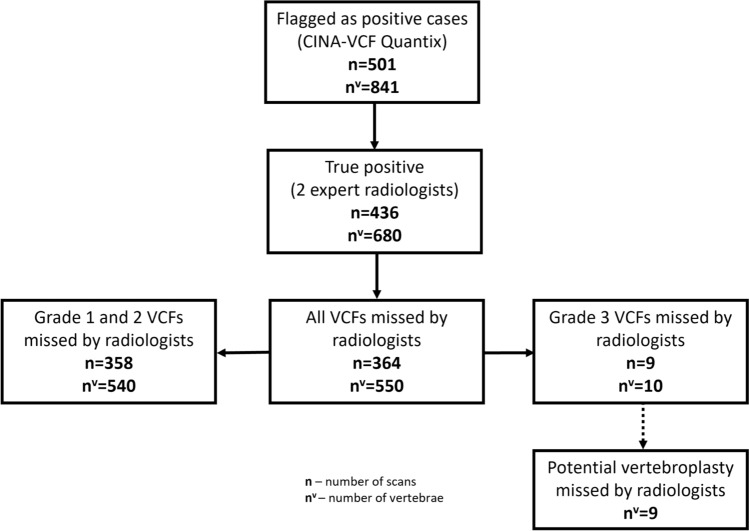 Figure 4
Peer Reviews
No public reviews on file for this paper yet. If you reviewed it on a platform where reviews are public (OpenReview, ICLR, NeurIPS, ICML), you can paste yours below so the community can read it here.
Videos
No videos yet. Explain this paper in a talk, walkthrough, or lecture? Add one.
Taxonomy
TopicsPelvic and Acetabular Injuries · Medical Imaging and Analysis · Bone and Joint Diseases