Arterial wall enhancement indicates higher reperfusion rates in non-ruptured aneurysms after endovascular treatment with stent-assisted coiling
Valentin Ladenhauf, Malik Galijasevic, Milovan Regodic, Verena Rass, Christian Freyschlag, Johannes Deeg, Leonhard Gruber, Michael Swoboda, Jakub Bochnicka, Stephanie Mangesius, Lukas Lenhart, Elke Ruth Gizewski, Astrid Ellen Grams

TL;DR
This study shows that arterial wall enhancement after stent-assisted coiling treatment for brain aneurysms is linked to higher reperfusion rates, suggesting it could be an early sign of treatment instability.
Contribution
The study identifies arterial wall enhancement as a potential early imaging biomarker for reperfusion risk in stent-assisted coiling-treated aneurysms.
Findings
78.3% of patients with AWE showed reperfusion, compared to 42.9% without AWE.
Reperfusion rates were significantly higher in patients with AWE (p = 0.0139).
The association remained significant after propensity score matching (p = 0.0456).
Abstract
There are differing results in recent literature concerning aneurysmal wall enhancement (AWE) after endovascular treatment (ET) of intracranial aneurysms (IAs). The aim of this retrospective study is to investigate if the presence of AWE of unruptured treated IAs via stent-assisted coiling (SAC) is associated with higher reperfusion rates. The clinical courses of 58 patients with IAs after ET via SAC were examined over the timespan of up to 5 years, assessing for AWE in T1 SPACE FS and T1 SE FS blood suppression sequences after contrast administration, events of reperfusion and need for retreatment. 58 patients were included (23 with AWE, 35 without). 18 of 23 patients (78.3%) with AWE showed reperfusion after treatment, compared to 15 of 35 patients (42.9%) without AWE. Reperfusion rates were significantly higher in patients with AWE, compared to those without AWE (p = 0.0139) also…
Genes, proteins, chemicals, diseases, species, mutations and cell lines named across the full text — each resolved to its canonical identifier and authoritative record.
Click any figure to enlarge with its caption.
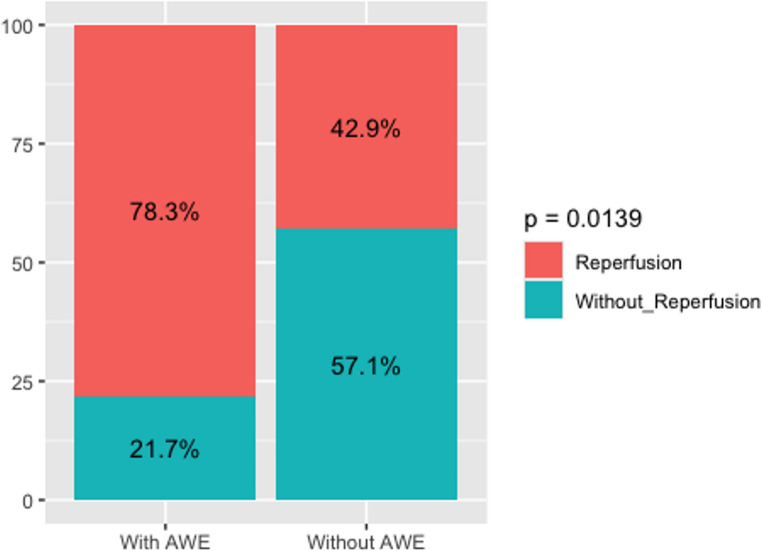 Figure 1
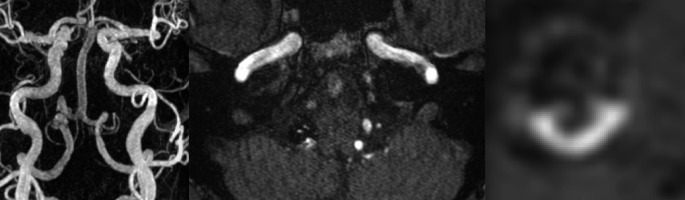 Figure 2
 Figure 3
 Figure 4
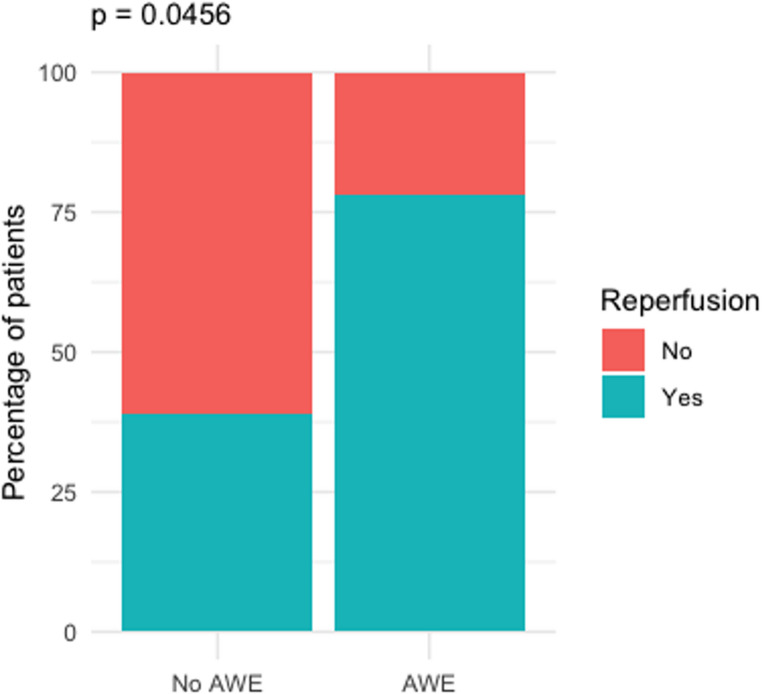 Figure 5
Peer Reviews
No public reviews on file for this paper yet. If you reviewed it on a platform where reviews are public (OpenReview, ICLR, NeurIPS, ICML), you can paste yours below so the community can read it here.
Videos
No videos yet. Explain this paper in a talk, walkthrough, or lecture? Add one.
Taxonomy
TopicsIntracranial Aneurysms: Treatment and Complications · Cerebrovascular and Carotid Artery Diseases · Moyamoya disease diagnosis and treatment