Transgene-free genome editing in citrus and poplar trees using positive and negative selection markers
Dhiôvanna Corrêia Rocha, Miracle Osazee Omoregbee, Danyel Fernandes Contiliani, Rushil Mandlik, Gen Li, Juliet Mascoveto, Gary Coleman, James N. Culver, Daniel Rodriguez Leal, Alessandra Alves de Souza, Yiping Qi

TL;DR
Researchers developed a method to edit the genomes of citrus and poplar trees without leaving transgenes, using a base editor and selection markers.
Contribution
A novel co-editing strategy using a cytosine base editor and selection markers enables transgene-free genome editing in perennial plants.
Findings
The CBE-based co-editing strategy successfully edited citrus and poplar plants, though with low efficiency for biallelic edits.
The addition of TLS mobile RNA unexpectedly reduced genome editing efficiency in both transgenic and non-transgenic plants.
A small fraction of transgene-free plants survived selection, demonstrating a promising approach for transgene-free genome editing.
Abstract
Transgene-free genome editing of the gene of interest in citrus and poplar has been achieved by co-editing the ALS gene via transient transgene expression of an efficient cytosine base editor. CRISPR-Cas genome editing systems have been widely used in plants. However, such genome-edited plants are nearly always transgenic in the first generation when Agrobacterium-mediated transformation is used. Transgene-free genome-edited plants are valuable for genetic analysis and breeding as well as simplifying regulatory approval. It can be challenging to generate transgene-free genome-edited plants in vegetatively propagated or perennial plants. To advance transgene-free genome editing in citrus and poplar, we investigated a co-editing strategy using an efficient cytosine base editor (CBE) to edit the ALS gene to confer herbicide resistance combined with transient transgene expression and…
Genes, proteins, chemicals, diseases, species, mutations and cell lines named across the full text — each resolved to its canonical identifier and authoritative record.
Click any figure to enlarge with its caption.
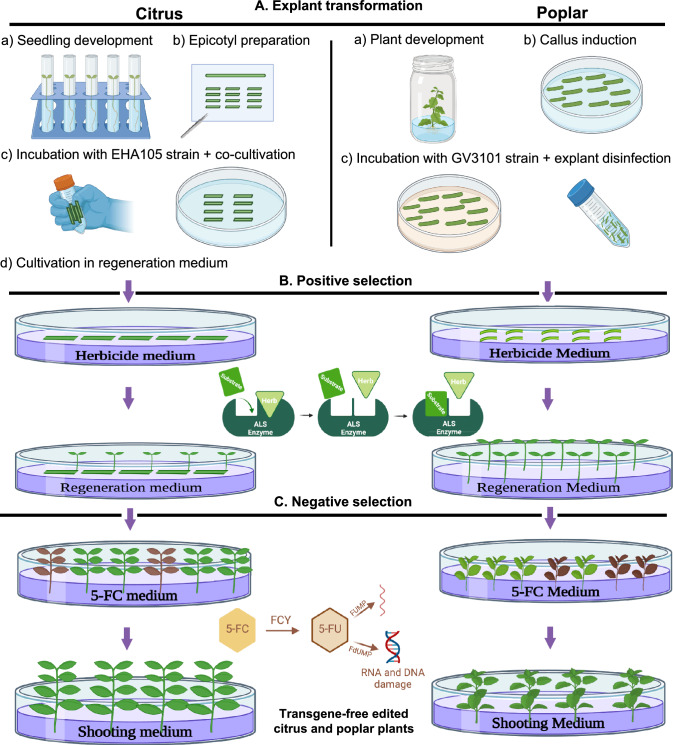 Figure 1
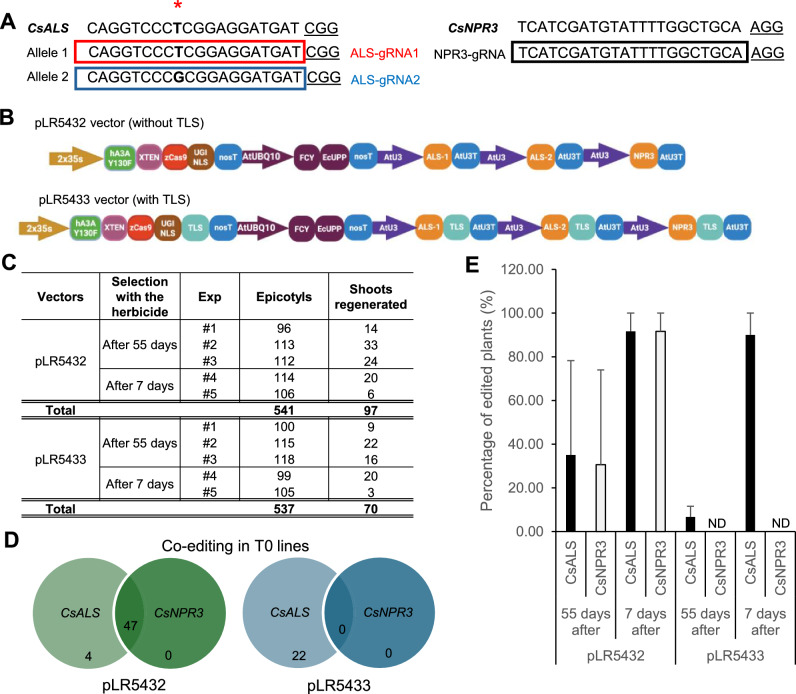 Figure 2
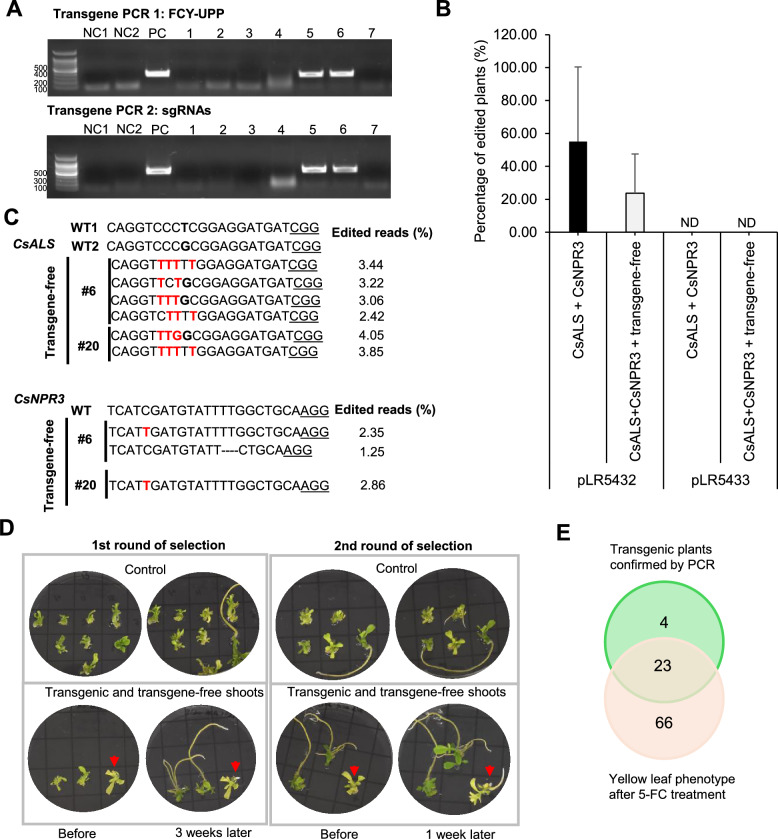 Figure 3
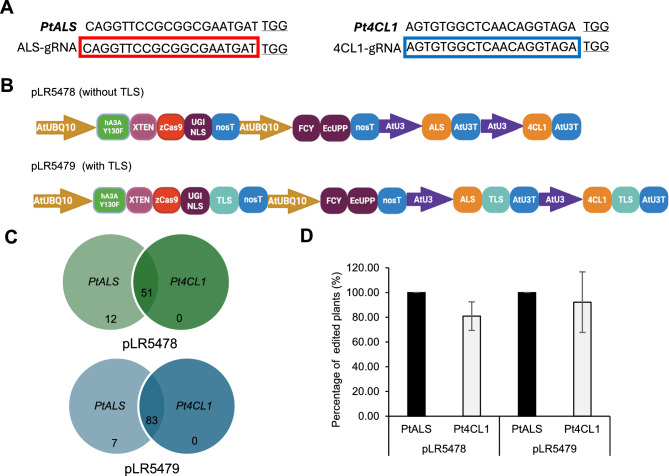 Figure 4
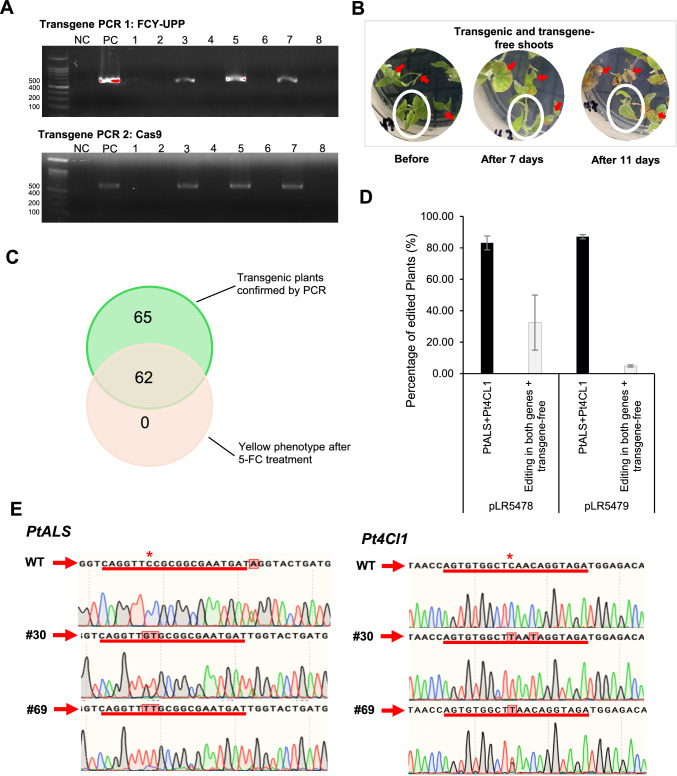 Figure 5
Peer Reviews
No public reviews on file for this paper yet. If you reviewed it on a platform where reviews are public (OpenReview, ICLR, NeurIPS, ICML), you can paste yours below so the community can read it here.
Videos
No videos yet. Explain this paper in a talk, walkthrough, or lecture? Add one.
Taxonomy
TopicsCRISPR and Genetic Engineering · Insect symbiosis and bacterial influences · Plant Virus Research Studies