Colorectal and emergency surgical patients in the literature supporting EHS and AHS guidelines on abdominal wound closure: a granular analysis
Vittoria Bellato, Sue Blackwell, Muhammed Elhadi, Thomas Grove, Lisa Massey, Barbara Vieira, Andreas Denys, Francesco Pata, Gabrielle H. van Ramshorst, Thomas Pinkney, Thomas Pinkney, Erman Aytac, Pamela Buchwald, Niki Christou, Dragomir Dardanov, Alaa El-Hussuna, Nir Horesh

TL;DR
This study evaluates the quality of evidence supporting hernia surgery guidelines for colorectal and emergency surgery patients, finding significant gaps in data quality and applicability.
Contribution
The paper provides a detailed analysis of the evidence base for hernia guidelines in colorectal and emergency surgery populations, highlighting critical limitations and the need for better research.
Findings
Most studies supporting hernia guidelines have low or critically low quality, with significant risk of bias.
Recommendations for colorectal patients are more supported than for emergency patients, who are largely excluded from key evidence.
The study emphasizes the lack of patient-centered outcomes and calls for targeted research in these populations.
Abstract
To critically appraise the evidence supporting the European and American Hernia Society (EHS/AHS) guidelines on abdominal wall closure in colorectal and emergency surgery patients, we conducted a granular analysis focused on the representation and quality of available data. References that addressed key questions (KQ) and recommendations in the original guidelines were screened and included if colorectal/emergency surgery was reported. Data extraction was performed with a standardised form and authors were contacted for missing data. Quality and risk of bias were assessed independently by two reviewers. Out of 33 studies included: 15 systematic reviews and one literature review were rated low or critically low (AMSTAR 2); 12 randomised controlled trials had moderate to high risk of bias (Cochrane RoB-2 tool); five observational studies were of low to very low quality (GRADE) with…
Genes, proteins, chemicals, diseases, species, mutations and cell lines named across the full text — each resolved to its canonical identifier and authoritative record.
Click any figure to enlarge with its caption.
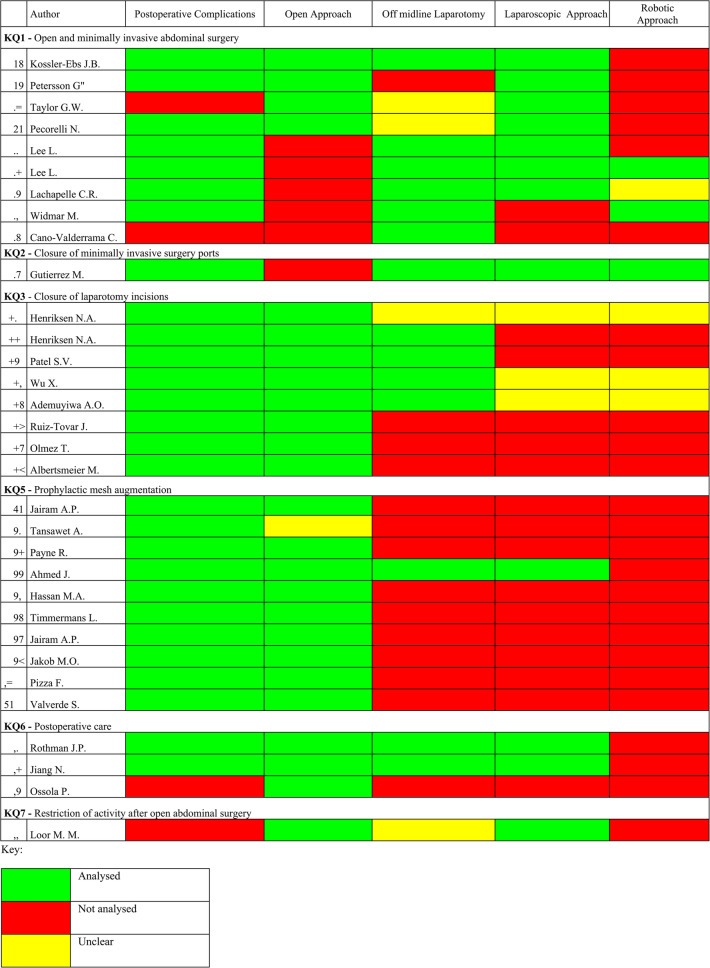 Figure 1
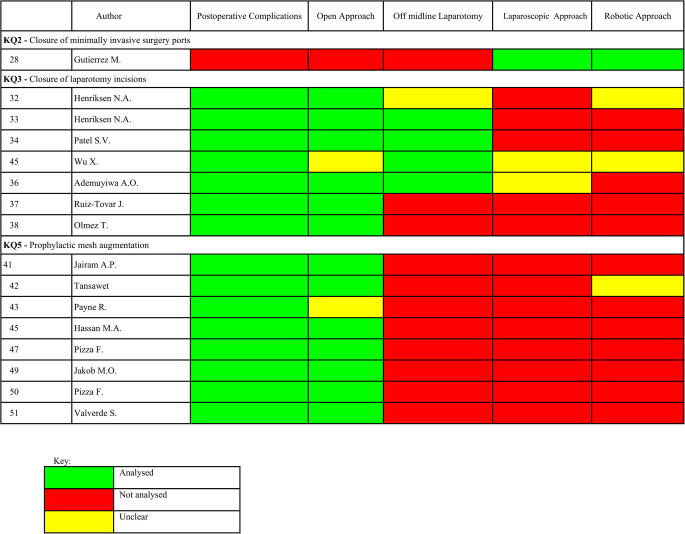 Figure 2
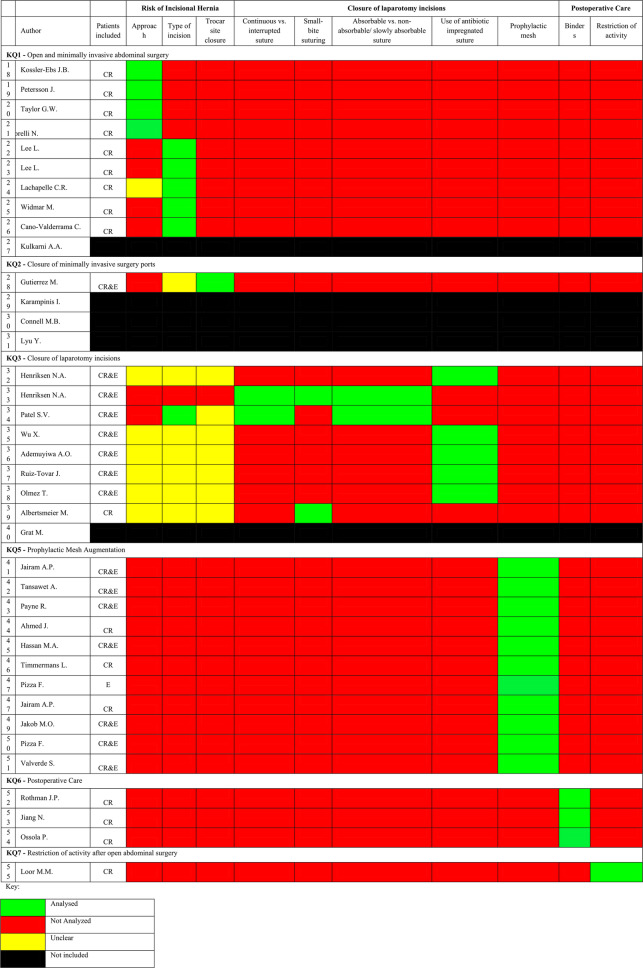 Figure 3
Peer Reviews
No public reviews on file for this paper yet. If you reviewed it on a platform where reviews are public (OpenReview, ICLR, NeurIPS, ICML), you can paste yours below so the community can read it here.
Videos
No videos yet. Explain this paper in a talk, walkthrough, or lecture? Add one.
Taxonomy
TopicsHernia repair and management · Pelvic and Acetabular Injuries · Appendicitis Diagnosis and Management