Neuromuscular blockade and their monitoring in the intensive care unit: a multicenter observational prospective study
Bertrand Hermann, Guillaume Decormeille, Tiphanie Gobé, Nathanaël Mangeard, Adel Maamar, Saria Sayadi, Bénédicte Pernod, Nadine Robquin, Jean-Pierre Ponthus, Sophie Le Potier, Pierre Bouju, Angélique Balabanian, Antoine Frouin, Sébastien Moschietto, Gwenaelle Jacq

TL;DR
This study examines how neuromuscular blocking agents are used in ICU patients and finds that prolonged use is linked to complications and longer ventilation.
Contribution
The study provides real-world data on neuromuscular blocking agents use, dosing, and outcomes in ICU patients.
Findings
10.3% of mechanically ventilated ICU patients received continuous neuromuscular blocking agents.
Prolonged infusion (>48 hours) was linked to lower weaning success and higher ventilator-associated pneumonia rates.
Neuromuscular blocking agents monitoring was associated with both increased ICU-acquired weakness and reduced ICU mortality.
Abstract
Neuromuscular blocking agents may improve outcomes in specific conditions, including the early phase of acute respiratory distress syndrome. However, neuromuscular blocking agents are associated with side effects and uncertainty persists regarding their optimal dosing and efficacy. Our objective was to describe the use of neuromuscular blocking agents in a real-world setting. We conducted a multicenter, prospective observational study, including adult patients who underwent invasive mechanical ventilation and received a continuous infusion of neuromuscular blocking agents. Patients were recruited across 19 intensive care units in France and Belgium. From November 16, 2019, to February 19, 2020, a total of 2248 patients were hospitalized and mechanically ventilated in 19 participating ICUs. Of these, 270 (12%) patients received at least one dose of neuromuscular blocking agents, and…
Genes, proteins, chemicals, diseases, species, mutations and cell lines named across the full text — each resolved to its canonical identifier and authoritative record.
Click any figure to enlarge with its caption.
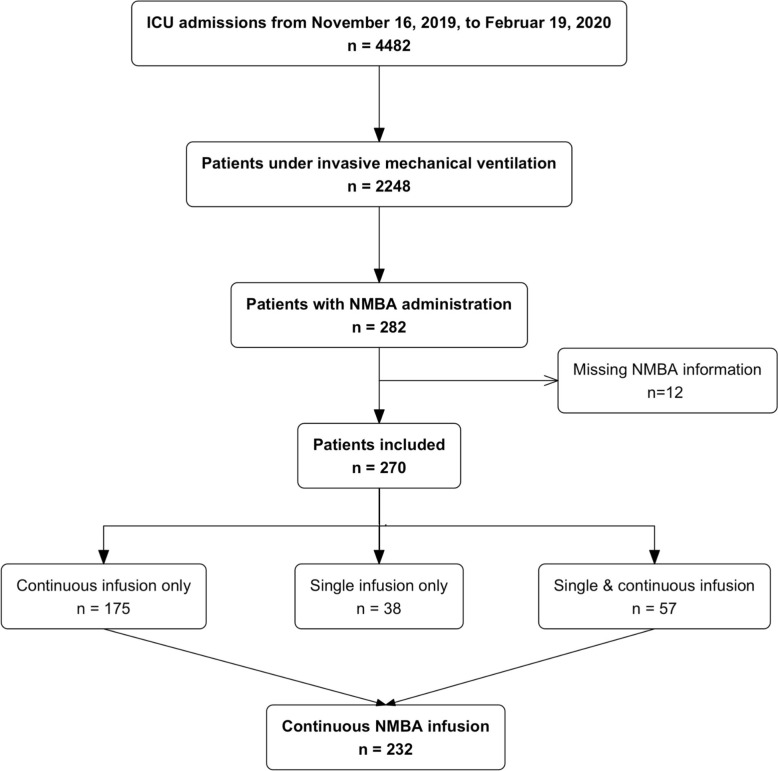 Figure 1
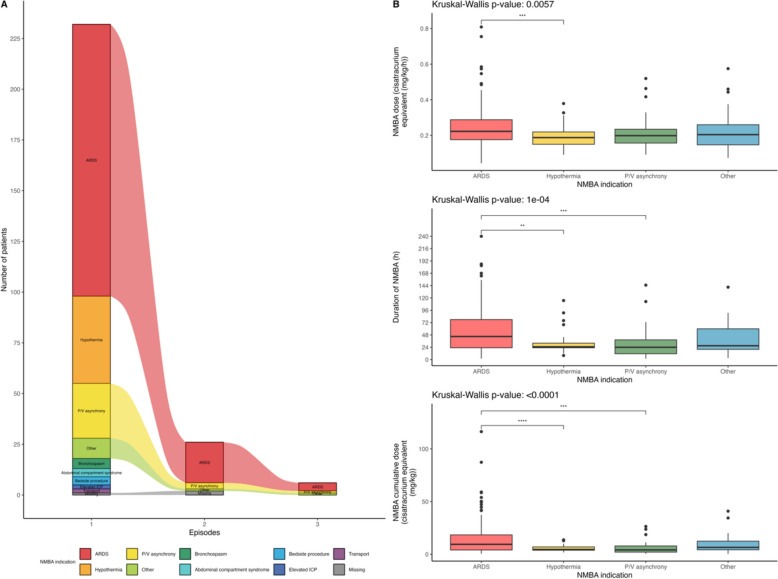 Figure 2
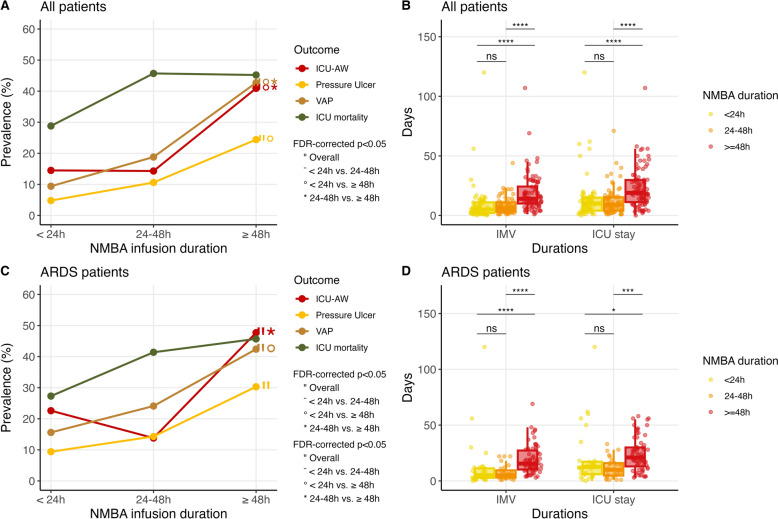 Figure 3
Peer Reviews
No public reviews on file for this paper yet. If you reviewed it on a platform where reviews are public (OpenReview, ICLR, NeurIPS, ICML), you can paste yours below so the community can read it here.
Videos
No videos yet. Explain this paper in a talk, walkthrough, or lecture? Add one.
Taxonomy
TopicsIntensive Care Unit Cognitive Disorders · Respiratory Support and Mechanisms · Anesthesia and Sedative Agents