In silico nephroprotective evaluation of microbial biotransformed metabolites from Aframomum melegueta
Rabab Mahrous Abdou, Riham Salah El-Dine, Reham Samir, Nebal Darwish El-Tanbouly, Aly Mohamed El-Sayed

TL;DR
This study explores how microbes transform natural compounds from Aframomum melegueta into new forms that may protect the kidneys by interacting with a key protein.
Contribution
The paper introduces a novel use of microbial biotransformation to generate nephroprotective metabolites and evaluates their binding affinity to AMPK for the first time.
Findings
Microbial transformation produced five new metabolites with potential kidney-protective properties.
M1 showed the highest binding affinity to AMPK, indicating strong therapeutic potential.
Biotransformed metabolites demonstrated better or comparable activity to their natural precursors.
Abstract
Microbial biotransformation of three bioactive phenolic constituents from Aframomum melegueta K. schum, namely 6-gingerol, 6-paradol and 6-shogaol, was performed by Bacillus subtilis 168, Pseudomonas aeruginosa PO1A and Candida albicans ATCC10231. Structures of the isolated compounds were determined using LC/MS analyses. To assess and compare their potential nephroprotective effects, the parent compounds and their biotransformation metabolites were subjected to molecular docking studies targeting AMP-activated protein kinase (AMPK) for the first time. During microbial biotransformation, a series of reactions, primarily hydroxylation and reduction, were observed, resulting in the identification of five distinct metabolites. LC/MS analysis of the fermentation medium revealed that Bacillus subtilis 168 converted 6-gingerol into 6-gingerdiol (M1) and hydroxylated 6-gingerol (M2), while…
Genes, proteins, chemicals, diseases, species, mutations and cell lines named across the full text — each resolved to its canonical identifier and authoritative record.
Click any figure to enlarge with its caption.
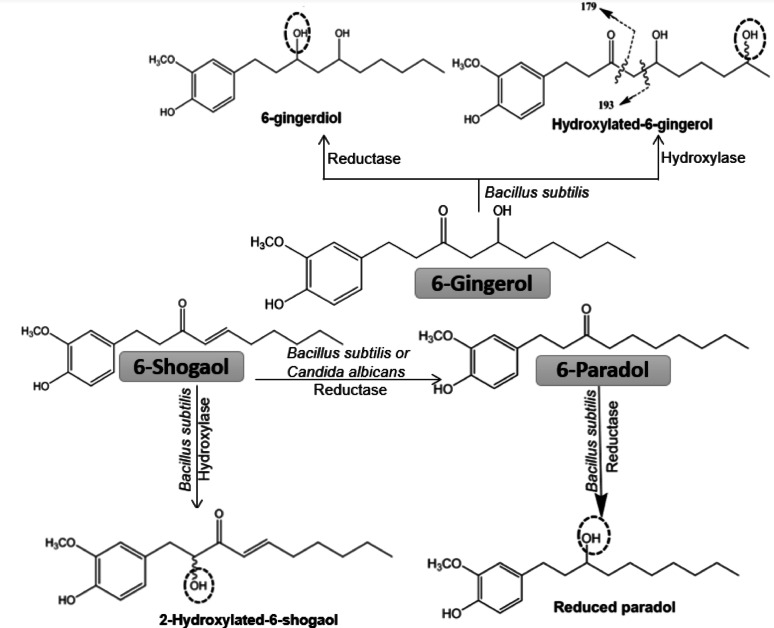 Figure 1
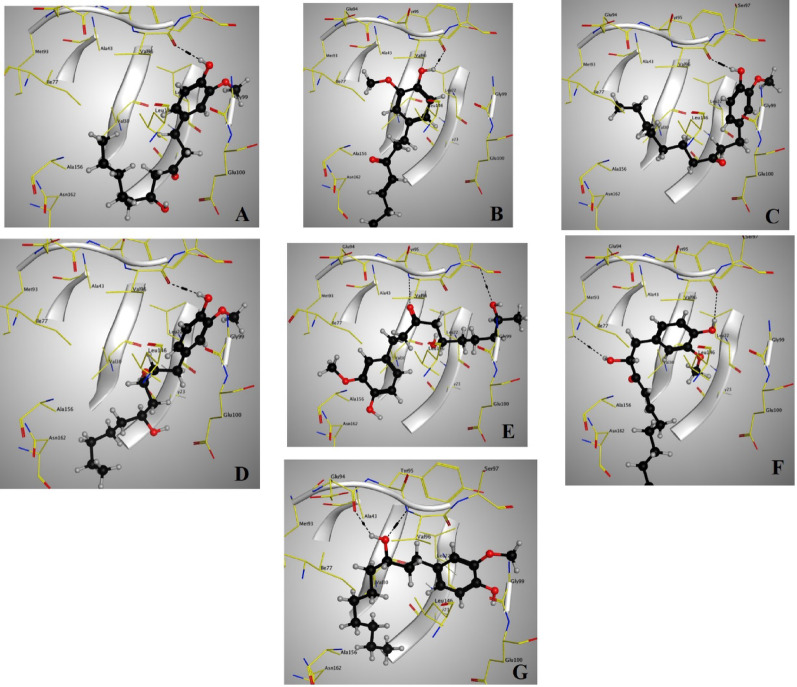 Figure 2
Peer Reviews
No public reviews on file for this paper yet. If you reviewed it on a platform where reviews are public (OpenReview, ICLR, NeurIPS, ICML), you can paste yours below so the community can read it here.
Videos
No videos yet. Explain this paper in a talk, walkthrough, or lecture? Add one.
Taxonomy
TopicsGinger and Zingiberaceae research · Cambodian History and Society · Piperaceae Chemical and Biological Studies