Computational analysis of two novel deep brain stimulation pulsing patterns on a thalamocortical network model of Parkinson’s disease
AmirAli Farokhniaee, Siavash Amiri

TL;DR
This study explores two new pulsing patterns for deep brain stimulation that may reduce Parkinson's symptoms while improving device battery life.
Contribution
The paper introduces and evaluates two novel DBS pulsing strategies that use fewer stimuli than traditional methods.
Findings
Both novel pulsing patterns significantly reduced exaggerated beta power in the motor cortex.
The new methods also significantly reduced network synchronization.
The effects were comparable to 130 Hz conventional DBS without adverse outcomes.
Abstract
Deep brain stimulation (DBS) at high frequencies has revolutionized efforts to alleviate Parkinson’s disease symptoms for approximately 30 years. Since then, there has been vast investigation into the mechanisms of action of DBS. Recently, synaptic suppression was found to play a pivotal role in the fundamental mechanisms underlying DBS. Based on this understanding, researchers introduced two novel DBS pulsing strategies that use a minimal number of stimuli. In contrast to conventional DBS (cDBS) pulsing, which employs continuous high-frequency pulses (>100 Hz), the two novel methods incorporate changes in pulsing frequency and on/off pulsing periods. In this computational study, we investigated the network effects of these two suggested patterns using an updated version of a biophysically realistic thalamocortical network model of DBS. Both suggested pulsing patterns significantly…
Genes, proteins, chemicals, diseases, species, mutations and cell lines named across the full text — each resolved to its canonical identifier and authoritative record.
Click any figure to enlarge with its caption.
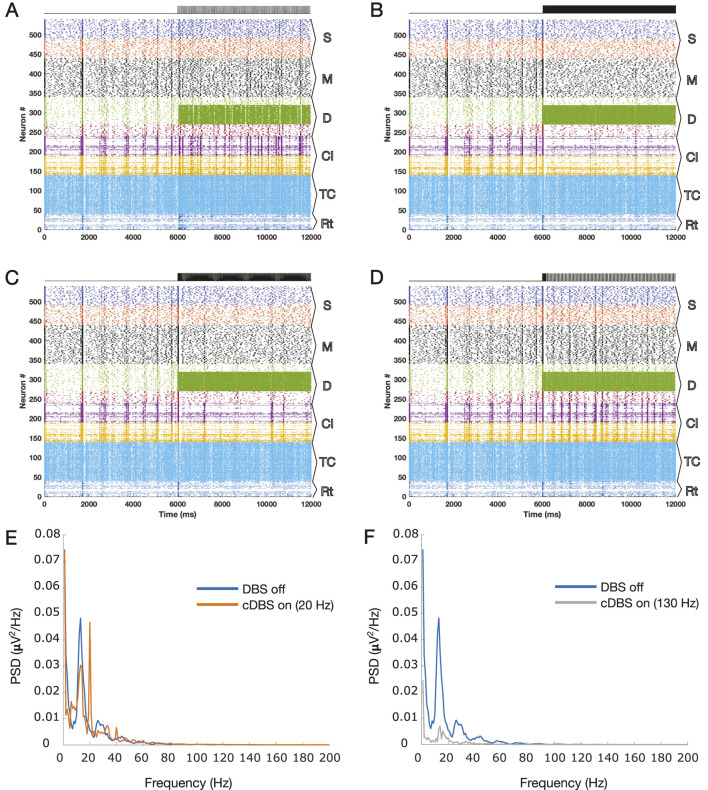 Figure 1
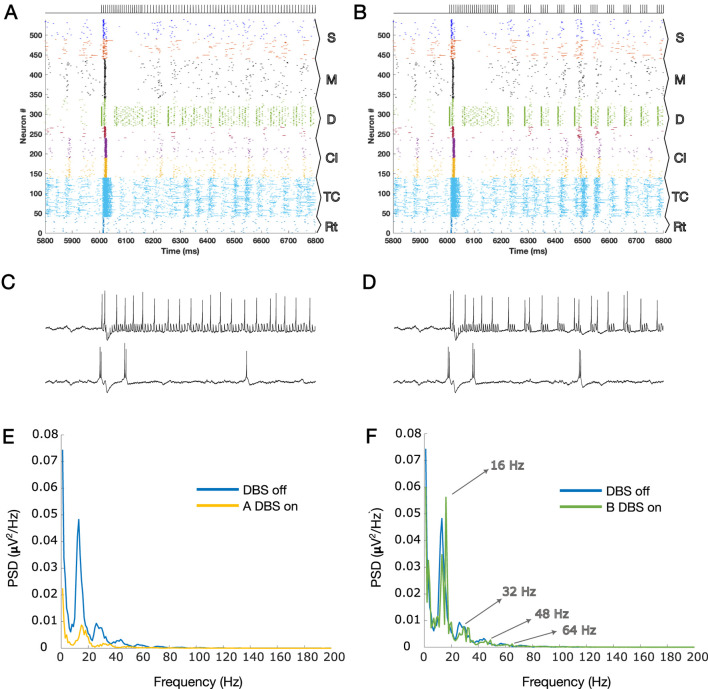 Figure 2
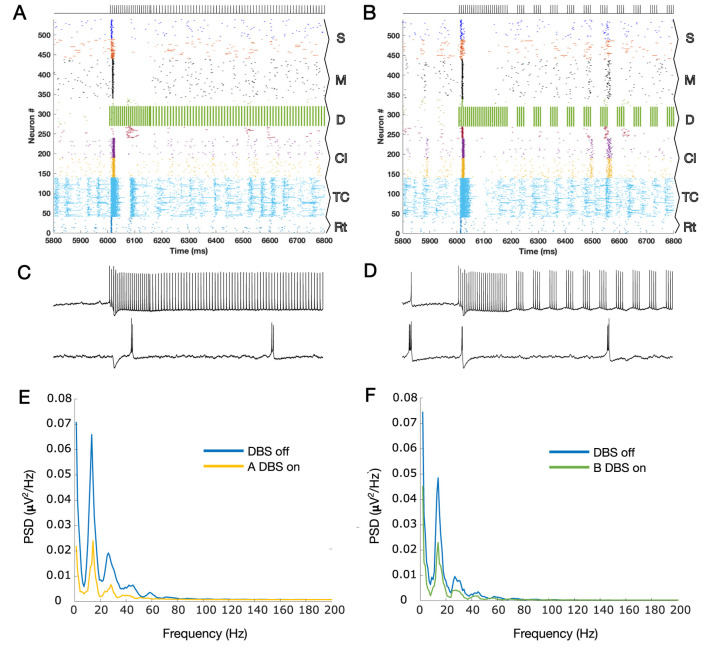 Figure 3
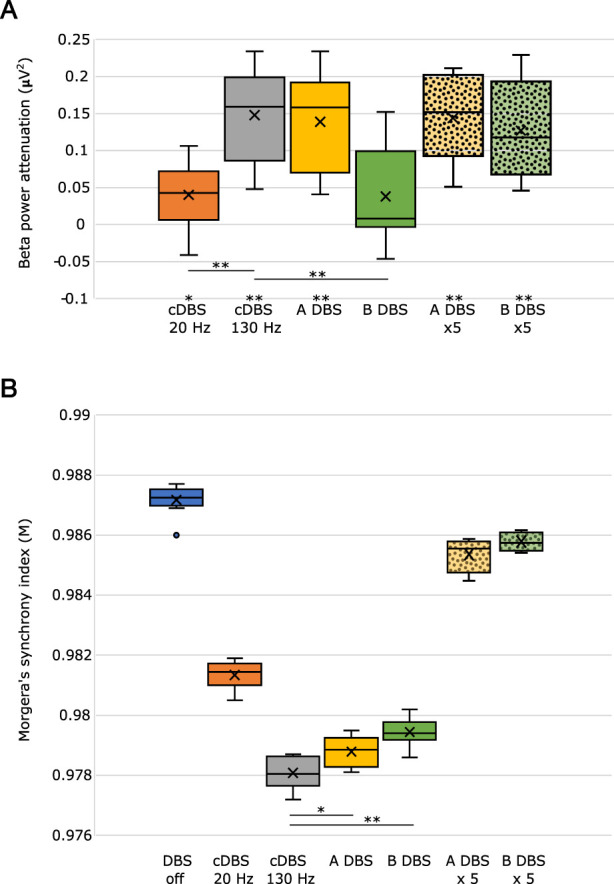 Figure 4
Peer Reviews
No public reviews on file for this paper yet. If you reviewed it on a platform where reviews are public (OpenReview, ICLR, NeurIPS, ICML), you can paste yours below so the community can read it here.
Videos
No videos yet. Explain this paper in a talk, walkthrough, or lecture? Add one.
Taxonomy
TopicsNeurological disorders and treatments · Neuroscience and Neural Engineering · EEG and Brain-Computer Interfaces