Emergence of high-risk ST595 and ST640 clones of carbapenem-resistant Serratia marcescens: insights from genomic and virulence profiling during a nosocomial epidemic
Yan Zhang, Tong Cao, Jie Zheng, Lingning Meng, Shuo Gao, Han Shen, Wanqing Zhou, Xiaoli Cao

TL;DR
This study identifies two dangerous clones of antibiotic-resistant Serratia marcescens that spread in a hospital and have traits that help them survive and evade the immune system.
Contribution
First integrated genomic and phenotypic characterization of CRSM during a documented hospital outbreak, identifying high-risk clones with distinct virulence signatures.
Findings
Two major epidemic clones, ST595 and ST640, were identified during the outbreak.
Certain isolates showed accelerated growth, strong biofilm formation, and serum resistance, traits that may enhance persistence and immune evasion.
CRSM isolates carried conserved virulence genes like shlA, hlyA, and genes related to motility and iron acquisition.
Abstract
Carbapenem-resistant Serratia marcescens (CRSM) poses a significant threat in hospital settings due to its potential for persistence and transmission. This study aims to elucidate the virulence landscape of carbapenem-resistant Serratia marcescens (CRSM) during a hospital outbreak and to identify high-risk clones with enhanced persistence and transmission potential. A total of 52 CRSM clinical isolates collected during a nosocomial outbreak were subjected to whole-genome sequencing (WGS) for comprehensive analysis of virulence factor (VF) profiles, sequence types (STs), and phylogenetic relationships. Based on genomic clustering, representative isolates were selected for in vitro phenotypic assays, including bacterial growth kinetics, biofilm formation, and serum bactericidal activity. All the CRSM carried blaKPC-2 (52/52), other carbapenemases detected included blaNDM-1 (n = 3),…
Genes, proteins, chemicals, diseases, species, mutations and cell lines named across the full text — each resolved to its canonical identifier and authoritative record.
Click any figure to enlarge with its caption.
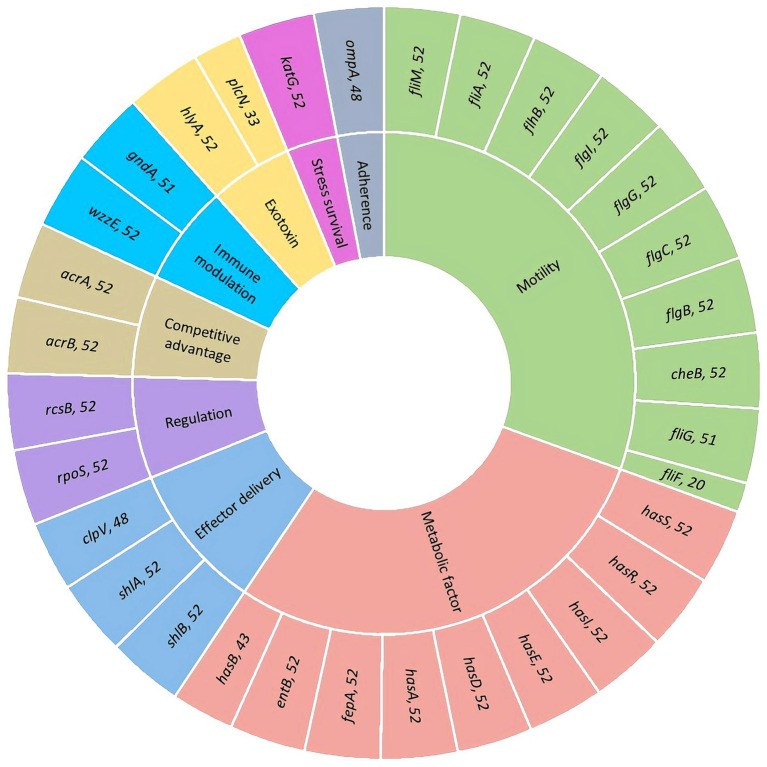 Figure 1
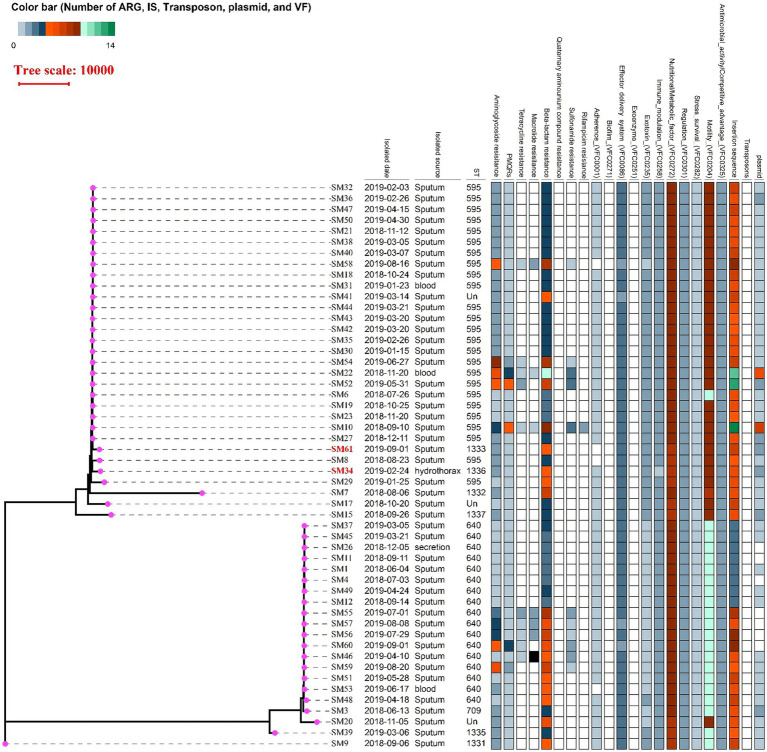 Figure 2
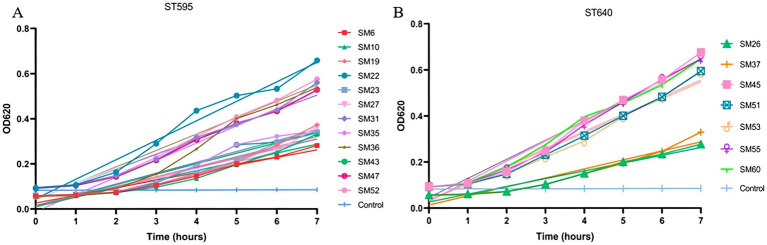 Figure 3
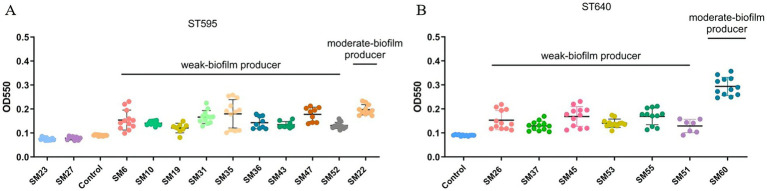 Figure 4
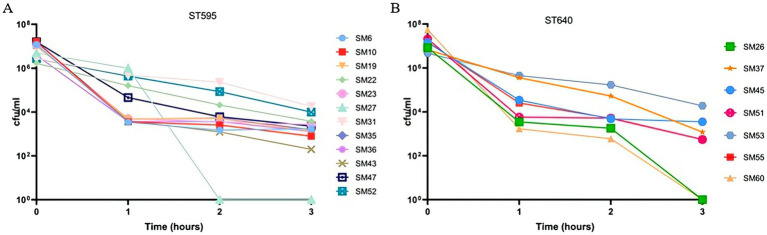 Figure 5
Peer Reviews
No public reviews on file for this paper yet. If you reviewed it on a platform where reviews are public (OpenReview, ICLR, NeurIPS, ICML), you can paste yours below so the community can read it here.
Videos
No videos yet. Explain this paper in a talk, walkthrough, or lecture? Add one.
Taxonomy
TopicsAntibiotic Resistance in Bacteria · Bacterial Identification and Susceptibility Testing · Vibrio bacteria research studies