Efficacy in the reduction ratios of middle molecules with the use of medium cut-off dialyzers and reduced dialysate flows: a cohort study
Juan C. Castillo, Cesar Doria, Javier Cely, David Camargo, Viviana Orozco, Daniel Ducuara, Jasmin Vesga, Mauricio Sanabria, Angela Rivera, Bengt Lindholm, Peter Rutherford

TL;DR
This study shows that a new dialysis method called HDx is better at removing harmful middle-sized molecules from the blood than traditional methods, with fewer side effects.
Contribution
The study demonstrates that HDx using Theranova dialyzers outperforms high-flux hemodialysis in removing medium-sized toxins at different dialysate flow rates.
Findings
HDx achieved greater removal of β2-microglobulin and free light chains compared to HF-HD at both dialysate flow rates.
HDx resulted in 25.9% fewer serious adverse events compared to HF-HD.
HDx with a dialysate flow rate of 400 mL/min was found to be an effective and sustainable treatment option.
Abstract
Expanded hemodialysis (HDx) enabled by Theranova increases the clearance of medium-sized molecules, improving clinical outcomes such as hospitalization and mortality. The objective of the study was to compare solute reduction ratios of medium-molecular-weight uremic toxins by HDx versus high-flux hemodialysis (HF-HD) with dialysate flow rates of 400 mL/min and 500 mL/min. In 287 prevalent adult dialysis patients (mean age 61 years, 67% were men, 42.5% had diabetic kidney disease, and 16.7% had urine output ≥250 mL/day), the solute reduction ratio of circulating middle molecules was determined at 4 weeks and 12 weeks of follow-up in two cohorts, one with HDx (n = 137) and one with HF-HD (n = 150). A mixed-effects repeated measures model was used to evaluate differences between treatment groups. The frequencies of serious adverse events and hospitalization were also calculated. The HDx…
Genes, proteins, chemicals, diseases, species, mutations and cell lines named across the full text — each resolved to its canonical identifier and authoritative record.
Click any figure to enlarge with its caption.
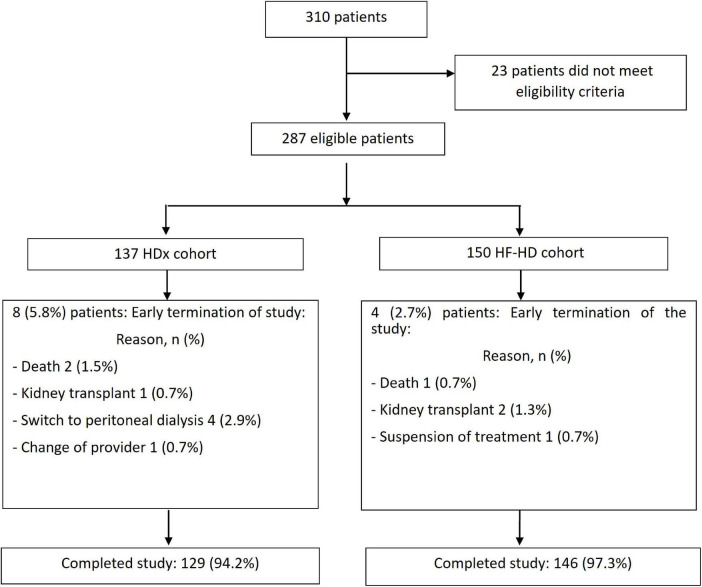 Figure 1
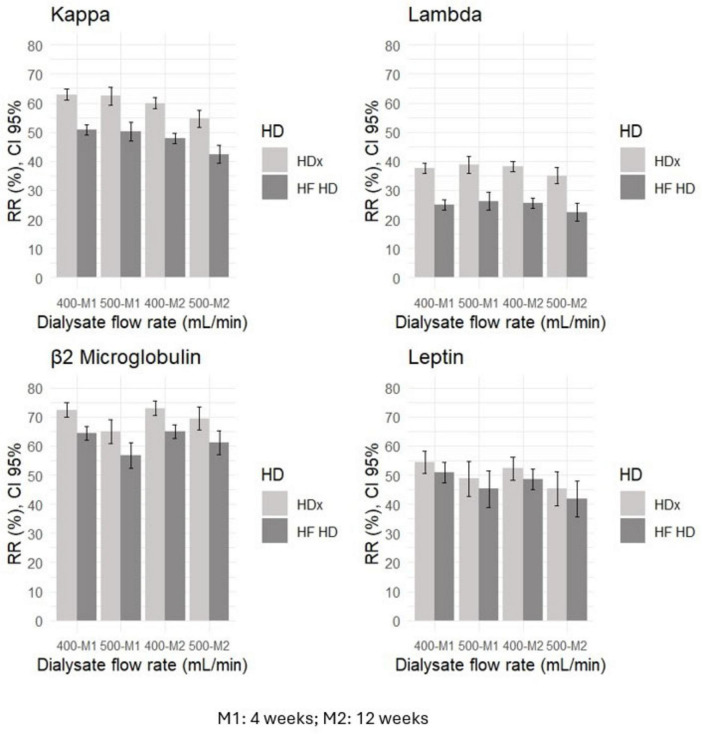 Figure 2
 Figure 3
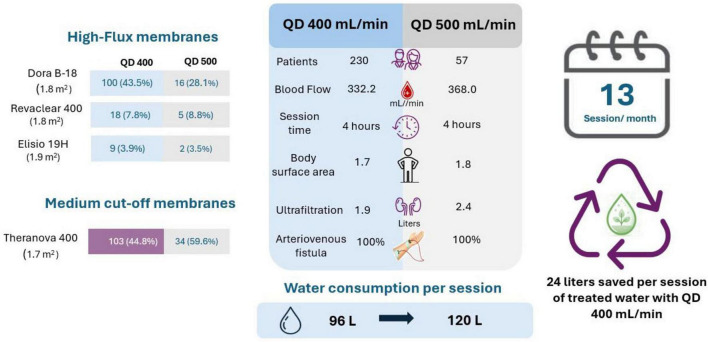 Figure 4
Peer Reviews
No public reviews on file for this paper yet. If you reviewed it on a platform where reviews are public (OpenReview, ICLR, NeurIPS, ICML), you can paste yours below so the community can read it here.
Videos
No videos yet. Explain this paper in a talk, walkthrough, or lecture? Add one.
Taxonomy
TopicsDialysis and Renal Disease Management · Erythropoietin and Anemia Treatment · Pharmacological Effects and Toxicity Studies