Is dexmedetomidine superior to non-dexmedetomidine sedatives (particularly propofol) for sedation in critically ill patients with septic shock? A systematic review and meta-analysis of randomized controlled trials
Xinjing Gao, Zhaoting Li, Zhibo Li, Yingzhi Qin, Jie Ren, Kai Zhang, Wenjiao Wang

TL;DR
Dexmedetomidine may be better than other sedatives for septic shock patients, but no clear difference was found between it and propofol.
Contribution
A systematic review and meta-analysis comparing dexmedetomidine with non-dexmedetomidine sedatives in septic shock patients.
Findings
Dexmedetomidine reduced 28-day mortality and inflammatory markers without increasing adverse effects.
No significant differences were found between dexmedetomidine and propofol for key clinical outcomes.
More high-quality trials are needed to confirm the effects of dexmedetomidine versus propofol.
Abstract
Dexmedetomidine (DEX) and propofol (PROP) are both recommended as first-line short-acting sedative-analgesic agents for sepsis patients. However, existing studies have reported inconsistent clinical outcomes potentially attributable to their distinct hemodynamic profiles. The aim of our study was to systematically evaluate the comparative clinical efficacy and safety of DEX vs. non-Dexmedetomidine sedatives (particularly Propofol) in patients with septic shock. The study protocol was prospectively registered on PROSPERO (CRD42024626139). Randomized controlled trials (RCTs) meeting eligibility criteria were systematically searched up to December 2024. Statistical analyses were performed using RevMan 5.4, and trial sequential analysis (TSA) was employed to determine the required sample size. 17 RCTs were enrolled with 1,422 patients. Compared with non-DEX group, DEX group presented…
Genes, proteins, chemicals, diseases, species, mutations and cell lines named across the full text — each resolved to its canonical identifier and authoritative record.
Click any figure to enlarge with its caption.
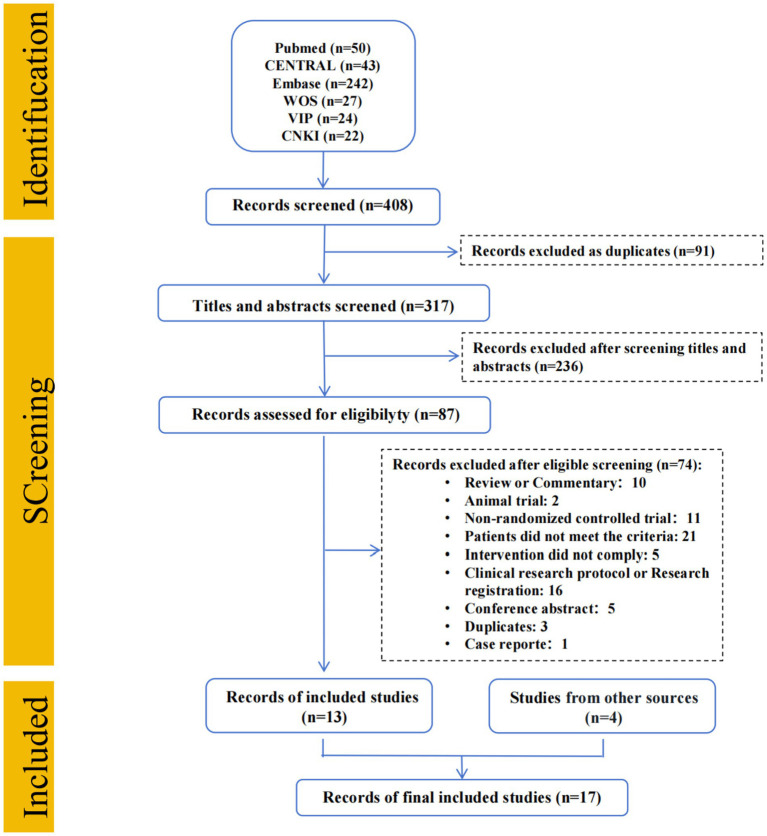 Figure 1
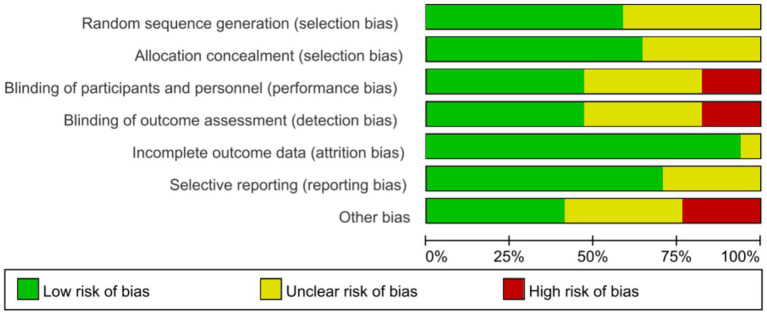 Figure 2
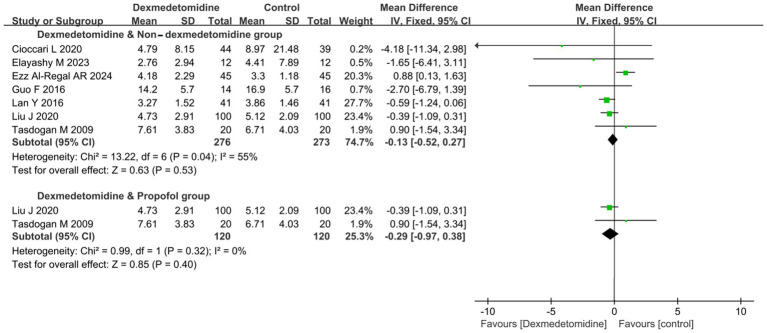 Figure 3
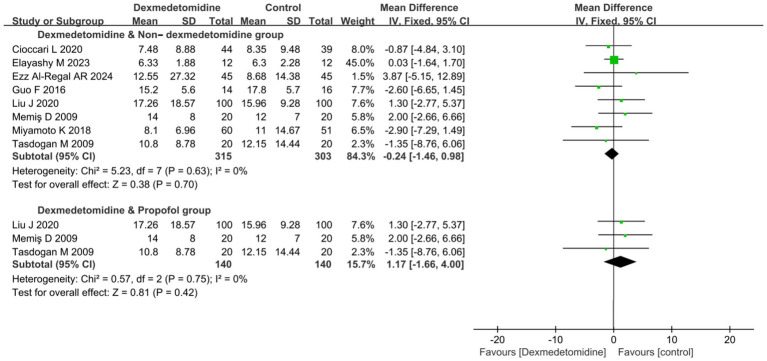 Figure 4
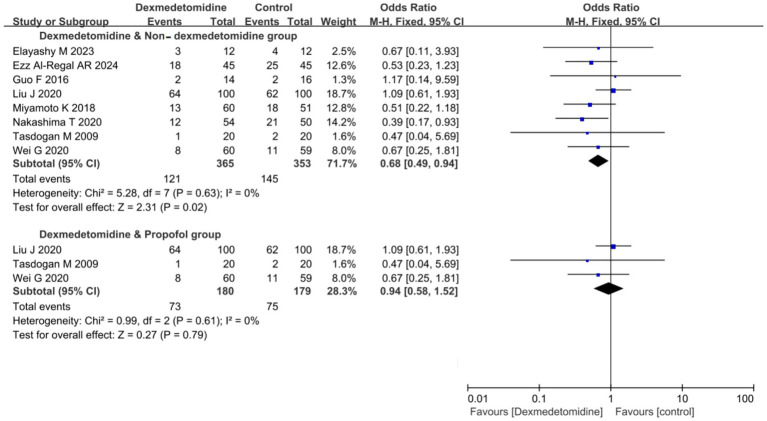 Figure 5
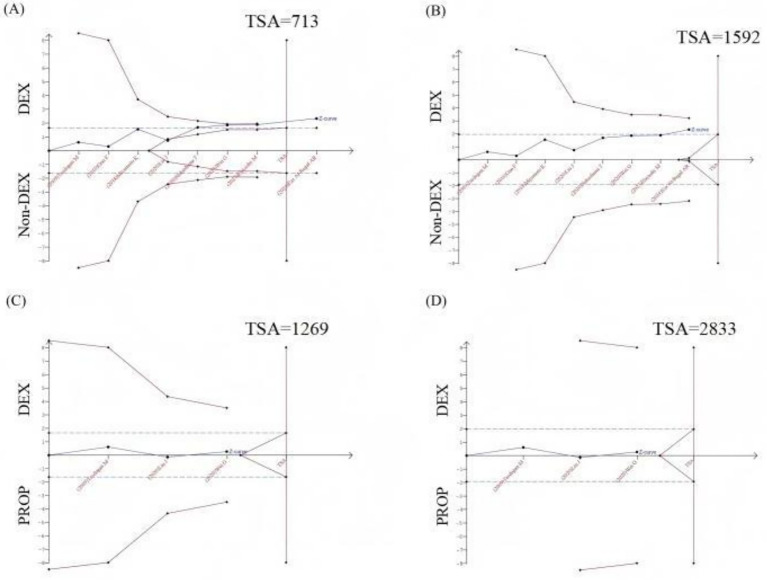 Figure 6
Peer Reviews
No public reviews on file for this paper yet. If you reviewed it on a platform where reviews are public (OpenReview, ICLR, NeurIPS, ICML), you can paste yours below so the community can read it here.
Videos
No videos yet. Explain this paper in a talk, walkthrough, or lecture? Add one.
Taxonomy
TopicsIntensive Care Unit Cognitive Disorders · Anesthesia and Sedative Agents · Anesthesia and Neurotoxicity Research