The spiny relationship between parallel fibers, climbing fibers, and Purkinje cells
Stefano Masoli, Martina Francesca Rizza, Francesco Moccia, Egidio D’Angelo

TL;DR
This review explores the complex structure and function of spines on Purkinje cells in the cerebellum, focusing on their unique properties and roles in synaptic communication.
Contribution
The paper provides a comprehensive review of recent findings on Purkinje cell spines, proposing a revised understanding of their number and functional diversity.
Findings
Purkinje cell spines require structural proteins from parallel and climbing fibers for stabilization.
Some spines are double-headed, enhancing Purkinje cell responses to parallel fiber stimulation.
Glial cells modulate spine activity following learning or tasks.
Abstract
Cerebellar Purkinje cells are one of the most complex neurons in the central nervous system and are well known for their extensive dendritic tree dotted by dendritic spines. PC spines receive excitatory synapses from parallel and climbing fibers and, although their morphological properties are comparable to those of other neuronal types, they show distinct extracellular and intracellular regulatory properties. Purkinje cell spine protrusion and helical patterning do not require nearby axons, as e.g., in pyramidal cells. Instead, Purkinje cell spines require structural proteins located on parallel and climbing fibers for their stabilisation and maintenance. The total spine number is influenced by scaffold proteins and eventually reflects the total dendritic length and local spine density. Purkinje cell spines were supposed to range up to over 105 in rodents and 106 in humans, but recent…
Genes, proteins, chemicals, diseases, species, mutations and cell lines named across the full text — each resolved to its canonical identifier and authoritative record.
Click any figure to enlarge with its caption.
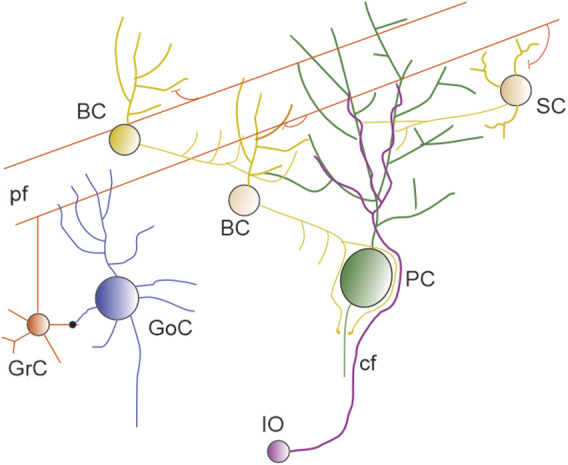 Figure 1
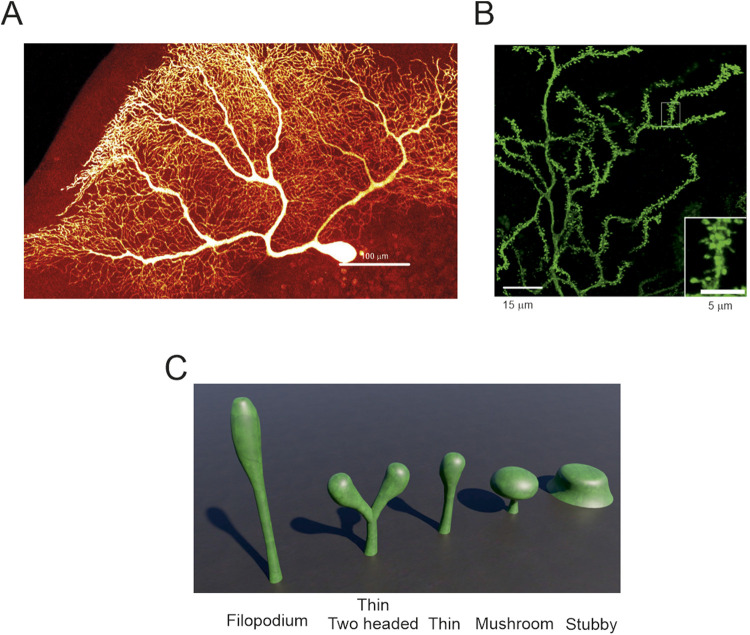 Figure 2
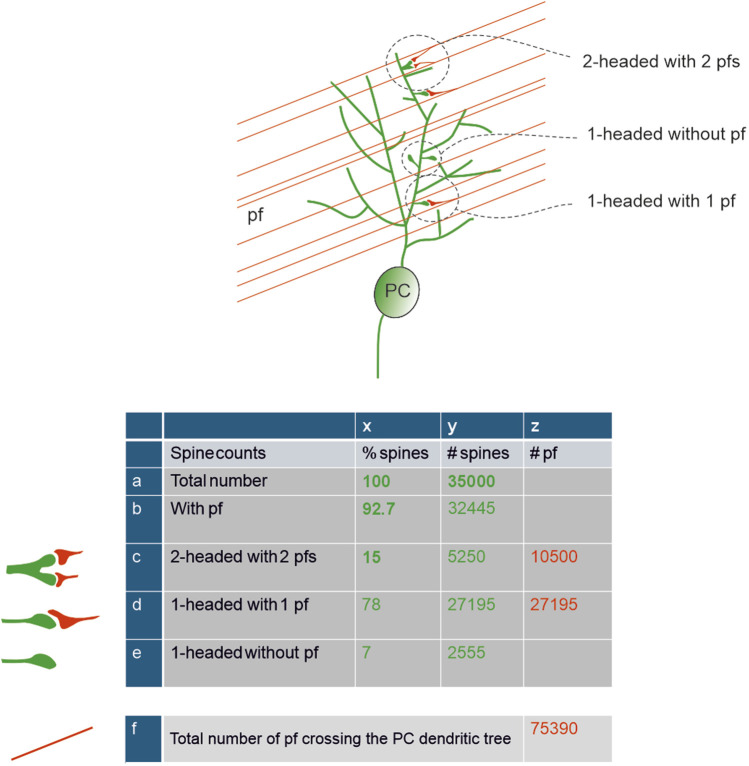 Figure 3
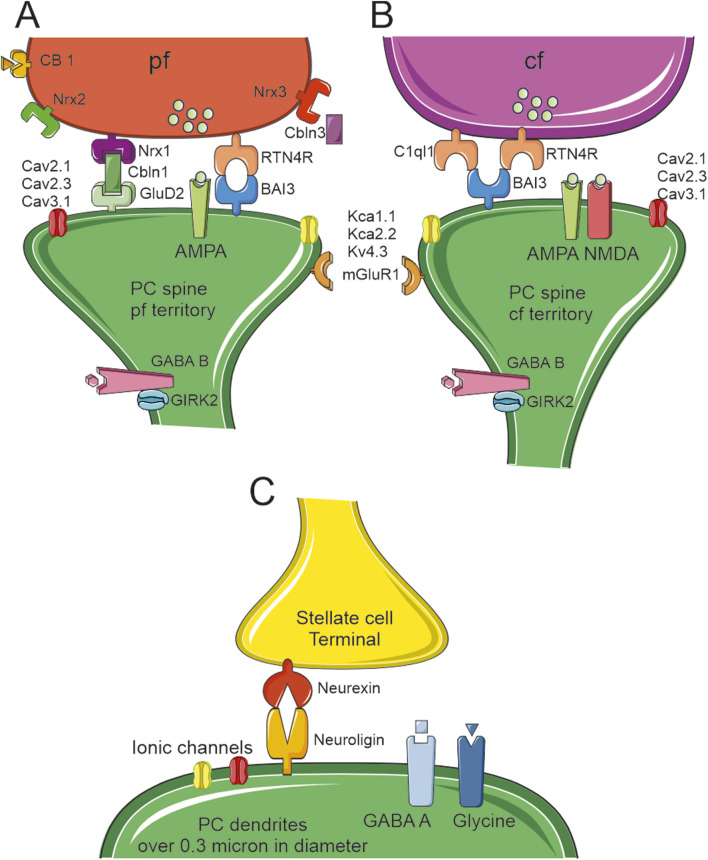 Figure 4
Peer Reviews
No public reviews on file for this paper yet. If you reviewed it on a platform where reviews are public (OpenReview, ICLR, NeurIPS, ICML), you can paste yours below so the community can read it here.
Videos
No videos yet. Explain this paper in a talk, walkthrough, or lecture? Add one.
Taxonomy
TopicsNeurological disorders and treatments · Transcranial Magnetic Stimulation Studies · Genetic Neurodegenerative Diseases