Elucidating Mechanisms of Hypomorphic WDR19-Related Kidney Failure
Omer Shlomovitz, Yam Ben-Haim, Netanel Eisenstein, Leah Armon, Igor Grinberg, Sylvie Polak-Charcon, Danit Atias-Varon, Guy Chowers, Dror Ben-Ruby, Achia Urbach, Asaf Vivante

TL;DR
This study investigates how a specific WDR19 gene variant causes kidney failure by impairing kidney development and cilia function in human organoids.
Contribution
The study demonstrates how a hypomorphic WDR19 variant disrupts kidney organoid development and ciliopathy pathways in human stem cell models.
Findings
WDR19 hypomorphic variant impairs nephron development and causes structural abnormalities in kidney organoids.
Mutant organoids show reduced ciliation and dysregulated Sonic hedgehog signaling with altered FGF8 expression.
Findings highlight the role of cilia in kidney development and the inverse relationship between Shh and FGF pathways.
Abstract
Variants in the WDR19 gene, a crucial component of the intraflagellar transport (IFT) complex A, are associated with renal-cystic ciliopathies, a prevalent cause of renal failure of genetic origin. In the Arab Druze population, a WDR19 pathogenic missense variant (c.878G>A; p.Cys293Tyr, termed WDR19:C.878G>A) is the most common genetic cause of kidney failure manifesting as adult-onset, typically nonsyndromic chronic kidney disease (CKD). The underlying pathogenesis of this condition remains unclear. We used CRISPR-Cas9 to induce patient-specific hypomorphic and loss-of-function (LoF) variants in human embryonic stem cells (hESCs), in addition to using patient-derived induced pluripotent stem cells (iPSCs) for differentiation into kidney organoids. Organoids were assessed by using immunofluorescence, electron microscopy, RNA-sequencing, and pathway analysis to elucidate the effects of…
Genes, proteins, chemicals, diseases, species, mutations and cell lines named across the full text — each resolved to its canonical identifier and authoritative record.
Click any figure to enlarge with its caption.
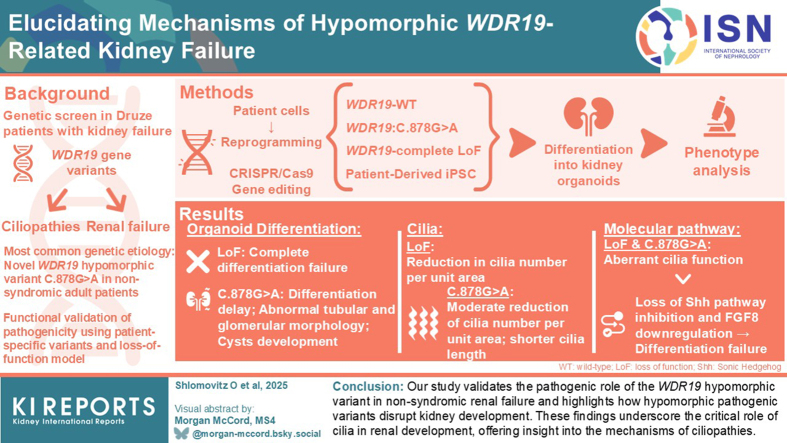 Figure 1
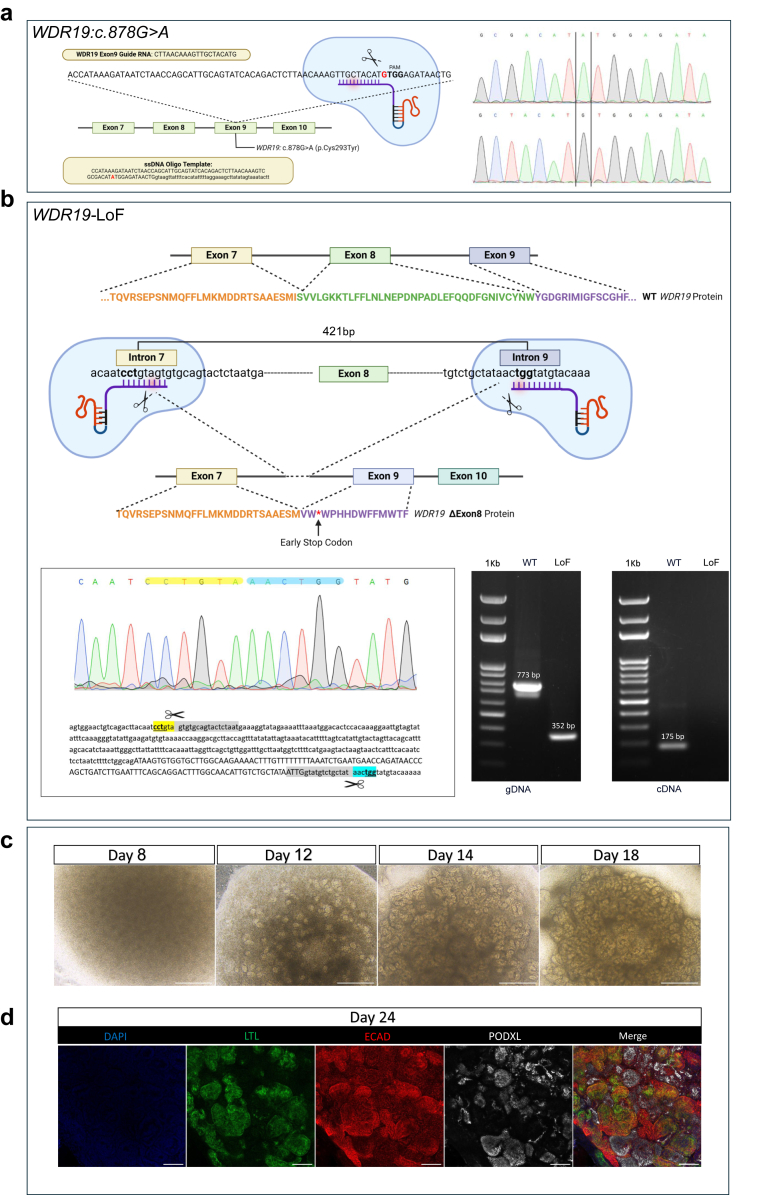 Figure 2
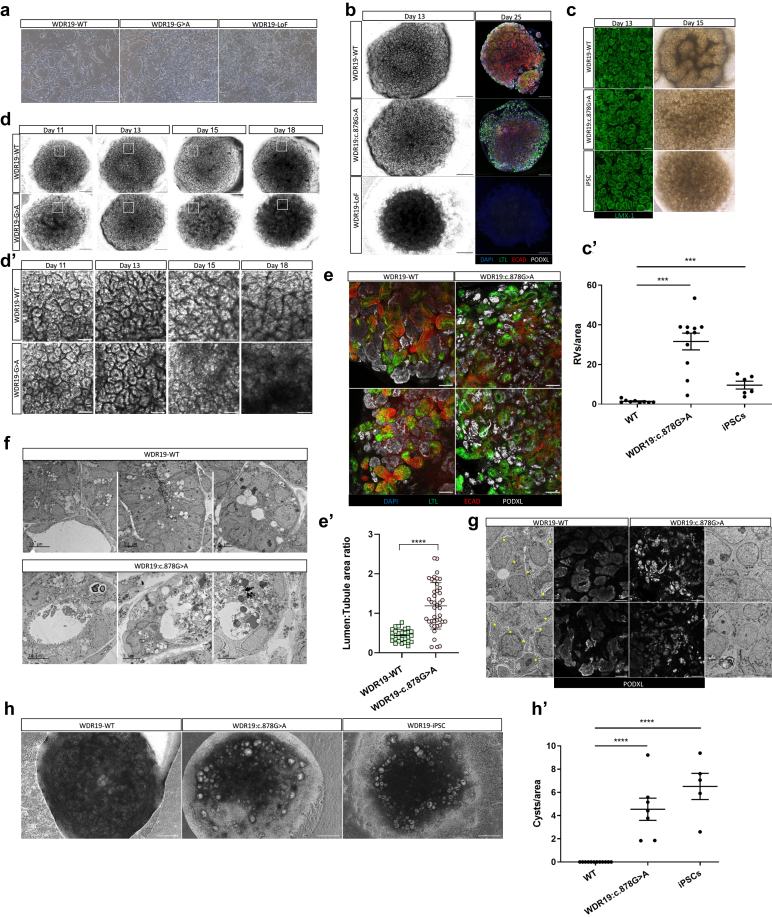 Figure 3
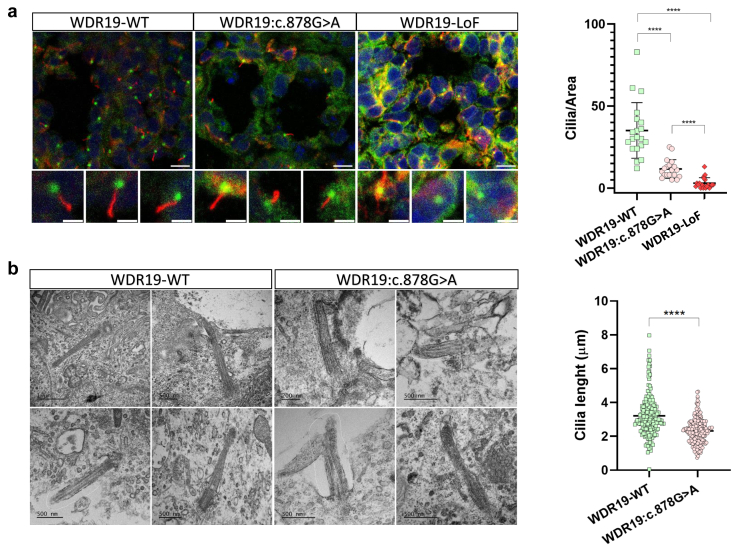 Figure 4
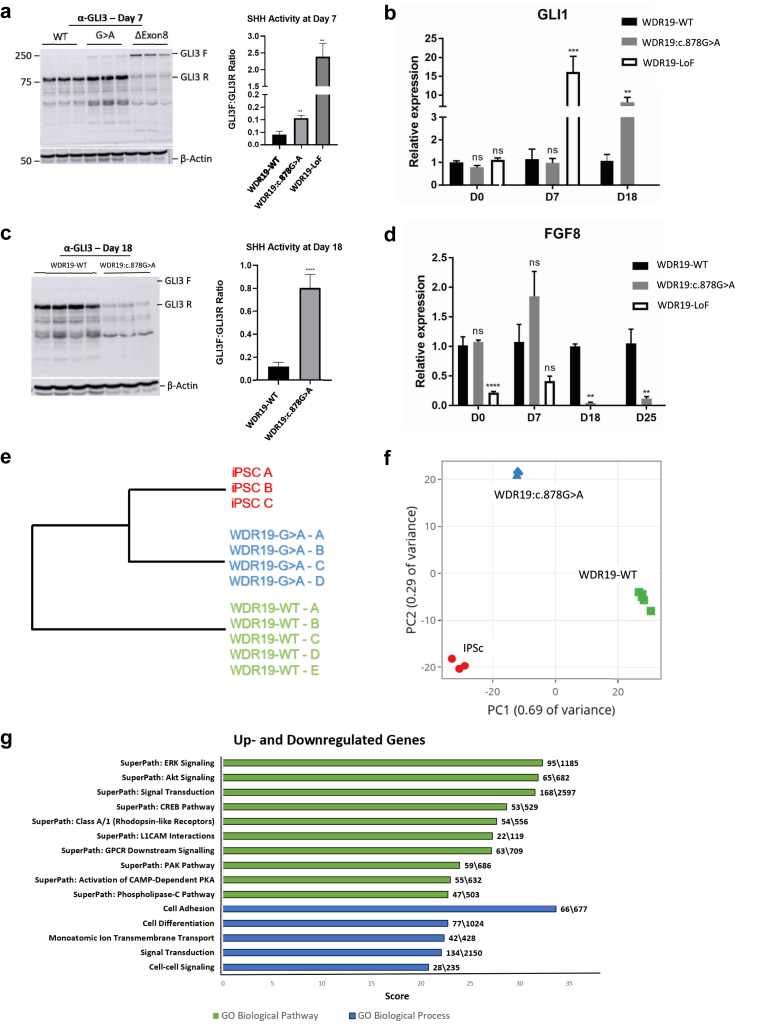 Figure 5
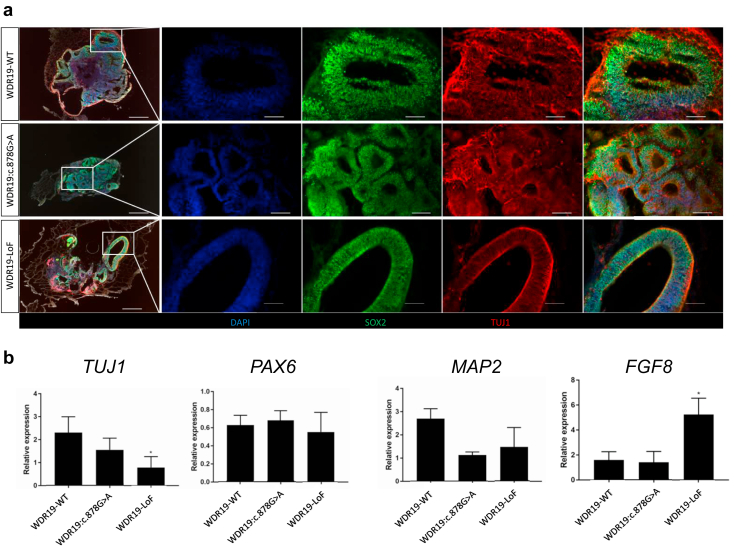 Figure 6
Peer Reviews
No public reviews on file for this paper yet. If you reviewed it on a platform where reviews are public (OpenReview, ICLR, NeurIPS, ICML), you can paste yours below so the community can read it here.
Videos
No videos yet. Explain this paper in a talk, walkthrough, or lecture? Add one.
Taxonomy
TopicsRenal and related cancers · Genetic and Kidney Cyst Diseases · Organ Donation and Transplantation