Light Sensitive Bumblebee Species Are Associated With Forest Habitat and Forest‐Dominated Landscapes
Océane Bartholomée, Pierre Tichit, Jens Åström, Henrik G. Smith, Sandra Åström, Markus A. K. Sydenham, Emily Baird

TL;DR
Bumblebees with better light sensitivity are more common in forests and tend to forage on shade-tolerant plants, showing how vision shapes their habitat and foraging choices.
Contribution
This study is the first to link pollinator visual abilities to plant niches, offering a new basis for modeling plant-pollinator interactions.
Findings
Bumblebee species with high light sensitivity are more common in forest habitats and forested landscapes.
Bumblebees with higher light sensitivity forage on plants with greater shade tolerance.
Community-weighted eye parameters increase with forest cover and are higher in forest habitats.
Abstract
We investigate whether the eye parameter of bumblebees—a visual trait measuring the tradeoff between light sensitivity and visual resolution—is associated with: (i) local habitats, (ii) forest cover at the landscape scale (1 km radius), and (iii) the shade tolerance of the plants they forage on. The association of bumblebee species with local habitat and forest cover at the landscape scale was analyzed using generalized linear mixed models. We combined data from the Norwegian national bumblebee monitoring program with Corine CLC+ land cover and bumblebee functional traits: eye parameter and intertegular distance. These analyses were done at the species and community level. To determine whether bumblebee light sensitivity correlated with the shade tolerance of the plant they forage on, we combined bumblebee–plant interactions from a British database with a Swedish plant trait database.…
Genes, proteins, chemicals, diseases, species, mutations and cell lines named across the full text — each resolved to its canonical identifier and authoritative record.
Click any figure to enlarge with its caption.
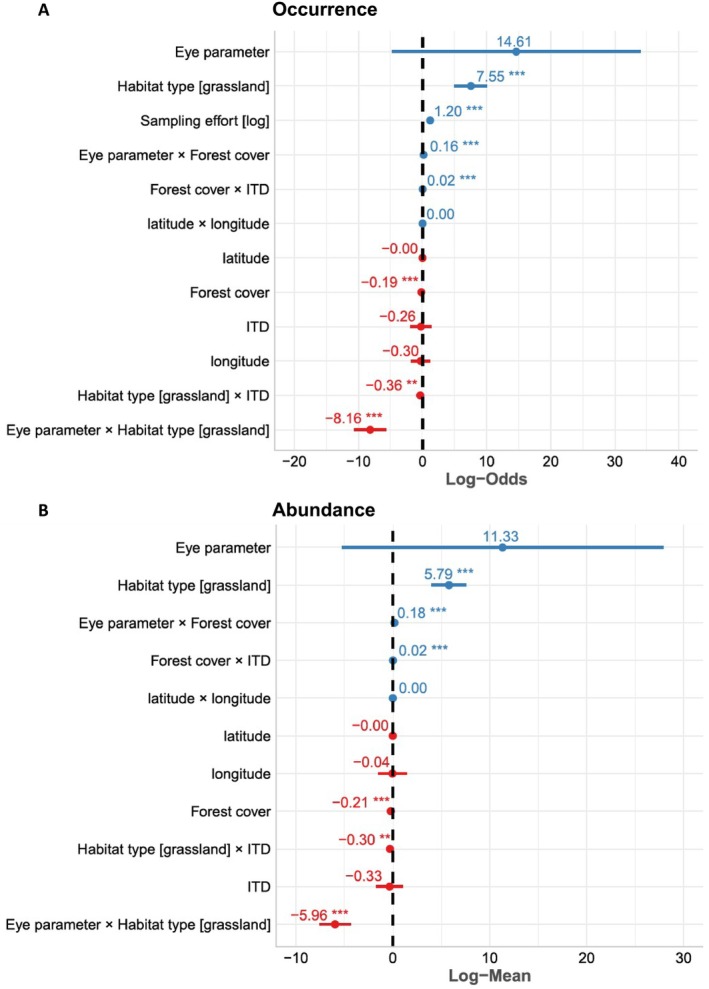 Figure 1
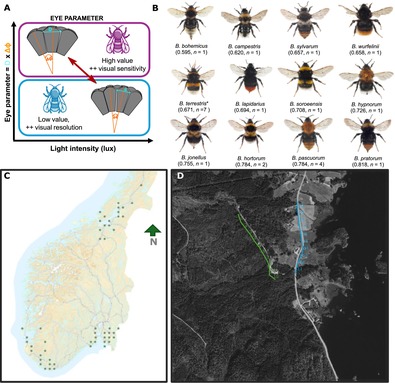 Figure 2
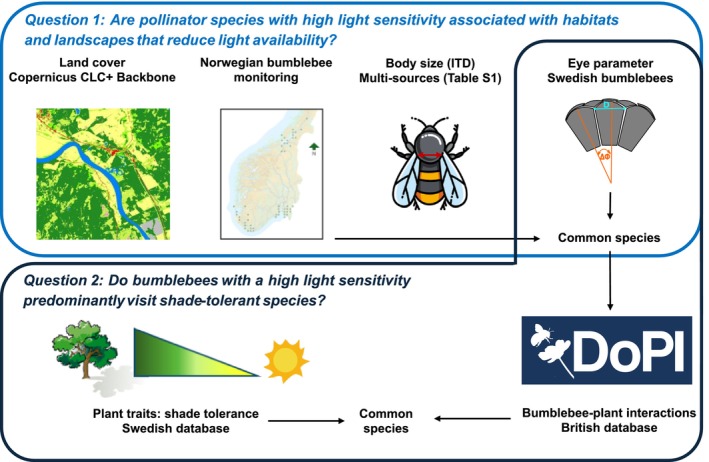 Figure 3
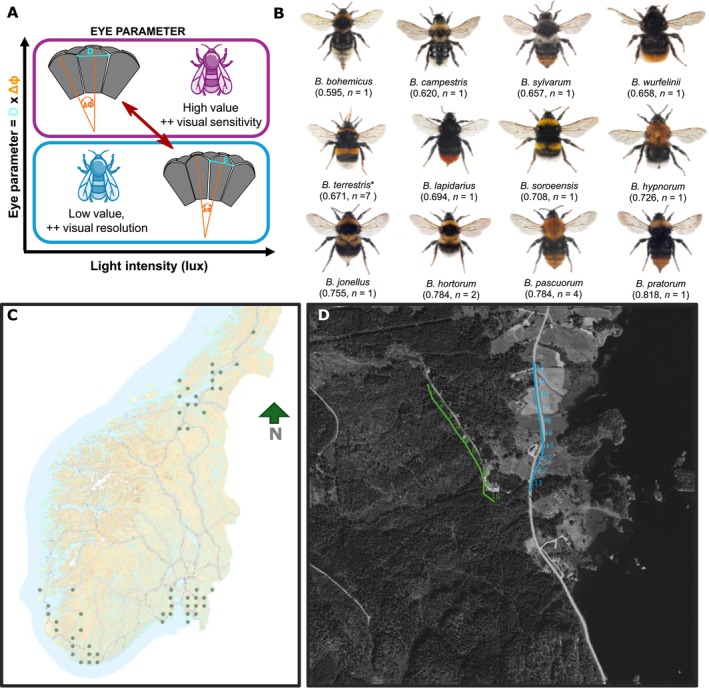 Figure 4
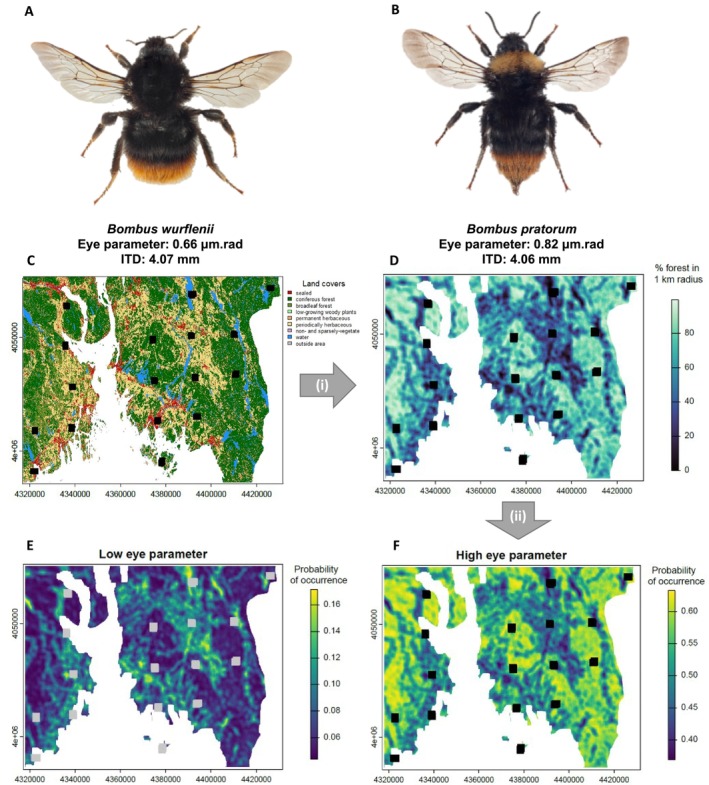 Figure 5
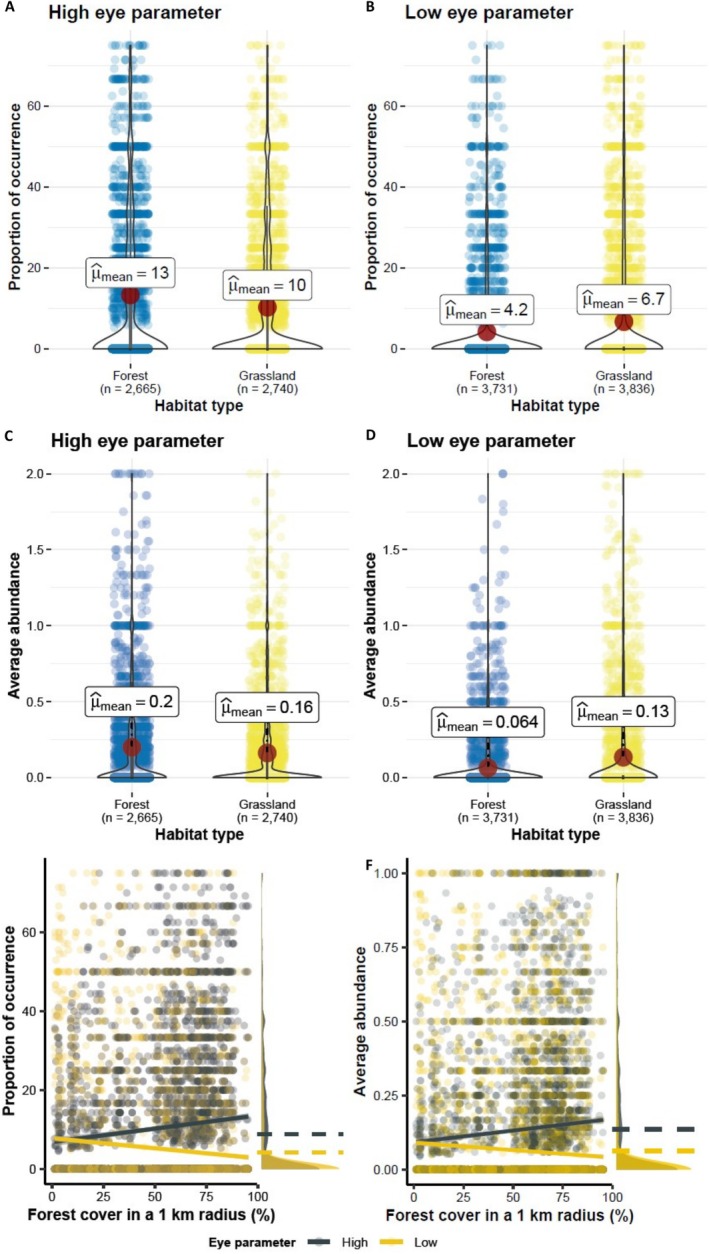 Figure 6
Peer Reviews
No public reviews on file for this paper yet. If you reviewed it on a platform where reviews are public (OpenReview, ICLR, NeurIPS, ICML), you can paste yours below so the community can read it here.
Videos
No videos yet. Explain this paper in a talk, walkthrough, or lecture? Add one.
Taxonomy
TopicsPlant and animal studies · Insect and Pesticide Research · Insect and Arachnid Ecology and Behavior