Causal Associations Between Dietary Factors and Uterine Inflammatory Diseases: A Mendelian Randomization Study
Biao Xiong, Zhaoan Lian

TL;DR
This study found that eating more dried fruits and cereals may lower the risk of uterine inflammatory diseases, suggesting diet could help prevent these conditions.
Contribution
The study identifies dried fruit and cereal consumption as potential causal protective factors against uterine inflammatory diseases using Mendelian randomization.
Findings
Higher dried fruit intake was robustly associated with reduced risk of uterine inflammatory disease (IVW OR = 0.277, p = 1.72 × 10⁻⁵).
Cereal intake showed a nominally protective effect (IVW OR = 0.446, p = 0.00488) but was not significant in weighted median analyses.
No evidence of pleiotropy was found using MR-Egger analysis (p > 0.05).
Abstract
Uterine inflammatory diseases, such as endometritis, are linked to infertility and adverse reproductive outcomes. We performed a two‐sample Mendelian randomization (MR) study using genetic instruments for 19 dietary exposures (e.g., fruits, meats, cereals, beverages) from UK Biobank GWAS. The outcome was inflammatory uterine disease (ICD‐10: N71) from FinnGen. We applied inverse‐variance weighted (IVW) regression as the primary analysis, with sensitivity analyses (MR‐Egger, weighted median) and pleiotropy‐robust methods (MR‐PRESSO). Higher dried fruit intake showed a robust inverse association with uterine inflammatory disease (IVW OR = 0.277, 95% CI: 0.154–0.498; p = 1.72 × 10⁻⁵, FDR‐q = 3.27 × 10⁻⁴), supported by weighted median analysis. Cereal intake was nominally protective (IVW OR = 0.446, 95% CI: 0.255–0.783; p = 0.00488, FDR‐q = 0.0464) but not significant in weighted median…
Genes, proteins, chemicals, diseases, species, mutations and cell lines named across the full text — each resolved to its canonical identifier and authoritative record.
Click any figure to enlarge with its caption.
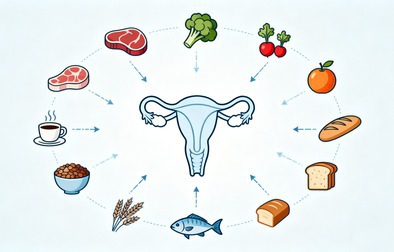 Figure 1
| ID | GWAS identifier | Variable | Sample size |
|---|---|---|---|
| 1 | ukb‐b‐5779 | Alcohol intake frequency | 462,346 individuals from the UK Biobank |
| 2 | ukb‐b‐6324 | Processed meat intake | 461,981 individuals from the UK Biobank |
| 3 | ukb‐b‐8006 | Poultry intake | 461,900 individuals from the UK Biobank |
| 4 | ukb‐b‐2862 | Beef intake | 461,053 individuals from the UK Biobank |
| 5 | ukb‐b‐17,627 | Non‐oily fish intake | 460,880 individuals from the UK Biobank |
| 6 | ukb‐b‐2209 | Oily fish intake | 460,443 individuals from the UK Biobank |
| 7 | ukb‐b‐5640 | Pork intake | 460,162 individuals from the UK Biobank |
| 8 | ukb‐b‐14,179 | Lamb/mutton intake | 460,006 individuals from the UK Biobank |
| 9 | ukb‐b‐11,348 | Bread intake | 452,236 individuals from the UK Biobank |
| 10 | ukb‐b‐1489 | Cheese intake | 451,486 individuals from the UK Biobank |
| 11 | ukb‐b‐8089 | Cooked vegetable intake | 448,651 individuals from the UK Biobank |
| 12 | ukb‐b‐6066 | Tea intake | 447,485 individuals from the UK Biobank |
| 13 | ukb‐b‐3881 | Fresh fruit intake | 446,462 individuals from the UK Biobank |
| 14 | ukb‐b‐15,926 | Cereal intake | 441,640 individuals from the UK Biobank |
| 15 | ukb‐b‐1996 | Salad/raw vegetable intake | 435,435 individuals from the UK Biobank |
| 16 | ukb‐b‐5237 | Coffee intake | 428,860 individuals from the UK Biobank |
| 17 | ukb‐b‐16,576 | Dried fruit intake | 421,764 individuals from the UK Biobank |
| 18 | ukb‐b‐8121 | Salt added to food | 462,630 individuals from the UK Biobank |
| 19 | ukb‐b‐14,898 | Water intake | 427,588 individuals from the UK Biobank |
| 20 | N14_INFLUTH | Inflammatory disease of uterus (ICD‐10: N71) | 6060 cases and 250,564 controls from the FinnGen Release 12 |
| Serial number | Outcome | Exposure | Number of SNPs | IVW method | Horizontal pleiotropy | ||||||
|---|---|---|---|---|---|---|---|---|---|---|---|
| OR | lci95 | uci95 |
| FDR‐corrected | Egger intercept | se |
| ||||
| 1 | Inflammatory disease of uterus | Alcohol intake frequency | 86 | 1.07E+00 | 8.38E‐01 | 1.36E+00 | 5.93E‐01 | 7.89E‐01 | −4.05E‐03 | 9.11E‐03 | 6.58E‐01 |
| 2 | Inflammatory disease of uterus | Processed meat intake | 21 | 7.42E‐01 | 4.04E‐01 | 1.36E+00 | 3.36E‐01 | 5.80E‐01 | −1.23E‐02 | 2.26E‐02 | 5.93E‐01 |
| 3 | Inflammatory disease of uterus | Poultry intake | 7 | 2.76E+00 | 7.01E‐01 | 1.09E+01 | 1.47E‐01 | 3.98E‐01 | 9.95E‐02 | 2.27E‐01 | 6.80E‐01 |
| 4 | Inflammatory disease of uterus | Beef intake | 12 | 2.49E+00 | 9.20E‐01 | 6.72E+00 | 7.27E‐02 | 3.45E‐01 | −2.56E‐02 | 3.69E‐02 | 5.04E‐01 |
| 5 | Inflammatory disease of uterus | Non‐oily fish intake | 11 | 8.09E‐01 | 2.65E‐01 | 2.47E+00 | 7.10E‐01 | 7.89E‐01 | −1.83E‐02 | 3.42E‐02 | 6.07E‐01 |
| 6 | Inflammatory disease of uterus | Oily fish intake | 52 | 1.07E+00 | 7.16E‐01 | 1.59E+00 | 7.50E‐01 | 7.89E‐01 | 5.06E‐05 | 1.23E‐02 | 9.97E‐01 |
| 7 | Inflammatory disease of uterus | Pork intake | 10 | 2.36E+00 | 3.46E‐01 | 1.61E+01 | 3.81E‐01 | 6.03E‐01 | −4.11E‐02 | 6.15E‐02 | 5.23E‐01 |
| 8 | Inflammatory disease of uterus | Lamb/mutton intake | 26 | 1.11E+00 | 5.14E‐01 | 2.41E+00 | 7.87E‐01 | 7.89E‐01 | −2.09E‐03 | 1.83E‐02 | 9.10E‐01 |
| 9 | Inflammatory disease of uterus | Bread intake | 25 | 1.12E+00 | 6.27E‐01 | 2.01E+00 | 6.95E‐01 | 7.89E‐01 | 1.38E‐02 | 2.00E‐02 | 4.97E‐01 |
| 10 | Inflammatory disease of uterus | Cheese intake | 53 | 8.10E‐01 | 5.60E‐01 | 1.17E+00 | 2.64E‐01 | 5.41E‐01 | −1.06E‐02 | 1.34E‐02 | 4.33E‐01 |
| 11 | Inflammatory disease of uterus | Cooked vegetable intake | 15 | 6.48E‐01 | 2.17E‐01 | 1.94E+00 | 4.37E‐01 | 6.39E‐01 | 1.09E‐02 | 6.69E‐02 | 8.74E‐01 |
| 12 | Inflammatory disease of uterus | Tea intake | 33 | 7.28E‐01 | 4.82E‐01 | 1.10E+00 | 1.32E‐01 | 3.98E‐01 | −7.80E‐04 | 8.97E‐03 | 9.31E‐01 |
| 13 | Inflammatory disease of uterus | Fresh fruit intake | 49 | 5.04E‐01 | 2.44E‐01 | 1.04E+00 | 6.44E‐02 | 3.45E‐01 | 2.18E‐03 | 1.16E‐02 | 8.52E‐01 |
| 14 | Inflammatory disease of uterus | Cereal intake | 34 | 4.46E‐01 | 2.55E‐01 | 7.83E‐01 | 4.88E‐03 | 4.64E‐02 | −9.65E‐03 | 1.72E‐02 | 5.78E‐01 |
| 15 | Inflammatory disease of uterus | Salad/raw vegetable intake | 12 | 3.32E‐01 | 8.29E‐02 | 1.33E+00 | 1.19E‐01 | 3.98E‐01 | −4.28E‐02 | 3.29E‐02 | 2.23E‐01 |
| 16 | Inflammatory disease of uterus | Coffee intake | 35 | 9.33E‐01 | 5.63E‐01 | 1.55E+00 | 7.89E‐01 | 7.89E‐01 | 4.48E‐04 | 8.54E‐03 | 9.58E‐01 |
| 17 | Inflammatory disease of uterus | Dried fruit intake | 33 | 2.77E‐01 | 1.54E‐01 | 4.98E‐01 | 1.72E‐05 | 3.27E‐04 | 6.60E‐03 | 1.66E‐02 | 6.93E‐01 |
| 18 | Inflammatory disease of uterus | Salt added to food | 87 | 1.28E+00 | 8.92E‐01 | 1.83E+00 | 1.82E‐01 | 4.32E‐01 | −6.52E‐03 | 8.57E‐03 | 4.49E‐01 |
| 19 | Inflammatory disease of uterus | Water intake | 33 | 7.65E‐01 | 4.68E‐01 | 1.25E+00 | 2.85E‐01 | 5.41E‐01 | −2.95E‐03 | 1.04E‐02 | 7.79E‐01 |
Peer Reviews
No public reviews on file for this paper yet. If you reviewed it on a platform where reviews are public (OpenReview, ICLR, NeurIPS, ICML), you can paste yours below so the community can read it here.
Videos
No videos yet. Explain this paper in a talk, walkthrough, or lecture? Add one.
Taxonomy
TopicsEndometriosis Research and Treatment · Reproductive System and Pregnancy · Reproductive Physiology in Livestock
Introduction
1
Uterine inflammatory diseases, including endometritis and chronic endometritis, are characterized by localized inflammation of the endometrium and may lead to pelvic pain, infertility, and adverse reproductive outcomes such as recurrent pregnancy loss or implantation failure (Kimura et al. 2019; Park et al. 2016; Puente et al. 2020). The etiology of these diseases remains incompletely understood, with both infectious and non‐infectious factors implicated. Diet is a key modifiable determinant of inflammation, with specific nutrients and food groups demonstrating anti‐inflammatory or pro‐inflammatory effects (Sears 2015; Bolte et al. 2021; Galland 2010). Despite growing evidence linking diet to systemic inflammation, research on dietary factors in uterine inflammatory diseases remains limited, and their potential role in modulating endometrial inflammation is poorly understood. To address this gap, we performed a Mendelian randomization (MR) analysis investigating 19 dietary exposures from the UK Biobank, including: (1) animal‐based foods (processed meat, poultry, beef, pork, lamb/mutton, non‐oily fish, oily fish, cheese); (2) plant‐based foods (fresh fruit, dried fruit, cooked vegetables, salad/raw vegetables, bread, cereal); (3) beverages (alcohol intake frequency, tea, coffee, water intake); and (4) other dietary components (salt added to food), in relation to uterine inflammatory disease risk. MR offers a powerful alternative by leveraging genetic variants as instrumental variables to infer causal relationships (Ference et al. 2021; Grover et al. 2017). By using fixed genetic proxies for dietary exposures, MR minimizes confounding and avoids biases inherent in traditional observational designs.
Method
2
Source Data and Instrumental Variable Selection
2.1
For this MR study, genetic instruments for 19 dietary factors (e.g., alcohol intake, coffee consumption, fruit intake; full list in Table 1) were obtained from the UK Biobank (UKB) genome‐wide association studies (GWAS), ensuring robust and population‐level exposure data. The dietary factors involved in the study were measured using the ACE touchscreen questionnaire from the UKB, which mainly includes two categories: frequency and intake amount (Biobank 2025). The outcome, inflammatory disease of the uterus (ICD‐10: N71), was derived from FinnGen Biobank. Due to the use of data sourced from different databases, the overlap rate of our samples is nearly zero. The MR analysis relied on three key assumptions: (1) genetic variants strongly associate with the exposures, (2) variants are independent of confounders, and (3) they influence the outcome only via the exposure. To ensure robust and independent genetic instruments, we selected SNPs associated with dietary exposures at genome‐wide significance (p < 5 × 10^−8^), applied a 10,000 kb clumping window with a stringent LD threshold (r ^2^ < 0.001), and excluded any variants significantly linked to the outcome (p < 5 × 10^−8^) to minimize pleiotropic bias. This study utilized publicly available summary‐level GWAS data from UKB and FinnGen, which were previously approved by relevant ethics committees. Since no individual‐level data were accessed and all analyses were conducted in anonymized form, this research qualifies for exemption from additional institutional ethics review per applicable guidelines.
Statistical Analysis
2.2
We performed MR analyses using the TwoSampleMR package (version 0.6.2) in R (version 4.5.0). The primary analysis employed the inverse‐variance weighted (IVW) method, with p values corrected for multiple testing using the false discovery rate (FDR). Secondary analyses included the weighted median (WM) method and MR‐Egger regression. To evaluate potential violations of MR assumptions, we conducted several sensitivity analyses: (1) MR‐Egger regression was used to assess horizontal pleiotropy, with its intercept test indicating directional pleiotropy if statistically significant; (2) the MR‐PRESSO (Mendelian Randomization Pleiotropy RESidual Sum and Outlier) test was applied to detect and correct for potential outliers; and (3) Cochran's Q‐test was performed to examine heterogeneity across instrumental variable estimates.
Result
3
The complete analytical results, including effect estimates from multiple MR methods (IVW, MR‐Egger, and weighted median), sensitivity analyses (heterogeneity tests), and pleiotropy assessments, are presented in Table S1. Table 2 specifically summarizes the primary findings from the IVW method along with horizontal pleiotropy evaluation using the MR‐Egger intercept.
As shown in Table 2, the IVW analysis revealed statistically significant inverse associations for two dietary factors: dried fruit intake (OR = 0.277, 95% CI: 0.154–0.498, p = 1.72 × 10^−5^; FDR‐corrected p = 3.27 × 10^−4^) and cereal intake (OR = 0.446, 95% CI: 0.255–0.783, p = 4.88 × 10^−3^; FDR‐corrected p = 0.0464). These results suggest potential protective effects against inflammatory uterine disease. The WM analysis further supported the protective association of dried fruit intake (OR = 0.237, 95% CI: 0.107–0.526, p = 4.01 × 10^−4^), though cereal intake no longer reached statistical significance (OR = 0.525, 95% CI: 0.249–1.108, p = 0.0910). In contrast, the MR‐Egger method showed no significant associations for either dietary factor (dried fruit or cereal intake) with inflammatory uterine disease, suggesting that the protective effect of dried fruit intake was supported primarily by IVW and WM analyses. No other examined dietary exposures, including alcohol, meat products, fish, cheese, vegetables, fruits, or beverages, showed statistically significant associations (all nominal and FDR‐corrected p values > 0.05). Notably, MR‐Egger intercept tests detected no significant horizontal pleiotropy in any analysis (all intercept p values > 0.05). Detailed results from WM and MR‐Egger analyses are provided in Table S1.
Discussion
4
Our MR study identified dried fruit intake and cereal consumption as potential protective factors against inflammatory uterine diseases, with significant inverse associations in primary IVW analyses (OR = 0.277 and 0.446, respectively). These findings suggest that certain dietary components may mitigate uterine inflammation. The protective effect of dried fruits was further supported by the weighted median method, while cereal intake showed weaker consistency. No other dietary factors, including alcohol, meat, or fresh fruits, demonstrated significant causal relationships with inflammatory uterine diseases.
Diet plays a pivotal role as a modifiable risk factor influencing systemic inflammation (Christ et al. 2019). Scientific evidence demonstrates that particular food constituents can impact the production and regulation of hormones (Martin et al. 2019; Simó et al. 2015). Diet plays a critical role in shaping gut microbial diversity and the abundance of microbial metabolites, as seen in the stark contrasts between plant‐rich and protein‐rich dietary regimens (David et al. 2014). Alterations in gut microbiota composition can influence systemic estrogen levels—impacting uterine physiology—while also modulating local immune responses, altering gut metabolite profiles, and compromising intestinal barrier integrity (Bhat and Rao 2023). A study demonstrated that in lean women with polycystic ovary syndrome (PCOS), a high‐calorie breakfast with reduced dinner intake significantly decreased free testosterone and increased sex hormone‐binding globulin (SHBG) levels (Jakubowicz et al. 2013). Another cross‐sectional study (Liu et al. 2022) from the United States found that a pro‐inflammatory diet was associated with decreased SHBG levels. The interplay between SHBG and inflammation (e.g., CRP) has been widely documented in prior research (Liao et al. 2012; Azat Rasimovich and Rasim 2018). Diet affects metabolites in the blood, such as blood cell count, standard biochemistry, fatty acids, etc. (King et al. 2006; Hodson et al. 2008; Ambring et al. 2006), which may further influence uterine inflammation through systemic metabolic reprogramming. These pathways could partially explain the protective effects of certain dietary patterns observed in our study.
The robust inverse association observed for dried fruit intake (IVW OR = 0.277, p = 1.72 × 10^−5^) is biologically plausible. Dried fruits are rich in minerals, fiber, and micronutrients (e.g., potassium, folate, and vitamin C) with demonstrated anti‐inflammatory and antioxidant properties (Bennett et al. 2011). Dried fruits are a rich source of antioxidants that can scavenge free radicals such as superoxide, hydroxyl, and peroxyl radicals, and enhance plasma antioxidant capacity, thereby reducing oxidative damage at the cellular level (Wang et al. 2025, 2018; Alasalvar et al. 2020). For instance, a study demonstrated that daily consumption of 50–100 g dried plums by healthy postmenopausal women significantly increased total antioxidant capacity and superoxide dismutase activity over 6 months, while also lowering markers of oxidative stress and inflammation (Hong et al. 2021). Therefore, via these pathways, which include scavenging harmful free radicals, boosting systemic antioxidant capacity, and alleviating oxidative stress as well as inflammatory responses, dried fruits may reduce the oxidative burden on uterine tissues and thus potentially lower the risk of uterine inflammatory diseases. The consistency of this association in the weighted median analysis further strengthens its credibility, though the MR‐Egger results warrant caution (potential weak instrument bias or residual pleiotropy). In our study, the IVW analysis demonstrated an inverse association between cereal intake and the risk of uterine inflammatory diseases. Grains contain a composite of bioactive compounds, primarily including dietary fiber (e.g., arabinoxylan, β‐glucan) and polyphenols (predominantly phenolic acids like ferulic acid and vanillic acid), each of which contributes to robust anti‐inflammatory actions (Khan et al. 2024). These bioactive components in grains may serve as crucial pathways for reducing the risk of uterine inflammatory diseases. However, the absence of significant associations in both the WM and MR‐Egger analyses suggests that this relationship may lack robustness, potentially due to unmeasured confounders (e.g., variations in cereal processing methods or other dietary factors). Notably, no other dietary factors (e.g., alcohol, fresh fruits, or meat) showed significant associations. Both fruits and vegetables may exert anti‐inflammatory effects (in IVW method, the ORs for the associations between the intake of fresh fruits, dried fruits, fresh vegetables, and cooked vegetables and uterine inflammatory diseases are all less than 1). However, the results failed to reach statistical significance, which may be attributed to the relatively small number of cases of uterine inflammatory diseases (n = 6060). Our study provides compelling evidence that dried fruit intake and cereal consumption may serve as protective dietary factors against inflammatory uterine diseases. These findings carry important clinical implications for both preventive and therapeutic strategies in women's health.
Despite the clinically significant implications of our study, several limitations warrant consideration. First, although we employed multiple sensitivity analyses to address pleiotropy, residual confounding through unmeasured pathways (e.g., gut microbiome interactions) cannot be entirely excluded. Second, the broad categorization of exposures (e.g., ‘cereal intake’) prevented examination of potentially important subtypes (e.g., whole vs. refined grains). Third, our exclusive reliance on European‐ancestry populations may restrict the generalizability of findings to other ethnic groups with distinct genetic architectures or dietary patterns. Finally, the use of genetic proxies for lifetime exposure rather than measured dietary intake precluded assessment of critical windows for intervention or dose–response relationships that could refine clinical recommendations. To address the limitations of this study and extend its findings, future research should prioritize the following directions. First, the results should be replicated in non‐European populations to examine whether the protective associations of dried fruit and cereal intake against uterine inflammatory diseases are consistent across groups with different genetic backgrounds and cultural dietary patterns. This would enhance the generalizability of the findings. Second, more detailed dietary classification should be employed, for example, by distinguishing between unsweetened and sugar‐added dried fruits, as well as whole‐grain and refined cereals, to better capture nuanced dietary relationships. Third, validation of these associations through prospective studies, which reduce recall bias, and through interventional trials would help strengthen causal inference beyond the current associative evidence.
Conclusion
5
This study suggests that higher intake of dried fruits and cereals may reduce the risk of uterine inflammatory diseases, while other dietary factors showed no significant associations. The findings highlight the potential protective role of certain dietary patterns in women's health. Further research is needed to confirm these causal relationships and explore underlying biological mechanisms.
Author Contributions
Biao Xiong: conceptualization (equal), data curation (equal), formal analysis (equal), funding acquisition (equal), investigation (equal), methodology (equal), project administration (equal), resources (equal), software (equal), supervision (equal), validation (equal), visualization (equal), writing – original draft (equal). Zhaoan Lian: conceptualization (equal), data curation (equal), formal analysis (equal), funding acquisition (equal), investigation (equal), methodology (equal), project administration (equal), resources (equal), software (equal), supervision (equal), validation (equal), visualization (equal), writing – original draft (equal).
Conflicts of Interest
The authors declare no conflicts of interest.
Supporting information
Table S1: Causal Relationships Between Dietary Exposures and inflammatory disease of uterus (ICD‐10: N71).This Mendelian randomization study comprehensively evaluated the causal relationships between dietary factors and uterine inflammatory diseases. The analysis employed a robust methodological approach: (1) inverse‐variance weighted (IVW) regression served as the primary analytical method; (2) weighted median and MR‐Egger approaches provided supplementary causal estimates; (3) horizontal pleiotropy was assessed through MR‐Egger intercept tests (with statistical significance defined as p < 0.05); (4) heterogeneity was evaluated using Cochran's Q test; and (5) the MR‐PRESSO method identified and adjusted for potential outliers, with comparative results presented before and after outlier correction.
The reference list from the paper itself. Each links out to its DOI / PubMed record.
- 1Alasalvar, C. , J. S. Salvadó , and E. Ros . 2020. “Bioactives and Health Benefits of Nuts and Dried Fruits.” Food Chemistry 314: 126192.31958750 10.1016/j.foodchem.2020.126192 · doi ↗ · pubmed ↗
- 2Ambring, A. , M. Johansson , M. Axelsen , L. Gan , B. Strandvik , and P. Friberg . 2006. “Mediterranean‐Inspired Diet Lowers the Ratio of Serum Phospholipid n–6 to n–3 Fatty Acids, the Number of Leukocytes and Platelets, and Vascular Endothelial Growth Factor in Healthy subjects 2.” American Journal of Clinical Nutrition 83, no. 3: 575–581.16522903 10.1093/ajcn.83.3.575 · doi ↗ · pubmed ↗
- 3Azat Rasimovich, A. , and M. A. Rasim . 2018. “The Effect of Inflammatory Diseases Associated With Opportunistic Urogenital Infection on the Hormonal Function of the Female Reproductive System.” International Journal of Reproductive Biomedicine 16, no. 11: 697–702.30775685 PMC 6350851 · pubmed ↗
- 4Bennett, L. E. , D. P. Singh , and P. R. Clingeleffer . 2011. “Micronutrient Mineral and Folate Content of Australian and Imported Dried Fruit Products.” Critical Reviews in Food Science and Nutrition 51, no. 1: 38–49.21229417 10.1080/10408390903044552 · doi ↗ · pubmed ↗
- 5Bhat, R. G. , and B. K. Rao . 2023. “The Gut Microbiota: A Novel Player in the Pathogenesis of Uterine Fibroids.” Reproductive Sciences 30, no. 12: 3443–3455.37418220 10.1007/s 43032-023-01289-7PMC 10691976 · doi ↗ · pubmed ↗
- 6Biobank, U. 2025. Category 100052: Frequency of Intake of a Range of Common Food and Drink Items. UK Biobank. https://biobank.ctsu.ox.ac.uk/crystal/label.cgi?id=100052.
- 7Bolte, L. A. , A. Vich Vila , F. Imhann , et al. 2021. “Long‐Term Dietary Patterns Are Associated With Pro‐Inflammatory and Anti‐Inflammatory Features of the Gut Microbiome.” Gut 70, no. 7: 1287–1298.33811041 10.1136/gutjnl-2020-322670 PMC 8223641 · doi ↗ · pubmed ↗
- 8Christ, A. , M. Lauterbach , and E. Latz . 2019. “Western Diet and the Immune System: An Inflammatory Connection.” Immunity 51, no. 5: 794–811.31747581 10.1016/j.immuni.2019.09.020 · doi ↗ · pubmed ↗