Development and application of a Puccinia triticina avirulence gene AvrLr15-specific molecular marker
Yuqing Jin, Zhongchi Cui, Maoxing Song, Shitao Yuan, Dashuo Ding, Yuanxia Liu, Shuxin Yin, Peiyuan Xu, Chengyi Yan, Daqun Liu, Zhihui Wu, Haiyan Wang

TL;DR
This paper develops a molecular marker to monitor wheat rust pathogen races and assess resistance durability.
Contribution
The study created the first molecular marker specific to the Puccinia triticina avirulence gene AvrLr15.
Findings
A duplex PCR assay successfully differentiated virulent and avirulent Pt races based on AvrLr15.
The AvrLr15 marker was validated using 21 races and 168 isolates collected from 15 provinces in 2024.
The marker can monitor the V15 race distribution and evaluate the durability of Lr15 resistance in wheat.
Abstract
Puccinia triticina (Pt) races vary frequently, and new virulence races continue to emerge, leading to a lack of durable resistance in wheat cultivars. Therefore, monitoring avirulence gene composition and variation in Pt is crucial. In our previous study, we identified an avirulence protein AvrLr15 from Pt that induced Lr15-dependent immune responses and found that evasion of Lr15-mediated resistance in wheat was associated with a deletion and point mutations of amino acids in AvrLr15. In this study, TcLr15–Thatcher hybrid materials and Lr15 mutant materials were developed, which further confirmed the reliability of AvrLr15. A duplex PCR assay using two primer pairs (M1-F/M1-R and M2-F/M2-R) designed based on the differences between AvrLr15 and virulence gene avrLr15 successfully differentiated avirulent and virulent races, which can be used as the AvrLr15 marker. A total of 21 races…
Genes, proteins, chemicals, diseases, species, mutations and cell lines named across the full text — each resolved to its canonical identifier and authoritative record.
Click any figure to enlarge with its caption.
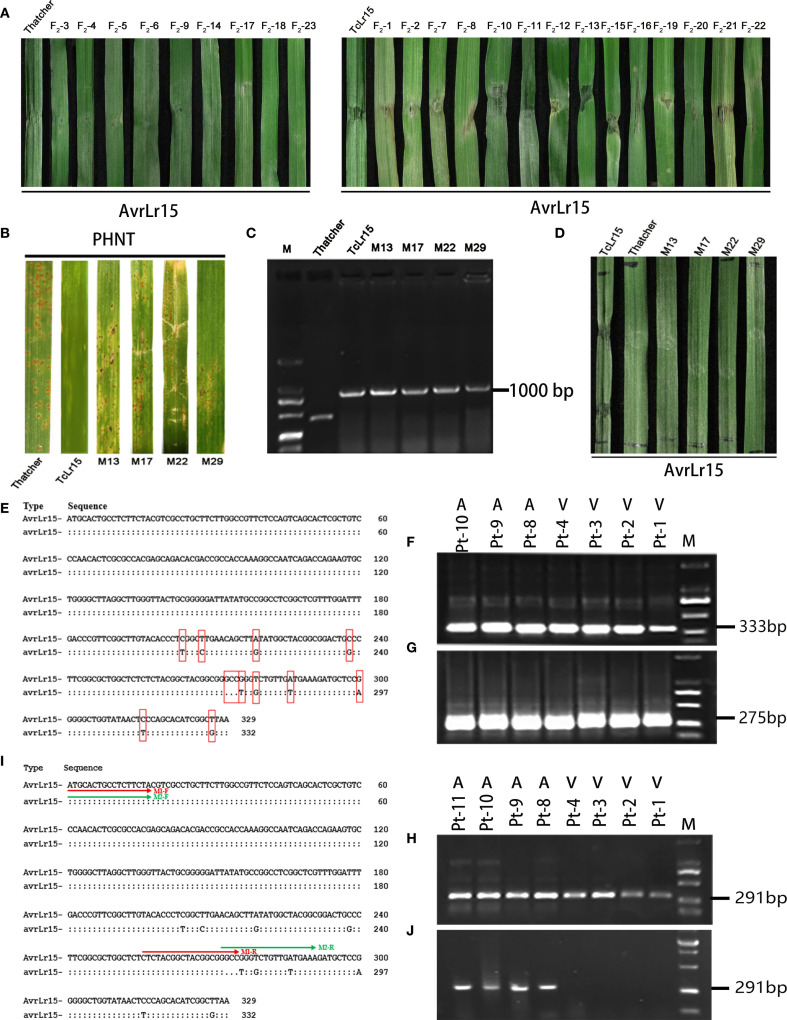 Figure 1
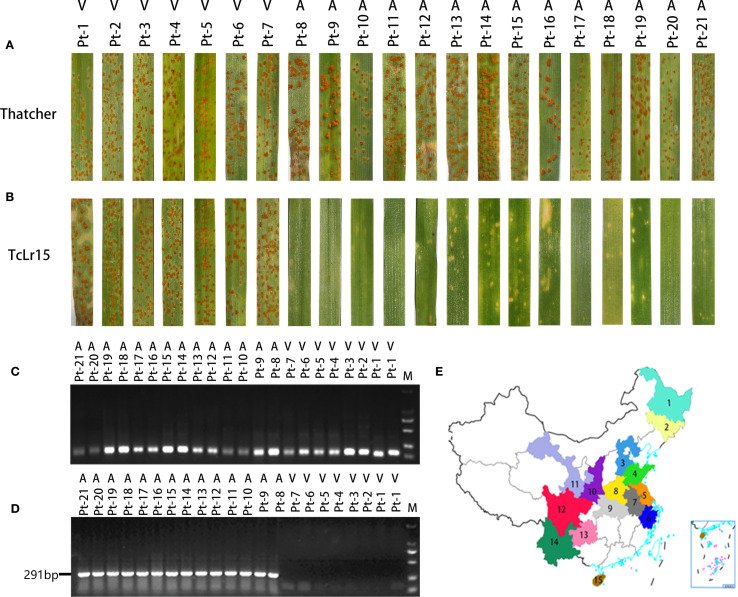 Figure 2
Peer Reviews
No public reviews on file for this paper yet. If you reviewed it on a platform where reviews are public (OpenReview, ICLR, NeurIPS, ICML), you can paste yours below so the community can read it here.
Videos
No videos yet. Explain this paper in a talk, walkthrough, or lecture? Add one.
Taxonomy
TopicsWheat and Barley Genetics and Pathology · Plant tissue culture and regeneration · Plant-Microbe Interactions and Immunity
Introduction
1
Wheat leaf rust, caused by Puccinia triticina (Pt), is one of the most economically significant fungal diseases worldwide, leading to substantial yield losses in major wheat-producing regions (Eversmeyer and Kramer, 2000). The widespread cultivation of single resistant varieties exerts selective pressure on Pt populations, resulting in the emergence of new virulent races and shifts in dominant pathotypes. This dynamic leads to the breakdown of host resistance and subsequent disease epidemics, causing severe production losses (Aime et al., 2018; Ellis et al., 2014).
To mitigate the rapid erosion of resistance in Pt-resistant cultivars, continuous monitoring of Pt virulence in field populations is essential. To date, over 100 leaf rust resistance (Lr) genes have been identified in wheat and its wild relatives, with 85 formally designated (Sharma et al., 2024). The Lr15 gene, derived from common wheat (Triticum aestivum) cultivar Kenya and located on chromosome 2D, confers resistance to Pt races in Canada, Europe, and Central Asia. However, its effectiveness has declined in Germany, India, and South Africa (Huerta-Espino et al., 2011). Statistical analysis of the Pt physiological races in China’s major wheat-producing regions from 2007 to 2021 revealed that virulence frequency to Lr15 presented a general trend of fluctuation and decline (Li et al., 2024; Zhang et al., 2020). In addition, Lr15 is present in only a few commercial cultivars, indicating its limited deployment in field production. This low utilization indicates that Lr15 has application potential (Gao et al., 2019) in the future. Thus, developing effective management strategies to preserve Lr15 effectiveness and prevent large-scale epidemics is critical.
Gene-for-gene theory posits that effective resistance occurs only when a plant carries a functional R gene and the corresponding pathogen carries an Avr gene. In contrast, loss-of-function variations in Avr genes (deletions, point mutations) or Avr gene absence disrupts this recognition, allowing the pathogen to evade R-mediated resistance (Flor, 1971; Ellis et al., 2014). Molecular markers of the Avr gene are essential tools for detecting polymorphisms in Avr genes during pathogen surveillance (Panthee, 2023), as they enable rapid detection of pathogen avirulent/virulent races and support dynamic monitoring of field virulence. Single-nucleotide polymorphism (SNP) markers offer particular advantages due to their high stability, rapid detection, and suitability for high-throughput analysis (Terracciano et al., 2013; Al-Samarai and Al-Kazaz, 2015).
In our previous study, we identified the Pt effector Pt_19 as the avirulence gene AvrLr15 and characterized four nucleotide mutations in its coding sequence that differentiate the avirulent (AvrLr15) and virulent (avrLr15) alleles (Cui et al., 2024). Here, we further validated the function of AvrLr15 by generating TcLr15–Thatcher hybrids and EMS-induced TcLr15 mutant lines and developed an AvrLr15-specific molecular marker and applied it to systematically monitor the distribution of the V15 (virulent to the Lr15 gene) races across China’s major wheat-growing regions. Our findings support strategic deployment of Lr15-based wheat cultivars to improve durable resistance against Pt epidemics.
Materials and methods
2
Plant materials, Pt isolates, and sample collection
2.1
Wheat near-isogenic line TcLr15 (carrying the Lr15 gene in the Thatcher background) and its susceptible parent Thatcher, along with 21 Pt isolates with different virulence to TcLr15 from different years, were maintained at the Wheat Leaf Rust Laboratory of Hebei Agricultural University (Supplementary Table S1). A total of 168 Pt single-pustule isolates were generated in the greenhouse from field-collected leaves in 2024 (Supplementary Table S2). Each isolate was systematically numbered according to its geographic origin.
Generation and characterization of TcLr15–Thatcher hybrid materials
2.2
TcLr15 and Thatcher were hybridized to obtain the F_1_ generation (Li et al., 1992), which was then selfed to obtain the F_2_ generation of TcLr15–Thatcher hybrid material. The Lr15 molecular marker was used to detect Lr15 in TcLr15–Thatcher hybrid materials (F_2_ generation). TcLr15, Thatcher, and the F_2_ generation of TcLr15–Thatcher hybrid material were infiltrated with pure protein of AvrLr15, respectively, and the programmed cell death (PCD) on the infiltrated region was observed at 24 h. The test was repeated three to five times.
EMS mutagenesis and mutant screening
2.3
To obtain wheat materials with Lr15 gene mutation, mutagenesis was performed as previously described (Wang et al., 2023). In brief, 200 TcLr15 seeds were soaked in 100 mL of 0.4% EMS, mixed by 125 r min^−1^ shaking at 25 °C for 10 h, and washed with running water at 26°C for 4 h. Treated seeds were planted in a greenhouse maintained at 25 °C for 15 days to observe seedling growth and development. Putative mutants were screened using Lr15-specific molecular markers and avirulent Pt race PHNT inoculation.
Design and validation of the avirulence gene AvrLr15 molecular marker
2.4
Based on the four nucleotide variation sites previously identified between the avrLr15 and AvrLr15 sequences, a total of 30 primer pairs were designed targeting the CDS region to serve as molecular markers for AvrLr15 (Supplementary Table S3). The primers were designed using Primer 5.0 and subsequently synthesized by Sangon Biotech (Shanghai) Co., Ltd. Genomic DNA was extracted from urediniospores of 21 Pt races that exhibited different infection types on TcLr15, using a modified CTAB method based on the protocol by Doyle (Doyle and Doyle, 1987). PCR amplification was performed using specific primers in a total reaction volume of 25 μL, containing 12.5 μL of 1× Taq Master Mix, 1 μL each of 5 mmol/L forward and reverse primers, and 1 μL of 30-ng DNA template, with the remaining volume supplemented with ddH_2_O. The cycling conditions are provided in Supplementary Table S4 (the reaction system and program for the β-Actin internal reference were identical). The presence of an amplification product of the expected size was indicative of an avirulent isolate, whereas its absence indicated a virulent isolate.
Application of the avirulence gene AvrLr15 molecular marker
2.5
In 2024, a total of 168 Pt isolates were collected from 15 provinces across China, with Hebei and Henan provinces exhibiting relatively higher sampling densities compared with other regions. Samples were collected from three sites per province where natural infections had occurred and no fungicides had been applied. At each site, three biological replications were conducted within 10 m × 10 m experimental plots using the five-point sampling method for isolate collection (Saghai-Maroof et al., 1984). Following collection, Pt isolates were inoculated onto TcLr15 and Thatcher wheat cultivars, with three biological replicates per isolate, for virulence phenotyping under controlled environmental conditions (22 ± 2 °C, 70% relative humidity, 150–250 μmol·m^−2^·s^−1^ light intensity, and 12 h light/12 h dark). Genomic DNA was extracted from each isolate, and virulence was confirmed through PCR amplification using specific molecular markers (M1 and M2) (Supplementary Table S3). Statistical analysis was performed on the spatial distribution of V15 virulence frequency across different geographical regions. Chi-square tests were applied to the virulence frequency results, wherein the likelihood ratio method was adopted when the sample size (N) exceeded 40 and the minimum expected count fell between 1 and 5.
Results
3
The specific recognition between AvrLr15 and Lr15 was confirmed in hybrid plants
3.1
To provide the genetic proofs for the specific interaction between the avirulence gene AvrLr15 and the resistance gene Lr15, F_2_ progeny derived from the TcLr15–Thatcher hybrid were genotyped using an Lr15-specific molecular marker. Among 23 F_2_ hybrid plants, a fragment of 1,000-bp length was detected in 14 plants, which was identical to the TcLr15 as positive control, whereas nine plants exhibited a 500-bp fragment, matching Thatcher as negative control (Supplementary Figure S1), confirming the presence of Lr15 in 14 F_2_ hybrid plants. Chi-square test confirmed that the 14:9 segregation ratio matches the expected 3:1 mendelian ratio (χ^2^ = 2.43, df=1, P>0.05), supporting Lr15 as a single dominant gene.
To verify whether AvrLr15 could trigger an immune response in the TcLr15–Thatcher hybrid wheat, we infiltrated purified AvrLr15 protein into the F_2_ hybrid materials. Nine Lr15-negative hybrid plants did not display PCD response, consistent with the negative control (Thatcher infiltrated with AvrLr15). In contrast, 14 Lr15-positive hybrid plants developed PCD response upon AvrLr15 infiltration, identical to the positive control (TcLr15 infiltrated with AvrLr15) (Figure 1A). These results demonstrate that AvrLr15 can specifically induce an immune response in Lr15-containing TcLr15–Thatcher hybrid materials, providing genetic evidence for the specific recognition between AvrLr15 and Lr15.
Validation of the avirulence gene AvrLr15 in Pt and molecular marker development. (A) Transient expression analysis of AvrLr15 in the hybrid wheat of TcLr15 and Thatcher, F2-1-F2-23: second hybrid generation of TcLr15–Thatcher. (B) Inoculation of TcLr15 mutants with the avirulent strain PHNT (against Lr15). (C) Detection of TcLr15 mutants using molecular markers for the Lr15 gene. (D) Transient expression analysis of AvrLr15 in TcLr15 mutants. (E) Schematic diagram of nucleotide sequence polymorphisms between the virulence (avrLr15) and avirulence (AvrLr15) alleles. (F) PCR amplification using primer M17 (333 bp) on four virulent and three avirulent races. (G) PCR amplification using primer M1 (275 bp) on four virulent and three avirulent races. (H) PCR amplification using primer M2 (291 bp) on four virulent and four avirulent races. (I) Primer positions are indicated by colored lines: M1 (red) and M2 (green). (J) Dual PCR amplification using primers M1 and M2, followed by electrophoresis, on four virulent and four avirulent races.
AvrLr15 could not trigger the immune response in the Lr15 mutants
3.2
Based on statistical analysis of germination rate and malformation frequency in TcLr15 wheat seeds treated with varying EMS concentrations (Supplementary Table S5), 0.4% EMS was identified as the optimal concentration for subsequent mutagenesis treatments. Phenotype assessments showed that four M_0_ plants (M13, M17, M22, and M29) displayed an intermediate susceptible phenotype (“3” infection type), whereas TcLr15 exhibited an immune response (“0” infection type), and Thatcher was highly susceptible (“4” infection type) (Figure 1B). Further PCR amplification using an Lr15-specific molecular marker confirmed that four M_0_ mutants retained the Lr15 gene, as evidenced by a 1,000-bp amplification product (Figure 1C). These results indicate that the Lr15 gene harbored mutations in the four mutant lines, M13, M17, M22, and M29.
To determine whether mutations in Lr15 affect its recognition with AvrLr15, purified AvrLr15 protein was infiltrated into the TcLr15 mutants. As expected, TcLr15 plants as positive control developed a PCD response, whereas four mutants (M13, M17, M22, and M29) did not, similar to the susceptible Thatcher as negative control (Figure 1D). These results demonstrate that mutations in Lr15 disrupt its recognition with AvrLr15.
Development of a molecular marker for avirulence gene AvrLr15
3.3
To develop molecular markers for AvrLr15, allele-specific primers were designed based on the 11 nucleotide variations identified between the AvrLr15 and avrLr15 alleles, including 10 single-nucleotide polymorphisms (SNPs: 204_C→T_, 208_T→C_, 219_A→G_, 238_C→G_, 276_G→T_, 278_T→G_, 286_A→T_, 300_G→A_, 316_C→T_, and 326_T→G_) and one trinucleotide deletion (273_GCC→-_) (Figure 1E). A total of 30 primer pairs were synthesized and initially screened using genomic DNA from seven to eight Pt races with defined virulence profiles. However, similar amplification products were observed between avirulence and virulence races to Lr15 (Figures 1F-H), suggesting that single SNP primer pairs could not distinguish the polymorphism between avirulence and virulence races to Lr15.
Subsequently, duplex PCR assays were performed using upstream primers (M1-F and M2-F) designed from the first 21 nucleotides of AvrLr15/avrLr15, coupled with deletion-flanking reverse primers: M1-R (3'-terminus anchored to the GCC deletion site) and M2-R (5'-terminus initiated at the deletion site) (Figure 1I). A 291-bp fragment exclusively was obtained in avirulent races to Lr15, whereas no amplification product appeared in the virulent races to Lr15 (Figure 1J). These results demonstrated the potential of M1-F/M1-R and M2-F/M2-R primer pairs for discriminating avirulent and virulent races to Lr15.
Validation of the AvrLr15-specific molecular marker
3.4
To elucidate sequence variations in AvrLr15 among different virulent races of Pt, we systematically assessed virulence profiles against Lr15. Physiological races Pt-1, Pt-2, Pt-3, Pt-4, Pt-5, Pt-6, and Pt-7 exhibited virulence toward TcLr15, developing abundant urediniospores with limited necrotic lesions—resembling disease susceptibility in Thatcher as controls. Conversely, races Pt-8, Pt-9, Pt-10, Pt-11, Pt-12, Pt-13, Pt-14, Pt-15, Pt-16, Pt-17, Pt-18, Pt-19, Pt-20, and Pt-21 showed avirulence to Lr15, inducing extensive necrotic responses without urediniospore formation on TcLr15 (Figures 2A, B; Supplementary Table S1). Collectively, 7 virulent races (Pt-1, Pt-2, Pt-3, Pt-4, Pt-5, Pt-6, Pt-7) and 14 avirulent races (Pt-8, Pt-9, Pt-10, Pt-11, Pt-12, Pt-13, Pt-14, Pt-15, Pt-16, Pt-17, Pt-18, Pt-19, Pt-20, Pt-21) were identified.
Validation and application of molecular markers for the wheat avirulence gene AvrLr15. (A) Phenotypic identification of 21 Pt physiological races inoculated on the susceptible material Thatcher. (B) Phenotypic identification of 21 Pt physiological races inoculated on TcLr15 wheat. (C) PCR detection of the β-actin reference gene in 21 Pt physiological races. (D) Dual PCR amplification using primers M1 and M2, followed by electrophoresis, on DNA from 21 Pt physiological races. (E) Sampling regions for 2024 Pt isolates. Colored areas indicate collection sites: 1: HLJ (Heilongjiang); 2: JL (Jilin); 3: HEB (Hebei); 4: SD (Shandong); 5: JS (Jiangsu); 6: ZJ (Zhejiang); 7: AH (Anhui); 8: HEN (Henan); 9: HUB (Hubei); 10: SX (Shanxi); 11: GS (Gansu); 12: SC (Sichuan); 13: GZ (Guizhou); 14: YN (Yunnan); 15: HAN (Hainan).
To further validate the reliability of the AvrLr15 molecular marker in distinguishing virulent and avirulent races, PCR amplification was conducted using genomic DNA from 21 characterized Pt races. Initial quality control was performed through β-actin gene amplification, confirming the integrity of all DNA templates (Figure 2C). Subsequent electrophoresis analysis revealed distinct patterns, a 291-bp amplification band appeared in 14 avirulent races, whereas 7 virulent races exhibited no amplification (Figure 2D). These results demonstrate that the AvrLr15 molecular marker can accurately differentiate Pt races with different virulence to Lr15.
Application of the AvrLr15 molecular marker
3.5
To monitor the distribution of the V15 race and assess the durability of Lr15-mediated resistance, 168 Pt isolates were collected from 15 provinces in 2024, predominantly in the Huang-Huai-Hai wheat region (Figure 2E; Supplementary Table S2). Phenotypic assessment after inoculation on TcLr15 classified 120 isolates as avirulent (immune response) and 48 isolates as virulent (highly susceptible). DNA quality verification followed by AvrLr15-specific marker testing confirmed that the 291-bp band was tested in 120 avirulent isolates, whereas the 291-bp band was absent in 48 virulent isolates (Supplementary Figure S2A, B). Lr15 virulent isolates were distributed as follows: Hebei (14), Henan (9), Shandong (6), Hubei (5), Zhejiang (5), Sichuan (4), Gansu (3), and Shanxi (2).
Statistical analysis of virulence frequency revealed that the V15 virulent strain was distributed at relatively high frequencies in Hubei (45.45%), Hebei (43.75%), Henan (39.13%), and Zhejiang (38.46%), whereas lower frequencies were observed in Gansu (37.50%) Shandong (35.29%), Shanxi (28.57%), and Sichuan (26.67%). The V15 isolates were not detected in any sampled isolates from Yunan, Jiangsu, Anhui, Heilongjiang, Hainan, Liaoning, and Guizhou. The chi-square test revealed significant differences in the V15 virulence frequency among regions (χ^2^ = 19.234, P = 0.007<0.05). Specifically, the Huang-Huai area exhibits significant differences in the V15 virulence frequency compared with the southwestern/northeastern provinces (Supplementary Table S6), supporting that V15 virulent strains show significant geographical different in China’s wheat regions.
Discussion
4
Plant resistance is generally conferred by immune receptors of the nucleotide-binding leucine-rich repeat (NLR) class, which recognize pathogen effector proteins delivered into the host cell during infection, often known as avirulence proteins. Phytophthora infestans avirulence genes Avramr1 was identified and verified by transiently co-expressed with potato late blight resistance gene Rpi-amr1 in Nicotiana benthamiana (Lin et al., 2020). Lin et al. (2022) identified P. infestans avirulence gene Avramr3 that is recognized by potato late blight Rpi-amr3. Wheat powdery mildew resistance gene Pm1a as an immune receptor gene specifically recognizes Blumeria graminis avirulence gene AvrPm1a (Hewitt et al., 2021). Müller et al. (2022) identified Blumeria graminis avirulence gene AvrPm17 by transient co-expression in Nicotiana benthamiana. However, the genome of Pt is relatively complex and dikaryotic, which has resulted in significantly lagging research on its avirulence genes in this field. Our previous study identified Pt avirulence genes AvrLr21 and AvrLr15 (Shen et al., 2024; Cui et al., 2024), finding that Lr21-breaking Pt isolates can suppress Lr21-mediated immunity. To provide strong genetic evidence for the specific recognition between AvrLr15 and Lr15, the hybrid plants of Thatcher and TcLr15 and Lr15 EMS mutants were constructed in this study, and the function of AvrLr15 as an avirulence gene was further verified.
The development of molecular markers for avirulence genes enables precise detection of gene variations, offering molecular evidence for understanding how pathogens evade host resistance recognition through genetic mutations (Dong et al., 2009). Tong et al. (2023) developed Sw-5b-specific markers to distinguish between Sw-5bR and Sw-5bS alleles, which enable precise selection and accelerating tomato spotted wilt virus (TSWV)-resistant tomato breeding to mitigate yield losses. Phytophthora sojae avirulence gene Avr3a exhibits two variation patterns, namely, coding sequence mutations and promoter-mediated transcriptional loss, facilitating the creation of two SNP markers and one PCR marker for virulence identification (Hu et al., 2021). Dussault-Benoit et al. (2020) developed a molecular assay method to define the pathotypes of Phytophthora sojae, based on seven Avr genes (Avr1a, Avr1b, Avr1c, Avr1d, Avr1k, Avr3a, and Avr6). The matching rate between the molecular assay method and the phenotyping assay was as high as 97%. Our previous study demonstrated that Lr15-breaking Pt isolates contained nucleotide deletions that led to one amino acid deletion located at amino acid residue P92 and multiple nucleotide changes that resulted in three amino acid substitutions at residues P80, M96, and P106, which provides a basis for the development of the AvrLr15 molecular marker. We tried to distinguish the avirulence and virulence races to Lr15 by 30 SNP-based primers, but no polymorphism was detected between the avirulence and virulence races to Lr15 (Figures 1F, G). SNP-based primer designs rely on single-base variation. However, such variation can be easily masked by non-specific primer binding during PCR (Zhang et al., 2023). This limitation was obvious in our study: All 30 SNP primers failed to differentiate AvrLr15 and avrLr15 alleles, resulting in cross-amplification in both virulent and avirulent Pt races. A duplex PCR assay enables the effective differentiate of the alleles in a single PCR reaction (Ma et al., 2003). In this study, the molecular marker for AvrLr15 was developed by duplex PCR assays and used to monitor the distribution of the V15 race. The virulence frequency of V15 was revealed in 168 Pt isolates collected from 15 provinces in China in 2024. The matching rate between the molecular assay and the phenotyping assay was as high as 100%. All these findings benefit the assess of the durability of Lr15-mediated resistance.
The AvrLr15 molecular marker was used to monitor the distribution of the V15 race collected from 15 provinces in 2024; ongoing monitoring is needed to track temporal shifts. All in all, the molecular marker of AvrLr15 as the first molecular marker for an avirulence gene of Pt was developed successfully, and it can rapidly detect Pt isolates with different virulence to Lr15. Our findings will provide a molecular tool for monitoring virulence in natural Pt populations and guiding the field deployment of Lr15-resistant wheat cultivars and contribute to maintaining the durable resistance endowed by wheat leaf rust resistance gene Lr15.
The reference list from the paper itself. Each links out to its DOI / PubMed record.
- 1Aime M. C.Bell C. D.Wilson A. W. (2018). Deconstructing the evolutionary complexity between rust fungi (Pucciniales) and their plant hosts. Stud. Mycol. 89, 143–152. doi: 10.1016/j.simyco.2018.02.002, PMID: 29910520 PMC 6002339 · doi ↗ · pubmed ↗
- 2Al-Samarai F. R.Al-Kazaz A. A. (2015). Molecular markers: an introduction and applications. Eur. J. Mol. Biotechnol. 19, 118–130. doi: 10.13187/ejmb.2015.9.118Cross Ref · doi ↗
- 3Cui Z.Shen S.Meng L.Sun X.Jin Y.Liu Y.. (2024). Evasion of wheat resistance gene Lr 15 recognition by the leaf rust fungus is attributed to the coincidence of natural mutations and deletion in Avr Lr 15 gene. Mol. Plant Pathol. 25, e 13490. doi: 10.1111/mpp.13490, PMID: 38952297 PMC 11217590 · doi ↗ · pubmed ↗
- 4Dong S.Qutob D.Tedman-Jones J.Kuflu K.Wang Y.Tyler B. M.. (2009). The Phytophthora sojae avirulence locus Avr 3c encodes a multi-copy RXLR effector with sequence polymorphisms among pathogen strains. Public Library Sci. One 4, e 5556. doi: 10.1371/journal.pone.0005556, PMID: 19440541 PMC 2678259 · doi ↗ · pubmed ↗
- 5Doyle J. J.Doyle J. L. (1987). A rapid DNA isolation procedure for small quantities of fresh leaf tissue. Phytochem. Bull. 19, 11–15.
- 6Dussault-Benoit C.Arsenault-Labrecque G.Sonah H.Belzile F.Bélanger R. R. (2020). Discriminant haplotypes of avirulence genes of Phytophthora sojae lead to a molecular assay to predict phenotypes. Mol. Plant Pathol. 21, 318–329. doi: 10.1111/mpp.12898, PMID: 31908142 PMC 7036360 · doi ↗ · pubmed ↗
- 7Ellis J. G.Lagudah E. S.Spielmeyer W.Dodds P. N. (2014). The past, present and future of breeding rust resistant wheat. Front. Plant Sci. 5. doi: 10.3389/fpls.2014.00641, PMID: 25505474 PMC 4241819 · doi ↗ · pubmed ↗
- 8Eversmeyer M. G.Kramer C. L. (2000). Epidemiology of wheat leaf and stem rust in the central great plains of the USA. Annu. Rev. Phytopathol. 38, 491–513. doi: 10.1146/annurev.phyto.38.1.491, PMID: 11701852 · doi ↗ · pubmed ↗