Molecular Detection of Brucella Species Causing Abortion Outbreaks in Ruminant Livestock in Tunisia
Ibtihel Ben Abdallah, Kaouther Guesmi, Awatef Béjaoui, Sana Kalthoum, Amel Arfaoui, Haikel Kessa, Sabeur Hadhiri, Zakia Issaoui, Boubaker Ben Smida, Karima Jouini, Mohamed Bidhani, Aymen Toumi, Chédia Seghaier, Mohamed Naceur Baccar, Abderrazak Maaroufi

TL;DR
This study detects Brucella species in ruminant abortions in Tunisia using molecular methods, showing the prevalence of B. melitensis and B. abortus.
Contribution
The study identifies Brucella species in aborted livestock using molecular tools and evaluates sample types for detection.
Findings
24.26% of 272 samples tested positive for Brucella spp., with higher rates in sheep and goats.
Vaginal swabs showed the highest positivity rate at 31.13%.
B. melitensis was detected more frequently (46.96%) than B. abortus (19.69%) in positive samples.
Abstract
Brucellosis is an endemic zoonotic disease in Africa and Tunisia, severely affecting both human and animal health, particularly ruminants. In livestock, brucellosis causes reproductive failure, including abortions, leading to substantial economic losses. Despite surveillance and vaccination efforts in Tunisia, brucellosis remains widespread. This study is aimed at assessing the presence of Brucella infection in aborted animals (sheep, goats, and cattle) using an IS711-based real-time PCR assay, determining the circulating species (Brucella melitensis and Brucella abortus) by differential qPCR, and identifying the most suitable sample type for detection between 2020 and 2022. Samples including vaginal swabs, blood, placenta, and fetal organs (liver, spleen, stomach, and cotyledons) were collected from farms selected based on abortion reports from farm owners. A total of 272 samples were…
Genes, proteins, chemicals, diseases, species, mutations and cell lines named across the full text — each resolved to its canonical identifier and authoritative record.
Click any figure to enlarge with its caption.
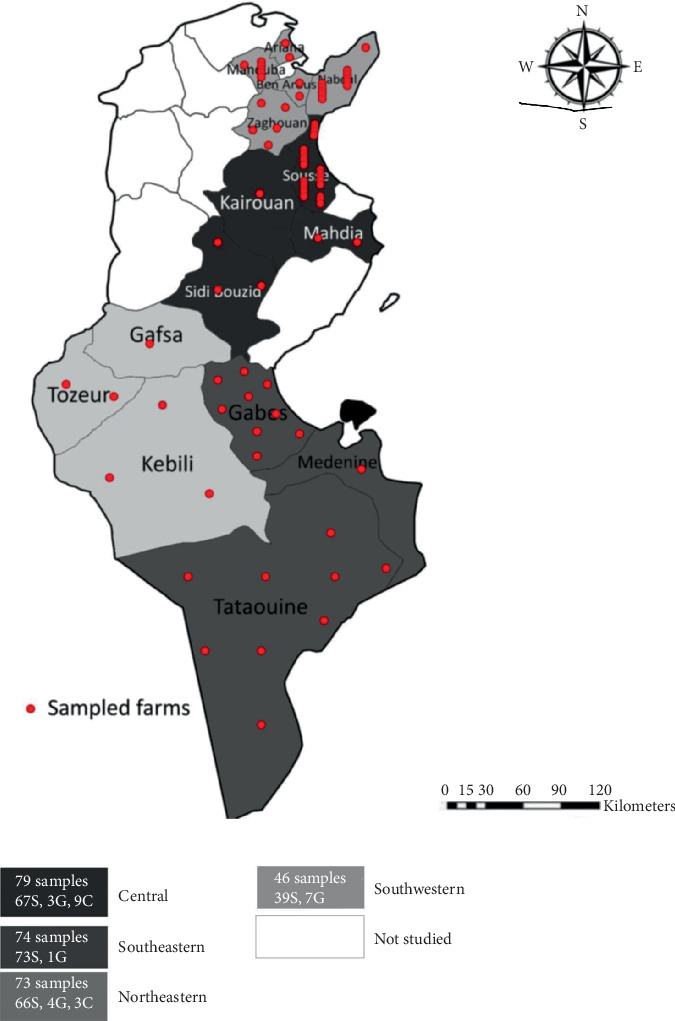 Figure 1
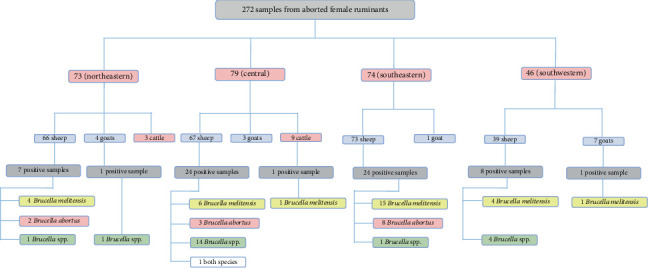 Figure 2
Peer Reviews
No public reviews on file for this paper yet. If you reviewed it on a platform where reviews are public (OpenReview, ICLR, NeurIPS, ICML), you can paste yours below so the community can read it here.
Videos
No videos yet. Explain this paper in a talk, walkthrough, or lecture? Add one.
Taxonomy
TopicsBrucella: diagnosis, epidemiology, treatment · Animal Diversity and Health Studies · Salmonella and Campylobacter epidemiology
1. Introduction
Brucellosis is a zoonotic disease caused by Gram-negative facultative intracellular bacteria of the genus Brucella that affects livestock, wildlife, and humans [1, 2]. Recognizing the significant impact of this disease, the World Organization for Animal Health (WOAH), the Food and Agriculture Organization (FAO), and the World Health Organization (WHO) have identified brucellosis as a significant global zoonotic disease [3, 4]. While brucellosis has been successfully controlled in many developed countries through effective prevention and eradication measures, it is still endemic in developing countries, particularly in Africa, the Middle East, Central Asia, Latin America, and various Mediterranean countries [3, 5]. Human contamination is often associated with animal infection, with approximately 2.1 million new human cases reported annually [6].
In Tunisia, Brucellosis is endemic and listed as a notifiable disease under national regulations. The incidence of human brucellosis in Tunisia has shown an exponential increase, rising from 2.9 cases per 100,000 inhabitants in 2008 to 3.9 cases per 100,000 in 2015 and reaching 9.8 cases per 100,000 in 2017 [7]. Several studies conducted in Tunisia indicate that over 90% of human cases are linked to raw milk consumption, 77% of neurobrucellosis cases to foodborne contamination, and 90.6% of patients report contact with infected animals [8–10]. This persistence is largely attributed to its presence in livestock. Surveillance data over a 14-year period (2005–2018) revealed that the seroprevalence of infected ruminant herds ranged from 0% to 70% of the flocks. Bovine brucellosis is primarily concentrated in the northern and southeastern regions, while small ruminant infections are widespread across most districts [11].
To date, more than 12 different species have been described within the genus Brucella [12]. The most virulent species is Brucella melitensis, which mainly affects sheep and goats, followed by Brucella abortus in cattle and Brucella suis in pigs [13, 14]. These species cause significant economic losses in the livestock sector, particularly due to abortion and infertility in females, resulting in reduced milk and meat production [15–17]. In humans, all species but B. suis bv. 2 are highly zoonotic, causing a serious and debilitating illness that requires prolonged combined antibiotic therapy. If left untreated, it can lead to severe sequels [18, 19].
The diagnosis of brucellosis traditionally relies on microbiological and serological methods. However, culture methods are time-consuming and require specialized laboratory facilities, and serological tests can lack sensitivity and specificity due to cross-reactivity. To address these issues, molecular techniques such as real-time PCR have been recommended due to their high sensitivity and reliability compared to serological methods [20–22].
Currently, the available data on brucellosis infection and its contribution to abortions in ruminants in Tunisia are fragmented and primarily based on serological methods [8, 11, 23, 24]. However, there have been a few studies that have employed highly sensitive molecular tools [7, 13, 25, 26]. A previous study has employed qPCR to investigate the involvement of brucellosis in bovine abortions, uniquely focusing on the governorate of Sfax in central-eastern Tunisia from 2010 to 2012 [25]. Despite previous studies indicating the presence of brucellosis among aborted ruminants, the actual contribution of this disease to abortion rates on domestic farms remains largely unknown in Tunisia.
Given the health and economic importance of this disease, comprehensive research studies are essential for effective control measures. This study is aimed at identifying Brucella species in samples collected from aborted ruminants in various Tunisian locations, between 2020 and 2022. The findings of this research may be very helpful in preventing and controlling the spread of this infection.
2. Materials and Methods
2.1. Clinical Cases of Abortion in Ruminants
As part of passive surveillance of infectious abortions in ruminants, the Centre National de Veille Zoosanitaire received alerts regarding abortion cases in cattle and small ruminants between February 2020 and November 2022. This management system relies on livestock owners voluntarily reporting cases to veterinary services, enabling veterinarians to conduct on-site investigations and collect samples promptly. Timely reporting is essential to identify the cause, prevent disease transmission, and improve herd health. In most cases, sampling was performed within 24–48 h postabortion; however, in some instances, it occurred more than 1 week after the event. Samples were collected and referred to the Epidemiology and Veterinary Microbiology Laboratory (Institut Pasteur de Tunis) for molecular diagnosis.
A total of 79 mixed farms (sheep, goats, and cattle) were included in this study, selected based on reported abortion problems and subsequent veterinary intervention requests. Although the selection was not random, efforts were made to ensure a broad geographic distribution, covering 33 sectors across 15 governorates: five governorates in the northeastern region (Ariana, Manouba, Ben Arous, Zaghouan, and Nabeul), four in the central region (Sousse, Mehdia, Sidi Bouzid, and Kairouan), three in the southeastern region (Gabes, Medenine, and Tataouine), and three in the southwestern region (Gafsa, Tozeur, and Kebili) (Figure 1).
2.2. Sample Collection and Processing
For each clinical case, one or more samples (blood, vaginal swabs, placenta, and fetus organs) were taken. A total of 272 samples (100 in 2020, 90 in 2021, and 82 in 2022) were obtained, including 167 vaginal swabs (159 from sheep, 3 from cattle, and 5 from goats), 35 organs (32 from sheep, 1 from cattle, and 2 from goats), and 70 blood samples (55 from sheep, 7 from cattle, and 8 from goats) that were referred to the laboratory for molecular analysis (Table 1). Regarding the analyzed organ types, placentas were collected from 13 cases of aborted females (11 from sheep and 2 from cattle). The other organ types were obtained from 22 aborted fetuses and included 20 from sheep (4 spleens, 4 stomachs, 4 cotyledons, and 8 livers) and 2 from goats (2 livers) (Table 1).
Out of the 272 samples, a collection of 35 blood and swab samples taken simultaneously from the same animals (33 from sheep and 2 from cattle) to determine the most effective sample type for Brucella detection using qPCR.
Each sample was individually placed in a sterile bag and transported to the laboratory in a cool box to maintain refrigeration throughout transit. A single positive animal within a flock was sufficient to classify the entire flock as positive.
2.2.1. Biosafety Procedures
To prevent the contamination of personnel and the environment with zoonotic pathogens, high biosecurity measures, protective laboratory clothing, and waste decontamination procedures were applied. All samples were processed under biosafety level two-plus (BSL2+) laboratory, and DNA extraction was conducted in a Class II Type A2 Biosafety Cabinet.
2.3. DNA Extraction
The collected vaginal swabs were resuspended in 900 μL of sterile 1× PBS (phosphate-buffered saline), and 500 μL of the suspension was centrifuged for 10 min at 10,000 × g. The obtained pellet was diluted in 100 μL of sterile 1× PBS and used for the extraction of bacterial DNA.
Regarding the organs, the samples were finely minced with a sterile scalpel in an aseptic environment. A total of 30 mg was then used for DNA extraction. For blood samples, a volume of 100 μL was used, and due to the presence of inhibitory substances in the blood, a 1:10 dilution (with sterile double-distilled water) was additionally prepared for DNA extraction.
The DNA extraction was conducted in accordance with the manufacturer's instructions for the QIAamp DNA Mini Kit (QIAGEN, Hilden, Germany). A volume of 100 μL of pathogen-free fetal bovine serum (FBS) (Gibco-BRL, Paisley, United Kingdom) was used as a negative control in the extraction step. The purified DNAs were eluted in 100 μL of AE buffer (QIAGEN, Hilden, Germany) and stored at −20°C until analysis.
2.4. qPCR Testing
The TaqMan RT-PCR Bru Multi Assay was performed to detect Brucella spp. DNA by amplifying a 121 bp fragment of the IS711 insertion element gene as previously described [13, 27]. Each 25 μL reaction contained 6.25 μL of TaqMan Environmental Master Mix (Life Technologies, Brant, France), 0.75 μL of each primer (10 μM), 0.25 μL of probe (10 μM), and 8.5 μL of nuclease-free water. Positive control containing B. abortus DNA (1 ng/μL) and two negative controls (one for extraction [FBS] and another for amplification [H_2_O/nuclease-free]) were included in each reaction, along with an internal KoMa plasmid DNA control [28]. Each DNA sample was tested in duplicate. The amplification was conducted in a real-time thermocycler, Bio-Rad CFX96 (Bio-Rad, Singapore), and the program consisted of an initial phase at 95°C for 600 s, succeeded by 40 cycles consisting of 15 s at 95°C and 60 s at 60°C. The data analysis was performed using the Bio-Rad CFX Maestro Software. Samples showing cycle threshold (Ct) values of 37 or less were considered positive.
Positive samples were further analyzed by RT-PCR Bru Diff Assay to differentiate B. abortus and B. melitensis, following the same conditions [13, 27]. All primers and probes used in this study (MOLBIOL, Berlin, Germany) were previously described [13].
3. Results
3.1. Frequency of Brucella spp. in Sheep, Goats, and Cattle
Out of the 272 analyzed samples for the presence of Brucella, 66 (24.26%) were found to be positive for qPCR, with a Ct value below 37. The negative controls were confirmed to be valid, with no signal detected. The positive control was also validated in all reactions. The qPCR results indicated an infection rate of 25.71% (63/245) in sheep, followed by 13.33% (2/15) in goats, and 8.33% (1/12) in cattle (Table 2).
The overall detection rate of Brucella spp. was estimated at 24% (60/250) in aborted females and 27.27% (6/22) in aborted fetal materials. Among the samples from aborted females, qPCR positivity was highest in vaginal swabs (31.13%, 52/167), followed by placental samples (30.77%, 4/13) and blood samples (5.71%, 4/70). Regarding aborted fetal materials, the spleen had the highest positivity rate (75%, 3/4), followed by the stomach (25%, 1/4) and the liver (20%, 2/10), while none of the cotyledon samples was PCR positive (Table 3).
Furthermore, out of the 35 collections of 35 blood and vaginal swab samples taken simultaneously from the same aborted females, nine (27.27%) tested positive for Brucella. Of these, eight positive cases (88.88%) were detected only in vaginal swabs, while the one Brucella-positive blood sample (11.11%) was also found to be positive in a vaginal swab sample (Table 4).
Out of the 66 Brucella-positive cases, 35 were detected in 2020 (34 in sheep and 1 in goat), 16 in 2021 (15 in sheep and 1 in cattle), and 14 in 2022 (13 in sheep and 1 in goat) (Table 5).
3.2. Frequency of B. melitensis and B. abortus
A qPCR analysis was conducted on all positive samples to identify the present Brucella species [29, 30]. Of the 66 positive samples, 46.96% (31/66) were identified as B. melitensis, while 19.69% (13/66) were assigned as B. abortus. Additionally, one sample (1/66; 1.51%) showed a coinfection with both B. abortus and B. melitensis.
A total of 21 (31.81%) of the Brucella spp. positive samples were not identified neither as B. abortus or B. melitensis. The highest positive rates for B. melitensis and B. abortus were observed in sheep with 46.03% and 20.63%, respectively. In goats, one case of B. melitensis and one case of Brucella spp. were identified, while in cattle, only one case of B. melitensis was observed (Figure 2).
4. Discussion
The present study offers updated data on the presence of Brucella spp. in aborted female ruminants, including sheep, goats, and cattle during the period between 2020 and 2022, using sensitive qPCR to detect and determine the circulating Brucella species and identify the most effective sample types for detecting Brucella. The use of molecular tools in diagnostics (PCR and RT-PCR) has addressed limitations associated with classical diagnostic methods such as prolonged processing times and biohazard risks [20, 21, 31]. The choice of qPCR based on the IS711 gene has been shown as a sensitive and specific assay in comparison to other qPCR tests targeting the bcsp31 and per genes as well as culture and serological tests [29, 31–33]. Indeed, the IS711 insertion sequence has been demonstrated to be a highly conserved element within the Brucella genus, which is present in multiple copies offering low detection limits up to 10 fg per reaction [13, 30].
Our study revealed the presence of Brucella DNA in 24.26% (66/272) of samples, underlining the extent of this infection in herds. This is in accordance with other studies confirming the circulation of Brucella in ruminant herds in Tunisia and its role as a significant cause of abortion, using qPCR. Indeed, it was reported by Barkallah et al., a notable Brucella positivity rate of 31.3% in bovine abortion cases in the Sfax region, in 2012 [25]. Furthermore, Barkallah and collaborators reported, in 2017, a Brucella positivity rate of 17.19% in sheep and cattle using qPCR [26].
Brucellosis prevention in Tunisia relies mainly on vaccination. Since 1975, a national program has targeted young dairy cattle (4–7 months) with the B19 vaccine, and in 1991, a similar program was launched for small ruminants using the Rev 1 vaccine for young females (from 3 months) and adults, with annual boosters. However, despite these long-standing vaccination efforts, brucellosis remains endemic [11]. According to our results, the highest number of positive samples was recorded in 2020 (35%), followed by 17.77% in 2021 and 18.29% in 2022. Despite this decreasing trend, the persistence of infection remains evident. This persistent issue emphasizes the need for improved control measures, including more effective vaccination campaigns, better herd management practices, and enhanced surveillance.
On the other hand, when compared to published studies from different countries, the observed percentage in the present study (24.26%) is lower than those reported in Iran (30%) [34], Iraq (32.16%) [35], Kenya (33.3%) [36], and Southeast Europe (37%) [37]. However, it is higher than those reported in Turkey (13, 92%) [31], Colombia (9.5%) [38], and Greece (14.77%) [39].
When comparing Brucella positivity rates based on animal species in our study, the infection rates in aborted animals were 25.71% (63/245) for sheep, 13.33% (2/15) for goats, and 8.33% (1/12) for cattle. Barkallah and collaborators have reported 31.3% in cattle in 2014 and 21.49% in cattle and 11.58% in sheep in 2017 in the Sfax region [25, 26]. Based on qPCR studies, positivity rates of 35.45% in sheep and 23.8% in goats in Iraq [34], 6.8% in sheep and 12.5% in goats in Iran [40], and 20.9% in cattle and 10.8% in sheep in Southern Cameroon [41] have been reported. These results clearly illustrate that positivity rates vary depending on the animal species, region, and study period. The detection of Brucella spp. in aborted females is estimated at 24% (60/250) and at 27.27% (6/22) in aborted materials. To further understand the distribution of Brucella spp. across different sample types and to identify the most effective samples for Brucella detection using qPCR, our study analyzed various specimens such as vaginal swabs, placenta, and blood from aborted female ruminants, as well as different fetal organs (including the liver, stomach, cotyledons, and spleen).
In aborted females, Brucella spp. DNA was detected most frequently in vaginal swabs, which had an infection rate of 31.13% (52/167), followed by placenta at 30.76% (4/13) and blood at 5.71% (4/70). These results are consistent with our findings from the collection of 35 blood and vaginal swab samples taken simultaneously from the same animals. Of these 35 samples, nine were positive (27.27%). A significant rate of 88.88% (8/9) was observed only in the vaginal swab samples, while the one Brucella-positive blood sample (11.11%) (1/9) was also found to be positive in a vaginal swab sample. The lower detection rate in blood may be attributed to the timing of sample collection, as some samples were obtained more than 1 week after abortion events due to the passive nature of surveillance and logistical constraints. This delay likely reduced the likelihood of detecting Brucella DNA circulating in the bloodstream.
Moreover, variability in positivity rates was observed across different organ types. The spleen exhibited an infection rate of 75% (3/4), followed by the stomach at 25% (1/4), and the liver at 20% (2/10). These results highlight the importance of selecting the appropriate sample type for detecting Brucella. They confirm the high sensitivity of the qPCR method, particularly in vaginal swabs, and suggest that certain organs, notably the spleen and placenta, can increase the probability of detecting Brucella in aborted female ruminants. Furthermore, a genital swab taken after abortion or parturition in goats, sheep, or cows appears to be a highly effective biological specimen for the detection and recovery of viable Brucella cells [42, 43].
Among the positive samples, B. melitensis was identified in 46.96%, B. abortus in 19.69%, and one sample (1.51%) demonstrated coinfection with both B. abortus and B. melitensis. Notably, 31.81% of the Brucella-positive samples could not be classified as either B. melitensis or B. abortus. Both species were most prevalent in sheep, accounting for 46.03% and 20.63%, respectively. One case of B. melitensis was also detected in goat and cattle.
These results confirm the circulation of B. melitensis and B. abortus in ruminant livestock, which could be explained by several factors, including inadequate disposal of aborted materials, lack of cooperation between policymakers and health professionals, and insufficient government compensation for infected animals, which are major obstacles to disease control. Furthermore, hesitancy toward vaccination, uncontrolled animal movements, and the absence of appropriate diagnostic methods further aggravate the situation. Control strategies such as “test-and-slaughter” and milk pasteurization, which have proven effective in developed countries, may not be suitable for developing countries including Tunisia due to resource limitations. These results thus highlight the need for enhanced national and international collaboration, as well as better training for veterinary and medical personnel, to effectively combat brucellosis in these regions [44].
While B. melitensis has been linked to infections in sheep and goats, B. abortus is typically associated with cattle [45]. However, this host specificity has largely changed, and both species could be found in small ruminants and cattle. Indeed, B. abortus in sheep has been reported in Egypt [46], Pakistan [47], Southern Cameroon [41], and Iran [34, 40]. On the other hand, B. melitensis in cattle has been reported in Southern Cameroon [41], Tanzania [48], and Pakistan [49], which corroborates with our findings.
Coinfection with both B. abortus and B. melitensis was detected in sheep (1/66) from a mixed farm. This finding is not unexpected, since several previous studies have reported similar results [21, 40, 41, 46, 50]. These studies highlighted that the cohabitation of different ruminant species within the same farms or shared grazing areas facilitates the transmission of multiple Brucella species. The transmission is often facilitated by exposure to secretions from infected cows, particularly under mixed farming conditions. In Tunisia, mixed farming systems are common and occupy 75%–85% of the agricultural land [51]. The practice of herding multiple ruminant species together, which is a traditional activity among sheep breeders in Tunisia, significantly increases the risk of brucellosis transmission between species [21].
5. Conclusions
The present study revealed a relatively high occurrence of brucellosis (24.26%) in aborted female ruminants, as detected by qPCR, indicating a widespread presence of the disease in the study region of Tunisia. The qPCR method demonstrated high sensitivity, particularly when applied to vaginal swabs and fetal organs, such as the spleen and placenta. Both species B. melitensis and B. abortus were detected, posing a potential risk to human health. However, as the study was conducted in the context of diagnosing passive abortion, the results may not accurately reflect the true prevalence of the disease in livestock. The study confirmed the need to strengthen vaccination programs for ruminants and to raise public awareness of brucellosis.
The reference list from the paper itself. Each links out to its DOI / PubMed record.
- 1Qureshi K. A. Parvez A. Fahmy N. A. Brucellosis: Epidemiology, Pathogenesis, Diagnosis and Treatment–A Comprehensive Review Annals of Medicine 2023552229539810.1080/07853890.2023.229539838165919 PMC 10769134 · doi ↗ · pubmed ↗
- 2Cloeckaert A. Roop R. M. Scholz H. C. Whatmore A. M. Zygmunt M. S. Editorial: Pathogenomics of the Genus Brucella and Beyond, Volume II Frontiers in Microbiology 20241510.3389/fmicb.2024.137033038333583 PMC 10850559 · doi ↗ · pubmed ↗
- 3Corbel M. J. Food and Agriculture Organization of the United Nations World Health Organization World Organization for Animal Health Brucellosis in Humans and Animals 2006 World Health Organization https://iris.who.int/handle/10665/43597
- 4Hull N. C. Schumaker B. A. Comparisons of Brucellosis Between Human and Veterinary Medicine Infection Ecology & Epidemiology 201881 p. 150084610.1080/20008686.2018.15008462-s 2.0-85052054007 PMC 606334030083304 · doi ↗ · pubmed ↗
- 5Buttigieg S. C. Savic S. Cauchi D. Lautier E. Canali M. Aragrande M. Brucellosis Control in Malta and Serbia: A One Health Evaluation Frontiers in Veterinary Science 20185 p. 14710.3389/fvets.2018.001472-s 2.0-85050266022 PMC 603785030018972 · doi ↗ · pubmed ↗
- 6Laine C. G. Johnson V. E. Scott H. M. Arenas-Gamboa A. M. Global Estimate of Human Brucellosis Incidence Emerging Infectious Diseases 20232991789179710.3201/eid 2909.23005237610167 PMC 10461652 · doi ↗ · pubmed ↗
- 7Selmi R. Mamlouk A. Belkahia H. Serological and Molecular Survey of Brucellosis and Chlamydiosis in Dromedary Camels From Tunisia Comparative Immunology, Microbiology and Infectious Diseases 202410410209810.1016/j.cimid.2023.10209838007988 · doi ↗ · pubmed ↗
- 8Khbou M. K. Htira S. Harabech K. Benzarti M. First Case-Control Study of Zoonotic Brucellosis in Gafsa District, Southwest Tunisia One Health 20185212610.1016/j.onehlt.2017.12.0012-s 2.0-8503884789029911160 PMC 6000818 · doi ↗ · pubmed ↗