German pediatric intensive care transport registry: study protocol for a prospective multicenter registry
Stefan Winkler, Felix Dittgen, Edmondo Hammond, Nele Börner, Johanna Kossack, Frank Eifinger, Ingeborg Alijda van den Heuvel, Elias Klinghammer, Victoria Lieftüchter, Pia Paul, Alba Perez-Ortiz, Patricia Bimboese, Richard Biedermann, André Jakob, Sarah Irlbeck, Nadine Mand

TL;DR
This study aims to create a nationwide registry for transporting critically ill children in Germany to better understand and plan for their medical needs.
Contribution
The paper introduces a prospective multicenter registry to collect data on pediatric critical care transports in Germany for the first time.
Findings
Currently, there is no structured data on pediatric critical care transports in Germany.
The registry will collect and analyze transport data to inform future demand planning.
Participating pediatric centers will submit anonymized data via a secure web-based platform.
Abstract
In contrast to critical care transport of adults or newborns, transport of pediatric critical care patients in Germany is neither regulated by law nor centrally organized. Due to their different therapeutic needs compared to newborns or adults, critically ill children may receive insufficient treatment during transport. In some regions in Germany, pediatric centers provide specialized pediatric retrieval teams, while others organize each transport individually. Currently, no valid data on pediatric critical care transports in Germany are available, nor are they recorded in a structured manner. To establish a nationwide registry for pediatric intensive care transports in Germany. The aim is to describe and analyze the need for and current practice of specialized transports. This data may be used for future demand planning. Transports are documented by pediatric centers admitting…
Genes, proteins, chemicals, diseases, species, mutations and cell lines named across the full text — each resolved to its canonical identifier and authoritative record.
Click any figure to enlarge with its caption.
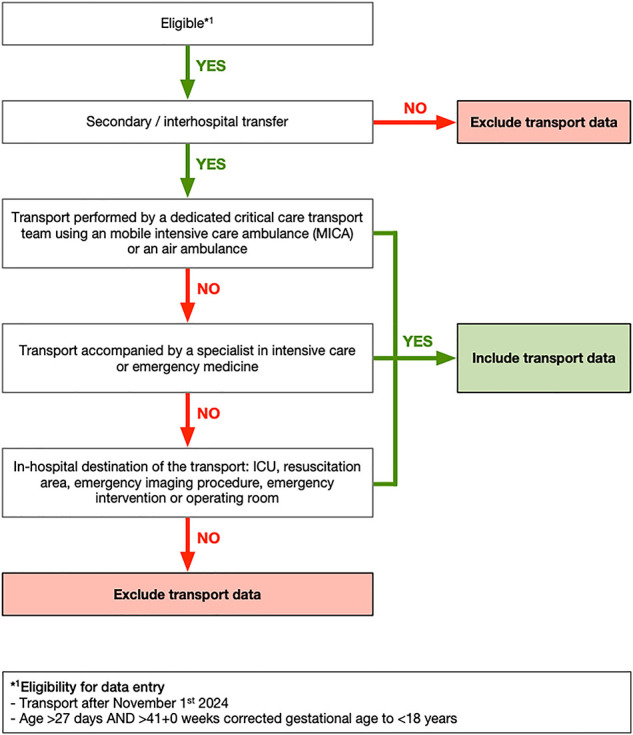 Figure 1
Peer Reviews
No public reviews on file for this paper yet. If you reviewed it on a platform where reviews are public (OpenReview, ICLR, NeurIPS, ICML), you can paste yours below so the community can read it here.
Videos
No videos yet. Explain this paper in a talk, walkthrough, or lecture? Add one.
Taxonomy
TopicsTrauma and Emergency Care Studies · Emergency and Acute Care Studies · Healthcare Policy and Management
Introduction
1
While pediatric services in Germany lack the centralized structure seen in the United Kingdom or the United States, pediatric intensive care is mainly concentrated in large pediatric centers. Critically ill infants and children are typically transported to the nearest children's hospital, where their condition is assessed, initial stabilization is provided, and transfer to a pediatric intensive care unit (PICU) is coordinated. Referral of critically ill children to these centers or PICUs necessitates specialized critical care transport. In retrospective association studies, transport by specialist pediatric critical care transport teams (PCCTs) was associated with fewer transport-related adverse events or interventions needed directly after admission (1, 2). Non-specialist transport teams often reported feeling uncomfortable or uncertain when administering pediatric medication or trauma care prehospitally (3–6), thus negatively influencing parents’ experience of their child's emergency transfer (7). Prospective cohort studies demonstrated a significant improvement in survival rates for patients transferred by PCCTs, after adjustment for illness severity (8, 9). However, establishing and maintaining PCCTs requires significant resources (10). Currently, unlike adult or neonatal critical care transport, pediatric critical care transport in Germany is neither legally regulated nor centrally organized. Consequently, retrieval of critically ill children is often performed by general emergency medical services (EMS) or adult critical care transport teams, with occasional support from pediatric specialists. These non-specialized teams are frequently available but may have limited pediatric training and experience in managing true pediatric emergencies. Furthermore, their equipment may be inappropriate for optimal care of pediatric patients. In contrast to Germany, numerous countries run nationwide or large-scale PCCT programs (11, 12). In the United Kingdom, pediatric intensive care services were centralized over 20 years ago. Subsequently, PCCTs were set up for each region to transport critically ill children from acute general hospitals to dedicated PICUs (13, 14). Transport cases account for almost half of the 12,000 annual emergency admissions to UK PICUs, with the majority of these cases handled by PCCTs (15).
To date, no published nationwide data exist on pediatric critical care transports in Germany. To address these challenges, we initiated the development of a nationwide pediatric critical care transport registry. This report outlines the rationale, framework, development, and refinement of the German “Pediatric Intensive Care Transport Registry” (PIT Registry) dataset, as well as the registry's operational methods.
Methods and analysis
2
Goals of the registry
2.1
The Pediatric Intensive Care Transport Registry is designed as a prospective multi-center registry. It was initiated to establish a research infrastructure for the systematic documentation of pediatric intensive care transports across Germany. The PIT registry aims to improve the quality and accessibility of care for critically ill children by providing a comprehensive dataset covering transport characteristics, patient demographics, medical interventions, clinical status upon admission, and transport-related adverse events.
The primary objective of the PIT registry is to collect timely, nationwide data on pediatric intensive care transports to address relevant clinical and research questions. The secondary aim is to assess the actual demand for pediatric intensive care transport services in Germany and to compare these needs with existing transport capacities and organizational structures.
Governance
2.2
The registry was formally initiated in June 2023 by the Transport Working Group of the Pediatric Section of the German Interdisciplinary Association for Intensive Care and Emergency Medicine (DIVI) and has since received official endorsement from the DIVI. The registry was launched in November 2024, with the first patient being enrolled on 25 November 2024.
Its coordination is overseen by a steering committee comprising four members representing three university medical faculties (Dresden, Mannheim, Marburg) and one regional pediatric center (Bad Kreuznach). In addition to the formal management of the registry, the steering committee is also responsible for public relations and communication management, onboarding and training of newly participating centers, as well as data management. Virtual steering committee meetings are held biweekly to support this process.
As the PIT registry is not based on an existing network of children's hospitals, a system of regional PIT coordinators was implemented across the German federal states, with one or two coordinators assigned to each state. These coordinators are responsible for the decentralized recruitment of local PICUs and for obtaining the necessary approvals from local ethics committees. They also form the Scientific Advisory Board. Virtual meetings with the coordinators are held every month.
All German hospitals with pediatric intensive care units that receive pediatric critical care transports are eligible to participate in the PIT registry, regardless of patient volume. Each participating pediatric center has a designated local representative (PIT investigator) who ensures on-site data collection and serves as the registry's contact person. New participating centers receive training from members of the steering committee on the study population and data entry procedures, thereby promoting data completeness and comprehensiveness. These trainings are offered on a weekly basis. Ongoing communication with local sites is ensured through dedicated email contacts.
The steering committee, regional coordinators, and local investigators of the Pediatric Intensive Care Transport Registry collectively form the PIT study group.
Study population
2.3
All interhospital pediatric intensive care transports of children, aged >27 days and >41 + 0 weeks of corrected gestational age, to <18 years, are eligible for data entry.
Critical care transports are defined as transports that meet at least one of the following criteria: I) The transport was performed by a dedicated critical care transport team using a mobile intensive care ambulance (MICA) or an air ambulance. II) The transport was accompanied by a specialist in intensive care or emergency medicine. III) The in-hospital destination of the transport is a critical care area, such as an intensive care unit, a resuscitation area, an operating room, an emergency imaging procedure, or an emergency intervention (see Figure 1).
Inclusion criteria for transport datasets. ICU, intensive care unit.
Dataset
2.4
The registry dataset was developed by experts in the field of pediatric intensive care and pediatric critical care transport through a two-stage Delphi process (16). It consists of 71 variables in four categories: (I) Details on transport timing, referral, and accepting hospitals; (II) Patient details including vitals on arrival; (III) Details on the transport team and the transport equipment; (IV) Interventions by the transport teams and critical incidents. The minimum dataset comprises seven mandatory variables (date of transport, collection unit, collection area, destination unit, destination type, patient's age, mode of transport). Both English and German versions of the data dictionary can be found on the PIT registry homepage (https://www.pit-register.de), Mendeley Data (DOI: 10.17632/nngrkzxjf8.1) and in the supplement (see Supplementary Tables S1, S2).
The dataset will be evaluated for completeness and plausibility on a regular basis. After the first six months of data collection, local investigators from the participating pediatric intensive care units (PICUs) will be consulted on potential improvements to the collected variables. Based on this feedback, selected variables will be revised as necessary. To ensure the registry is continuously refined, local PICU investigators will regularly be involved in the review process. All modifications to the set of variables will be systematically documented to maintain the highest level of transparency.
Data management
2.5
To ensure comprehensive documentation of pediatric critical care transports and to prevent duplicate records resulting from multiple entries, transports are documented by pediatric centers that admit patients via critical care transport. Upon admission, eligible patients’ transport data is documented using a standardized paper-and-pencil sheet. Secondary, local PIT investigators enter fully anonymized patient data via electronic case report forms (eCRFs) into REDCap (Research Electronic Data Capture) (17, 18). This Data is stored on a server at the Coordinating Centre for Clinical Trials (CCC) of Philipps-University Marburg (Germany).
Patient data are fully anonymized so that reported transports cannot be re-identified by CCC personnel or scientists analyzing the data. The study and data protection protocol were initially approved by the ethics committees at the Technical University Dresden (Germany) (study ID: REG-EK-270072024). Subsequently, the study protocol was approved at the local ethics committees of all participating pediatric centers.
All members of the PIT study group are eligible to apply to use PIT registry data to answer specific scientific questions. Study proposals can be submitted via the Use and Access Committee (UAC), which comprises rotating members of the Steering Committee and the Scientific Advisory Board. Further details have been published in the dedicated publication guidelines on the PIT registry website.
Data monitoring and data quality
2.6
Routine data quality checks will be conducted at regular intervals, especially during the initial period of the registry, to ensure accuracy and consistency. Each PIT investigator is responsible for ensuring the correctness and plausibility of their data before submitting it. However, as the registry is fully anonymized, individual centers will not be able to modify data once it has been submitted.
As data will be checked for completeness and plausibility, single centers will be audited and re-trained when a high percentage of missing or implausible values appear. Items with a high proportion of missing values are regularly re-evaluated and adjusted if necessary.
The quality of the survey methods is investigated on an annual basis. Quality indicators comprise (I) the nationwide coverage of the PIT registry (based on eligible and participating centers), (II) the completeness of values per case and possible reasons for incompleteness, and (III) the amount of and reasons for implausible values.
The registry data are evaluated annually by the steering committee, in collaboration with statisticians and epidemiologists. The resulting annual reports are distributed to all participating centers by the end of the first quarter of each year.
As the registry is planned as a long-term, open-ended registry, it is intended to evolve and change with emerging research questions.
Statistical analysis
2.7
Statistical analyses are performed continuously for monitoring purposes. Patient demographics and basic transport variables will be summarized using descriptive summary measures. Further analysis will be performed according to specific research questions and will be undertaken by a trained statistician or epidemiologist. Upon request, only evaluated data will be provided for study purposes, not original data.
Discussion
3
The Pediatric Intensive Care Transport Registry aims to collect transport data on a nationwide basis, providing the first comprehensive and reliable data on pediatric critical care transports across Germany.
As EMS in Germany are regulated by the federal states on a regional basis, the result is a heterogeneous landscape of transport systems for patients of all ages. Regional studies focusing on EMS for pediatric-out-of hospital emergencies indicate a low incidence of critical illness among children (19) and a high rate of inappropriate utilization for mildly ill pediatric cases (20). Local infrastructure for the interhospital transfer of critically ill children is limited to individual regional projects (21) and there is a lack of nationwide systems dedicated to their transport. This poses significant challenges for the systematic collection and analysis of relevant data, which are to be addressed through the PIT registry.
Clinical registries have become a vital tool for performance measurement, quality improvement, and clinical research. They expose variations in practices, processes, and outcomes, and identify targets for improvement (22). In pediatrics, registries have been associated with improved outcomes, particularly in the management of preterm neonates, in pediatric oncology, pediatric critical care, and in critical care transport (9, 23–28). Recently, a nationwide pediatric registry focusing on pediatric intensive care admissions (PIA) in Germany has been initiated (29). This network aims to improve pediatric intensive care medicine in Germany by providing a comprehensive understanding of critical illness, benchmarking treatment quality, and enabling disease surveillance. Integrating data from the PIT registry with the PIA network may enhance future analysis of outcomes in critically ill children affected by intensive care transport.
The systematic collection of data on pediatric critical care transports within the PIT registry facilitates the identification of current practices and needs. In the future, these data will support needs-based planning, the development of quality indicators, and the design of targeted training programs for the personnel involved in pediatric intensive care transports.
The registry has several limitations: (I) Due to the lack of standardized software interfaces for patient management data systems (PDMS) that integrate with the study database, the data entry process is currently manual. This additional burden on already limited human resources in German hospitals may compromise the likelihood of complete data entry. To ensure the completeness of data, routine data quality checks are conducted, and centers will be re-trained when a high percentage of missing or implausible values appear. (II) Since registry participation is voluntary, a comprehensive database encompassing all pediatric critical care transports performed in Germany seems unlikely to be achieved. Nevertheless, the decentralized structure based on regional study coordinators assigned to the German federal states has proven highly effective in inviting regional pediatric centers for study participation and supporting them with applications to their local Institutional Review Boards. (III) To avoid interfering with already established neonatal registries and to ensure comparability with the population represented in the German PIA network, only non-neonatal cases are included in the registry. However, this approach may result in the omission of some transports conducted by pediatric critical care teams. As the registry is intended to evolve, a future adjustment of the inclusion criteria is conceivable. (IV) Local PIT investigators are responsible for data entry, and no monitoring is available to ensure the completeness and quality of the captured data. Therefore, regional study coordinators will play a key role in maintaining close interaction with participating centers to encourage their active participation in the study. (V) No government or institutional funding is currently available to support the project, which poses a significant risk to its long-term continuation.
To overcome these limitations and to unlock its full potential, the registry will require ongoing refinement and advancement of its methods. The optimized digitalization of hospital documentation and automated data export to study databases are essential in minimizing the workload of personnel involved and facilitating the collection of high-quality data. Close interaction between regional study coordinators and participating centers, as well as transparent rules for data availability, which is granted to all members of the PIT study group, are key elements for active study participation.
In summary, the PIT registry is a nationwide pediatric critical care transport registry that aims to improve the availability and quality of transports of critically ill children across Germany. Regional study coordinators play a key role in encouraging pediatric centers for active participation. In the future, potential collaborative data collection between the PIA network and the PIT registry may further enhance the possibilities for analysis and improve the reliability of the data.
The reference list from the paper itself. Each links out to its DOI / PubMed record.
- 1Vos GD Nissen AC Nieman HM Meurs F Waardenburg MM Bvan DA Comparison of interhospital pediatric intensive care transport accompanied by a referring specialist or a specialist retrieval team. Intensiv Care Med. (2004) 30:302–8. 10.1007/s 00134-003-2066-714618230 · doi ↗ · pubmed ↗
- 2Prabhudesai S Kasala M Manwani N Krupanandan R Ramachandran B. Transport-related adverse events in critically-ill children: the role of a dedicated transport team. Indian Pediatr. (2017) 54:942–5. 10.1007/s 13312-017-1187-y 28849766 · doi ↗ · pubmed ↗
- 3Tsao HS Sutcliffe T Wang C Vargas SE Day C Brown LL. Barriers and enablers in prehospital pediatric analgesia. Prehospital Emerg Care. (2024) 29:1–7. 10.1080/10903127.2024.243158639561318 · doi ↗ · pubmed ↗
- 4Carey JM Studnek JR Browne LR Ostermayer DG Grawey T Schroter S Paramedic-identified enablers of and barriers to pediatric seizure management: a multicenter, qualitative study. Prehospital Emerg Care. (2019) 23:870–81. 10.1080/10903127.2019.159523430917730 · doi ↗ · pubmed ↗
- 5Shah MI Ostermayer DG Browne LR Studnek JR Carey JM Stanford C Multicenter evaluation of prehospital seizure management in children. Prehospital Emerg Care. (2021) 25:475–86. 10.1080/10903127.2020.178819432589502 · doi ↗ · pubmed ↗
- 6Patel SC Murphy S Penfil S Romeo D Hertzog JH. Impact of interfacility transport method and specialty teams on outcomes of pediatric trauma patients. Pediatr Emerg Care. (2018) 34:467–72. 10.1097/pec.000000000000116728463947 · doi ↗ · pubmed ↗
- 7Evans REC Barber V Ramnarayan P Davies P Wray J, Group on behalf of the DS. Emergency inter-hospital transfer of children to PIC Us in the United Kingdom: qualitative exploration of Parents’ experiences of retrieval teams. Pediatr Crit Care Med. (2023) 24:e 476–86. 10.1097/pcc.000000000000326737166250 · doi ↗ · pubmed ↗
- 8Orr RA Felmet KA Han Y Mc Closkey KA Dragotta MA Bills DM Pediatric specialized transport teams are associated with improved outcomes. Pediatrics. (2009) 124:40–8. 10.1542/peds.2008-051519564281 · doi ↗ · pubmed ↗