Is there a difference in the expression levels of genes responsible for fluconazole resistance in Candida albicans isolated from people with different underlying diseases? A systematic review
Akbar Hoseinnejad, Mehrnoush Maheronnaghsh, Mojtaba Taghizadeh Armaki, Jalal Jafarzadeh, Mahnaz Fatahinia

TL;DR
This systematic review examines how fluconazole resistance gene expression in Candida albicans varies among people with different underlying diseases.
Contribution
The study systematically identifies key genes (CDR1, ERG11, MDR1, CDR2) most associated with fluconazole resistance in C. albicans.
Findings
CDR1 is the most highly expressed gene among those involved in fluconazole resistance in C. albicans.
Underlying diseases and treatment factors may influence resistance mechanisms in C. albicans.
ERG11, MDR1, and CDR2 follow CDR1 in gene expression levels related to resistance.
Abstract
Fluconazole is one of the primary antifungal agents in the treatment of candidiasis. However, long-term treatment and indiscriminate use of drugs from the azole family have created resistant isolates. Candida albicans cells can develop resistance to fluconazole through various mechanisms. The present study aimed to investigate the expression of genes involved in fluconazole resistance in C. albicans in people with different underlying diseases. Databases, such as PubMed, Scopus, and Web of Science were used to collect studies evaluating the expression levels of key C. albicans genes associated with fluconazole resistance from 1997 to 2024. Finally, 25 out of the 1,096 extracted studies were selected based on the inclusion and exclusion criteria. This systematic review identified the genes encoding the ATP-binding cassette membrane pump (CDR1, CDR2) and the genes encoding the major…
Genes, proteins, chemicals, diseases, species, mutations and cell lines named across the full text — each resolved to its canonical identifier and authoritative record.
Click any figure to enlarge with its caption.
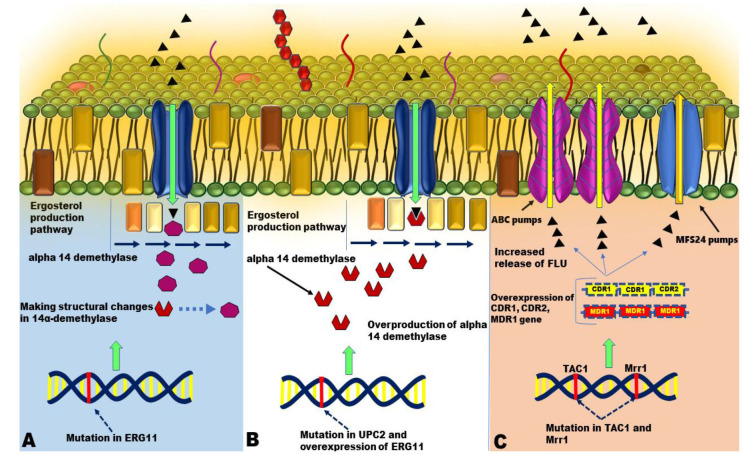 Figure 1
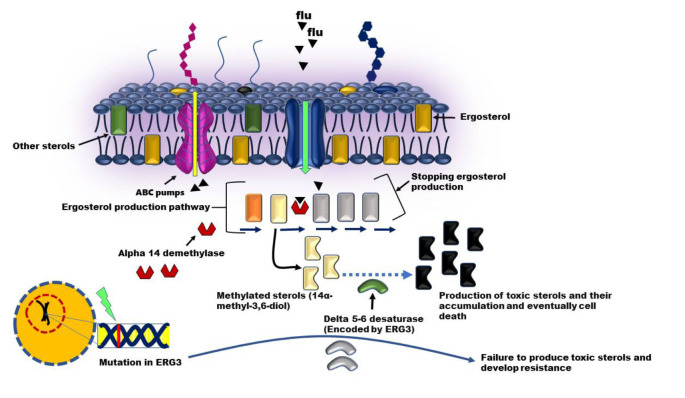 Figure 2
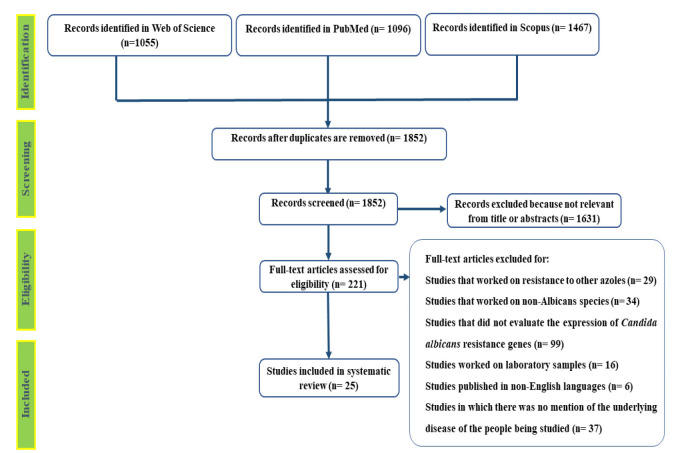 Figure 3
| No. | Author, year, country, and reference | Underlying disease | Isolated source | Evaluation of the expression of | Overexpression in |
|---|---|---|---|---|---|
| 1 | Sanglard et al. (1995) Switzerland [ | HIV-infected patients | Oral or esophageal samples | ||
| 2 | White et al. (1997) USA [ | HIV-infected patients | Oral samples | ||
| 3 | Franz et al. (1998) Germany [ | Oral samples | |||
| 4 | Lopez-Ribot et al. (1998) USA [ | HIV-infected patients | Oral or esophageal samples | ||
| 5 | Franz et al. (1998) Germany [ | HIV-infected patients | Oral samples | ||
| 6 | Maesaki et al. (1999) Japan [ | HIV-infected patients | Oral or esophageal samples | ||
| 7 | Perea et al. (2001) USA [ | HIV-infected patients | Oral samples | ||
| 8 | Maebashi et al. (2001) Japan [ | HIV-infected patients | Oral samples | CDR1 (FC: ND), CDR2 (FC: ND) | |
| 9 | Rogers et al. (2002) USA [ | HIV-infected patients | Oral samples | ||
| 10 | Martinez et al. (2002) USA [ | HIV-infected patients | Oral samples | ||
| 11 | Goldman et al. (2004) Brazil [ | HIV-infected patients | Oral samples | ||
| 12 | Ribeiro et al. (2005) Brazil [ | HIV-infected patients | Vaginal samples | ||
| 13 | Xu et al. (2006) China [ | Bone marrow transplantation patients | Blood culture samples | ||
| 14 | Dunkel et al. (2008) Germany [ | HIV-infected patients | Oral samples | ||
| 15 | Sikhala et al. (2010) Finland [ | APECED patients | Oral samples | ||
| 16 | Mario et al. (2012) France [ | HSCT recipient, heart transplant recipient | Respiratory tract, blood culture sample | ||
| 17 | Sikala et al. (2013) Finland [ | APECED patients | Oral samples | ||
| 18 | Morio et al. (2013) France [ | HIV-infected patients | Oral, respiratory tract, intra-abdominal sample | ||
| 19 | Eddouzi et al. (2015) Tunisia [ | Bone marrow transplantation patients | Oral swabs and blood culture samples | ||
| 20 | Rosana et al. (2015) Indonesia [ | HIV-infected patients | Oral samples | ||
| 21 | Salari et al. (2015) Iran [ | HIV-infected patients | Oral samples | CDR1, CDR2, MDR1, ERG11 | CDR1 (FC: ND), CDR2 (FC: ND), MDR1 (FC: ND) |
| 22 | Alizadeh et al. (2017) Iran [ | Immunocompromised patients | Oral, vaginal, and cutaneous samples |
|
|
| 23 | Hiyama et al. (2021) Japan [ | Diabetics patients | Urine sample | ||
| 24 | Maheronnaghsh et al. (2022) Iran [ | Cancer patients | Oral cavity and tongue samples | ||
| 25 | Jahanshiri et al. (2022) Iran [ | Head and neck cancer patients | Oral samples |
Peer Reviews
No public reviews on file for this paper yet. If you reviewed it on a platform where reviews are public (OpenReview, ICLR, NeurIPS, ICML), you can paste yours below so the community can read it here.
Videos
No videos yet. Explain this paper in a talk, walkthrough, or lecture? Add one.
Taxonomy
TopicsFungal Infections and Studies · Antifungal resistance and susceptibility · Parasites and Host Interactions
Introduction
Candidiasis is a primary or secondary fungal infection that can be caused by different species of Candida. It can present acutely, subacutely, or chronically on different human surfaces, such as skin, nails, mucous membranes, and internal organs. Mucosal candidiasis is one of the most common types of this infection, which mainly affects the mucous membrane of the mouth and esophagus; moreover, several species of Candida, especially C. albicans, can cause this disease [ 1
- 3 ]. For the treatment of this fungal infection, various antifungal drugs, such as azoles, especially fluconazole, are used. In recent years, numerous reports have highlighted the resistance of C. albicans to this antifungal in various patients, which ultimately caused the failure of the treatment in these cases [ 4 , 5 ].
Various mechanisms cause the resistance of C. albicans to fluconazole, which includes changes in 14α-demethylase, increased production of 14α-demethylase, exit phenomenon, and changes in the ergosterol synthesis pathway. One of the genes that play an important role in the resistance mechanisms against fluconazole is ERG11. This gene encodes the 14α-demethylase enzyme, and the mutation in this gene reduces the affinity of 14α-demethylase to fluconazole, and by making structural changes in 14α-demethylase, it does not allow azole drugs to stick to this enzyme, thereby leading to resistance in fungi (Figure 1-A)[ 6
- 8 ]. Mutations in the UPC2 gene, which controls the expression level of the ERG11 gene, can increase the expression of the ERG11 gene and the number of its copies, eventually resulting in the overproduction of 14α-demethylase, which is considered another resistance mechanism to fluconazole in C. albicans (Figure 1-B) [ 9
- 10 ]. The CDR1, CDR2, and MDR1, which encode Candida membrane efflux pumps, are among the genes effective in resistance to azoles, especially fluconazole. The CDR1 and CDR2 encode the ATP-binding cassette (ABC) pumps, and MDR1 encodes the major facilitator superfamily pumps, which ultimately cause the release of toxic molecules, such as azole drugs from Candida cells. TAC1 and MRR1 genes control the expression of CDR1, CDR2, and MDR1 genes; in addition, the mutation in each of them will increase the expression of CDR1, CDR2, and MDR1, and as a result, increase resistance against azole drugs (Figure 1-C) [ 11 , 12 ].
A. A mutation in the ERG11 gene (encoding the 14-alpha-deamylase enzyme) results in an amino acid substitution in the 14-alpha-deamylase protein sequence. These changes lead to a reduction in the affinity of 14-alpha-deamylase for azoles or to structural changes that prevent fluconazole from reaching the active site. Ultimately, it causes a resistant phenotype. B. Mutation in UPC2 and overexpression of ERG11 followed by overproduction of alpha-14 demethylase and resistance to fluconazole. C. TAC1 and MRR1 genes control the expression of CDR1, CDR2, and MDR1 genes. In addition, the mutation in each of them will increase the expression of CDR1, CDR2, and MDR1, and as a result, increase resistance against azole drugs.
Another gene involved in the resistance of Candida to azoles is ERG3. It should be noted that azole drugs, including fluconazole, by inhibiting the 14α-demethylase enzyme, cause the accumulation of 14α-methyl-3,6-diol in the C. albicans membranes, and these methylated sterols are converted by the enzyme delta 5-6 desaturase (encoded by ERG3). It becomes toxic to the products, and the accumulation of these toxic substances causes the death of the fungus. When a mutation occurs in the ERG3 gene, toxic products are not produced and C. albicans survive in the presence of fluconazole (Figure 2). This resistance mechanism has been shown experimentally by targeted deletion of the ERG3 gene in laboratory strains [ 13 , 14 ].
In the presence of fluconazole, inhibition of 14-alpha-deamylase leads to the accumulation of methylated sterols in the cell. These are then converted into toxic sterols by delta-5,6-desaturase (encoded by the ERG3 gene). If the ERG3 gene is mutated, these toxic products are no longer produced and the fungal cell survives and becomes resistant to fluconazole.
Besides genetic mutations or expression changes, environmental factors, such as host immune status, biofilm formation, efflux pumps, and environmental stressors (oxidative stress and nutrient limitation) play significant roles in modulating fluconazole resistance in Candida species [ 15 ]. The present study aimed to investigate the expression of genes involved in C. albicans resistance in people with different underlying diseases. By obtaining comprehensive information about the activity of these genes, the emergence of resistance to fluconazole and other azoles can be prevented, and appropriate treatment methods can be identified.
Materials and Methods
Literature search
In this systematic review with a comprehensive search conducted by three authors, several databases, such as PubMed (Medline), Scopus, and Web of Science were used to collect all studies evaluating the expression level of the key involved in C. albicans resistance to fluconazole from 1997 to 2024. The search in the mentioned databases was performed using a specific set of medical subject headings ("Resistance mechanisms" OR resistant OR "molecular mechanisms" OR "Drug resistance" OR resistance OR "efflux pumps" OR "ABC transporter" OR "resistant phenotype" OR "Efflux Mechanisms" OR "ATP-binding cassette" OR "drug efflux" ) AND ( fluconazole* OR "antifungal agents" OR "antifungal drugs" OR azole OR "azole resistance" OR "Subinhibitory concentrations") AND ("Candida albicans" OR candidiasis OR "oropharyngeal candidiasis" OR "vulvovaginal candidiasis") AND (cdr* OR erg11* OR mdr1 OR "Gene expression" OR overexpression OR mrr1/2 OR erg-11) keywords from February 1 to 28, 2023. It should be noted that in addition to the articles selected for the study, the references of these studies and related articles were also searched. The present review only used articles that were published in English.
Study selection criteria
The inclusion and exclusion criteria for the studies in this systematic review are as follows. All original English-language studies that were collected had three main criteria: 1) C. albicans isolates were collected from people with various underlying diseases associated with candidiasis, 2) the antifungal sensitivity of clinical C. albicans isolates to fluconazole was examined, and 3) the increased expression of fluconazole resistance genes in C. albicans isolates was investigated.
Regarding the exclusion criteria, studies were excluded if they met any of the following conditions: 1) focused on laboratory and non-clinical C. albicans isolates, 2) were published in other languages, including Turkish, Persian, Chinese, and Spanish, and 3) examined only the mutations that occurred in fluconazole-resistant C. albicans isolates, 4) investigated the increased expression of genes responsible for resistance to other azoles, except fluconazole, 5) worked on animal samples, such as mice, and 6) were narrative reviews, systematic reviews, meta-analyses, best evidence reviews, short letters or reports, case studies, book reviews, and book sections. Finally, 25 studies were selected and reviewed completely (Figure 3).
Flow diagram showing the study selection process.
This study was approved by the Ethics Committee of Ahvaz Jundishapur University of Medical Sciences Council (IR.AJUMS.REC.1402.197).
Results
Expression level of genes involved in C. albicans resistance to fluconazole in human immunodeficiency virus-infected patients
In recent years, the resistance of C. albicans to azole agents, particularly fluconazole, which is commonly used to treat oropharyngeal candidiasis in human immunodeficiency virus (HIV) patients, has resulted in treatment failure for these patients [ 41 ]. Based on the present research, 16 studies have been identified since 1995 that have examined the expression levels of genes responsible for fluconazole resistance in C. albicans isolated from HIV-infected patients.
Studies have revealed that most fluconazole-resistant C. albicans species are isolated from HIV-positive patients, many of whom have been on long-term fluconazole treatment during their therapy [ 42 , 43 ].
In HIV-infected patients, most fluconazole-resistant isolates exhibit lower levels of fluconazole intracellular accumulation than sensitive C. albicans strains. Among the studied genes, CDR1/2 genes were found to be the most highly expressed in fluconazole-resistant Candida species isolated from HIV-positive patients, followed by ERG11, MEDR1, BENr, and FLU1. However, it is essential to mention that some of these genes did not have overexpression in several fluconazole-resistant isolates, and in some cases, their expression even decreased. This contradiction could be due to the existence of different mechanisms of fluconazole resistance in C. albicans, as well as differences in the C. albicans strains examined in different studies. In the reviewed studies, CDR1 was found to be most significant in creating the resistant phenotype of Candida in HIV-positive patients (with an increase in expression from 2 to 17 times), followed by CDR2, CDR3, and CDR4, which were also investigated in some of these studies. However, unlike CDR1/2 genes, they were not associated with C. albicans resistance to fluconazole [ 18 , 23 ]. Another gene found to be highly involved in causing resistance was ERG11. The ERG11 gene was examined in 11 out of the 16 studies on C. albicans isolated from HIV-positive patients. In seven studies, there was an increase in the expression of this gene in resistant isolates [ 19 , 20 , 22 , 26 , 29 , 33 , 35 ], while in four studies the expression of ERG11 was not increased in any of the resistant isolates [ 23 , 25 , 27 , 36 ]. The MDR1 gene was not transcribed or barely transcribed in fluconazole-susceptible C. albicans strains. However, in most of the clinical isolates obtained from HIV-positive patients who were resistant to fluconazole, it was overexpressed, which eventually reduced the accumulation of fluconazole inside Candida cells and caused resistance to fluconazole. Some resistant strains of C. albicans in HIV-positive patients that did not overexpress CDR1 extensively expressed another efflux pump gene, BENr, which plays an important role in resistance [ 16 ]. Another gene involved in the resistance isolates was the FLU1 gene, which is a homologue of MDR1. Removal of this gene from several resistant C. albicans isolates increases their sensitivity to fluconazole. However, overexpression of this gene has not yet been suggested as a cause of fluconazole resistance in clinical isolates of C. albicans from HIV-infected patients [ 44 ].
The data from these 16 studies, conducted in different countries, such as the USA, Germany, and Japan, indicate that CDR1 followed by ERG11 genes play the most significant roles in creating the fluconazole-resistant phenotype. The genetic changes identified in this context suggest that the resistance of C. albicans to fluconazole develops in a stepwise manner and that one or more of these changes lead to the final resistant phenotype.
Expression level of genes involved in C. albicans resistance to fluconazole in cancer patients
In total, 2 out of 25 collected studies investigated the expression level of genes responsible for fluconazole resistance in C. albicans isolated from cancer patients [ 39 , 40 ]. Based on these two studies, the increase in the expression level of CDR1 and CDR2 genes in C. albicans isolated from these patients can cause resistance of C. albicans to fluconazole. However, CDR1 plays a greater role than CDR2 in this resistance.
According to a study performed by Maheronnaghsh et al., MDR1 is another gene found to be significantly over-expressed in fluconazole-resistant C. albicans isolated from cancer patients. Expression level of this gene is directly related to the level of resistance to fluconazole [ 39 ].
Maheronnaghsh et al. and Jahanshiri et al. noted that drugs used to treat certain cancers, such as cabazitaxel and idarubicin, which are also FDA-approved, have a negative effect on the antifungal activity of fluconazole. These drugs increase the expression of genes encoding drug-release proteins, such as MDR1 or ABC (CDR1 and CDR2), as well as the expression of the ERG11 gene, and ultimately increase the resistance of C. albicans to fluconazole by 4 to 16 times. Usage of some chemical drugs in people suffering from various types of malignancies can cause the C. albicans-resistant phenotype in this category of patients by affecting the expression level of the above-mentioned genes.
Expression level of genes involved in C. albicans resistance to fluconazole in organ transplant patients
According to Table 1, three studies have been conducted on C. albicans species isolated from transplant patients. In these individuals, as in HIV-infected and cancer patients, several genes play an essential role, and the combination of these genes leads to the emergence of C. albicans resistant phenotypes to fluconazole. In 2006, Xu et al. examined several resistant C. albicans species isolated from bone marrow transplant patients in terms of expression levels of resistance-causing genes. They found that CDR gene mRNA levels (including CDR1 and CDR2), as well as some genes involved in drug resistance, such as IFU5, RTA2, and IFD6, had increased 2.5 to 7 times, compared to sensitive species.
It is important to point out that the IFU5 gene can increase the pathogenicity of C. albicans by interacting with the Efg1 gene. Moreover, RTA2 genes increase the resistance of C. albicans to fluconazole, and the IFD6 gene increases the ability of C. albicans to form biofilms [ 45
- 47 ]. The increase in CDR gene mRNA expression is mostly related to CDR1, and CDR2 expression level did not show much difference between resistant and sensitive isolates. [ 28 ]. A study was conducted by Morio et al. in France on fluconazole-resistant C. albicans isolated from hematopoietic stem cell transplant recipients and heart transplant recipients. They found that among the PMA1, ERG11, MDR1, CDR1, and ERG3 genes that were examined, only the ERG11 gene showed increased expression in resistant isolates, compared to sensitive isolates [ 31 ].
These observations are consistent with the findings of a study performed by Eddouzi et al. (2015). In their study, Eddouzi, like Morio, found that the ERG11 level in resistant isolates showed a significant increase. In the aforementioned study, in addition to the ERG11 gene, the expression of the MDR1 gene also increased in resistant isolates [ 34 ].
Expression level of genes involved in C. albicans resistance to azole in diabetic patients
According to a study conducted by Hiyama et al., C. albicans resistance to fluconazole is significantly the result of increased expression of membrane current transporter genes. In contrast to Candida isolates from other underlying diseases, MDR1 showed the highest increase in expression in C. albicans, compared to sensitive species, followed by CDR2, CDR1, and ERG11 [ 38 ].
Expression level of genes involved in C. albicans resistance to azole in autoimmune polyendocrinopathy-candidiasis-ectodermal dystrophy patients
In two studies carried out by Siikala et al. in 2013 and 2010 in Finland on resistant C. albicans isolates obtained from autoimmune polyendocrinopathy-candidiasis-ectodermal dystrophy (APECED) patients, CDR1 and CDR2 genes had higher expression levels. This increase in expression, compared to the wild-type species, is due to the presence of gain-of-function mutations in the regulatory factors of these three genes [ 30 , 32 ].
Expression level of genes involved in C. albicans resistance to azole in immunocompromised patients
In another study conducted in Iran by Alizade et al. on immunocompromised patients, the level of ERG11 gene expression was not significantly different between fluconazole-resistant and fluconazole-sensitive strains [ 37 ].
Discussion
Fluconazole is considered one of the main antifungal drugs for the treatment of Candidiasis [ 37 ]. Despite this, long-term treatment and indiscriminate use of azole family drugs have created isolates resistant to these azoles. These resistant isolates are among the main problems in the treatment of Candidiasis [ 48 ]. Identification of the cause of resistance to azole drugs in clinical isolates of C. albicans can help to provide more appropriate treatment and prevent or control Candidiasis in the future [ 49 ]. Candida albicans cells can develop resistance to fluconazole at the molecular level through various mechanisms, which are explained in detail in the introduction section [ 22 , 50 , 51 ].
Based on the studies conducted since 1995, the CDR1 gene has the highest expression level among the genes involved in resistance, followed by ERG11, MDR1, and CDR2 genes, respectively. The CDR1 gene has the highest expression in HIV-infected, cancer, and APECED patients, making CDR1-mediated resistance the most important resistance mechanism of C. albicans to fluconazole in these patients. However, in transplant patients, the ERG11 gene has the highest expression, and the resistance mechanism in these patients is related to this gene. Moreover, the MDR1 gene showed the highest increase in expression of the isolates obtained from diabetic patients. In fluconazole-resistant C. albicans isolated from HIV-positive patients, the development of resistance depends not only on continuous and intermittent administration of this drug but also on the cumulative dose of the received fluconazole (cumulative dose of fluconazole>10 g) [ 25 ]. Accumulation of this drug is prevented by C. albicans due to a significant increase in the expression level of CDR1 and BENr genes. Both CDR1 and BENr are multidrug transporter genes, each belonging to different classes of transporters [ 16 ].
In cancer patients, accumulation of chemotherapeutic drugs in C. albicans cells stimulates regulatory factors, increases CDR1 and MDR1 gene expression, and ultimately induces resistance. Since the increase in expression of these two genes in cancer and HIV-infected patients causes C. albicans resistance to fluconazole, the isolates in which the MDR1 promoter is more active will grow under fluconazole or other selective pressure and survive longer than susceptible isolates. This provides numerous opportunities to create mutations that confer high levels of drug resistance [ 39 ]. A study of the combined effect of some FDA-approved oncology drugs with fluconazole found that a number of oncology drugs have a negative effect on antifungal activity. Oncological drugs combined with azoles exacerbate antifungal resistance in C. albicans in vitro. These include tamoxifen, epirubicin, idarubicin, nilotinib, ceritinib, daunorubicin, cabazitaxel, and doxorubicin, which are prescribed for lymphoma, prostate cancer, bladder cancer and sarcoma [ 52 ].
Patients with type 2 diabetes are more likely to be affected by internal organ candidiasis [ 53 ]. An increase in the level of glucose, as well as an increase in the serum level of fructose, is one of the important causes of resistance of C. albicansto azole drugs in these patients [ 54 ]. Moreover, according to the study performed by Hiyama et al., an increase in urine glucose concentration promotes the growth of C. albicans and also significantly increases the expression of genes involved in C. albicans resistance to fluconazole, especially CDR2 and MDR1. Increased expression of these two genes plays an important role in resistance to fluconazole in Candida species isolated from these patients [ 38 ].
In a study published in 2009, Uittamo et al. found that C. albicans isolated from APECED patients were able to produce high levels of carcinogenic acetaldehyde in vitro. In C. albicans, alcohol dehydrogenase, encoded by ADH1, catalyzes the oxidation of ethanol to acetaldehyde. Expression of ADH1 is necessary for the production of ADH and acetaldehyde from ethanol [ 55 ]. According to the findings of a study performed by Sikala in 2013, the expression of the ADH1 gene is strongly increased in isolates with low CDR1 and CDR2 expression levels. In other words, the expression levels of the ADH1, CDR1, and CDR2 genes have an inverse relationship. Most fluconazole-resistant isolates of C. albicans have highly increased expression levels of CDR1 and CDR2, while ADH1 has the lowest expression level [ 32 ]. This important finding demonstrates the relationship between the acetaldehyde metabolism genes of C. albicans in these patients and azole resistance.
It is important to mention that in a number of studies, the overexpression of genes responsible for resistance has been observed only in some isolates and not in all isolates. Since the ERG11 gene has been investigated in several studies, more aspects of this gene have been identified, compared to other major resistance-causing genes. It should be noted that fluconazole resistance in C. albicans is the result of different mechanisms controlled by different genes, with the ERG11 gene being only one of them. One or more other genes may also be involved in creating the resistant phenotype.
Financial limitations and lack of advanced laboratory facilities in underdeveloped or less developed countries have led researchers to select fewer genes for study, and sometimes these selected genes do not show overexpression in both resistant and susceptible isolates. In this case, the resistance mechanism may be related to other genes that the researcher has not studied. For example, in a study conducted by Alizadeh et al. in Iran, only the ERG11 gene was examined in resistant isolates of C. albicans isolated from immunocompromised patients. Finally, it was found that ERG11 was not over-expressed in the resistant and sensitive isolates.
Extensive investigation of different genes involved in resistance, using molecular techniques, such as microarray and RNA-seq, can reveal new and broader aspects of their role. In isolates obtained from HIV-infected patients with candidiasis, the CDR1 gene was the most highly expressed gene, while in transplant patients, the ERG11 gene was the most highly expressed gene. This difference in resistance gene expression in isolates from patients with other underlying conditions, as mentioned in the results section, also exists and may have several potential causes.
Conclusion
Genotypic differences between isolates from various parts of the world, the type of underlying disease, drug interactions between the antifungals and medications the individual was taking for the underlying condition, as well as the dosage and duration of the antifungals, may play an important role in determining the resistance mechanism of C. albicans. According to the conducted studies, it can be said that the expression level of fluconazole resistance genes varies in C. albicans species isolated from individuals with different underlying diseases. Nevertheless, to better clarify this issue, more studies need to be conducted with a larger number of fluconazole-resistant isolates and a larger number of genes.
The reference list from the paper itself. Each links out to its DOI / PubMed record.
- 1Vila T Sultan AS Montelongo-Jauregui D Jabra-Rizk MA Oral candidiasis: a disease of opportunity J Fungi (Basel). 2020 61153196318010.3390/jof 6010015 PMC 7151112 · doi ↗ · pubmed ↗
- 2Pappas PG Lionakis MS Arendrup MC Ostrosky-Zeichner L Kullberg BJ Invasive candidiasis Nat Rev Dis Primers 2018 41180262974938710.1038/nrdp.2018.26 · doi ↗ · pubmed ↗
- 3Aboualigalehdari E Tahmasebi Birgani M Fatahinia M Hosseinzadeh M Oral colonization by Candida species and associated factors in HIV-infected patients in Ahvaz, southwest Iran Epidemiol Health 202042 e 20200333251266610.4178/epih.e 2020033 PMC 7644944 · doi ↗ · pubmed ↗
- 4Mohamed AA Lu XL Mounmin FA Diagnosis and treatment of esophageal candidiasis: current updates Can J Gastroenterol Hepatol 2019201935851363177292710.1155/2019/3585136 PMC 6854261 · doi ↗ · pubmed ↗
- 5Bhattacharya S Sae-Tia S Fries BC Candidiasis and mechanisms of antifungal resistance Antibiotics (Basel). 2020963123252692110.3390/antibiotics 9060312 PMC 7345657 · doi ↗ · pubmed ↗
- 6Carvalho VO Okay TS Melhem MS Szeszs M Wdel Negro GM The new mutation L 321F in Candida albicans ERG 11 gene may be associated with fluconazole resistance Rev Iberoam Micol 2013303209122340282810.1016/j.riam.2013.01.001 · doi ↗ · pubmed ↗
- 7DannaouiÉ Résistance des Candida aux antifongiques: détection et mécanismes Revue Francophone des Laboratoires 20132013450717
- 8Wang H Kong F Sorrell TC Wang B Mc Nicholas P Pantarat Netal Rapid detection of ERG 11 gene mutations in clinical Candida albicans isolates with reduced susceptibility to fluconazole by rolling circle amplification and DNA sequencing BMC Microbiol 2009 91671968235710.1186/1471-2180-9-167PMC 2782262 · doi ↗ · pubmed ↗