Anthelmintic resistance in livestock in Africa: review of the current status
Lucy Gatitu, Mitchelle R. Kasudi, Samuel Githigia, Arshnee Moodley, Dishon M. Muloi

TL;DR
This paper reviews the current state of anthelmintic resistance in African livestock, highlighting the need for better monitoring and sustainable control strategies.
Contribution
A comprehensive scoping review of anthelmintic resistance in African livestock, identifying key gaps in surveillance and methodology.
Findings
Anthelmintic resistance is reported in multiple African countries, primarily affecting cattle and small ruminants.
Resistance is most commonly observed against benzimidazoles and macrocyclic lactones in Haemonchus and Trichostrongylus nematodes.
Study methodologies vary widely, limiting comparability and epidemiological insights.
Abstract
Livestock across the globe are frequently infected with multiple gastrointestinal nematode (GIN) species, and the use of anthelmintics remains a cornerstone of their control. However, anthelmintic resistance (AHR) poses a growing threat to sustainable livestock production, resulting in reduced productivity and compromised animal health and welfare. Reports of resistance in various helminth species against multiple anthelmintic classes exist in African livestock; however, studies summarising the extent and burden of this resistance are limited, and systematic monitoring or surveillance efforts are largely absent across the continent. We conducted a comprehensive scoping review to evaluate the current status of AHR in African livestock. Our systematic search yielded 357 original studies, 28 met the eligibility criteria, covering nine countries and spanning from 1996 to 2024. All studies…
Genes, proteins, chemicals, diseases, species, mutations and cell lines named across the full text — each resolved to its canonical identifier and authoritative record.
Click any figure to enlarge with its caption.
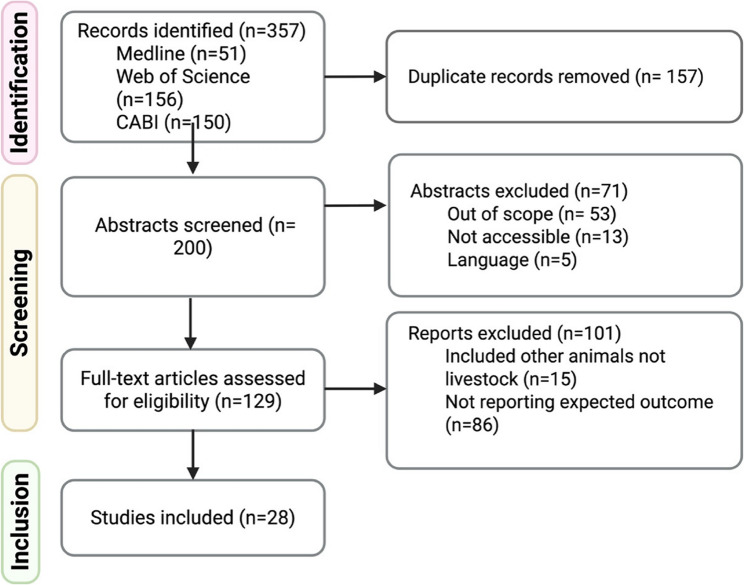 Figure 1
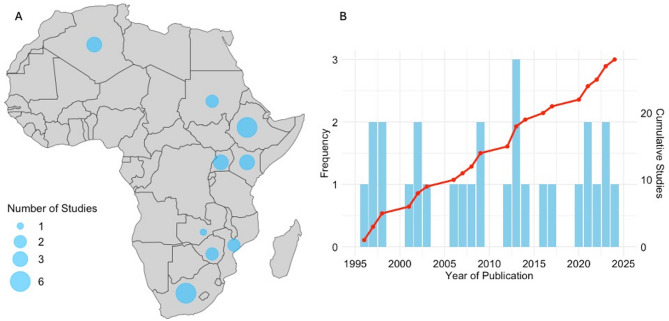 Figure 2
- —https://doi.org/10.13039/501100015815Consortium of International Agricultural Research Centers
Peer Reviews
No public reviews on file for this paper yet. If you reviewed it on a platform where reviews are public (OpenReview, ICLR, NeurIPS, ICML), you can paste yours below so the community can read it here.
Videos
No videos yet. Explain this paper in a talk, walkthrough, or lecture? Add one.
Taxonomy
TopicsHelminth infection and control · Parasite Biology and Host Interactions · Parasites and Host Interactions
Background
Livestock production significantly contributes to household income in Africa, with over 70% of households relying on it for up to 33.8% of their total income [1]. However, infections with helminth parasites, particularly gastrointestinal nematodes (GIN), pose a major threat to the profitability and sustainability of livestock systems. These infections are typically chronic and lead to subclinical losses, including reduced weight gain, lower meat and milk yields, diminished reproductive performance, and overall compromised animal health and welfare [2–4]. A recent meta-analysis reported that GIN infections in sheep resulted in reductions of 58% in weight gain, 90% in wool production, and 78% in milk yield [2]. GIN infections are more prevalent in animals with outdoor access, such as cattle and small ruminants [5], but also found in indoor reared species such as pigs and poultry.
Current control strategies rely heavily on the use of broad-spectrum anthelmintics, primarily benzimidazoles (e.g., albendazole), imidazothiazoles (e.g., levamisole), and macrocyclic lactones (e.g., ivermectin), administered either curatively or prophylactically [6]. However, the frequent administration of anthelmintics, often with incorrect dosing or without rotation of different drug classes, has led to the development of anthelmintic resistance (AHR).
The global and national burden of GIN infections and AHR remains unknown, but available data suggest that helminth infections cost the European livestock industry over 41 million in losses [7]. These economic costs are expected to rise due to the spread of resistant parasites, including multi-drug resistant strains. Additionally, climate change is likely to exacerbate parasite transmission, leading to more frequent treatments and further resistance development [8]. In much of Africa, where helminths have long seasonal activity, anthelmintic drugs are widely accessible and commonly used, often without veterinary guidance, resulting in rapid acceleration of AHR. Several studies have reported the occurrence of AHR in multiple helminth species against different anthelmintic classes in different livestock species [9]. Effective resistance management requires the ability to detect its presence and support drug-use decisions regarding effective treatments against target helminth populations. Routine anthelmintic efficacy testing in most countries is undertaken through the faecal egg count reduction test (FECRT) [10], which remains the gold standard recommended by the World Association for the Advancement of Veterinary Parasitology (WAAVP) [11]. Data is essential to measure the extent of this problem in Africa. However, robust data to assess the scale of AHR across the continent are scarce, and systematic monitoring or surveillance frameworks are currently lacking.
This scoping review aimed to comprehensively map the scientific evidence reporting anthelmintic resistance in GINs in different livestock species in Africa. Our findings will support anthelmintic stewardship and development of effective parasite control strategies; and underscore the need for investment in routine surveillance systems and further research.
Materials and methods
Data sources, search strategy and screening
We conducted a scoping review to collect evidence on the prevalence of AHR in livestock across African countries. The review followed the Preferred Reporting Items for Systematic Reviews and Meta-Analyses extension for Scoping Reviews (PRISMA-ScR) guidelines [12] (Supplemental material 2). A comprehensive search was conducted in three electronic databases – PubMed (MEDLINE), Web of Science, and CABI – using a combination of search terms related to anthelmintic resistance (“anthelmintic resistance” OR “endoparasite resistance” OR “antiparasitic resistance” OR “nematode resistance” OR “benzimidazole resistance” OR “imidazothiazole resistance” OR “salicylanilide resistance” OR “tetrahydropyrimidine resistance” OR “macrocyclic lactones resistance”), food animals (cattle OR bovine OR sheep OR ovine OR goat OR caprine OR chicken OR poultry), and African countries. No date restrictions were applied, and the search included studies published up to 3 February 2025. A detailed search strategy for each database is provided in the Supplemental material 1. Studies were eligible for inclusion if they were peer-reviewed, original research articles reporting the prevalence of AHR using FECRT method in sheep, goats, cattle, pigs, or poultry in African countries. Case reports, review articles, and studies available in non-English full texts were excluded. Titles and abstracts retrieved from the database searches were screened for eligibility. Full texts of potentially eligible articles were then reviewed in detail to confirm inclusion. Data extraction was performed using a standardised template. Initial screening and data extraction were conducted by one author (LG), with independent verification by a second author (DMM or MRK).
Data extraction and synthesis of results
One author (LG) extracted data from the full texts of eligible studies using a piloted, standardised data collection form. A second reviewer (MRK or DMM) independently verified all extracted information to ensure accuracy. Extracted data included: article title, first author, year of study and publication, study design, country of study, number and age of animals treated, specific anthelmintic(s) or combinations used, diagnostic tests employed, route of drug administration (oral or injectable), dosage, and anthelmintic efficacy where available. Study quality was assessed using an adapted version of the Joanna Briggs Institute critical appraisal tool for prevalence studies. A score of 1 was assigned for each criterion met, 0.5 if partially met, and 0 if not met. Scores were calculated based on the responses to each question [13]. Appraisal scores were categorised as very low (≤ 25%), low (26–50%), moderate (51–75%), or high (> 75%).
In line with established scoping review methodology, we used tabular and thematic approaches to summarise the extracted data. Descriptive statistics, including counts and proportions, were used to characterise the included studies. Anthelmintic efficacy was assessed using the faecal egg count reduction test (FECRT) where drug efficacy ≥ 95% indicates susceptibility in the parasite population, while efficacy < 95% suggests resistance.
Results
Characteristics of included studies
A total of 357 studies were identified through the database search. After removing duplicates, 200 articles were screened by title and abstract, of which 129 were selected for full-text review. Ultimately, 28 articles met the inclusion criteria and were included in this scoping review (Fig. 1). The characteristics of each include study are detailed in Table 1.Fig. 1. Study selection flowchartTable 1Description of selected studiesAuthorCountryLivestock speciesNumber of animalsAnthelminticTestedDosageRoute of administrationEfficacy< 95%FECRT Design and post-treatment sampling intervalHelminth genus Bentounsi, et al. 2012 [14]AlgeriaCattle186Albendazole7.5 mg/kgOral58%−83%UnpairedDay 0–20Trichostrongylus Atanasio, et al. 2002 [15]MozambiqueGoats568Albendazole5 mg/kgOral43–82.9.9%UnpairedDay 0–10HaemonchusTrichostrongylusOesophagostomumFenbendazole5 mg/kgOral49–87.6.6%Levamisole7.5 mg/kgOral87.4–93.5% Bersissa and Girma, 2009 [16]EthiopiaGoats200Albendazole7.5 mg/kgOral48–67%UnpairedDay 0–12HaemonchusTrichostrongylusTeladorsagiaTetramisole22.5 mg/kgOral80–84%Ivermectin0.2 mg/kgSC71–78% Waruiru et al. 1998 [17]KenyaGoats1300Albendazole5 mg/kgOral29.0%UnpairedDay 0–14HaemonchusOesophagostomumTrichostrongylusThiophanate50 mg/kgOral16.9%Levamisole15 mg/kgOral62.9%Rafoxanide7.5 mg/kgOral79.2%Ivermectin0.2 mg/kgOralS(99.8%)Ivermectin0.2 mg/kgSCS(99.2%) Getachew, et al. 2016 [18]EthiopiaSheep141Albendazole7.5 mg/kgOral57.5–92%UnpairedDay 0–14StrongylesTrichurisTetramisole15 mg/kgOralS (98.6–100)Ivermectin0.2 mg/kgSC51.7–87.6% Boersema and Pandey 1997 [19]ZimbabweSheep40Fenbendazole5 mg/kgOral0–80%UnpairedDay 0–14TrichostrongylusHaemonchusOesophagostomumLevamisole5 mg/kgSC46–91%Rafoxanide7.5 mg/kgOral32–79% Mohammedsalih et al. 2020 [20]SudanGoats60AlbendazoleUnpaired FECRT5 mg/gOral85.8–87.5%Paired and unpairedDay 0–14HaemonchusTrichostrongylusCooperia7.5 mg/kg87.1%10 mg/kg86.5–87.3%12.5 mg/kg96.6%Paired FECRT5 mg/kg54.4–90.2%7.5 mg/kg93.7%10 mg/kg87.3–89.8%12.5 mg/kg97.2% Wondimu and Bayu 2022 [21]EthiopiaGoats100Albendazole7.5 mg/kgOral69.9%UnpairedDay 0–14Trichostrongylus HaemonchusTeladorsagiaTetraclozan7.5 mg/kgOral84.3%Tetramisole,7.5 mg/kgOralS (95.7) %Ivermectin0.2 mg/kgSC71.1% Mphahlele, et al. 2021 [22]South AfricaSheep200Albendazole7.5 mg/kgOral47–92%UnpairedDay 0–14HaemonchusTrichostrongylusTeladorsagiaLevamisole5 mg/kgOral70–94%Ivermectin0.2 mg/kgSC65–92%Bakunzi et al. 2008 [23]South AfricaSheep480Albendazole7.5 mg/kgOral68–93%UnpairedDay 0–14HaemonchusOesophagostomumTrichostrongylusLevamisole7.5 mg/kgOral58–91%Closantel5 mg/kgOral72–94% Nsereko, et al. 2013 [24]UgandaGoats93Albendazole5 mg/kgOral77.30%UnpairedDay 0–14HaemonchusOesophagostomumLevamisole7.5 mg/kgOral85%Ivermectin0.2 mg/kgSC54–92%Byaruhanga et al. 2013 [25] UgandaGoats71Albendazole5 mg/kgOral11–28.5.5%UnpairedDay 0–13HaemonchusCooperiaOesophagostomumLevamisole7.5 mg/kgOral84.8–91%Ivermectin0.2 mg/kgSC78.47% Gabriel et al. 2001 [26]ZambiaSheep360Albendazole4 mg/kgOral48–86%UnpairedDay 0–14HaemonchusLevamisole7.5 mg/kgOralS(95–99.4.4%)Ivermectin0.2–0.3 mg/kgOral72–94% Chaka and Gizaw 2009[27]EthiopiaSheep120Albendazole7.5 mg/kgND30.4%PairedDay 0–21 for ivermectin0–15 for albendazole and tetramisoleHaemonchusTetramisole15 mg/kg75%Ivermectin0.3 mg/kg78.5% Dreyer 2002 [28]South AfricaSheep50Albendazole3.8 mg/kgOral6.3–86.9%UnpairedDay 0–10NDLevamisole7.5 mg/kgOral7.9–87%Ivermectin0.2 mg/kgOral76.2–87%Moxidectin0.2 mg/kgOral94.2% Mohammedsalih et al. 2021 [29]SudanCattle123Albendazole7.5 mg/kgOralUnpaired: 88.2%−93.7%Paired and unpaired0-day 14HaemonchusTrichostrongylusOesophagostomumCherbatiaPaired:88.5–94.6% Nabukenya, et al. 2014 [30]UgandaGoats497Albendazole7.5 mg/kgOral40–94%UnpairedDay 0–15HaemonchusStrongyloidesTrichostrongylusCooperiaBunostomumLevamisole10.5 mg/kgOral29–92%Ivermectin0.3 mg/kgSC54–92% Mukaratirwa et al. 1997[31]ZimbabweSheep226Albendazole10 mg/kgOral56–87%PairedDay 0–7HaemonchusCooperiaOxfenbendazole5 mg/kgOral82.3–82.9%Fenbendazole5 mg/kgOral83.3%Levamisole7.5 mg/kgOral89.9%Ivermectin0.02 mg/kgSCS (100%) Tsotetsi, et al. 2013[32]South AfricaSheep120Albendazole7.5 mg/kgOral56–76%PairedDay 0–14HaemonchusTrichostrongylusTeladorsagiaLevamisole5 mg/kgOral81–87%Ivermectin0.2 mg/kgSC76–87%Goats80Albendazole7.5 mg/kgOral22–77%Levamisole5 mg/kgOral60–92%Ivermectin0.2 mg/kgSCI: 27% Bentounsi et al. 2007 [33]AlgeriaSheep192Albendazole3.8 mg/kgOral21–94%Unpaired FECRTDay 0–10TeladorsagiaTrichostrongylusMarshallagiaNematodirusIvermectin0.0002 mg/kgSC24–89% Molla, et al. 2023 [34]EthiopiaSheep735AlbendazoleNDND68–93.5.5%Unpaired FECRTDay 0–14StrongylidFasciolaTriclabendazole Bakunzi 2003 [35]South AfricaGoats400Fenbendazole5 mg/kgOral47–88%Unpaired FECRTDay 0–14HaemonchusTrichostrongylusOesophagostomumLevamisole7.5 mg/kgOral76–93%Rafoxanide7.5 mg/kgOral31–91% Wanyangu, et al. 1996 [36]KenyaSheep1328AlbendazoleLevamisoleNDNDNDUnpaired FECRTDay 0–14HaemonchusTrichostrongylusOesophagostomumGoats989AlbendazoleLevamisole Maingi, et al. 1998 [37]KenyaSheepNDAlbendazole5 mg/kgOralNDUnpaired FECRTDay 0–14HaemonchusLevamisole7.5 mg/kgOralFebantel5 mg/kgOral Bentounsi, et al. 2006 [38]AlgeriaSheep29AlbendazoleNDND71%Unpaired FECRTDay 0–10StronglesFenbendazole77% Atanásio-Nhacumbe, et al. 2017 [39]MozambiqueGoats335Albendazole5 mg/kgOral0–81%Unpaired FECRTDay 0–14HaemonchusOesophagostomumTrichostrongylusStrongyloides Emsley et al. 2023 [40]South AfricaSheepGoats130119Albendazole7.5 mg/kgOral3.81–72.15%FECRTDay 0–14HaemonchusLevamisole5 mg/kgOral10–72.95.95%Ivermectin0.2 mg/kgSC43.66–54.66% Maurizio, et al. 2024 [41]EthiopiaCattle120AlbendazoleNDOral52.2–68.1%Unpaired FECRTDay 0–14NDTetramisoleOral94.2%IvermectinSC56.5–73.8%Goats120AlbendazoleOral82.5–91.5%TetramisoleOralSIvermectinSC88.8–94.8%Sheep120AlbendazoleOral85.1–91.1%TetramisoleOral92.1%IvermectinSC93.4–94.1%**ND *Not defined, S Susceptible, SC subcutaneous
The included studies originated from nine African countries—representing 16.7% of the continent’s 54 nations—indicating limited geographical coverage. South Africa and Ethiopia each contributed six studies, followed by Uganda, Algeria, and Kenya with three studies each. Zimbabwe, Sudan, and Mozambique contributed two studies each, and Zambia contributed one (Fig. 2A). The selected articles were published between 1996 and 2024, with no clear linear publication trend. Notably, 68% (n = 19) of the included studies were published before 2014 (Fig. 2B).
Fig. 2 A-B. A Regional distribution of included studies. B Number of studies published over time. The left y-axis shows the annual number of papers, while the right y-axis and trend line represent the cumulative total of studies
Among the 28 studies included, 12 (42.9%) investigated AHR exclusively in sheep, 10 (35.7%) in goats, and two (7.1%) in cattle. Three studies (10.7%) included both sheep and goats, while one (3.6%) assessed all three ruminant species. No studies evaluated AHR in non-ruminant livestock such as pigs or poultry. Resistance was investigated against five main anthelmintic classes either individually or in combination: benzimidazoles (albendazole, fenbendazole, oxfenbendazole, thiophanate, triclabendazole, febantel), imidazothiazoles (levamisole, tetramisole), salicylanilides (closantel, rafoxanide, tetraclozan), macrocyclic lactones (ivermectin, moxidectin, doramectin), and tetrahydropyrimidines (morantel). Benzimidazoles were the commonly studied drug, reported in all 28 studies either singly or in combination, followed by imidazothiazoles in 21 studies (75%) and macrocyclic lactones in 16 studies (57.1%). Salicylanilides were evaluated in five studies (17.9%). A total of 10 different parasite genera were reported across the 28 studies. Haemonchus spp was the most frequently reported parasite, investigated in 21 studies (75%). Trichostrongylus spp. were reported in 16 studies (57.1%), Oesophagostomum spp. in 10 (35.7%), Teladorsagia spp. In 6 (21.4%), and Cooperia spp. in 4 (14.3%). Less frequently reported were Strongyloides (2 studies (7.1%), Bunostomum, Trichuris, Cherbatia, Marshallagia, and Nematodirus (each in 1 study, 3.6%).
Methodological quality assessment
Across the 28 studies, the majority (n = 22, 78.6%) employed an unpaired FECRT design, in which you compare treated animals to untreated controls. Three studies (10.7%) used a paired design [27, 31, 32], following the same animals before and after treatment, while two studies (7.1%) applied both approaches [20, 29]. In one of the studies using both approaches, paired approach yielded lower efficacy estimates compared to unpaired approach [20] (Unpaired: 85.8–87.5% vs. paired 54.4–90.2% for 5% albendazole) while in the second study both approaches showed close agreement (Unpaired: 88.2%−93.7% vs. Paired: 88.5–94.6% for 7.5% albendazole) [29]. Post-treatment sampling intervals were generally consistent with WAAVP recommendations. Most studies collected samples on day 14 (n = 18, 64.3%), followed by day 10 (n = 4, 14.3%), while day 7, day 12, day 13, day 20 and day 21 were each reported in a single study (3.6% each), and two studies reporting day 15 (3.6%). Sample sizes varied considerably across studies, ranging from 29 to 1,328 animals. Most studies (57.1%, n = 18) enrolled between 100 and 500 animals, while 21.4% (n = 6) included fewer than 100 animals and 14.3% (n = 5) had more than 500. Larger sample sizes were mostly reported in sheep and goat studies, whereas cattle studies were fewer and typically involved smaller cohorts of around 120–186 animals. Dosage regimens varied both across drug classes and even within the same host species. Albendazole showed the widest range, administered at doses ranging from 3.8 mg/kg to 12.5 mg/kg, with one study using 3.8 mg/kg, eight studies using 5 mg/kg, seven studies using 7.5 mg/kg, two studies using 10 mg/kg, and one study testing 12.5 mg/kg.
Nearly one-third of studies (n = 10, 35.7%) were rated as low quality, 11 (39.3%) were of moderate quality, and seven (25%) achieved a high-quality rating (Supplemental Table S1). When assessed by quality domain, reporting was strongest in the description of the anthelmintic intervention including drug, dosage, and route of administration, as well as in the method of parasite identification and quantification (each mean score 0.9). The FECRT procedure and efficacy threshold were also generally well described (mean score 0.83). In contrast, reporting of the study design (mean score 0.70) and the target animal species and sourcing (mean score 0.69) was less consistent. Only six studies clearly differentiated helminth egg species in their FECR reporting (mean score 0.22), and just one study accounted for sample size or incorporated a formal power calculation.
Resistance to benzimidazoles
Of the 28 studies reporting benzimidazole resistance, 26 (93.9%) documented resistance to albendazole, five (17.9%) to fenbendazole, and one each (3.6%) to oxfenbendazole and thiophanate. Efficacy within this class was highly variable, with albendazole showing the widest range. Nearly half of the studies (42.9%, n = 12) on albendazole reported efficacy below 50%, including complete treatment failure in goats in Mozambique (0% efficacy) [39], 11–28.5.5% in goats in Uganda [25], 29% in goats in Kenya [17], and 3.8–72.1% in South African small ruminants [40]. In contrast, other studies demonstrated higher efficacy. Fenbendazole efficacy also varied widely, with 40% (n = 2) of studies reporting reductions below 50% (0–80% in sheep in Zimbabwe [19], 47–88% in goats in South Africa [35]).
Resistance to imidazothiazoles
Among the 21 studies that assessed resistance to imidazothiazoles, 16 (81.3%) evaluated levamisole and five (23.8%) tetramisole. Levamisole generally showed better efficacy, with most studies reporting rates above 80%. For example, efficacy reached 85% in goats in Uganda [24, 25], 89.9% in sheep in Zimbabwe [31], 76–93% in sheep and goats in South Africa [35] and goats in Mozambique [15]. However, approximately one-third of the studies (30.7%, n = 4) documented efficacy values below 50%, with the lowest reported at 7.9% in sheep in South Africa [28]. Tetramisole showed generally higher efficacy, with all studies reporting rates greater than 75%.
Resistance to salicylanilides
Five studies assessed resistance to salicylanilides, including three on rafoxanide, one on closantel, and one on tetraclozan. Rafoxanide showed high efficacy in most studies; however, two reported lower efficacy rates, with values as low as 31% [35] in goats in South Africa and 32% in sheep in Zimbabwe [19]. Closantel demonstrated consistently high efficacy (72–94%) in South African sheep [23], while tetraclozan achieved 84.3% in goats in Ethiopia [21].
Resistance to macrocyclic lactones
Resistance to ivermectin was reported in 16 studies (57.1%), with efficacy ranging widely. Two studies documented efficacy below 50%, including 24% in Algeria [33], 27% in goats in South Africa [32],and 43% in sheep in South Africa [40]. Moderate reductions were reported in Uganda (54–92%) [30] and Ethiopia (51.7–87.6%) [18], while higher efficacy was observed in Zambia (72–94%) [42] and Kenya, where both oral and subcutaneous dosing achieved >99% [17]. A multi-host study from Ethiopia highlighted variability by species, with efficacy lowest in cattle (56.5–73.8%) compared to goats (88.8–94.8%) and sheep (93.4–94.1%) [41]. Moxidectin was evaluated in a single study and demonstrated high efficacy of 94.2% [28].
Discussion
Our findings highlight a striking scarcity of data on AHR in livestock across Africa. Given that the continent is home to more than a quarter of the global livestock population – comprising 20% of the world’s cattle, 27% of sheep, and 32% of goats [43] – and these numbers are rising, the limited number of studies in our review underscores a critical research and surveillance gap. It is indisputable that anthelmintic resistance constitutes a substantial component of the broader antimicrobial resistance (AMR) challenge in livestock [6]. Yet, research and surveillance on anthelmintic resistance remain largely excluded from funding priorities and implementation strategies aimed at understanding and addressing AMR. The disproportionate focus on bacterial AMR in animal health, primarily driven by public health reasons, is concerning, as effective anthelmintic protection is essential not only for animal health but also for food security across the region. There is a pressing need for increased funding to support the development of these systems, strengthen laboratory infrastructure, harmonise field and laboratory standard operating procedures, and improve coordination between animal health policy makers, livestock producers, and users of anthelmintics. We call for renewed national and regional efforts to establish and operationalise robust anthelmintic resistance surveillance systems.
Whilst most studies broadly adhered to WAAVP guidelines on FECRT implementation, methodological inconsistencies limit the comparability and interpretability of results across settings and host species. For example, minimal description of study design such as animal selection or lack of standardisation in dosing regimens even within the same host species. Likewise, limited differentiation of helminth species in FECRT results constrains the ability to link resistance patterns to specific parasites, hindering epidemiological insights needed for targeted control. In 2023, WAAVP issued updated guidelines to improve methodology and standardisation of FECRT in livestock with an aim of supporting researchers, practitioners, and policymakers in the diagnosis and classification of AHR [44]. These guidelines recommend prioritising paired study designs over unpaired ones, basing requirements on the total number of eggs counted rather than mean EPG, and allowing flexible treatment group sizes according to expected egg counts.
Collectively, the studies reviewed demonstrate evidence of resistance to commonly used anthelmintics across multiple livestock species and African countries. Several factors are likely contributing to this observation. First, the frequent and often indiscriminate use of anthelmintics, whether given prophylactically or at low doses due to cost [45] and the heavy reliance on a few drug classes like benzimidazoles (e.g., albendazole), macrocyclic lactones (e.g., ivermectin), and imidazothiazoles (e.g., levamisole). In addition, poor farm management practices, such as the absence of pasture rotation and high stocking densities [46], combined with the lack of systematic monitoring programs for detecting resistance contributes to the continued use of ineffective treatments [47]. The rapid emergence of resistance to new anthelmintic classes, often within a decade of their introduction [48], is a growing concern [49]. With no new broad-spectrum anthelmintics featuring novel mechanisms of action developed since the introduction of macrocyclic lactones in the 1980 s [50], the threat posed by anthelmintic resistance is particularly serious. Climate change is also expected to accelerate the spread and severity of parasitism [8, 51, 52]. Rising temperatures and prolonged transmission seasons will increase parasite burdens and treatment frequency, which, in turn, will hasten resistance development. Understanding the interaction between climate change and AHR is therefore essential to devising long-term, sustainable control strategies [53]. In light of anticipated climate shifts, transitioning toward non-chemical parasite control methods are likely to become increasingly critical. In recent years, considerable effort has gone into quantifying the economic impact of GIN infections and AHR in livestock, but most analyses are limited to high income settings [7]. Quantifying these hidden losses would provide producers actionable information for on-farm decision-making and incentivise the uptake of non-pharmaceutical control measures while giving veterinary authorities the evidence base to advocate—credibly—for investment in surveillance and targeted intervention programmes.
All studies reviewed focused on cattle and/or small ruminants and primarily examined two classes of anthelmintics, benzimidazoles and macrocyclic lactones and two GINs Haemonchus spp and Trichostrongylus spp. The emphasis on ruminants likely reflects both ecological factors, particularly their high susceptibility to gastrointestinal nematodes due to grazing behaviour, and historical research priorities. Similarly, the predominance of benzimidazoles and macrocyclic lactones corresponds with their widespread use in livestock across sub-Saharan Africa, driven by factors such as affordability, accessibility, and ease of administration [54, 55].The dominance of Haemonchus and Trichostrongylus in the dataset likely reflects their high pathogenic potential and adaptive capacity, as well as their well-documented resistance profiles [56].These findings should inform the strategic prioritisation of AHR surveillance efforts across the continent, focusing on key parasite genera, anthelmintic classes, and livestock species.
The FECR test was the most widely used method for assessing anthelmintic efficacy in vivo and estimating the prevalence of resistance in our review. The lack of standardized FECR calculation methods across studies—with some comparing treated and control groups, and others focusing on pre- and post-treatment counts—could lead to discrepancies in the interpretation and comparison of resistance levels. According to the most recent WAAVP guidelines, FECR should be calculated using a paired design (pre- and post-treatment faecal egg counts from the same animals) as this approach enhances statistical power, controls for inter-animal variability, and yields more robust estimates of anthelmintic efficacy than post-treatment comparisons between treated and control groups [44]. Further, the FECR test is constrained by low sensitivity, high costs, reliance on laboratory infrastructure, and labour-intensive sampling making it largely inaccessible to veterinarians and farmers across African countries and thus limiting its utility in targeted anthelmintic stewardship. Veterinary authorities should prioritise expanding access (and affordability) to anthelmintic resistance diagnostics across regional laboratories, complementing existing investments in antibiotic resistance surveillance. A key scientific priority remains the development of rapid, reliable tools and protocols for early detection of anthelmintic resistance, to support timely and effective responses.
This scoping review has several limitations. First, our literature search was limited to English-language articles and did not include grey literature or supplementary search strategies such as citation tracking. Consequently, relevant studies may have been omitted. Second, data screening and extraction were initially performed by a single reviewer; although these data were subsequently verified by a second reviewer and discrepancies were resolved through team consensus, inadvertent errors or missed information cannot be completely ruled out. Third, the limited number of identified studies and their narrow geographic coverage - encompassing only nine African countries - should be considered when interpreting our findings. Finally, some of the included studies provided insufficient details regarding data sources or clear descriptions of their methodological approaches, potentially affecting the robustness and interpretability of the synthesized evidence.
Conclusion, recommendations and implications for decision-making
Our scoping review highlights clear evidence of AHR in livestock across Africa; however, research in this area remains disproportionately limited relative to the scale and significance of the continent’s livestock sector. Several key recommendations arise from our findings. Firstly, increased investment and research from a wider range of African countries is essential to generate comprehensive, geographically representative data on AHR. Currently, the limited available data reflect broader global neglect of AHR within the antimicrobial resistance agenda, which tends to prioritise bacterial pathogens. Yet, the implications of AHR are profound, including diminished animal health and productivity, higher treatment costs, and increased susceptibility to climate-driven parasitic challenges. Secondly, establishing standardised surveillance systems to systematically monitor AHR development and spread should be a high priority for governments. Such surveillance should routinely gather basic clinical, epidemiological, drug-efficacy data, and climatic data where possible. Thirdly, veterinary authorities should advocate policies restricting routine prophylactic anthelmintic use, promoting instead targeted, evidence-based treatment strategies that prioritize high-risk animal populations and geographical hotspots. The development and broader adoption of non-chemical parasite control methods are essential, particularly given increased climate variability and a lack of novel anthelmintic classes. Finally, quantifying the economic impacts of GIN infections and associated AHR in African livestock is critical to guide investment decisions, inform policy development, and support sustainable livestock production and livelihoods. Addressing these gaps will require strengthened collaboration among governments, funding agencies, animal health authorities, researchers, veterinary professionals, and livestock producers.
Supplementary Information
Supplementary Material 1.
Supplementary Material 2.
The reference list from the paper itself. Each links out to its DOI / PubMed record.
- 1Wondimu A, Bayu Y. Anthelmintic drug resistance of gastrointestinal nematodes of naturally infected goats in haramaya, Ethiopia. J Parasitol Res. 2022;(1):4025902. 10.1155/2022/4025902. 10.1155/2022/4025902 PMC 878654235083085 · doi ↗ · pubmed ↗
- 2Gabriel S, Phiri I, Dorny P, Vercruysse J. A survey on anthelmintic resistance in nematode parasites of sheep in Lusaka, Zambia. Onderstepoort J Vet Res. 2001;68(4):271–4.12026061 · pubmed ↗
- 3Fissiha W, Kinde MZ. Anthelmintic resistance and its mechanism: a review. Infect Drug Resist. 2021;14:5403–10. 10.2147/IDR.S 332378.10.2147/IDR.S 332378 PMC 868751634938088 · doi ↗ · pubmed ↗