Media Information Compared to Scientific Studies Regarding Piranha Attacks in Brazil
Patrícia Tatiane Gomes, Sheila Canevese Rahal, Edson Luiz Fávero, Adriana Lúcia Mendes, Itamar Alves Martins, Vidal Haddad

TL;DR
The paper examines media reports of piranha attacks in Brazil to correct misconceptions and highlight human factors influencing these incidents.
Contribution
The study provides a factual analysis of piranha attacks, challenging myths and emphasizing human environmental impact.
Findings
Most piranha attacks in Brazil are mild and linked to nest protection behavior.
Seasonal and improper food disposal patterns significantly correlate with attack occurrences.
Media coverage perpetuates myths and overlooks human environmental responsibility.
Abstract
Piranhas are carnivorous fish that inhabit rivers in Central and South America, and they are popularly recognized as relentless hunters of continental waters. Their reputation as killers is fueled by folklore and cinematographic works, which contribute to the creation of myths, generation of fear among people, and the vilification of fish. We analyzed several media reports on piranha bites that occurred in Brazil, seeking to demystify these attacks as they are described in the lay press, using the injuries and circumstances observed as a basis. In addition, we highlighted human actions that directly affect piranha behavior. Of the 711 cases reported in humans in the last 10 years, 82.27% were classified as mild, with single “punch-out”-shaped injuries associated with the behavior of males to protect nests and larvae in dams and lakes. Seasonal analysis revealed that 29.62% of attacks…
Genes, proteins, chemicals, diseases, species, mutations and cell lines named across the full text — each resolved to its canonical identifier and authoritative record.
Click any figure to enlarge with its caption.
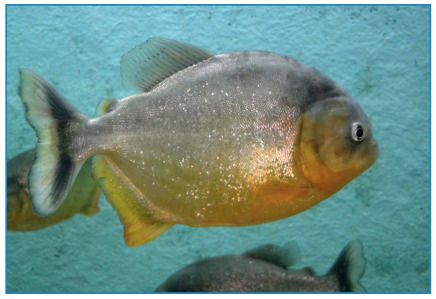 Figure 1
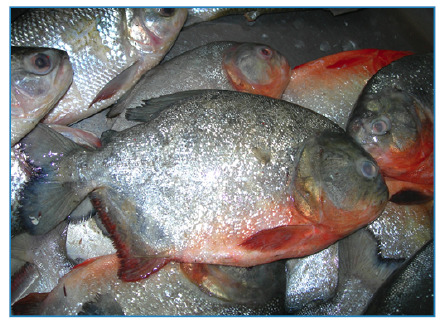 Figure 2
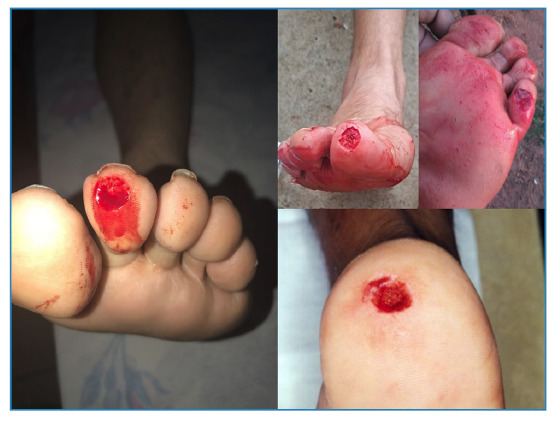 Figure 3
Peer Reviews
No public reviews on file for this paper yet. If you reviewed it on a platform where reviews are public (OpenReview, ICLR, NeurIPS, ICML), you can paste yours below so the community can read it here.
Videos
No videos yet. Explain this paper in a talk, walkthrough, or lecture? Add one.
Taxonomy
TopicsMisinformation and Its Impacts
INTRODUCTION
Piranhas are Neotropical carnivorous fish found in Central and South America. They are found in rivers and lakes in several river basins, being abundant in the Amazon and Orinoco regions and in the Prata and São Francisco River basins1 ^-^ 3 .
Serrasalmus maculatus (Figure 1), also known as pirambeba, is the most abundant in dammed stretches and streams, and is the main cause of bites in the southeast region of Brazil. Pygocentrus nattereri (Figure 2), popularly known as piranhas-caju or cashew-piranhas, is typical of lentic regions and causes injuries in the Central Amazon and Pantanal of the Midwest region1 ^-^ 3. They are reddish in color, with a grayish head and back4.
FIGURE 1:Pirambeba (Serrasalmus maculatus): common in dams and rivers of the Southeast region of Brazil.
FIGURE 2:Piranha-caju (Pygocentrus nattereri): species frequent in the Midwest and Northern regions.
The reproductive season of Serrasalmus maculatus is longer in the upper Paraná River, extending from September (dry season) to January (high season), where environmental conditions favor the emergence of aquatic plants that guarantee spawning sites and serve as shelter for larvae and juveniles1 ^,^ 2.
During spawning, the couples position themselves side by side, the females then lay eggs on the roots of the aquatic plants so that the males can fertilize them and later care for the offspring1 ^,^ 2. Some species reach a total length of approximately 50 cm. Piranhas are active mainly during the day and extend their foraging time until the beginning of the night, as they visually orient themselves toward their food1 ^-^ 3.
The bad reputation of piranhas originated in 1913-1914, with the publication of the book “Through the Brazilian Wilderness” by Theodore Roosevelt, a former American president who embarked on a scientific expedition to explore rivers in the Amazon rainforest4. One of Roosevelt’s most famous observations about piranhas was their ability to devour dead or injured animals in a matter of minutes, describing scenes in which piranhas clean the bones of animals in an impressive and frightening manner4. The description confirmed the reputation of piranhas as fearsome fish and fueled many myths surrounding these animals, from movies to popular expressions such as the “boi-de-piranha or piranha’s cow”4.
Despite this reputation, the species does not hunt in groups, and “feeding frenzy” attacks on large, live prey are rarely observed. The popular reports of piranha attacks on humans is probably due to their scavenging habits, as these fish usually consume dead or injured animals. Reported piranha attacks in the media negatively reinforce the popular idealization of the behavior of these species in relation to humans5 ^,^ 6.
This study aimed to analyze the information broadcast by the media about piranha attacks that occurred in Brazil, highlight the human actions that influence the defense behavior of this species, and emphasize the importance of carnivorous fish species in natural population control to maintain the balance of aquatic ecosystems. The data presented in this study did not include reports by health systems but focused only on the outbreaks reported in the country by media sources.
METHODS
Only states that had injury rates of more than 20 individuals reported in the media between 2012 and 2022 were analyzed. To quantify accidents, keywords were used at research sites and separated by state. The main news websites consulted were Globo Notícias, Conexão Tocantins, I7 Notícias, Portal da Cidade Santa Helena, Assis Notícias, Agência Brasil Comunicações, Folha de Boa Vista, and Redação O Sul. The information was compared with all reports to obtain more accurate data, and organized in an Excel file according to the state, municipality, place of occurrence, number of people injured, characteristics and region of injuries, time of occurrence, time of outbreak, year, and the hypotheses given by “experts.” The Google Earth Pro application was used to evaluate the municipal characteristics as well as capture satellite images of the locations of occurrences and identify the areas in which they occurred and the possible anthropogenic causes. According to the local Human Ethics Committee, images and patients without a clinical history and without facial details do not require authorization from the committee for publication.
RESULTS
The states of São Paulo, Alagoas, Amazonas, Bahia, Ceará, Goiás, Minas Gerais, Mato Grosso, Pará, Paraná, Roraima, Rio Grande do Sul, and Tocantins were notified by the media through basic health units, fire departments, and the municipal civil defense (Table 1).
TABLE 1:Quantification and characteristics of injuries found in the Brazilian territory.StatesReported InjuriesFeaturesCausesTocantins309Single bitesDammed water, discarded foodRoraima140Single bitesDammed water, discarded foodSão Paulo78Single bitesDammed water, discarded foodAlagoas68Single bitesBreeding seasonParaná40Single bitesDammed water, discarded food.
Owing to the teeth of piranhas, the injuries had evident “punch-out” shapes (Figure 3), and the severity varied according to the force of the bite and the body part affected. Almost all accidents reported in the media referred to single bites on the hands, legs, and feet of individuals, ranging from mild to moderate injuries with loss of skin fragments and muscle tissue and rarely loss of bone tissue. From the sources analyzed according to the degree of severity, of the 711 human cases reported in the last 10 years throughout Brazil, 82.27% were considered mild with single bites on the hands and feet with only skin loss, 0.70% were considered serious because of muscle and occasional bone loss, and 0.14% (one case) was considered isolated with the victim found dead with injuries compatible with piranha bites. Approximately 16.87% of these patients did not have the injuries described in the reports. According to local information, the factors that cause conflicts contribute to these attacks. include the breeding season (29.62%), improper disposal of food (25.92%), damming by hydroelectric power plants (UHE) (14.81%), dry season (11.11%), spawning grounds (7.40%), an imbalance in natural predator species (3.70%), damaged protective screens (3.70%), the presence of water hyacinths on riverbanks (3.70%), and young fish learning to hunt (3.70%). Notably, this information was obtained from reports published after the accidents. Although some of the information was presented by individuals identified as experts, no evidence proves that these people were, in fact, experts in the aforementioned area. The seasonality of piranha bites was not fully explained in these reports; many of the reported cases did not specify the day, month, and time of occurrence. However, 33 reports clarified the period of the accidents, while in 7 reports, 332 cases were not clarified.
FIGURE 3:Punch-out shaped lacerations, characterized by a single bite on the leg.
Despite folklore portraying surreal attacks by schools of piranhas on large animals and humans, no scientific evidence proves these events7 ^-^ 9. The piranha species Pygocentrus nattereri and Serrasalmus maculatus, which are mostly associated with the accidents, have opportunistic and scavenging feeding behaviors and can feed on birds, mammals, and fish that are already in the process of decomposition. However, their main diet comprises live fish and whole or fragmented parts of scales, fins, or muscles.
The characteristics of piranha accidents in the Brazilian territory as described in the media include isolated circular shaped bites that involve the skin and occasionally muscles, which can cause extensive bleeding due to damaged blood vessels7 ^-^ 9. Most accidents occurred during the reproductive season, which is a warning behavior characteristic of male piranhas to protect their nest and offspring (Table 1).
Piranhas, like all predator species, are extremely important for maintaining the balance and health of ecosystems, as they control populations and feed on sick or dead fish that are decomposing.
DISCUSSION
Of the 711 reported cases, 3 were considered serious owing to partial amputation of the phalanges, which occurred mainly in children whose phalanges are small. These cases occurred in the states of Goiás (2) and São Paulo in Brazil. In addition, 585 cases were classified as minor with only single bites. Of these, 318 occurred during the spawning season, reinforcing the hypothesis that the accidents were caused by males protecting their offspring. These data estimate that the probability of an accident being considered serious is 0.68%, that is, one case in every 147 cases. All the reports analyzed used the term “attacks” to inform the public about accidents involving piranhas. The profile of accidents caused by piranhas in Brazil is completely different from that reported by the media.
The reference list from the paper itself. Each links out to its DOI / PubMed record.
- 1Lopes DA Barbosa BB Severo-Neto F Strietman M Serrasalmus maculatus Kner, 1858 Bol Soc Bras Ictiologia 20181242022
- 2Villares GA Junior Gomiero ML Goiten R Alimentação de Serrasalmus maculatus (Ker, 1858) (Characiformes; Serrasalmidae) no trecho inferior bacia do rio Sorocaba, São Paulo, Brasil Acta Sci Biol Sci 2008303267273
- 3Fink WL Revision of the Piranha Genus Pygocentrus (Teleostei, Characiformes)Copeia 19933665687
- 4Roosevelt T Through the Brazilian Wilderness New York C. Scribner´s. Sons 1914
- 5Sazima I Guimarães S Scavenging on human corpses as a source for stories about man-eating piranhas Environ Biol Fishes 19872017577
- 6Sazima I Machado FA Underwater observation of piranhas in western Brazil Environ Biol Fishes 1990811731
- 7Haddad V Jr Sazima I Piranha Attacks on Humans in Southeast Brazil: Epidemiology, Natural History, and Clinical Treatment, With Description of a Bite Outbreak Wilderness Environ Med 2003142492541471986010.1580/1080-6032(2003)14[249:paohis]2.0.co;2 · doi ↗ · pubmed ↗
- 8Haddad V Junior Sazima I Martins M Mordidas de mãe: piranhas não são tão agressivas como se imagina e, em geral, atacam em defesa da prole Pesquisa Fapesp 2004984445