40 years of CEPARM: transforming amyloidosis related to transthyretin from neglect to recognition
Marcia Waddington Cruz, Marleide da Mota Gomes

TL;DR
This paper highlights how CEPARM transformed the neglected disease ATTR amyloidosis into a recognized condition through research and treatment advancements over 40 years.
Contribution
The paper emphasizes CEPARM's role in advancing liver transplantation, pharmacological therapies, and patient care for ATTR amyloidosis.
Findings
CEPARM significantly improved recognition and management of FAP through research and treatment innovations.
Liver transplantation and pharmacological therapies developed by CEPARM enhanced patient outcomes.
The center's holistic approach to patient care addressed ongoing challenges and ethical issues in the field.
Abstract
Variant transthyretin amyloidosis with polyneuropathy (ATTRv-PN) and cardiomyopathy (ATTRv-CM), formerly known as familial amyloidotic polyneuropathy (FAP), is a severe, progressive disorder caused by mutations in the transthyretin ( TTR ) gene. Historically, FAP was considered a neglected disease due to its rarity and the limited understanding of its pathophysiology, which led to minimal research funding and few therapeutic options. The present article explores the transformative role of Centro de Paramiloidose Antônio Rodrigues de Mello (CEPARM), established in 1984, in elevating the status of FAP through significant advancements in research and treatment. Although CEPARM was not the sole catalyst for this shift, its contributions in liver transplantation, the development of pharmacological therapies, and holistic patient care have substantially improved the recognition and management…
Genes, proteins, chemicals, diseases, species, mutations and cell lines named across the full text — each resolved to its canonical identifier and authoritative record.
Click any figure to enlarge with its caption.
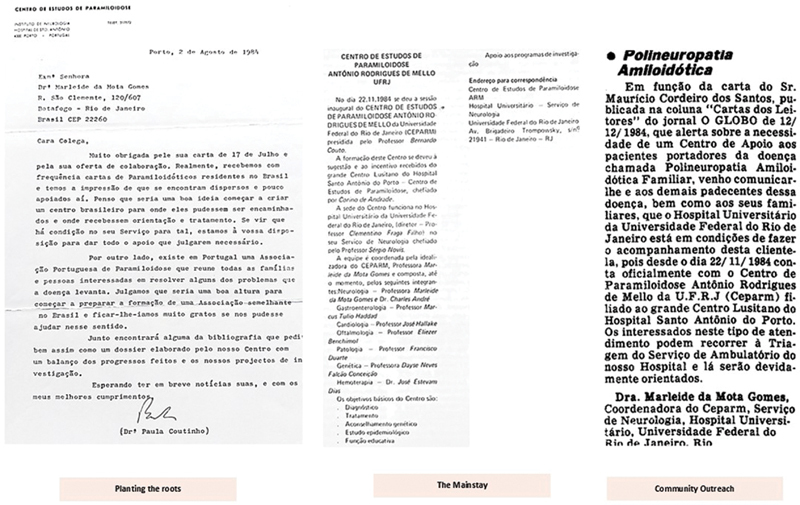 Figure 1
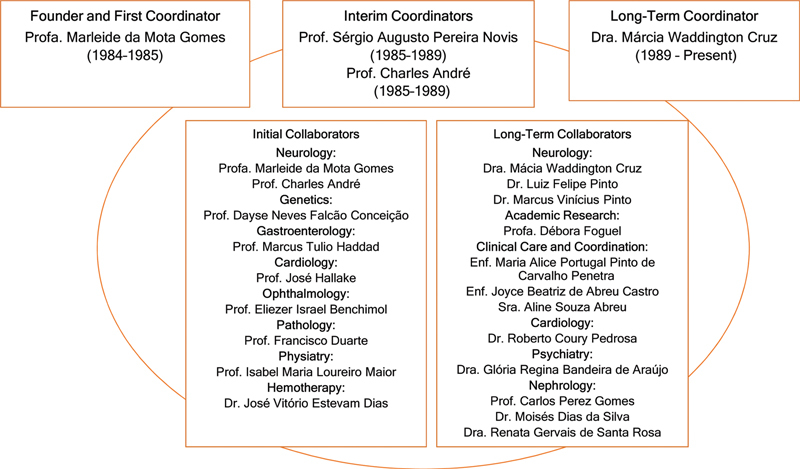 Figure 2
| Year | Event |
|---|---|
| 1984 | Founding of CEPARM: Established by Marleide da Mota Gomes at HUCFF/UFRJ to address the needs of patients with FAP, particularly those of Portuguese descent. Pioneered a multidisciplinary approach to care. |
| 1989 | Founding of ABPAR: Created to support amyloidosis patients and their families, strengthening community support for FAP treatment. CEPARM has been collaborating with ABPAR since its inception. |
| 1993 | The inaugural liver transplant in a PAF patient, in São Paulo, was performed by Professor Silvano Raia from USP on a patient of Professor Osvaldo Nascimento. |
| 1997 | First liver transplant in Rio de Janeiro by Professor Joaquim Ribeiro (UFRJ): Extended the availability of liver transplantation in Brazil, solidifying its role in FAP management. |
| 2013 | IX ISFAP: Hosted by CEPARM, it brought together global experts to discuss advancements in FAP research and treatment, marking the first and only ISFAP hosted in Latin America |
| 2015 | CEPARM facility established: A specialized facility for ATTR treatment and research was established at HUCFF-UFRJ, enhancing care and participation in global clinical trials. |
| 2016 | –Tafamidis approved by ANVISA for peripheral neuropathy: First pharmacological treatment approved in Brazil for FAP patients, marking significant progress in non-surgical management. CEPARM was the only Brazilian center involved in the international trial.– CEPARM's coordinator, Márcia Waddington, President of Scientific Committee of THAOS (2016–2019): Recognized globally with her appointment to the scientific committee of THAOS, a pivotal database to improve FAP treatment. |
| 2017–2020 | Tafamidis trial and approval for cardiomyopathy: Approved for treating cardiomyopathy associated with ATTR, offering new hope for cardiac patients. CEPARM was the first cardiac center elected for the ATTR-CM trial. |
| 2018 | Tafamidis officially included in the Brazilian Clinical Protocol and Guidelines for FAP treatment, ensuring broader patient access through public health services, in collaboration with CONITEC (Ministry of Health/Brazil). |
| 2015–2024 | –TTR silencers approved by ANVISA: Introduction of RNA-based therapies (e.g., patisiran, inotersen) aimed at reducing abnormal TTR protein production, revolutionizing FAP treatment. |
| First- and second-generation TTR silencers trials: CEPARM participated in trials for both generations of TTR silencers, serving as the coordinator center, top patient recruiter, and consulted for CONITEC in establishing these therapies. | |
| 2008–2023 | THAOS database contributions: Significant contributions made to the THAOS database, enrolling over 6 thousand patients worldwide and carriers, shaping the understanding of ATTR and its treatment. |
| 2024 | By 2024, more than 800 patients had gained access to tafamidis, underscoring CEPARM's impact on providing life-extending treatments. CEPARM provides multidisciplinary care for over 450 patients from various parts of Brazil and Latin America. |
Peer Reviews
No public reviews on file for this paper yet. If you reviewed it on a platform where reviews are public (OpenReview, ICLR, NeurIPS, ICML), you can paste yours below so the community can read it here.
Videos
No videos yet. Explain this paper in a talk, walkthrough, or lecture? Add one.
Taxonomy
TopicsAmyloidosis: Diagnosis, Treatment, Outcomes · Cellular transport and secretion · Sarcoidosis and Beryllium Toxicity Research
INTRODUCTION
Familial amyloidotic polyneuropathy (FAP), now more commonly known as variant transthyretin amyloidosis (ATTRv), encompassing polyneuropathy (ATTRv-PN) and cardiomyopathy (ATTRv-CM), is a progressive and life-threatening disorder caused by mutations in the transthyretin ( TTR ) gene. These mutations result in misfolded TTR proteins that form amyloid deposits, primarily affecting peripheral nerves in ATTRv-PN and the heart in ATTRv-CM. 1 2
Historically, FAP was regarded as a low-prestige disease, largely neglected due to its rarity and the limited understanding of its mechanisms. This lack of recognition led to minimal research funding and scarce treatment options. Hindhede and Larsen's work 4 highlights how disease prestige is shaped by technological and research advancements, reflecting the challenges FAP faced in gaining attention. However, growing interest from the pharmaceutical industry, coupled with an increased focus on rare diseases, has been pivotal in transforming its status and improving the outcomes. 3 4
Variant transthyretin amyloidosis was initially considered a disease confined to endemic foci in Portugal, Japan, and Sweden. However, the presence of late-onset cases in endemic and non-endemic areas has now been recognized, indicating that the disorder is more common than previously thought. 5 6
THE EARLY YEARS OF CEPARM
Centro de Paramiloidose Antônio Rodrigues de Mello (CEPARM) was established in 1984 at Hospital Universitário Clementino Fraga Filho (HUCFF), Universidade Federal do Rio de Janeiro (UFRJ), by Marleide da Mota Gomes. The center was named in honor of Antônio Rodrigues de Mello, who first coined the term familial amyloidotic polyneuropathy . The establishment of the multidisciplinary CEPARM was driven by the need to offer specialized support and care for FAP patients, especially those of Portuguese descent, who were disproportionately impacted by this poorly-understood disorder ( Figure 1 ).
Founding Centro de Paramiloidose Antônio Rodrigues de Mello (CEPARM): initial meetings with Professor Paula Coutinho, center establishment, and community engagement featured in newspaper O Globo , December 1st, 1985. 7 8
The establishment of CEPARM honored and extended the legacy of Corino Andrade, who first identified FAP, and Paula Coutinho, who expanded research into genetic neurological diseases. This center continued their pioneering work while introducing a multidisciplinary approach to meet the evolving needs of FAP patients. 7 8 9
Also in its foundational period, CEPARM encountered numerous challenges: FAP was largely unknown within the broader medical community, leading to a lack of awareness and resources. The center adopted a multidisciplinary approach, integrating various specialties to offer comprehensive care. Initial treatment strategies included plasmapheresis to remove abnormal prealbumin and the use of dimethyl sulfoxide (DMSO) to reduce amyloid deposits. These efforts were complemented by the development of care protocols, which guided specialists and promoted the center's services to patients. Despite these initiatives, CEPARM faced limitations in treatment efficacy and slow progress in understanding the disease. 6 7
The founder left this legacy to the institution and patients, pursued a master's degree at McMaster University, and subsequently spent 4 years at the Brazilian Ministry of Health, in Brasília. Other coordinators succeeded her, leading to the long administration by Márcia Waddington Cruz, a specialist in neuropathies, for 35 years. The interim administration involved the collaboration of Charles André and Sérgio Novis ( Figure 2 ). 10 11
Evolution and featured collaboration of CEPARM.
KEY MILESTONES IN THE EVOLUTION OF FAP TREATMENT
A significant breakthrough for CEPARM and FAP treatment occurred with the identification of TTR gene mutations as the cause of the disease. This discovery led to liver transplantation becoming a viable treatment option.
By replacing the main source of mutant TTR production, liver transplantation offered patients extended survival and improved quality of life. This advancement positioned CEPARM as a leading institution in FAP treatment, drawing global attention. 9
The development of pharmacological treatments further enhanced CEPARM's role in FAP research. Drugs such as the TTR stabilizer tafamidis, and TTR silencers such as patisiran, inotersen, vutrisiran, and eplontersen, were introduced, providing new therapeutic options that could stabilize or halt disease progression. These advancements were made possible through close collaboration with pharmaceutical companies, which recognized CEPARM as a key site for clinical trials. The center's involvement in these trials not only increased its prestige but also contributed significantly to the global understanding of FAP, making it a highly attractive area for research. 12 13 14 15 16 17 18 19 20
Table 1 summarizes the main CEPARM milestones.
Table 1: Milestones in CEPARM's Journey: advancements in ATTR research and treatment 10 11 12 13 14 15 16 17 18 19 20
CURRENT STATUS OF CEPARM
Today, CEPARM and other centers in Brazil are internationally recognized for their contributions to FAP research and treatment. Applying innovative protocols and multidisciplinary approach have set new standards for patient care, transforming FAP from a neglected condition into a focal point of high research interest. The success of CEPARM is a testament to its commitment to advancing scientific knowledge and improving patient outcomes. The center's work has extended the lives of FAP patients and provided comprehensive care that addresses the physical, psychological, and social aspects of the disease.
IMPACT ON RESEARCH AND PATIENT CARE
The efforts made by CEPARM have significantly enriched the broader field of amyloidosis research, particularly in understanding and treating ATTR. The center's involvement in clinical trials has provided valuable data that has been instrumental in developing new treatments. These advancements have not only benefited FAP patients, who only have access to new and highly-expensive drugs being enrolled in clinical trials but also deepened scientific insights into ATTR.
CHALLENGES AND ETHICAL CONSIDERATIONS
Centro de Paramiloidose Antônio Rodrigues de Mello faces the ongoing challenge of balancing innovation and ethical responsibility, especially as its pharmaceutical partnerships continue to expand. Although these collaborations are essential to advance new treatments, they can also introduce potential conflicts of interest. To safeguard CEPARM's reputation, maintaining an unwavering commitment to patient care and upholding strict ethical standards is vital.
With the original long-serving leadership, succession planning and staff development have become crucial to preserve the center's legacy of excellence in both care and research. Preparing future leaders to carry forward CEPARM's values amid an evolving healthcare landscape is key to sustaining its mission.
The rising interest in rare diseases provides an opportunity for CEPARM to strengthen its position by partnering with multidisciplinary centers. This approach, similar to the Division of Rare Diseases Research Innovation (DRDRI) of the United States National Institutes of Health (NIH), 3 can enhance resources and collaboration, helping CEPARM address ethical challenges, ensure leadership continuity, and optimize patient care.
In conclusion, the transformation of FAP from a neglected disease to a prominent research focus has been influenced by several factors, with CEPARM playing a pivotal role in this evolution.
The reference list from the paper itself. Each links out to its DOI / PubMed record.
- 1Adams D Sekijima Y Conceição I Waddington-Cruz M Polydefkis M Echaniz-Laguna A Reilly M M Hereditary transthyretin amyloid neuropathies: advances in pathophysiology, biomarkers, and treatment Lancet Neurol 202322111061107410.1016/S 1474-4422(23)00334-437863593 · doi ↗ · pubmed ↗
- 2Buxbaum J N Eisenberg D SFändrich M Mc Phail E D Merlini G Saraiva M JM Amyloid nomenclature 2024: update, novel proteins, and recommendations by the International Society of Amyloidosis (ISA) Nomenclature Committee Amyloid 2024310424925610.1080/13506129.2024.240594839350582 · doi ↗ · pubmed ↗
- 3Brooks P J Grady A C Groft S Ho L Lumsden J Shah M The division of rare diseases research innovation at the national center for advancing translational sciences, NIH: mission, history, and current research activities Rare Dis Orphan Drug J 20243021510.20517/rdodj.2023.27 · doi ↗
- 4Hindhede A L Larsen K Prestige hierarchies of diseases and specialities in a field perspective Soc Theory Health 2019170221323010.1057/s 41285-018-0074-5 · doi ↗
- 5Study Group for Hereditary Neuropathy in Japan Koike H Misu K-i Ikeda S-i Ando Y Nakazato M Ando E Type I (transthyretin Met 30) familial amyloid polyneuropathy in Japan: early- vs late-onset form Arch Neurol 200259111771177610.1001/archneur.59.11.177112433265 · doi ↗ · pubmed ↗
- 6Pinto M V Pinto L F Dias M Rosa R S Mundayat R Pedrosa R C Waddington-Cruz M Late-onset hereditary ATTR V 30M amyloidosis with polyneuropathy: Characterization of Brazilian subjects from the THAOS registry J Neurol Sci 20194031610.1016/j.jns.2019.05.03031163298 · doi ↗ · pubmed ↗
- 7Gomes Md M Cruz M W Homage to Paula Coutinho – a pioneer in portuguese and worldwide neurogenetics Rev Bras Neurol 202258043033. Available from:https://neuro.org.br/pdfs/RBN-58/RBN-584-DEZEMBRO/RBN-584-DEZEMBRO-30-33.pdf
- 8Gomes M M Amiloidose familiar por transtirretina TTR Val 30Met e os primórdios do Centro de Estudos de Paramiloidose / Principles of the Familial transthyretin amyloidosis TTR Val 30Met and the beginning of the Paramyloidosis Center of Antonio Rodrigues de Mello Rev Bras Neurol 20114702721