Understanding climate engagement and open recognition in European higher education: A mixed-methods study across four countries
Pablo Martín-Ramos, Adriana Correa-Guimaraes, Fatma Fourati-Jamoussi, Kimberley Burcke-Couchy, Lucio Alessandro Lo Giudice, Barbara Tosi, Frederico Oliveira Pinto, Luís Veiga Martins, Luis Manuel Navas-Gracia, Anh Thu Nguyen, Paul Berger, Pablo Martín-Ramos

TL;DR
This study explores how university students in four European countries engage with climate issues and view digital badges for recognizing climate learning.
Contribution
The study provides insights into cross-country differences in climate engagement and the potential of open recognition systems in higher education.
Findings
Portuguese students showed the highest climate awareness, while Italian students had the lowest.
Students valued informal climate education more than formal training but participated little in eco-pedagogical activities.
Digital badges gained moderate interest when tied to institutional and employer recognition frameworks.
Abstract
This mixed-methods study investigates student engagement with climate issues and perceptions of open recognition systems across four European educational institutions in France, Italy, Portugal, and Spain as part of the OpenPass4Climate Erasmus+ project. Against the backdrop of the European Green Deal and UNESCO's call for transformative education, our research addresses the critical need for innovative climate education approaches that bridge knowledge and action. Through a comprehensive approach combining surveys ( n=630), individual interviews ( n=69), national focus groups ( n=45), and a transnational focus group ( n=16), we examined students' climate attitudes, educational preferences, and views on digital badge systems for recognizing climate competencies. Results reveal a notable disconnect between strong climate concern (mean=4.0/5) and moderate personal responsibility…
Genes, proteins, chemicals, diseases, species, mutations and cell lines named across the full text — each resolved to its canonical identifier and authoritative record.
Click any figure to enlarge with its caption.
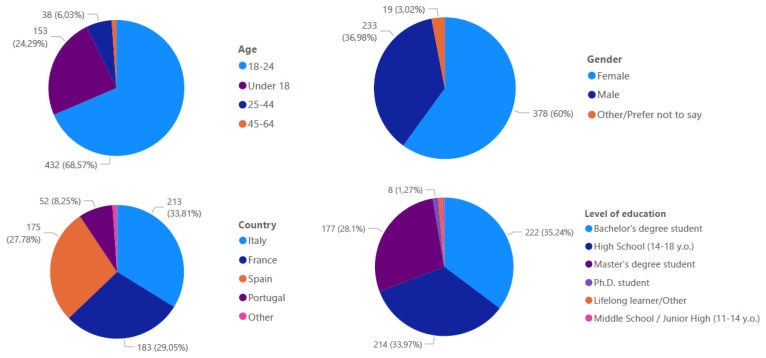 Figure 1
- —Horizon Europe Framework Programme
- —Erasmus+
Peer Reviews
No public reviews on file for this paper yet. If you reviewed it on a platform where reviews are public (OpenReview, ICLR, NeurIPS, ICML), you can paste yours below so the community can read it here.
Videos
No videos yet. Explain this paper in a talk, walkthrough, or lecture? Add one.
Taxonomy
TopicsEnvironmental Education and Sustainability · Climate Change Communication and Perception · Sustainability in Higher Education
Introduction
The fight against climate change is a cornerstone of the EU Erasmus+ program, with education recognized as a vital tool in confronting this global challenge ( European Commission, 2021a). The environmental crisis confronting humanity today transcends scientific boundaries, encompassing profound social and political dimensions ( Vare & Scott, 2007). As we approach the mid-2020s, the urgency of climate change and the associated loss of biodiversity necessitate an educational response, yet many schools and systems grapple with effective strategies ( UNESCO, 2021). Research consistently shows that merely imparting knowledge about environmental issues is insufficient to spur meaningful change; shifts in attitudes and perceptions of the natural world are essential to catalyzing behavioral transformation ( Ajzen, 1991; Bamberg & Möser, 2007; Kollmuss & Agyeman, 2002).
The European Union has responded decisively through initiatives such as the European Green Deal, launched in 2019, which outlines a roadmap for sustainable development ( European Commission, 2019). Moreover, its commitment has been further reinforced by policy recommendations that stress the importance of education for environmental sustainability and advocate for incorporating youth perspectives in tackling climate and biodiversity challenges—most notably, the Council Recommendation on Learning for the Green Transition and Sustainable Development ( Council of the European Union, 2022a) and the Council of Europe Recommendation on Young People and Climate Action ( Council of Europe, 2024). Complementing these efforts, the European Commission’s GreenComp framework provides a structured approach to fostering sustainability competencies across educational contexts ( Bianchi et al., 2022).
Within this framework, the OpenPass4Climate project emerges as an innovative initiative under the Erasmus+ program, introducing an open recognition alliance system to enhance climate education. By leveraging Open Badges and the OpenPass4Climate platform, the project aims to elevate climate-related activities from awareness to actionable commitment and justice. It seeks to evaluate the tangible impacts of these efforts on advancing climate justice and to identify mechanisms that accelerate the adoption of positive behaviors. A core objective is the creation of a lifelong, portable OpenPass4Climate system, empowering individuals to engage actively in climate initiatives.
To ensure the system’s efficacy, WP3 focused on understanding students’ engagement with climate issues, assessing key climate commitments, and exploring perceptions of both implicit and explicit recognition mechanisms. This comprehensive study spanned four European countries —France, Italy, Portugal, and Spain— and employed multiple research methods: an online survey, one-to-one interviews, national focus groups, and a transnational focus group. These efforts provide insights into youth perceptions of climate change, educational preferences, and attitudes toward open recognition systems, informing the co-design of an effective Open Badge system.
This article details the research methodology, presents findings from all study components, analyzes results within the context of contemporary European environmental and educational frameworks, and offers recommendations for the OpenPass4Climate system’s implementation. The findings aim to support the development of student-centered curricula and flexible learning pathways that bridge knowledge and action, fostering a generation of environmentally conscious citizens.
Methods
This study adopted a mixed-methods design, integrating quantitative and qualitative approaches across four phases: an online survey, one-to-one interviews, national focus groups, and a transnational focus group. This multifaceted strategy ensured both broad data collection and in-depth exploration of participants’ perspectives on climate education and open recognition systems.
Survey design and implementation
A 20-question survey (Annex I in the Extended Data) was administered to students from four European countries (France, Italy, Portugal, and Spain). The survey, designed by consortium members and crafted in compliance with the European Union's General Data Protection Regulation, collected demographic information including age, gender, education level, and country of study. Gender was determined through self-identification, with participants selecting from options including 'Male', 'Female', 'Non-binary', 'Prefer not to say', and an open text option for other gender identities. This approach aligns with best practices in gender-inclusive research design.
The survey investigated seven key constructs: ‘Climate change views’ examined students' acknowledgment of scientific evidence attributing climate change to human activity and their perception of it as a significant threat. ‘ Environmental values and identity’ explored the importance students attribute to environmental protection and their self-identification as environmentally friendly ( Bogner & Wiseman, 2006; Johnson & Manoli, 2010). ‘ Personal responsibility and emotional responses’ investigated students' sense of responsibility for mitigating climate change effects and their confidence in making a positive impact. ‘ Social norms’ explored perceptions of others' expectations and behaviors regarding environmental issues. ‘ Eco-pedagogical activities’ investigated prior formal and informal climate education. ‘ Learning interests and training preferences’ assessed interest in climate change learning and preferred approaches. The ‘ Open badges system/awareness’ examined familiarity with open badges for recognizing climate-related achievements.
Responses were provided on a Likert scale (1–5), with extreme scale values explicitly defined for all questions.
The survey instrument was initially pilot tested with a group of students from CSCI to assess clarity, comprehensibility, and response patterns. Feedback from this pilot phase was incorporated into the final version of the questionnaire. Internal consistency and reliability were assessed using Cronbach's alpha coefficient.
One-to-one interviews
Interview participants were selected from survey respondents who had indicated willingness to participate in follow-up research and provided contact information after reviewing data protection consent information. The final sample comprised 69 participants: 17 from France (UniLaSalle Beauvais), 23 from Italy (CSCI Novara), 10 from Portugal (Nova School of Business and Economics), and 19 from Spain (Universidad de Valladolid).
A set of 12 questions (Annex III in the Extended Data), designed by consortium members based on feedback from each partner institution’s teaching staff and students, structured the interviews into four blocks: ‘Climate change views’, ‘ Eco-pedagogical activities’, ‘ Learning interests and training preferences’, and ‘ Open badges system/awareness’. Interviews were conducted in participants' native languages without time constraints, allowing respondents to elaborate as needed for each question.
National focus groups
National focus groups were conducted in each participating country with a total of 45 participants: 17 French undergraduate students, 6 Italian vocational and high-school students, 12 Portuguese students across different levels, and 10 Spanish undergraduate and Master-level students. The focus groups addressed 12 questions (Annex IV in the Extended Data) organized into four thematic blocks: ‘ Climate change views’, ‘ Personal responsibility and social norms’, ‘ Learning interests and training preferences’, and ‘ Open badges system/awareness’.
Each consortium member conducted the focus group in their country using the participants' native language. As in the case of the one-to-one interviews, to comply with GDPR requirements, personally identifiable information and full transcripts were only accessible to the educational institution to which students belonged, with anonymized reports shared among consortium members.
International focus group
The transnational focus group involved 16 students, four from each country, selected to ensure diverse educational representation: Italian high school/vocational students, French undergraduates, Portuguese Master's students, and Spanish PhD-level students. The session was conducted using Miro as the online meeting platform, chosen for its EU GDPR compliance.
Participants were contacted by their institutions regarding purpose, objectives, and expected outcomes, with informed consent obtained for participation and research data use. Rather than recording the session, Miro's notes feature captured relevant information and insights during discussions, facilitating free and open dialogue while maintaining participant privacy.
Data analysis
The analysis followed a sequential mixed-methods approach. Quantitative survey data underwent statistical analysis using IBM SPSS Statistics v.27 (IBM Corp., Armonk, NY, USA). Given that assumptions of normality were not met, the Kruskal-Wallis non‐parametric test was employed to determine statistically significant differences among groups. Post hoc multiple pairwise comparisons used the Conover-Iman test. For reproducibility purposes, all statistical analyses conducted in this study can be replicated using R statistical software, an open-source alternative that provides equivalent statistical capabilities. Qualitative data from interviews and focus groups were subjected to thematic analysis. The integration phase employed a convergent design, wherein quantitative and qualitative findings were compared and contrasted to identify areas of convergence and divergence.
To address potential methodological limitations, several measures were implemented. The sample's composition, while diverse, showed some inherent limitations that were accounted for in the analysis. Categories with limited sample sizes were excluded from the summary of survey results. Furthermore, since age and educational level categories substantially overlapped, only the more detailed educational level data was retained in the analysis.
Translation and interpretation across multiple languages required careful attention. While interviews and focus groups were conducted in participants' native languages to ensure authentic expression, subsequent translation of findings into English for cross-consortium analysis involved review by multiple consortium members fluent in both the source language and English to maintain the accuracy and consistency of findings.
Results
Survey findings
** Reliability and sample characteristics **
The survey garnered responses from 630 participants, with demographic analysis ( Figure 1) revealing that 69% fell within the 18–24 age bracket. Gender distribution showed 60% female respondents compared to 37% male respondents. The sample's educational composition included Bachelor's degree students (35%, with 150 from Spain, 43 from France, and 27 from Portugal), A-level students (34%, predominantly from Italy), and Master's degree students (28%, with 134 from France, 19 from Portugal, and 18 from Spain).
Profile of the survey respondents.
The survey's internal consistency, assessed through Cronbach's alpha coefficient (0.847) and standardized Cronbach's alpha (0.848), demonstrated strong reliability in measuring latent factors among subjects.
** Climate attitudes and values **
Climate change views (questions 1–4; Annex II in the Extended Data, Tables S1 and S2)
Respondents expressed significant concern about climate change (mean=4.0/5), with strong consensus acknowledging human activities as major contributors (4.4/5). Participants generally believed in an individual capacity to impact climate change (3.7/5) and strongly endorsed government intervention (4.4/5). Statistical analysis revealed:
Significantly higher scores among female students across all four questionsHigher concern levels among university students compared to other educational levelsCountry-level variations with Italian students showing the lowest scores and Portuguese students consistently highest
Environmental values and identity (questions 5–7; Annex II in the Extended Data, Tables S1 and S2)
Environmental protection received high importance ratings (4.5/5), though prioritizing it over economic growth garnered less support (3.8/5). Respondents reported medium-high alignment between actions and environmental values (3.6/5), with notable variations:
Female students showed the highest scores for environmental values itemsNo significant gender differences in action alignmentMaster's students and French students reported the lowest alignmentPortuguese students demonstrated the highest alignment scores
Personal responsibility and emotional responses (questions 8–9; Annex II in the Extended Data, Tables S1 and S2)
Results showed a moderate sense of responsibility for reducing climate change effects (3.2/5), with:
Significantly higher scores among female respondentsLowest scores among French studentsHighest scores among Portuguese studentsGeneral lack of hope about the environmental future (2.6/5)Greater optimism among the youngest respondents and Portuguese/Italian students
Social norms (questions 10–11; Annex II in the Extended Data, Tables S1 and S2)
Participants reported medium levels of environmental concern in their social circles (2.9/5), with:
Highest scores among Master's studentsLower perceptions (2.4/5) of environmental care by authority figuresLowest scores in FranceHighest scores in Italy and Portugal
** Educational engagement **
Eco-pedagogical activities (questions 12–14; Annex II in the Extended Data, Tables S3 and S4)
Formal climate change training was rated as moderate (3.2/5), while informal education scored slightly higher (3.5/5). Key findings included:
Higher scores among female and Master's studentsHigher participation rates in France and PortugalLow overall participation in eco-pedagogical activities (2.3/5)
Learning interests and training preferences (questions 15–17; Annex II in the Extended Data, Tables S3 and S4)
Students showed moderate-to-high interest in climate-related learning (3.8/5), with:
Strong support for formal curriculum integration (4.1/5)High endorsement of informal learning effectiveness (4.1/5)Higher scores among female and Master's level studentsParticularly strong interest in France and Portugal
** Open recognition systems **
Open badges system/awareness (questions 18–20; Annex II in the Extended Data, Tables S3 and S4)
Results indicated:
Moderate valuation of climate-related learning recognition (3.5/5)Limited motivation for earning open badges (3.2/5)Neutral stance on employability impact (3.0/5)Higher optimism among Portuguese students (3.5/5)
Statistical analysis revealed significant country-level differences for 12 out of 20 items, emphasizing the importance of considering national contexts in implementation strategies.
Interview and focus group findings
** One-to-one interviews **
Participant profiles
The interviews involved 69 participants across four countries:
France: 17 respondents (14 females, 3 males), primarily second-year Environmental Engineering and Agri-Food degree studentsItaly: 23 respondents (14 males, 9 females) aged 17–18, representing diverse educational fields including Administration, Finance, Marketing, Agriculture, and othersPortugal: 10 Master-level students (5 females, 5 males) from the School of Business and EconomicsSpain: 19 respondents (11 females, 8 males) across undergraduate (11), Master's level (3), and PhD-level (5) programs
Common themes across countries
Pressing environmental issues emerged as a primary concern, with climate change universally recognized as the most critical issue. Participants specifically highlighted global warming, CO 2 emissions, pollution across multiple domains (air, water, soil), deforestation, biodiversity loss, and waste management challenges.
Individual actions were emphasized across all interviews, with participants identifying key behavioral changes such as reducing meat consumption, using public transportation, practicing recycling, raising awareness through education, and adopting responsible consumption habits.
Participants across countries supported regulatory measures and environmental taxes to drive change, emphasizing the role of politicians, governments, and corporations. Most respondents reported receiving climate-related training through both formal university courses and informal methods such as workshops and documentaries.
Country-specific insights
Italian participants provided detailed insights into local waste management practices and emphasized the need for improved energy efficiency systems. French students demonstrated a strong interest in innovative sustainability solutions and emphasized the importance of robust government policies. Portuguese respondents highlighted community-driven initiatives and advocated for comprehensive educational reforms. Spanish participants showed clear preferences for experiential and practical learning methods, with a strong dislike for purely online learning formats.
** National focus groups **
Participant distribution
The national focus groups comprised:
France: 17 undergraduate students (14 females, 3 males)Italy: 6 vocational and high-school students (3 females, 3 males)Portugal: 12 students (7 females, 5 males) across Bachelor's (5), Master's (5) and PhD (2) levelsSpain: 10 undergraduate and Master-level students (8 females, 2 males)
Key findings
Participants across all countries acknowledged the severity and urgency of climate change, citing issues such as global warming, extreme weather events, pollution, and biodiversity loss. There was strong consensus regarding climate change's impact on future generations, particularly concerning food security, health issues, economic instability, and increased migration.
Education emerged as crucial in fostering environmental awareness and promoting sustainable practices. Participants advocated for integrating environmental education into school curricula from an early age, ensuring comprehensive approaches beyond superficial treatment of topics.
Country-specific variations revealed:
Italian participants emphasized economic consequences, particularly agricultural impactsFrench participants discussed eco-anxiety and psychological effectsPortuguese participants focused on greenwashing issues and corporate transparencySpanish participants provided detailed insights into local climate impacts
International focus group
The transnational focus group involved 16 students (4 per country) representing different educational levels. Discussions focused on badge design, implementation preferences, and potential concerns.
** Badge design and comprehension **
Participants critiqued the badge design, noting readability challenges with white text on light backgrounds. They suggested green and orange hues to reflect nature and confidence, respectively, alongside clearer classification descriptions and refined graphics and logo sizes for visual clarity.
** Implementation recommendations **
For implementation, they advocated user-friendly features, such as progress-tracking tools and detailed tutorials, as well as highlighting training hours in metadata for EU-wide recognition. They also proposed gamification (e.g., weekly challenges) and integration with LinkedIn and university transcripts to enhance utility.
** Potential concerns **
Participants raised concerns about employer preferences for traditional certificates, uncertainty about badge value in job applications, and risks of superficial learning focused on badge acquisition rather than genuine knowledge gain. They emphasized the need for technical support and guidance for organizations implementing the badge system.
These findings provided insights for developing the badge system's design and implementation strategy while highlighting important considerations for ensuring its effectiveness and credibility.
Discussion
The multi-method approach of this study provides robust insights into youth climate attitudes, educational preferences, and perceptions of open recognition systems. Building on prior European research, such as the Special Eurobarometer 501 ( European Commission, 2020a) and 538 ( European Commission, 2023), the findings reveal both encouraging trends and persistent challenges in climate education and competency development, particularly within educational contexts and among younger populations.
Environmental attitudes and climate awareness
Concerning the first construct on ' Climate change views', a comparison of our survey results with the Eurobarometer findings reveals important insights into youth climate attitudes within the broader European context. Our student respondents demonstrated high climate concern (Q1, mean=4.0/5), which aligns with but intensifies the general public sentiment captured in Eurobarometer 538 (QC2, 'How serious a problem do you think climate change is at this moment?'), where 77% of EU citizens view climate change as a very serious problem. Country-specific trends (Portugal, 4.48 > France, 4.11 > Spain, 3.91 > Italy, 3.76) were quite consistent with those obtained in the Eurobarometer 538 (Portugal, 89% > Spain, 86% > France, 85% > Italy, 83%), with Portugal and Italy ranking first and last, respectively.
The OpenPass4Climate survey (Q2) provided unique insight into students' strong belief in human responsibility for climate change (4.4/5 overall, with Portugal's highest at 4.8/5), a perspective not directly measured in the Eurobarometer surveys.
When examining individual roles in tackling climate change (Q3), student respondents showed a stronger belief in individual impact (3.7/5) compared to the relatively low percentages in Eurobarometer 538 (QC3, ' In your opinion, who within the EU is responsible for tackling climate change?'), in which only 35% of respondents (EU27-average) felt personally responsible for tackling climate change. This suggests that students may feel more empowered than the general population. Interestingly, Portugal showed the highest belief in our survey (3.98/5), and lower than the EU27 average (28%) in the Eurobarometer, while Italy showed the lowest belief in both surveys (3.57/5 and 20%, respectively).
Students showed strong support for government intervention (Q4, 4.4/5) in tackling climate change. This aligns with the aforementioned Eurobarometer 538 (QC3) responses, in which national governments and the EU were chosen by 56% of the respondents as responsible for tackling climate change. This also connects with strong support for coordinated intervention, with Eurobarometer 501 (QA8) showing that 70% of the respondents favor joint EU decision-making on environmental issues. As for country differences, Portuguese students' strong support in our survey (4.63/5) contrasts with the lower support in Eurobarometer 538's QC3 (47% and 52% for national governments and the EU, respectively), while Italy's lowest scores in both surveys are consistent.
With regard to the ‘ Environmental values and identity’ construct, the relationship between environmental values and actions revealed interesting patterns across surveys. Younger populations demonstrated heightened endorsement of environmental protection (Q5, 4.5/5) compared to national averages: in Eurobarometer 501 (QA1, ‘ How important is protecting the environment to you personally?’), only 53% —EU-27 average value— of the respondents chose ‘very important’. The highest score among Portuguese students (4.75/5) aligns with the results from the TIMSS 2023 survey where Portugal ranked better (522±2.6) than Italy (517±3.7) and France (511±4.3) in terms of ‘Students Value Environmental Preservation’ ( von Davier et al., 2024).
However, despite strong endorsement of environmental protection, alignment between values and actions was moderate (Q7, 3.6/5), highlighting a ‘value-action gap’ ( Uitto et al., 2015). Focus groups further elucidated this gap, pointing to structural and institutional barriers, a phenomenon well-documented in environmental psychology ( Kollmuss & Agyeman, 2002). This disconnect finds parallels in Eurobarometer 538 (QC5, ‘Have you personally taken any action to fight climate change over the past six months?’) where only 63% of the respondents said ‘yes’, with concrete actions varying significantly (QC6), and with Eurobarometer 501 (QA9), in which 67% of the respondents recognized that —as citizens— they were not doing enough to protect the environment. Italy’s highest action-value alignment in our survey (3.71/5) contrasts with its lowest value in Eurobarometer 538 (52%), suggesting that in this country the gap may be reduced among more environmentally aware youth populations.
For the ‘ Personal responsibility and emotional responses’ construct, a dimension not covered in the Eurobarometer surveys, our survey shows students felt only moderately responsible for reducing the negative effects of climate change (Q8, 3.2/5), with a lower value than the one indicated above for Q3 on how much individuals can make a difference in addressing climate change (3.7/5). This further supports that they predominantly place the onus for climate action on governments while underestimating potential individual responsibility and contributions. Regarding the hopefulness about the future of the environment (Q9), they were mostly pessimistic (2.6/5). This prevailing sense of hopelessness about the environment's future is consistent with their perception of those in leadership positions within their countries, which they consider can make a difference, as indifferent to environmental issues (see below).
Analysis of the ‘ Social norms’ construct reveals that respondents in our survey considered that people in their social circle cared less than them about the environment and climate change (Q10, 2.9/10 vs. Q5, 4.5/5), which does not align with the actual perception in their countries according to Eurobarometer 538 QC2 (83 to 89% of respondents considered climate change a very serious problem). Their view on how much people in positions of responsibility (national government, regional government) in their country care and take action to protect the environment and climate change yielded a very low value (Q11, 2.3/5). This aligns with Eurobarometer 538 (QC7), in which 67% (EU27-average) of the respondents believed their governments are not doing enough, and with Eurobarometer 501 (QA9), in which 72% and 68% of the respondents considered that their national governments and the EU were not doing enough to protect the environment.
As for other aspects not analyzed in the Eurobarometer surveys, gender differences emerged in our survey, with female respondents consistently scoring higher on environmental values, aligning with established research ( McCright, 2010; Zelezny et al., 2000), though Portugal's uniformly high scores suggest cultural and educational contexts may mitigate such disparities.
The educational level also emerged as a significant factor in environmental engagement. Master's students showed the highest rates of climate awareness and advocacy, which aligns with UNESCO's analysis of how specialized education enhances pro-environmental behavior, particularly among STEM graduates ( Nair-Bedouelle, 2021).
Eco-pedagogical activities, learning interests, and training preferences
Results from the ' Eco-pedagogical activities' construct indicate that students rated their informal climate change education (Q13, 3.5/5) more highly than their formal training (Q12, 3.2/5). This preference for informal learning sources mirrors Eurobarometer 501's QA4 findings, where respondents primarily relied on television news (66%) and the internet (38%) for environmental information rather than formal educational channels. The higher scores for perceived climate change training in France (Q12, 3.51/5; Q13, 3.66/5), with Portugal ranking second, do not align with the results from the TIMSS 2023 survey where Portugal ranked better (520±2.9) than Italy (504±3.8) and France (492±3.6) in terms of ‘Average Environmental Knowledge’ score ( von Davier et al., 2024).
Despite high interest in climate-related learning (Q15, 3.8/5), participation in eco-pedagogical activities was low (Q14, 2.3/5). This participation gap mirrors the findings from Eurobarometer 501, in which eco-pedagogical activities (e.g., attending a workshop about environmental issues or a collective beach or park cleanup) showed consistently low engagement rates across member states (7% EU-27 average). Moreover, in Eurobarometer 501’s QA10, providing more information and education was only chosen as an effective way of tackling environmental issues by 24% of the respondents. Our student survey suggests a higher valuation of educational interventions among university students compared to the general population, highlighting the potential role of higher education in fostering environmental engagement, and that barriers remain to convert students’ strong interest in climate education into active participation in educational initiatives.
On the topic of training preferences, participants strongly favored hybrid learning models, valuing formal curriculum integration (Q16, 4.1/5) and informal pathways (Q17, 3.8/5). National focus groups underscored the complementary roles of structured and experiential learning, with students advocating for a balance that combines theoretical knowledge with practical, community-based activities. This preference aligns with the European Commission’s emphasis on flexible learning pathways ( European Commission, 2021a) and the GreenComp framework’s call for holistic sustainability education that fosters critical thinking, problem-solving, and collaboration ( Bianchi et al., 2022).
Open recognition systems: bridging theory and practice
The identified value-action gap suggests that recognition systems could incentivize action, even though the initial survey showed that students only moderately valued recognition for completing climate-related learning activities (Q18, 3.5/5) and showed even less interest in open badges as a motivation tool to learn about climate-related topics (Q19, 3.2/5). As subsequently evidenced during the one-to-one interviews and national focus groups, this was partly due to the students’ limited understanding of the open badges system and its value for recognizing and showcasing climate-related learning achievements (underscoring the need for targeted awareness campaigns and educational initiatives regarding its purpose and applications) and partly due to real-world applicability concerns, a notion supported by the transnational focus group’s emphasis on quality assurance, institutional credibility, and alignment with existing qualification frameworks. Participants expressed concerns about employer recognition of badges, technological barriers (e.g., lack of access to digital platforms in rural areas), and the risk of superficial learning if badges are awarded without rigorous assessment. These challenges resonate with broader EU competency framework efforts ( European Commission: Joint Research Centre, 2025) and UNESCO’s call for transformative education that fosters deep, meaningful engagement ( UNESCO, 2021).
On the question of employability (Q20, 3/5), the survey's neutral perception contrasts with evidence from the World Economic Forum's 2023 Future of Jobs Report, which indicates growing employer recognition of sustainability-focused credentials ( Di Battista et al., 2023). This discrepancy aligns with critiques of poor institutional communication about credential portability ( Oliver, 2022). However, Portuguese students were more optimistic (3.5/5), which may be tentatively attributed to Portugal’s comprehensive digital education strategy, particularly the Digital Transition Action Plan (PDE) adopted in 2020, which the European Schoolnet highlighted as a transformative System Change Case Study ( Wastiau et al., 2024). This initiative, complemented by the National Digital Skills Initiative e.2030 (INCoDe.2030) and the Portuguese government's strategic funding of Universidade Aberta, has created an integrated approach to digital micro-credentials and open education for certifying competencies ( Griffiths et al., 2024). Such coordinated national efforts align with and advance broader EU initiatives to embed Open Badges in educational frameworks ( Council of the European Union, 2022b; EQAR, 2023).
Addressing these concerns will require careful design, ensuring that badges are credible, user-friendly, and integrated with existing educational and professional frameworks. For example, badges could be aligned with the European Qualifications Framework ( European Commission, 2018) to enhance their recognition across borders. The European Council’s emphasis on whole-institution approaches ( Council of the European Union, 2022a) provides a supportive context for such developments, encouraging universities to adopt open recognition systems as part of their sustainability strategies.
Policy implications
The research findings advocate for coordinated policy interventions across European, national, and institutional levels to advance climate education and open recognition systems. Each level presents distinct challenges and opportunities that must be addressed through carefully crafted policy frameworks.
At the European level, the European Union must establish comprehensive frameworks that balance standardization with national adaptability. This requires developing quality assurance mechanisms for open badge systems that set minimum standards while allowing flexibility for national and regional adaptation ( Council of the European Union, 2022b). These mechanisms should ensure alignment with existing European qualification frameworks ( European Commission, 2018) while supporting accessibility through multilingual resources and platforms. The EU must also provide funding for digital infrastructure, particularly in underserved regions, and establish standardized protocols for badge portability across member states. Integration with broader EU initiatives is crucial, including alignment with European Green Deal educational objectives ( European Commission, 2019) and coordination with the Digital Education Action Plan implementation to support cross-border recognition of climate-related credentials.
National-level policy development should focus on the systemic integration of climate education and recognition within existing educational frameworks. Curriculum development requires thoughtful integration of climate competencies into national frameworks, with consideration given to increasing mandatory climate education hours ( UNESCO, 2022). Additionally, assessment frameworks must evolve to recognize both formal and informal learning pathways. Teacher preparation represents another crucial area for national policy intervention, as highlighted by Redman et al. (2018). Countries should establish systematic professional development programs and create support networks for teaching staff, providing necessary resources for eco-pedagogical activities. Recognition systems at the national level must create clear pathways for validating informal learning and establish mechanisms for incorporating open badges into national qualification systems, with quality assurance processes aligned with EU standards ( European Commission: Joint Research Centre, 2025).
At the institutional level, educational organizations require policy support for implementing comprehensive approaches to climate education and recognition ( Breiting et al., 2005; Higgs & McMillan, 2006; Leal-Filho et al., 2021; Mathar, 2015). Organizational strategy should embrace whole-institution approaches to climate education while establishing partnerships with environmental organizations ( UNESCO, 2021). Institutions must develop clear policies for recognizing external learning and integrating sustainability across academic programs. Infrastructure development demands significant attention, with investments needed in digital platforms for badge issuance and verification, alongside technical support systems for users. Quality assurance at the institutional level requires robust assessment criteria and verification processes for badge issuance, supported by careful documentation of learning outcomes.
These policy recommendations align with key EU frameworks, including the European Skills Agenda's emphasis on transversal skills recognition ( European Commission, 2020b), the Digital Education Action Plan's promotion of innovative learning tools ( European Commission, 2021b), and the European Green Deal's focus on environmental sustainability education ( European Commission, 2019). Successful implementation requires careful attention to several critical factors. Policymakers must maintain a delicate balance between standardization and contextual flexibility while ensuring equitable access to recognition systems. Support for technological infrastructure development must be coupled with building credibility through robust quality assurance, such as the European Blockchain Service Infrastructure (EBSI). Furthermore, policies should foster collaboration between educational institutions and industry to enhance the value and recognition of climate-related credentials.
Implementation should follow an evidence-based approach while remaining adaptable to emerging needs and technological developments in digital credentialing. The findings from this study suggest that effective policy frameworks must address both the technical aspects of open badge systems and the broader educational and social contexts in which they operate ( Bianchi et al., 2022). As climate education evolves and digital recognition systems mature, policies must remain responsive to changing needs while maintaining high standards for quality and accessibility.
Limitations and future research directions
This study has several limitations that future research should address. The sample's skew toward higher education students may limit generalizability to other educational contexts. Additionally, the rapid evolution of digital credentialing systems means that attitudes toward open badges may shift as these tools become more widespread. Future research should explore:
– Longitudinal impacts of open recognition systems on learning outcomes
– Comparative effectiveness of different badge implementation strategies
– Intersection of climate competencies with other key EU competency frameworks
– Role of emerging technologies, like blockchain, in credential verification to enhance security and trust
Our findings underscore the complex interplay between environmental attitudes, educational preferences, and recognition systems in supporting climate competency development. Success will require carefully coordinated efforts across policy domains and stakeholder groups, with particular attention to maintaining a balance between standardization and contextual flexibility.
Conclusions
The OpenPass4Climate research reveals critical insights for developing effective climate education and open recognition systems in European higher education. The study across four countries demonstrates that while students show strong climate awareness, there remains a significant gap between knowledge and action. This gap presents both a challenge and an opportunity for the development of open badge systems.
The findings suggest three key areas requiring immediate attention for the successful implementation of the OpenPass4Climate initiative:
First, educational systems must bridge formal and informal learning pathways. Our research demonstrates that students value both structured academic approaches and experiential learning opportunities, suggesting that open badge systems should recognize and validate both forms of learning.
Second, badge system design must prioritize credibility and usability. The focus group findings emphasize that successful implementation requires clear institutional backing, robust quality assurance mechanisms, and user-friendly interfaces. These elements are essential for ensuring that badges hold value for both academic progression and professional development.
Third, implementation strategies must account for national and cultural contexts while maintaining European-wide standards. The significant variations in climate attitudes and educational preferences across countries indicate the need for flexible frameworks that can adapt to local contexts while ensuring consistent quality and recognition.
Looking ahead, the OpenPass4Climate initiative must work within existing European educational frameworks while pushing boundaries to create innovative recognition systems. The focus should be on developing badges that not only acknowledge learning but actively encourage engagement with climate issues through practical action.
The path forward requires a coordinated effort from educational institutions, policymakers, and stakeholders to create meaningful change in climate education. Success will depend on maintaining the delicate balance between standardization and flexibility, ensuring that open badges serve as effective tools for recognizing and promoting climate competency development across Europe.
Ethics and consent
This research was conducted in accordance with the ethical principles of the Declaration of Helsinki. The study was approved by the Technical Directorate for Privacy Matters, with approval from the Data Protection Officer of the University of Valladolid (Reference Number: UVA/26/2023) on September 21, 2023. The study was conducted in accordance with the University of Valladolid's Ethical Code, approved by the Governing Council on July 22, 2022.
Informed consent was obtained from all participants through the online survey platform, where participants were informed that by taking the survey they indicated they had read and understood the data protection and consent statement and agreed to participate. For focus groups and interviews, participants provided verbal consent after reviewing data protection information. All participants were informed of data confidentiality measures and their rights under GDPR requirements, including the right to withdraw from the study at any time without penalty. Data were anonymized during analysis and reporting to protect participant identities.
The reference list from the paper itself. Each links out to its DOI / PubMed record.
- 1Ajzen I : The theory of planned behavior. Organ Behav Hum Decis Process. 1991;50(2):179–211. 10.1016/0749-5978(91)90020-T · doi ↗
- 2Bamberg S Möser G : Twenty years after Hines, Hungerford, and Tomera: a new meta-analysis of psycho-social determinants of pro-environmental behaviour. J Environ Psychol. 2007;27(1):14–25. 10.1016/j.jenvp.2006.12.002 · doi ↗
- 3Bianchi G Pisiotis U Cabrera Giraldez M : Green Comp: the European sustainability competence framework.Punie, Y. and Bacigalupo, M. editor(s), EUR 30955 EN, Publications Office of the European Union, Luxembourg, ISBN 978-92-76-46485-3, JRC 128040,2022. 10.2760/13286 · doi ↗
- 4Breiting S Mayer M Mogensen F : Quality criteria for ESD-schools.Austrian Federal Ministry of Education, Science and Culture,2005. Reference Source
- 5Bogner FX Wiseman M : Adolescents' attitudes towards nature and environment: quantifying the 2-MEV model. Environmentalist. 2006;26:247–254. 10.1007/s 10669-006-8660-9 · doi ↗
- 6Council of Europe: Recommendation CM/Rec(2024)6 of the Committee of Ministers to member States on young people and climate action. 2024. Reference Source
- 7Council of the European Union: Council Recommendation of 16 June 2022 on learning for the green transition and sustainable development 2022/C 243/01. 2022 a. Reference Source
- 8Council of the European Union: Council Recommendation of 16 June 2022 on a European approach to micro-credentials for lifelong learning and employability 2022/C 243/02. 2022 b. Reference Source 10.1080/21614083.2022.2147288 PMC 967799836420424 · doi ↗ · pubmed ↗