Correction: T cell-derived small extracellular vesicles in cancer–immune interactions
Ma Janelle Chichoco Garcia, Su Su Thae Hnit, Elena Shklovskaya, Yuling Wang

Abstract
Genes, proteins, chemicals, diseases, species, mutations and cell lines named across the full text — each resolved to its canonical identifier and authoritative record.
Click any figure to enlarge with its caption.
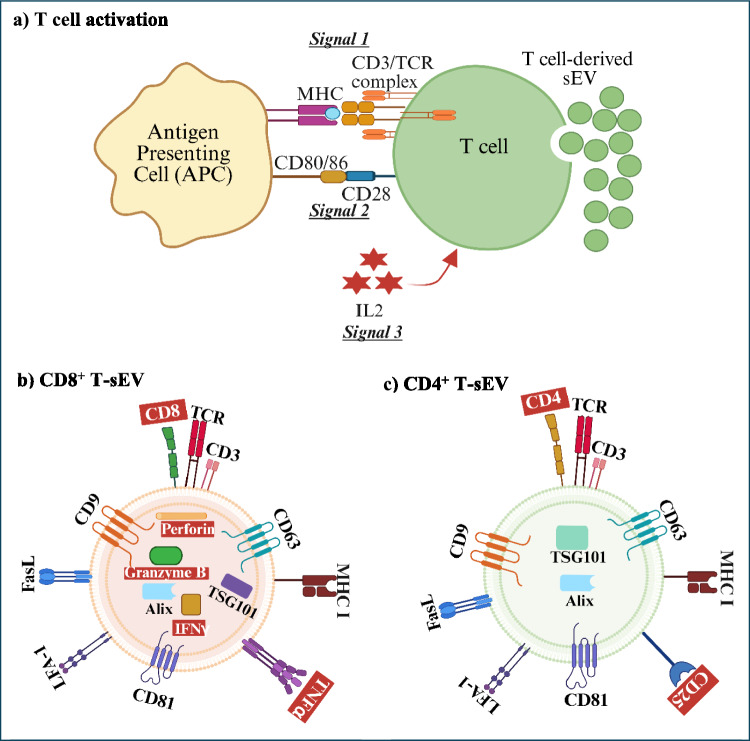 Figure 1
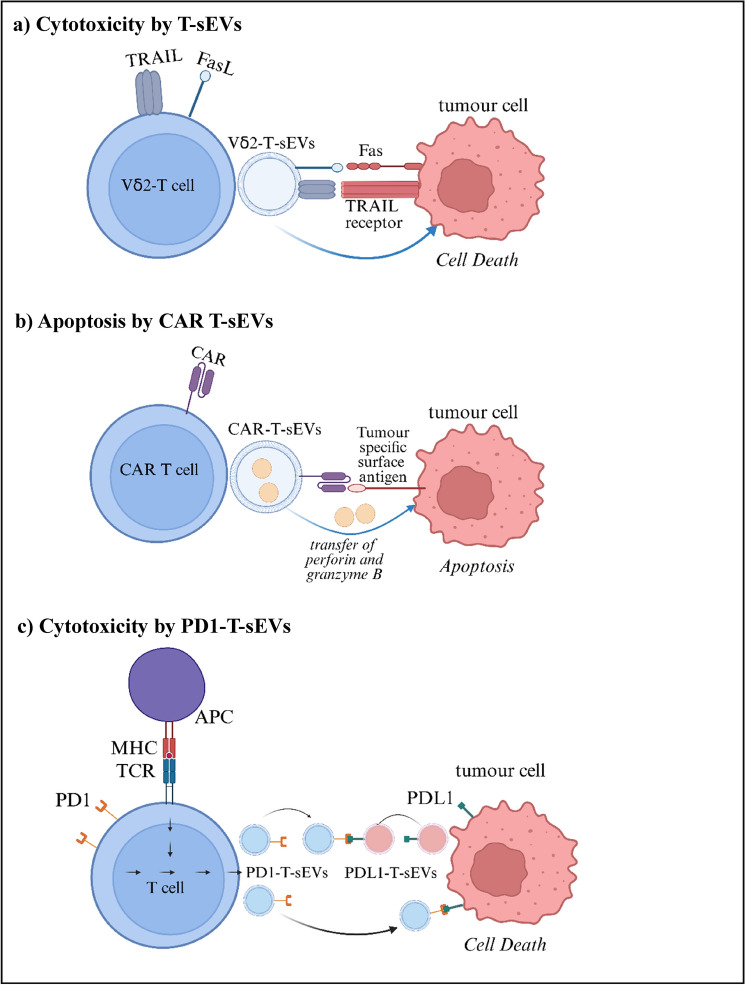 Figure 2
Peer Reviews
No public reviews on file for this paper yet. If you reviewed it on a platform where reviews are public (OpenReview, ICLR, NeurIPS, ICML), you can paste yours below so the community can read it here.
Videos
No videos yet. Explain this paper in a talk, walkthrough, or lecture? Add one.
Taxonomy
TopicsExtracellular vesicles in disease
Correction to: Cancer Immunology, Immunotherapy (2025) 74:252 10.1007/s00262-025-04109-w
In the original version of this article, the wrong figures appeared as Fig. 1 and Fig. 2. The Figs. 1 and 2 should have appeared as shown below.Fig. 1T-sEV generation by T cells activation and specific proteins found on CD8^+^ and CD4^+^ T-sEVs. a T cell activation is via Signal 1 which is provided by the TCR recognition of a peptide antigen bound to the MHC molecule on the APC. The second co-stimulatory signal (Signal 2) is provided by CD28 on T cells binding to CD80 and CD86 on APCs. The third signal (Signal 3) is T-cell derived IL2. The three signals integrate to stimulate sEV release from the T cell (32). b CD8^+^ T-sEVs and c) CD4^+^ T-sEVs both express the TCR/CD3 complex, MHC I, LFA-1, FasL and the sEV markers Alix, TSG101, CD9, CD63 and CD81. The key differences between CD8^+^ T-sEVs and CD4^+^ T-sEVs are highlighted in a red/dash box. CD8^+^ T-sEVs express TNFα, IFNγ, perforin and granzyme B (85). CD4.^+^ T-sEVs express CD25 (116). (Created with BioRender.com)Fig. 2. Anti-tumour effects of T-sEVs. a Vδ2-T-sEVs expressing FasL and TRAIL proteins displayed cytotoxicity against tumour cells (106). b CAR-T cells generated sEVs which carried CAR on their surface, and expressed Granzyme B and perforin which caused apoptosis of tumour cells (104). c) PD1-expressing T-sEVs were found to block the PD1:PD-L1 interaction thus mediating tumour cell death (102). (Created with BioRender.com)
The original article has been corrected.