One-Sided Matching Portal (OSMP): A Tool to Facilitate Rare Disease Patient Matchmaking
Matthew Osmond, E. Magda Price, Orion J. Buske, Mackenzie Frew, Madeline Couse, Taila Hartley, Conor Klamann, Hannah G. B. H. Le, Jenny Xu, Delvin So, Anjali Jain, Kevin Lu, Kevin Mo, Hannah Wyllie, Erika Wall, Hannah G. Driver, Warren A. Cheung, Ana S. A. Cohen, Emily G. Farrow

TL;DR
The OSMP is a new tool that helps find rare disease patients by matching them based on shared genetic variants, even if only one side has a known gene.
Contribution
The OSMP introduces a one-sided genomic matchmaking approach, expanding eligibility for rare disease patient matching.
Findings
The OSMP successfully identified thousands of variant occurrences in pilot studies.
A filtering workflow reduced false positives by over 99.8% in pilot queries.
One-sided matching is practical when variant and participant data are available.
Abstract
Genomic matchmaking—the process of identifying individuals with overlapping phenotypes and rare variants in the same gene—is an important tool facilitating gene discoveries for unsolved rare genetic disease (RGD) patients. Current approaches are two-sided, meaning both patients being matched must have the same candidate gene flagged. This limits the number of RGD patients eligible for matchmaking. One-sided matchmaking, in which a gene of interest is queried in the genome-wide sequencing data of RGD patients, would make matchmaking possible for previously undiscoverable individuals. However, platforms and workflows for this approach have not been well established. We released a beta version of the One-Sided Matching Portal (OSMP), a platform capable of performing one-sided matchmaking queries across thousands of participants stored in genomic databases. The OSMP returns variant-level…
Genes, proteins, chemicals, diseases, species, mutations and cell lines named across the full text — each resolved to its canonical identifier and authoritative record.
Click any figure to enlarge with its caption.
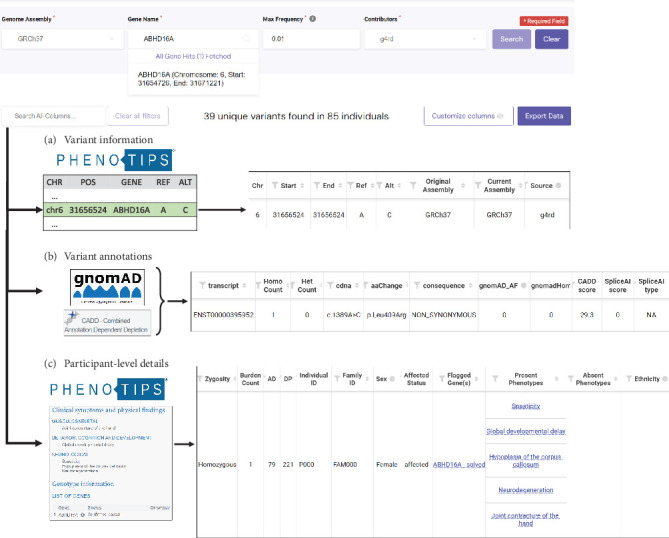 Figure 1
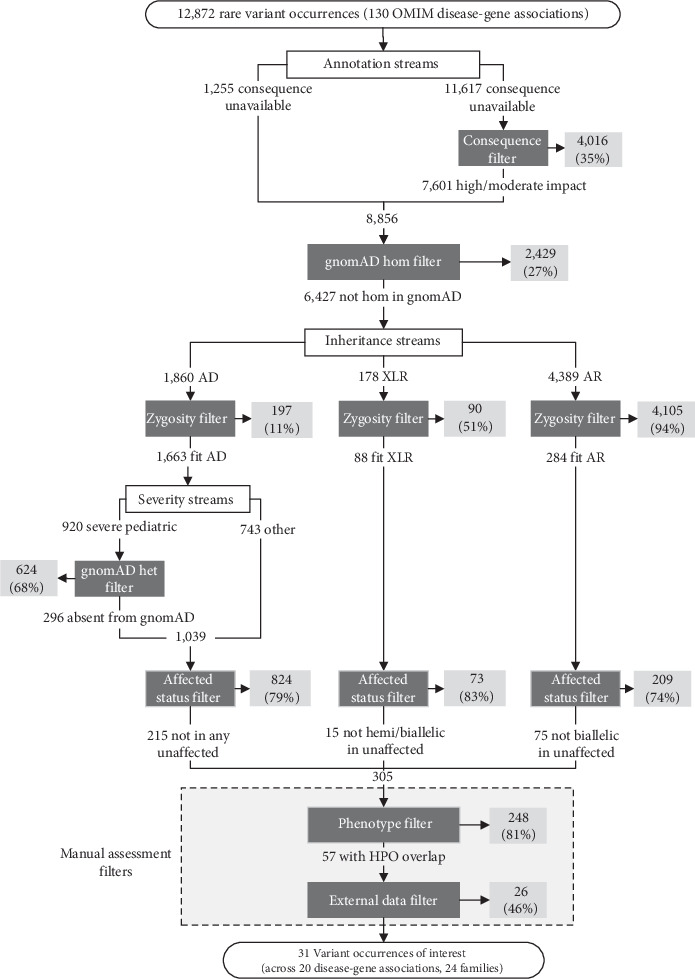 Figure 2
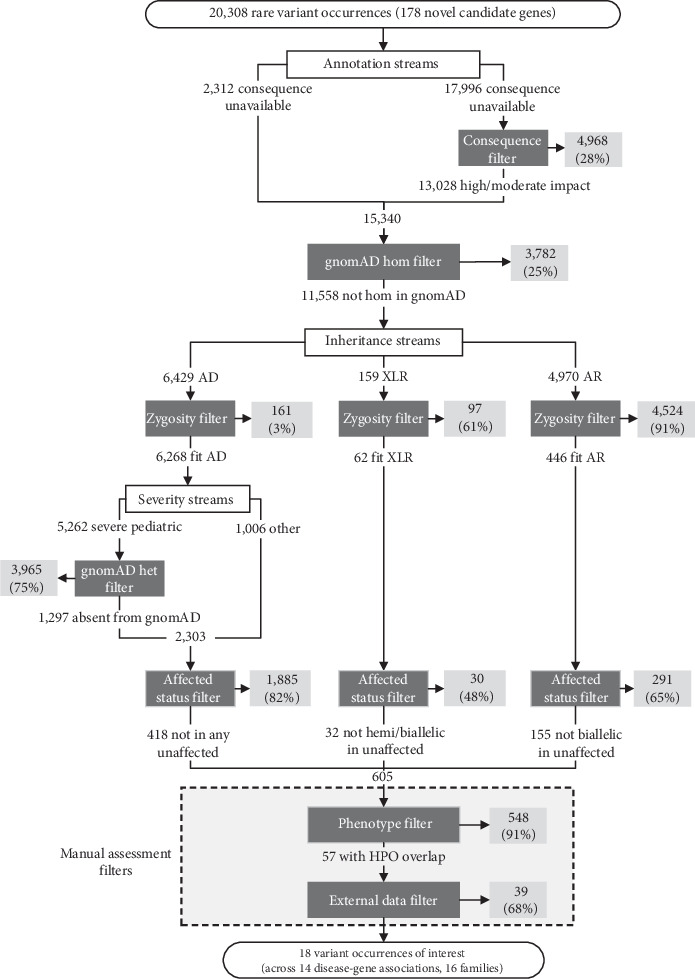 Figure 3
- —Children's Mercy Research Institute
- —Ontario Genomics Institute
- —Genome Canada
- —Canadian Institutes of Health Research
Peer Reviews
No public reviews on file for this paper yet. If you reviewed it on a platform where reviews are public (OpenReview, ICLR, NeurIPS, ICML), you can paste yours below so the community can read it here.
Videos
No videos yet. Explain this paper in a talk, walkthrough, or lecture? Add one.
Taxonomy
TopicsBiomedical Text Mining and Ontologies
1. Introduction
In the past decade, genome-wide sequencing (GWS), including both exome sequencing and genome sequencing, has become a standard tool for the diagnosis of rare genetic diseases (RGDs) in many regions of the world. Depending on the indication(s) and specific implementation, it is estimated that approximately 40% of RGD families tested by GWS will receive a diagnosis [1]. For comparison, the first-tier chromosomal microarray (CMA) test has an average diagnostic yield of 12.2% across a range of indications including developmental delay, dysmorphic features, intellectual disability, learning disabilities, autism, and multiple congenital anomalies [2]. And yet, despite the success of clinical GWS testing, a significant portion of families with RGD remains undiagnosed following their clinical testing.
Families without a diagnosis following clinical GWS testing fall broadly into three categories: (1) The etiology of their condition is not monogenic and is unlikely to be resolved by current genetic testing methods; (2) the genetic etiology of their condition is not detectable by the GWS method employed, for example, a complex structural variant with exome sequencing, but might be resolved by another technology; and (3) the genetic etiology of their condition is detectable by GWS, but the gene, region, or variant has not yet been associated with disease, for example, due to analytical challenges or insufficient evidence. In other words, families in this final group have a diagnosis within their existing sequencing data, but it is not reportable at the time of clinical testing.
Given the rapid pace at which new disease-gene associations and disease-variant associations are discovered each year, there is great interest in revisiting clinically generated GWS data to search for undetected molecular causes of RGDs. Many large-scale RGD research programs like the Undiagnosed Disease Network [3] (United States, https://undiagnosed.hms.harvard.edu/), Genomic Answers for Kids [4] (United States, https://www.childrensmercy.org/childrens-mercy-research-institute/studies-and-trials/genomic-answers-for-kids/), RD-Connect [5] (EU, https://rd-connect.eu/), and, our program discussed here, Care4Rare [6] (Canada, https://www.care4rare.ca/) leverage this approach—conducting “reanalysis” of clinically generated GWS data to search for unidentified molecular causes of RGD. A review of publications involving reanalysis of clinical GWS found the median new diagnostic rate was 15%, but that it varied considerably between studies [7]. Working with GWS data in a research context broadens the tools and approaches that can be used to identify the molecular cause of the RGD. We recently performed a “clinical reanalysis” of a cohort of 287 families undiagnosed following clinical GWS [8]. The reanalysis, limited to variants in genes known to be associated with disease in the Online Mendelian Inheritance in Man (OMIM) database, led to the identification of compelling candidate variants in 39 families (14%) and ultimately resulted in diagnoses for 13 families (5%). The most common factor in making these new diagnoses was the availability of new genomic knowledge, including new disease-gene associations, disease-variant associations, and phenotype expansions of existing conditions [9]. These findings indicate that some undiagnosed RGD families will receive a diagnosis due to advances in global genomics knowledge if their data is revisited over time.
While periodic clinical reanalysis may capture diagnoses in newly described disease associations, it fails to address facilitating the discovery of the estimated thousands of novel disease-gene associations in real time [10]. RGD families with conditions with an unknown molecular etiology will remain undiagnosed until enough evidence is generated to associate a causal gene with their specific disease. An important criterion to substantiate such an association is the identification of multiple unrelated probands with pathogenic variants in the same gene and overlapping phenotypes such that they are believed to have the same undescribed disease [11]. The process of identifying similar families in this way is broadly called genomic matchmaking. Since RGDs are, by definition, extremely rare, the discovery of new disease genes hinges on worldwide sharing of information about undiagnosed families. To do this, tools like the Matchmaker Exchange (MME) enable submitters (who might be researchers, clinicians, or RGD families) from around the world to connect and discuss potential overlap of cases [12]. The MME uses a two-sided approach to matchmaking, in which submitters will only be matched if they have the same novel candidate gene (a gene for which a novel disease-gene association is hypothesized) flagged for their respective families. Since its inception in 2015, the MME has been heavily used by both research and clinical rare disease communities to facilitate the discovery of hundreds of novel disease-gene associations [12]. Care4Rare's own experience with two-sided matchmaking through the MME reflects its utility; over just 2 years, Care4Rare matched on 194 novel candidate genes, resulting in 861 connections with other submitters, ultimately leading to collaborations for 23 (15%) of these genes [13].
While two-sided matchmaking has been a fundamental tool for gene discovery, the accessibility of this approach is limited for several reasons. Firstly, this hypothesis-based matching requires that each family have a novel candidate gene flagged (and thus must have been analyzed/reviewed) before it can be submitted. Secondly, while most databases currently connected to the MME support the inclusion of participant-level information (e.g., specific variant, zygosity, detailed phenotype, and inheritance) when submitting a novel candidate gene for matchmaking, in our experience, most matches lack this information at the outset. Additional details on potential matches therefore must be exchanged by email after the initial match is made, which is time-consuming for users [13]. The current two-sided matchmaking model thus limits sharable data to the small set of families who (i) have been (re)analyzed and (ii) have a flagged novel candidate gene and limits submitters to those with the resources to follow up on many potential matches by email. Given the amount of GWS data that is produced through clinical and research testing [14, 15], there are undoubtedly many untapped RGD datasets not currently available for two-sided matchmaking, restricting the ability to identify novel genetic etiologies for undiagnosed families.
Additional approaches to genomic matchmaking, which are aimed at addressing some of the shortcomings identified in two-sided matchmaking, have been proposed [12]. One-sided matchmaking involves a single party submitting a query on a gene or variant of interest to a database of GWS data to identify undiagnosed participants with variants matching the initial query. While a network of RGD databases like the MME has not yet been established for one-sided matchmaking, multiple databases have designed their own approaches to this type of matchmaking. MyGene2 (https://mygene2.org/MyGene2/), Geno2MP (https://geno2mp.gs.washington.edu/), VariantMatcher (https://variantmatcher.org/), and Franklin (https://franklin.genoox.com/) have designed variant-level implementations of one-sided matchmaking, in which users can search for the presence of a specific variant within the database and receive phenotypic information on any participant found to carry this variant [16]. Other platforms, such as the DatabasE of genomiC Variation and Phenotype in Humans using Ensembl Resources (DECIPHER) [17], RD-Connect Genome-Phenome Analysis Platform (GPAP) [18], and seqr [19], support a gene-level approach to one-sided matchmaking instead, where a user can query a gene of interest and all variants in this gene are returned by the queried database. In evaluating these existing approaches to one-sided matchmaking, we see gene-level one-sided matchmaking as having the potential to identify variants of interest in undiagnosed RGD families through the querying of two types of genes: (1) genes that have been recently associated with human disease and (2) genes that have not yet been associated with a disease. Given that a gene-level approach to one-sided matchmaking has the potential to, depending on the queried database's size, return many variants, we expect additional data related to these variants will be crucial in ruling out false positive matches. To our knowledge, however, there has not been an assessment of what types of data and level of detail are needed to allow one-sided matchmaking users to filter gene-level queries down to a manageable number of variants of potential interest.
In this paper, we present a workflow for gene-level one-sided matchmaking and a beta version of a tool to support this approach, called the One-Sided Matching Portal (OSMP). The platform was designed with an emphasis on providing a variety of participant-level and variant-level information inside a customizable interface, to best support users in making efficient one-sided matchmaking queries and limit the external communications required to rule potential matches in or out. To test the utility of the OSMP, as well as the one-sided matchmaking approach in general, we ran pilot studies using two sets of genes to identify new variants of interest in participants enrolled in Care4Rare: (1) 130 newly described OMIM disease genes, to search for disease-causing variants that would not have been recognized at the time of the last GWS analysis, and (2) 178 novel candidate genes previously flagged on GWS analysis performed by the Care4Rare program.
2. Materials and Methods
2.1. The OSMP
We designed and built a tool, called the OSMP (https://github.com/ccmbioinfo/osmp), a web-based portal that can be connected to one or more RGD databases that contain variant and health information from research participants. The beta version of the OSMP supports gene-based queries of PhenoTips instances by fetching and displaying single-nucleotide variants (SNVs) and small insertions or deletions (indels) from the PhenoTips variant store and participant information from PhenoTips participant records [20]. The OSMP's frontend is written using the React JavaScript library (https://react.dev/), and the backend is designed using a Node.js framework (https://nodejs.org/). User authentication is managed using a Keycloak server (https://www.keycloak.org/), which supports a single sign-on for users using credentials from connected RGD databases.
A matchmaking query using the OSMP starts with the user defining a gene of interest, the maximum allele frequency of the returned variants (with a maximum value of 0.05), the RGD database(s) to be queried, and the genome reference build in which to display the results. The OSMP sends the specified query to the selected database(s) and returns a table of variant occurrences (VOs, defined as a given SNV or small indel in a given participant) meeting the specified criteria. The University of California Santa Cruz (UCSC) LiftOver tool (https://genome.ucsc.edu/cgi-bin/hgLiftOver) converts genomic coordinates of returned VOs to the user's specified genome reference build, if necessary.
Each row of the result table corresponds to a specific VO; however, the rows can also be consolidated to display one unique variant per row. The result table is comprised of three categories of information returned for each VO, with multiple contributing data sources. The first category, variant information (Figure 1a), describes each variant, including its chromosome, genomic coordinate, reference allele, and alternate allele. This information is obtained from the PhenoTips variant store, an indexed database sourced from variant files for each participant in the PhenoTips instance. OSMP uses this variant information to return a second category of information, variant annotations (Figure 1b). Variant annotations include predicted changes to the cDNA and amino acid sequences, the allele frequency in the gnomAD control database, and predictions of pathogenicity using the in silico algorithms from Combined Annotation Dependent Depletion (CADD) [21] and SpliceAI [22]. Variant annotations are derived from stored versions of the gnomAD [23] and CADD [21] databases within seconds of query submission. This “on the fly” annotation was important to harmonize variant-level annotations within and between databases to accommodate the querying of source GWS files that may have been processed using different bioinformatics pipelines or at different times. This annotation step is currently performed for genes less than 200,000 bps in size due to computing limitations of the beta version of this platform. The final category of information, participant-level details (Figure 1c), includes information specific to the participant in whom each VO is found, including the zygosity of the variant, the clinical features in the form of a standardized vocabulary known as the Human Phenotype Ontology (HPO) [24], and previously identified novel candidate genes. This information is extracted from the participant's PhenoTips record for each queried RGD database. The OSMP calculates some information on the fly, including the number of heterozygous and homozygous participants returned for each VO (across all queried database[s]), as well as the number of VOs a participant has across the query gene (termed “burden”). Burden is especially important for identifying participants with potentially compound heterozygous VOs. A more detailed description of each data column returned or calculated by the OSMP is available in Table S1.
The result table displayed by the OSMP is flexible, allowing users to customize the interface to best fit their workflow. Columns can be rearranged within the table or hidden, and each column can be filtered independently to narrow down to a list of VOs of interest. These filters are applied through the user's local internet browser, meaning they are instantaneous and do not require an OSMP query to be rerun if filters are changed.
2.2. Participant Population
The beta version of the OSMP is connected to a single database, Genomics4RD [25], that houses data from thousands of participants enrolled in the Care4Rare Canada RGD gene discovery research program [6]. Table 1 provides an overview of the participant demographics within Genomics4RD at the time of each of the two OSMP pilot studies. These participants include individuals who are affected with an RGD, many of whom are undiagnosed, as well as their unaffected family members. Affected participants in Genomics4RD are phenotyped using HPO terms, with participants having between 1 and 79 terms listed. Many of these affected participants presented with neurodevelopmental disorders, with the most common HPO terms across the database being global developmental delay (HP:0001263), seizures (HP:0001250), delayed speech and language development (HP:0000750), short stature (HP:0004322), and generalized hypotonia (HP:0001290). Numerous participants had one or more genes flagged in their record, classified as either as candidates, that is, their role in the participant's condition was inconclusive, or causal, that is, they were a likely explanation for some or all of the participant's presentation. Finally, participants had GWS data uploaded to their records, which had been aligned and annotated using the Care4Rare bioinformatics pipeline [26].
2.3. A Workflow for One-Sided Matchmaking
One-sided matchmaking on a gene level is expected to result in many potential matches, since it will return all VOs that exist for a given gene from all participants in the database (affected and unaffected). We therefore devised a workflow to filter the large number of returned VOs down to a smaller, more manageable list of those most likely to be disease-causing (Figure 2). This seven-step workflow is aimed at prioritizing VOs that would be most likely to impact protein function and fit the inheritance pattern of a queried gene in participants with phenotypic overlap with the condition of interest.
The first applied filter was based on predicted protein function (i.e., the consequence filter). VOs that were predicted by Ensembl's Variant Effect Predictor (VEP) [27] to have a low impact on protein behavior (i.e., variants located outside of any exon or splice site) and had a SpliceAI score less than 0.5 were filtered out. VOs that were not given a conclusive annotation by VEP bypassed this filter and proceeded to the next step.
Next, VOs seen at least once in a homozygous state in gnomAD were removed (i.e., gnomAD hom filter), as homozygous variants present in reportedly unaffected participants are unlikely to be disease-causing, regardless of the inheritance pattern for a disease-gene association.
At the third stage of the workflow, we defined three streams based on different inheritance patterns for a given disease-gene association: an autosomal dominant (AD) stream, an X-linked recessive (XLR) stream, and an autosomal recessive (AR) stream. In each stream, a zygosity filter was first applied, such that only heterozygous VOs were kept in the AD stream and homozygous or occurrences of multiple heterozygous VOs in the same participant were kept in the AR stream. The XLR stream kept VOs that were hemizygous in males, VOs that were homozygous in females, or multiple heterozygous VOs that were in the same female participant. For VOs in genes associated with AD disease with a severe pediatric onset, we applied an additional filter to remove VOs present in any zygosity in gnomAD (i.e., gnomAD het filter), since this control database is expected to be largely absent of severe pediatric disease [23].
Next, we used the queried genomic database as a control cohort, similar to how the gnomAD filters were used. If a VO was seen in an unaffected participant with the inheritance pattern anticipated for the disease-gene association, the VO was filtered out (i.e., affected status filter). For example, when querying an AR disease-gene association, a homozygous VO in an unaffected participant would result in the VO being filtered out for them and any other participant homozygous for that same variant.
Finally, we were left with a prioritized list of VOs with which to perform phenotype/genotype correlation with the original disease-gene query. The HPO terms of each participant with a remaining VO were manually compared to the clinical descriptions of the disease being queried by a certified genetic counselor who is Care4Rare's genomic matchmaking lead (author MO). VOs in participants with insufficient phenotype overlap with queried disease features were removed (i.e., phenotype filter), and remaining VOs were then manually reviewed using external information sources (i.e., external data filter). Such information included ClinVar variant classifications, detailed clinical notes, and sequencing data from family members not included in the RGD database. The VOs remaining following this final filter were reviewed by a multidisciplinary team including medical geneticists, laboratory geneticists, and genetic counselors to determine if they warranted clinical validation or further investigation.
3. Results
3.1. One-Sided Matchmaking Pilot—OMIM Genes
Our first pilot of the one-sided matchmaking workflow tested the OSMP's functionalities by querying a set of genes recently associated with disease in OMIM (i.e., OMIM gene pilot). We hypothesized that this gene set may be enriched for disease-causing variants in unsolved RGD patients in the Genomics4RD database since these disease-gene associations would not have been reported at the time of the participant's most recent GWS analysis. First, a list of new disease-gene associations added to OMIM between November 2021 and August 2022 was generated (n = 227). These associations were manually reviewed to prioritize diseases with presentations most relevant to the Genomics4RD patient population (i.e., diseases that severely impact a single system or multiple systems), resulting in a list of 145 genes. These associations were then narrowed down to genes with sizes within the OSMP's current memory limitation of 200,000 bps (15 genes removed). The final list of 130 disease-gene associations (across 116 unique genes, i.e., 14 genes had two newly described disease associations) was queried using the OSMP. Approximately 63% (82/130) of the disease-gene associations were for AR conditions, 32% (42/130) for AD conditions, and 5% (6/130) for XLR conditions.
In total, 12,872 VOs with an allele frequency of 0.01 or less in Genomics4RD were returned by the OSMP across the 130 disease-gene associations queried. Figure 2 and Table 1 detail the number and proportions of VOs removed at each stage of the workflow, respectively. The consequence filter removed 35% of the VOs with a VEP-annotated impact. Next, filtering out VOs seen in a homozygous state in gnomAD removed 27% of the remaining VOs. The effectiveness of the zygosity filter varied across the inheritance patterns, with 11% of the remaining VOs filtered out VOs for AD associations, 51% of VOs for XLR associations, and 94% of VOs for AR disease-gene associations. For early onset AD conditions, 68% of the VOs that passed the zygosity filter were removed due to their presence in the gnomAD database. An additional 79% of the VOs for AD disease-gene associations, 83% for XLR associations, and 74% of VOs for AR associations were removed as they were present in the anticipated zygosity in unaffected participants. This resulted in 305 VOs remaining across 226 participants after all filters using OSMP-provided data. Across all inheritance patterns, 81% of the remaining VOs (n = 248) were filtered out due to insufficient phenotypic overlap with the disease synopsis in OMIM. Finally, 46% of the remaining VOs (n = 26) were removed following a manual review using data sources external to the OSMP. We filtered out VOs at this stage due to ClinVar classifications as benign or likely benign, variants not segregating appropriately in family members, and insufficient phenotypic overlap with the OMIM disease following review of external clinical notes. Following all filtration steps, a total of 31 VOs (0.24% of the original query results) remained across 20 newly described disease-gene associations and across 25 participants. These VOs were prioritized for review with the multidisciplinary team: 70% (14/20) of these disease-gene associations were for AD conditions, and 30% (6/20) were for AR conditions. Of these, one, so far, has resulted in a diagnosis. A previously unrecognized VO in the gene POLR3B was identified in a patient with overlapping neurological features to the recently described association with demyelinating Charcot–Marie–Tooth disease Type 1I (OMIM 619742). This disease-gene association was reported 6 months after the participant's last GWS analysis and thus was not prioritized at the time. The POLR3B variant has since been confirmed to be de novo and classified as likely pathogenic by a clinical diagnostic laboratory. This pilot demonstrated that the OSMP was able to query a large number of datasets in parallel, retrieve large numbers of VOs along with individual phenotypic information, and display these VOs in a format that allows queriers to apply custom filtering workflows based on their hypotheses.
3.2. One-Sided Matchmaking Pilot—Novel Candidate Genes
The second one-sided matchmaking pilot queried a set of novel candidate genes (designated as the novel candidate gene pilot). These novel candidate genes were identified through the analysis of GWS data for unsolved RGD patients enrolled in the Care4Rare research program (criteria described by Osmond et al.) [13]. Most of these participants have records in the Genomics4RD database and are queriable via the OSMP. This second pilot had two goals: first, to validate the one-sided matchmaking workflow (i.e., do we identify the true positive participants who harbor compelling candidates in these genes), and second, to identify additional families with rare variants in the same gene and overlapping phenotype that would help to build evidence for a novel disease-gene association. A total of 178 previously identified novel candidate genes had sizes within the OSMP's memory threshold and were queried for this novel candidate gene pilot. Of these 178 novel candidate genes, 140 had VOs previously prioritized as disease-causing or strong candidates in Care4Rare families (i.e., true positives) [13] that could be returned by the OSMP (i.e., they were SNVs/small indels, and the families' data were present in Genomics4RD) and thus this set of genes was used to validate our one-sided matchmaking workflow.
3.3. Validation of the One-Sided Matchmaking Workflow
The 140 novel candidate genes with true positive VOs described above were queried using the OSMP. After applying all filters, the VOs from 89% (124/140) of the novel candidate genes remained within our prioritized list. Out of the 124 participants whose true positive VOs passed our workflow filters, only one participant had VOs from another novel candidate gene that also passed all workflow filters. These have been sent for review by our multidisciplinary team as described in the following section. For the 16 genes with VOs that did not pass all filters, six genes had VOs that were removed by the consequence filter, most commonly because the VOs occurred just outside a canonical splice site. Nine had VOs removed by the gnomAD het filter, as these genes were associated with a severe AD pediatric onset condition, but the VO was present in at least one individual in gnomAD. In all these cases, the presence of the variant in gnomAD had been previously identified, and the variant was considered a weak novel candidate. Finally, one gene had a VO that was removed by the affected status filter, as the variant was present in a family member marked as “unaffected”; however, following review, it was deemed that the affected status of this relative was inconclusive. We did not believe that these false negatives warranted changes to our current one-sided matchmaking protocol.
3.4. Use of OSMP to Identify Additional Novel Candidate Gene Families
We excluded the true positive families described above in our novel candidate gene query of OSMP for additional families with seemingly the same novel RGD. In total, 20,308 VOs with a maximum allele frequency of 0.01 in Genomics4RD were returned by the OSMP related to the 178 novel candidate genes. Figure 3 and Table 2 detail the number and proportions of VOs removed at each stage of the workflow, respectively. Overall, the consequence filter removed 28% of eligible VOs, and the gnomAD het filter removed 25% of the remaining VOs. Like the OMIM gene pilot, the efficacy of the zygosity filter differed between the hypothesized inheritance patterns for these novel candidate genes. Approximately 3% of VOs for AD genes, 65% of VOs for XLR genes, and 91% of VOs for AR genes were removed by this filter. Filtering out variants seen in gnomAD removed 75% of the remaining VOs from genes with a suspected early onset AD condition. When filtering out VOs seen in unaffected participants, 82% of the VOs for AD disease-gene associations, 45% for XLR associations, and 65% for AR associations were removed. This resulted in 604 VOs remaining after all filters using OSMP-provided data. Filtering out participants with insufficient phenotype overlap to the original patient in which the novel candidate gene was identified resulted in the removal of 91% of VOs across all patterns of inheritance. Finally, approximately 67% of the remaining VOs were removed using data not available directly through the OSMP. External data used to rule out these VOs was similar to the OMIM gene pilot and included sequencing data from family members not in Genomics4RD, more extensive notes on clinical presentation, and the number of hemizygotes who carry a variant in gnomAD for XLR genes. Following all filtration steps, a total of 18 VOs (0.09% of the initial query results) across 14 novel candidate genes remained for review with the multidisciplinary team. Ten of these novel candidate genes were hypothesized to be associated with AD conditions (10 heterozygous VOs), three genes were hypothesized to be associated with AR conditions (2 homozygous VOs and 2 heterozygous VOs in the same participant), and one gene was thought to be associated with an XL condition (1 hemizygous VO). Review of the prioritized VOs in these novel candidate genes is ongoing.
4. Discussion
The development and piloting of the beta version of the OSMP show that one-sided matchmaking can be effective in identifying genetic variants of interest in undiagnosed patients with RGD. Though tens of thousands of VOs were returned in each pilot, we developed an effective workflow to quickly filter VOs to those most likely to be disease-causing. One diagnosis was made in the newly described OMIM gene POLR3B. The remaining prioritized VOs will undergo review by a multidisciplinary team including the participant's clinician, and we anticipate that performing follow-up activities such as validation by a clinical laboratory (for known disease-causing genes), functional experiments (to assess the impact of VOs on gene function), and submission of VOs to wider data-sharing initiatives (e.g., the MME) will lead to diagnoses in additional genes.
The OMIM gene and novel candidate gene pilots highlight the importance of making participant-level information available when performing this type of matchmaking to rule out as many false positives as possible before undergoing more extensive case reviews. Knowing when variants are present in unaffected participants was highly effective in filtering VOs across genes associated with all inheritance patterns, in total removing 78% and 79% of the remaining VOs in the OMIM gene and novel candidate gene pilots, respectively. Similarly, access to phenotypes in the form of HPO terms for affected participants enabled the removal of over 80% of the remaining VOs across both one-sided matchmaking pilots. Lastly, zygosity information on VOs was especially effective as a filter for genes with a known or hypothesized AR inheritance pattern, resulting in the removal of over 90% of remaining VOs for both pilot studies. The utility of phenotypic and genotypic data in proactively ruling out potential matches is a trend that our team has also experienced with two-sided matchmaking—over half of two-sided matches were ruled out when such information was available at the time the initial match was made [13]. Increasing the inclusion of such participant-level information for matches submitted to the MME has been highlighted as an important factor to improve the efficiency of two-sided matchmaking [12], and our pilots suggest that one-sided matchmaking platforms will not be successful without this data being made available.
The one-sided matchmaking workflow used for these pilots was validated by examining if VOs previously prioritized by Care4Rare in novel candidate genes passed through all filters. About 89% of these true positive VOs passed all filters. Examination of the 16 true positive VOs that did not pass all filters highlights opportunities for adjustments for future gene queries. Six of the 16 true positive VOs were removed by the consequence filter because they were located within an intron and were not predicted to impact splicing according to SpliceAI. Relaxing the consequence filter to include all intronic variants could be considered to increase the sensitivity of the workflow; however, this would result in significantly more VOs to review at later filter steps. Similarly, 9 of the 16 true positive VOs were filtered out by the gnomAD heterozygous filter. If this filter was relaxed to include any VO with a gnomAD allele frequency of 0.0001 or less, all nine VOs would pass the remaining filters. However, when this was attempted, four times as many VOs needed to be reviewed at the phenotype filter. We would suggest that while the gnomAD heterozygous filter could be relaxed in future queries to increase sensitivity, this decision should be weighed against factors such as the severity of the phenotype and the amount of human resources available for manually reviewing VOs.
5. Future Directions
While the beta version of the OSMP can provide the information necessary to make efficient one-sided matchmaking queries through an interface that is easy to use and customizable, these pilot studies provide insight into ways that the platform can be improved in future versions. Providing on-the-fly annotations with CADD and gnomAD datasets ensures that the variant-level data returned by the OSMP remains accurate and harmonized across databases using different bioinformatics pipelines; however, this feature is currently limited to genes less than 200,000 base pairs in size. Performance improvements to the existing software and allocation of additional compute resources will be made to ensure this feature is available to queries of genes of all sizes. Reviewing the VOs that were ruled out using data not directly available through the OSMP also indicates ways in which the platform can be improved. The OSMP variant annotations will be updated to include whether a variant has been classified in ClinVar and if variants in XLR genes are seen in a hemizygous state in gnomAD. More detailed information on the inheritance of VOs (i.e., if a heterozygous variant is de novo vs. inherited or if multiple heterozygous variants are in cis or trans) would also improve the efficiency of one-sided matchmaking on this platform, as the results generated by the OSMP are not currently optimized for family-based analyses. Another feature being considered for the OSMP is the implementation of automated filters. The current result table returns information in the form of columns that can be manually filtered by the user; however, generating a list of prioritized VOs could be expedited by providing an option for the OSMP to apply filters from our one-sided matchmaking workflow automatically. Additionally, we intend to explore the possibility of using semantic similarity algorithms to automate phenotype comparisons between disease features and a participant's HPO terms [28].
The source code for the OSMP is available on a public GitHub repository, enabling other PhenoTips databases to implement their own local versions of this platform. Future OSMP development will focus on load testing the tool so that more users—both members of the Genomics4RD database and other third-party researchers—can utilize this resource. In this next phase, connecting additional databases to the OSMP will be crucial for both increasing the number of unsolved RGD patients made available for one-sided matchmaking and improving the OSMP's ability to rule out existing VOs of interest with an increased number of internal controls (i.e., unaffected family members). The OSMP is in the process of establishing a connection to the PhenoTips database maintained by the Genomic Answers for Kids rare disease research program, which will enable the OSMP to query over 2900 additional RGD participants with GWS data.
6. Conclusions
The beta version of the OSMP can perform gene-level one-sided matchmaking queries for the purposes of prioritizing variants of interest in undiagnosed RGD patients. The development and piloting of the one-sided matchmaking workflow for both newly described disease-gene associations and novel candidate genes demonstrate both the sheer number of VOs returned by gene-level queries and the importance of variant-level and participant-level data in filtering possible matches down to a number that is more reasonable for users to review. Further, our pilots act as proof of principle that one-sided matchmaking can identify additional diagnoses and variants of interest in novel candidate genes. The lessons learned from piloting the beta version of the OSMP will be used to further refine the functionality of the platform, and we believe that these insights will be of use to other groups developing similar tools. The connection of additional RGD databases to one-sided matchmaking services like the OSMP will be crucial in providing access to matchmaking for as many clinically undiagnosed RGD families as possible, in the hopes of identifying the genetic etiologies of their conditions.
The reference list from the paper itself. Each links out to its DOI / PubMed record.
- 1Clark M. M. Stark Z. Farnaes L. Meta-Analysis of the Diagnostic and Clinical Utility of Genome and Exome Sequencing and Chromosomal Microarray in Children With Suspected Genetic Diseases NPJ Genomic Medicine 201831 p. 1610.1038/s 41525-018-0053-82-s 2.0-8504974914530002876 PMC 6037748 · doi ↗ · pubmed ↗
- 2Miller D. T. Adam M. P. Aradhya S. Consensus Statement: Chromosomal Microarray Is a First-Tier Clinical Diagnostic Test for Individuals With Developmental Disabilities or Congenital Anomalies American Journal of Human Genetics 201086574976410.1016/j.ajhg.2010.04.0062-s 2.0-7795203269020466091 PMC 2869000 · doi ↗ · pubmed ↗
- 3Tifft C. J. Adams D. R. The National Institutes of Health Undiagnosed Diseases Program Current Opinion in Pediatrics 201426662663310.1097/MOP.00000000000001552-s 2.0-8492769310525313974 PMC 4302336 · doi ↗ · pubmed ↗
- 4Cohen A. S. A. Farrow E. G. Abdelmoity A. T. Genomic Answers for Children: Dynamic Analyses of >1000 Pediatric Rare Disease Genomes Genetics in Medicine 20222461336134810.1016/j.gim.2022.02.00735305867 · doi ↗ · pubmed ↗
- 5Thompson R. Johnston L. Taruscio D. RD-Connect: An Integrated Platform Connecting Databases, Registries, Biobanks and Clinical Bioinformatics for Rare Disease Research Journal of General Internal Medicine 201429 supplement 378078710.1007/s 11606-014-2908-82-s 2.0-8490585977025029978 PMC 4124112 · doi ↗ · pubmed ↗
- 6Boycott K. M. Hartley T. Kernohan K. D. Care 4Rare Canada: Outcomes From a Decade of Network Science for Rare Disease Gene Discovery American Journal of Human Genetics 2022109111947195910.1016/j.ajhg.2022.10.00236332610 PMC 9674964 · doi ↗ · pubmed ↗
- 7Tan N. B. Stapleton R. Stark Z. Evaluating Systematic Reanalysis of Clinical Genomic Data in Rare Disease From Single Center Experience and Literature Review Molecular Genetics & Genomic Medicine 2020811 e 150810.1002/mgg 3.150832969205 PMC 7667328 · doi ↗ · pubmed ↗
- 8Hartley T. SoubryÉ. Acker M. Bridging Clinical Care and Research in Ontario, Canada: Maximizing Diagnoses From Reanalysis of Clinical Exome Sequencing Data Clinical Genetics 2023103328830010.1111/cge.1426236353900 · doi ↗ · pubmed ↗