Gait Variability and Spatiotemporal Parameters During Emotion-Induced Walking: Assessment with Inertial Measurement Units
Marvin Alvarez, Angeloh Stout, Luke Fisanick, Chuan-Fa Tang, David George Wilson, Leslie Gray, Breanne Logan, Gu Eon Kang

TL;DR
This study shows that emotions affect walking patterns and that wearable sensors can detect these changes in real-world settings.
Contribution
The study demonstrates the feasibility of using IMUs to detect emotion-related gait changes outside of lab environments.
Findings
Stride length, time, velocity, and cadence significantly differ across emotional states.
Anger and joy increase stride length and velocity, while sadness decreases walking speed and cadence.
Gait variability remains consistent across different emotional states.
Abstract
Emotion alters the way humans walk, yet most prior studies have relied on laboratory-based 3D motion capture systems. While accurate, these approaches limit translation to real-world settings and have largely focused on spatiotemporal parameters and joint motions. This study evaluated the feasibility of using inertial measurement units (IMUs) to detect emotion-related changes in gait variability as well as spatiotemporal gait parameters. Fourteen healthy young adults completed overground gait trials while wearing two ankle-mounted IMUs. Five target emotions, anger, sadness, neutral emotion, joy, and fear, were elicited using an autobiographical memory paradigm. The IMUs measured stride length, stride time, stride velocity, cadence, and gait variability. The results showed that stride length, stride time, stride velocity, and cadence significantly differed across emotions. Anger and joy…
Genes, proteins, chemicals, diseases, species, mutations and cell lines named across the full text — each resolved to its canonical identifier and authoritative record.
Click any figure to enlarge with its caption.
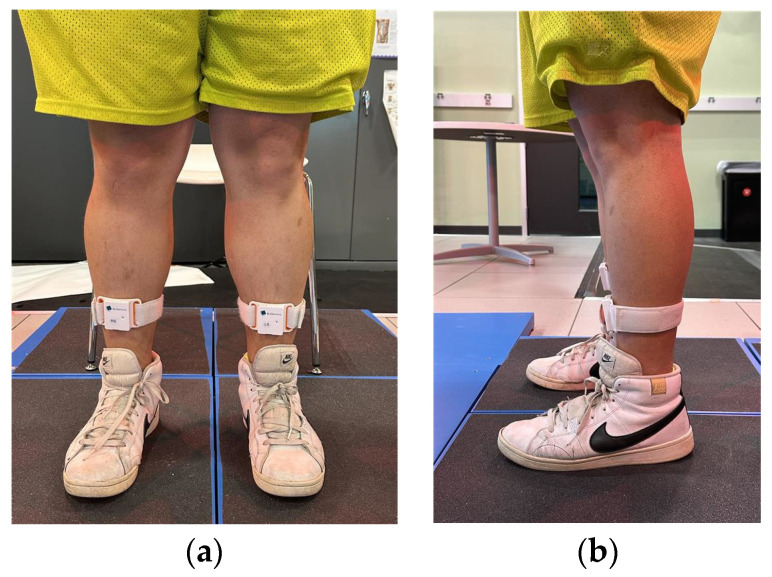 Figure 1
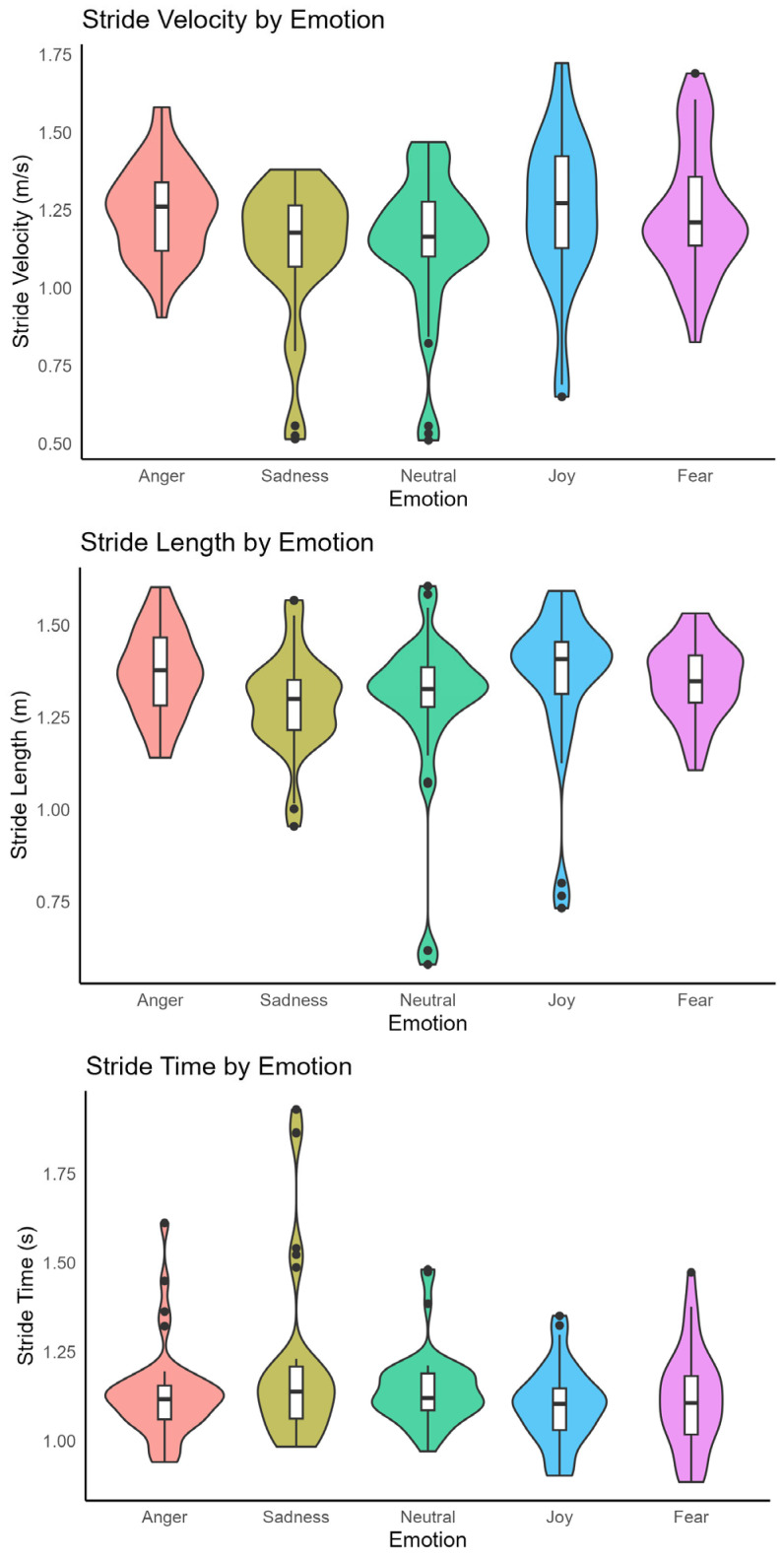 Figure 2
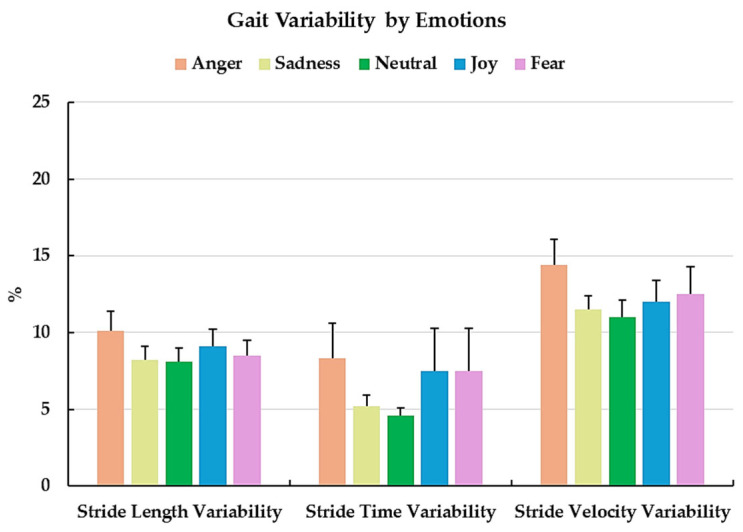 Figure 3
Peer Reviews
No public reviews on file for this paper yet. If you reviewed it on a platform where reviews are public (OpenReview, ICLR, NeurIPS, ICML), you can paste yours below so the community can read it here.
Videos
No videos yet. Explain this paper in a talk, walkthrough, or lecture? Add one.
Taxonomy
TopicsBalance, Gait, and Falls Prevention · Gait Recognition and Analysis · Winter Sports Injuries and Performance