Tailoring 3HV Fraction in Poly(3-hydroxybutyrate-co-3-hydroxyvalerate) by Azotobacter vinelandii Through Oxygen and Carbon Limitation in Continuous Cultures
Andrés Pérez, Andrés García, Viviana Urtuvia, Carlos Peña, Alvaro Díaz-Barrera

TL;DR
This study shows how adjusting oxygen and carbon levels in bacterial cultures can control the composition of a biodegradable polymer, useful for biomedical applications.
Contribution
The study demonstrates a novel method to tailor the 3HV fraction in P3HBV by manipulating oxygen and carbon limitations in continuous cultures.
Findings
Oxygen limitation increased biomass and P3HBV concentrations to 3.3 g L−1 and 2.1 g L−1, respectively.
The highest 3HV molar fractions (33.7 and 36.4 mol %) were observed at the lowest and highest oxygen uptake rates.
An elevated NAD(P)H/NAD(P)+ ratio under oxygen limitation favored polymer accumulation.
Abstract
Azotobacter vinelandii OP is a bacterium that can produce poly(3-hydroxybutyrate-co-3-hydroxyvalerate) (P3HBV), a biodegradable and biocompatible polymer with applications in the biomedical field. This study aimed to evaluate P3HBV production and its 3-hydroxyvalerate (3HV) fraction under different agitation rates and oxygen uptake rates (qO2) in chemostat cultures of A. vinelandii OP. Steady-state conditions with either oxygen or carbon limitation were established by modulating the agitation rates. Under oxygen-limited conditions (low qO2 values) biomass and P3HBV concentrations increased to 3.3 g L−1 and 2.1 g L−1, respectively. At higher qO2 values, the chemostat cultures were limited by carbon, and P3HBV content decreased from 62% to 33% (w w−1). The highest 3HV molar fractions, 33.7 and 36.4 mol %, were observed at both the lowest and highest qO2 levels, possibly linked to…
Genes, proteins, chemicals, diseases, species, mutations and cell lines named across the full text — each resolved to its canonical identifier and authoritative record.
Click any figure to enlarge with its caption.
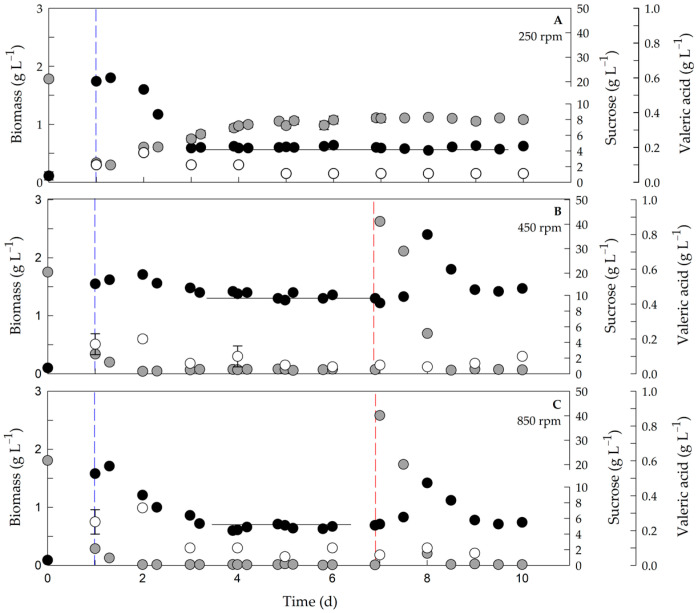 Figure 1
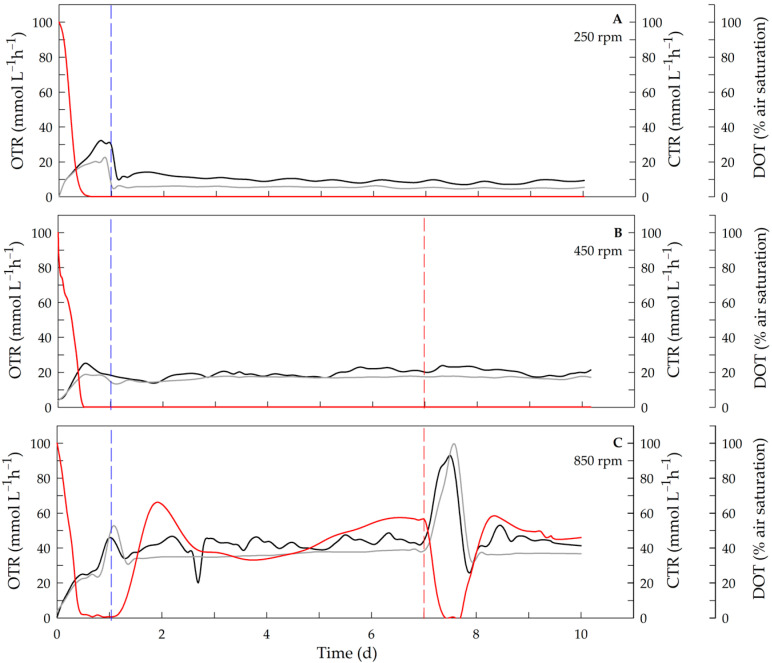 Figure 2
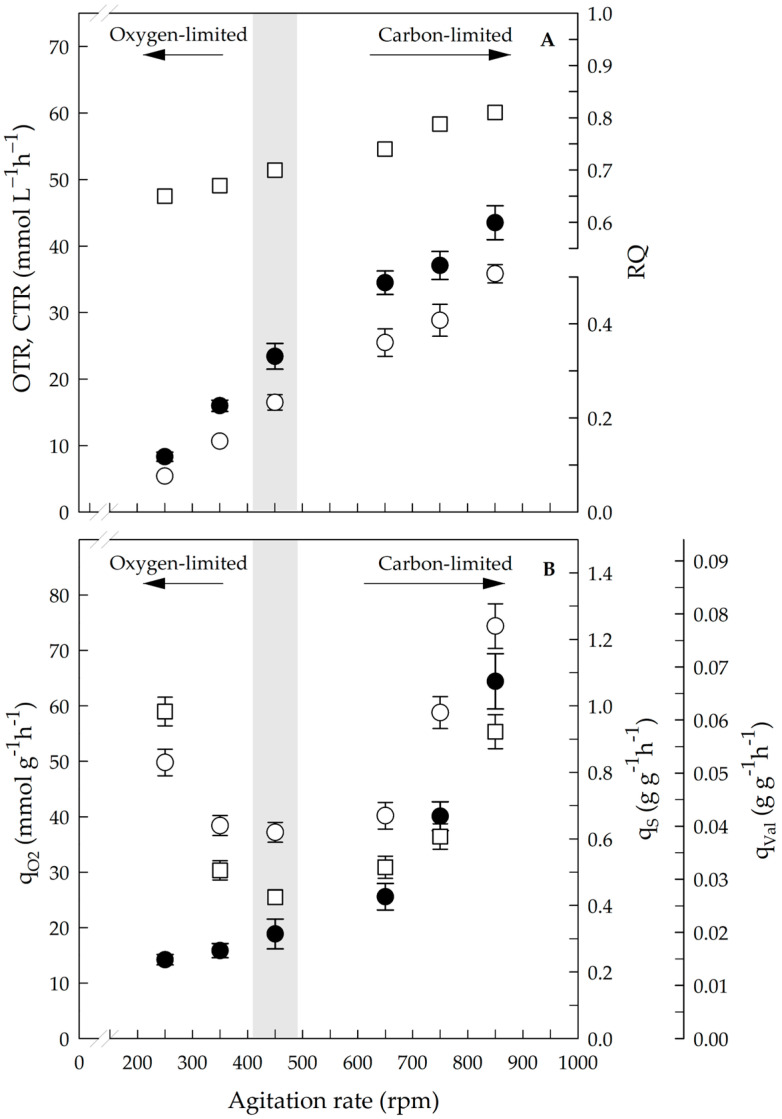 Figure 3
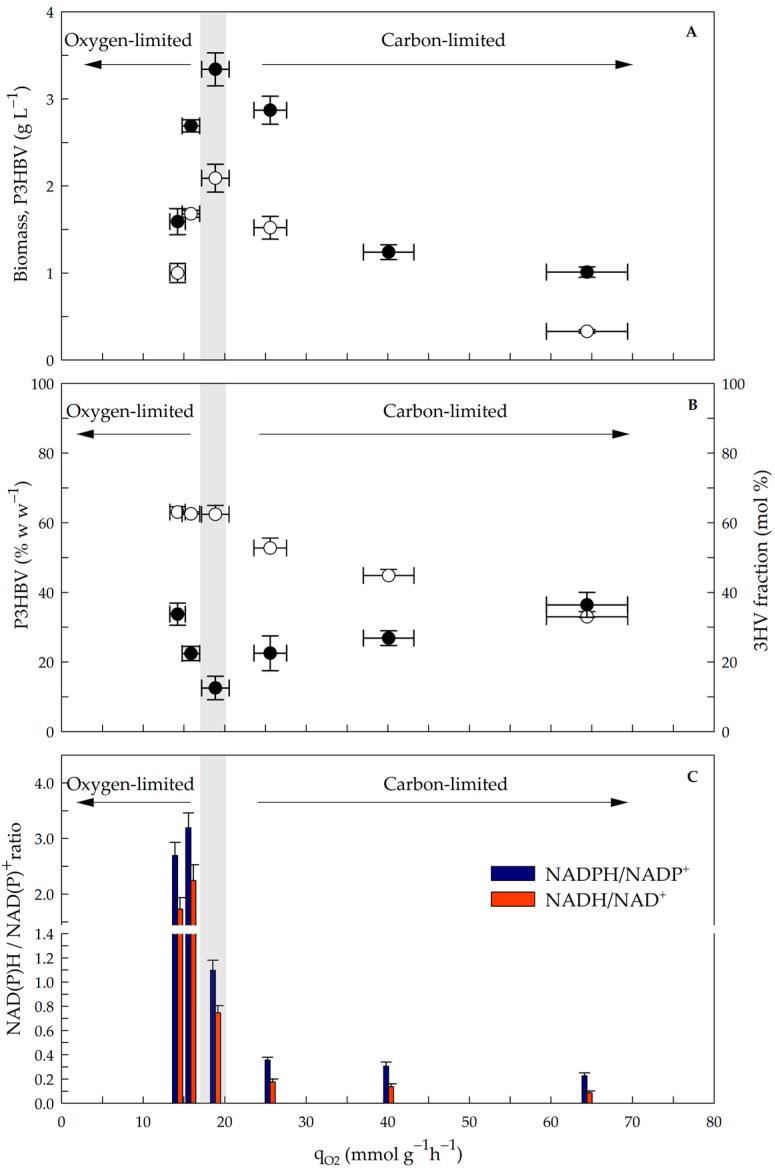 Figure 4
Peer Reviews
No public reviews on file for this paper yet. If you reviewed it on a platform where reviews are public (OpenReview, ICLR, NeurIPS, ICML), you can paste yours below so the community can read it here.
Videos
No videos yet. Explain this paper in a talk, walkthrough, or lecture? Add one.
Taxonomy
Topicsbiodegradable polymer synthesis and properties · Enzyme Catalysis and Immobilization · Carbon dioxide utilization in catalysis