The Utility of Angular Velocity During Back Squat to Predict 1RM and Load–Velocity Profiling
Kyle S. Beyer, Jonathan P. Klee, Jake C. Ojert, Marco D. Grenda, Joshua O. Odebode, Steve A. Rose

TL;DR
This study compares using linear and angular velocity to predict maximum squat weight, finding angular velocity more accurate but both needing improvement.
Contribution
The study introduces angular velocity as a novel method for predicting 1RM in back squats, showing it to be more accurate than linear velocity.
Findings
Angular velocity predictions of 1RM had lower error and higher correlation with actual 1RM compared to linear velocity.
Gender differences were observed in linear velocity at submaximal loads, suggesting the need for gender-specific training considerations.
Neither linear nor angular velocity fully met criteria for high validity in 1RM prediction.
Abstract
Linear velocity is commonly used to estimate 1-repetition maximum (1RM) from a load–velocity profile (LVP), as well as prescribe training intensity. However, no study has assessed angular velocity, which may be more representative of joint motion. The purpose of this study was to compare the prediction of 1RM from linear velocity (1RMlinear) and angular velocity (1RMangular) LVPs in men and women. Fourteen recreationally trained college-aged subjects (7 males, 7 females) completed 1RM testing on day 1, then a randomized submaximal (30–90% 1RM) squat protocol on day 2. Linear velocity was measured with a linear position transducer, while angular velocity was recorded using an accelerometer affixed to the thigh. 1RMangular was not significantly different from actual 1RM (p = 0.951), with a trivial effect size (d = 0.02), and nearly perfect correlation with actual 1RM (r = 0.984).…
Genes, proteins, chemicals, diseases, species, mutations and cell lines named across the full text — each resolved to its canonical identifier and authoritative record.
Click any figure to enlarge with its caption.
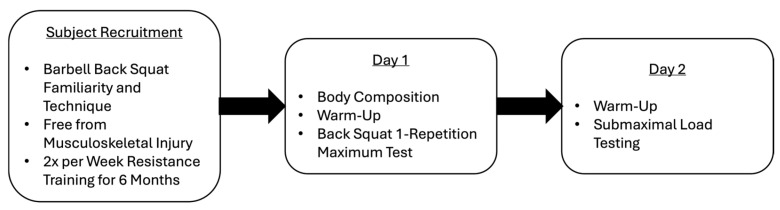 Figure 1
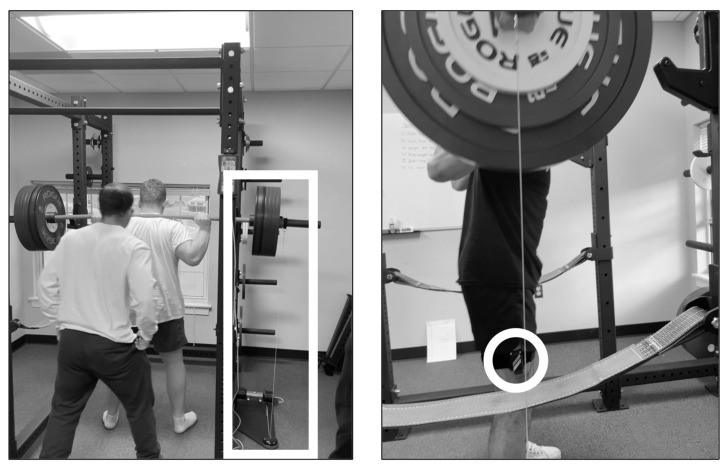 Figure 2
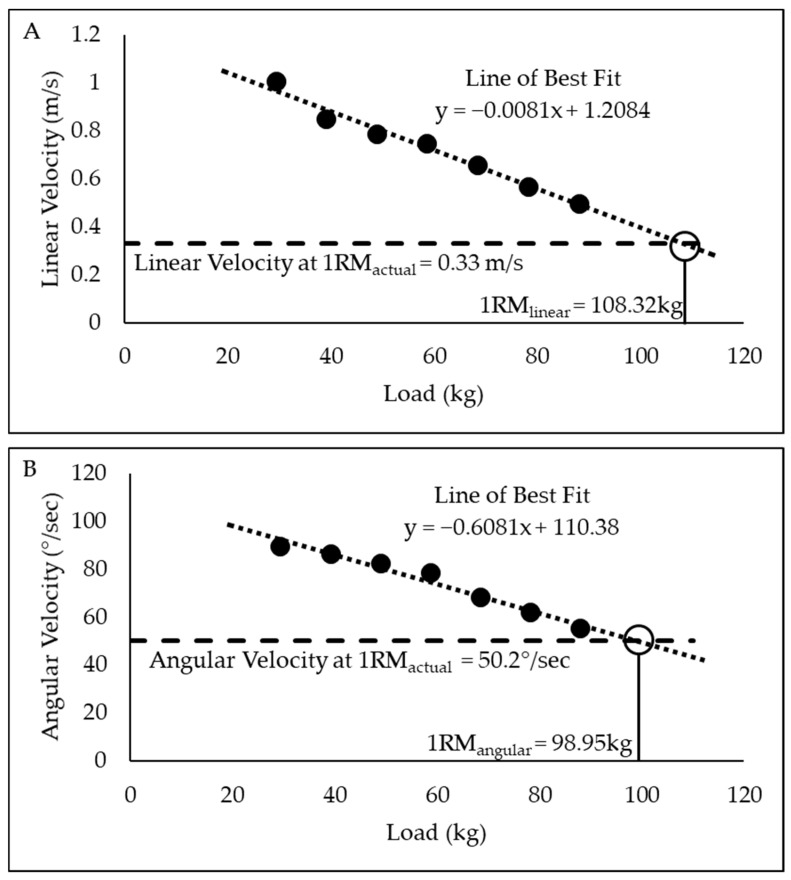 Figure 3
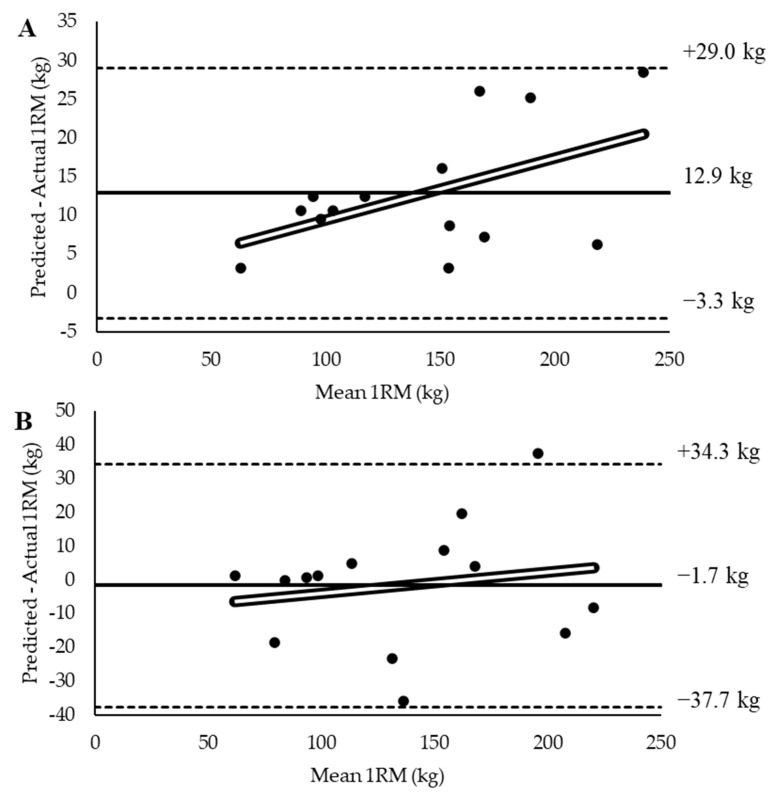 Figure 4
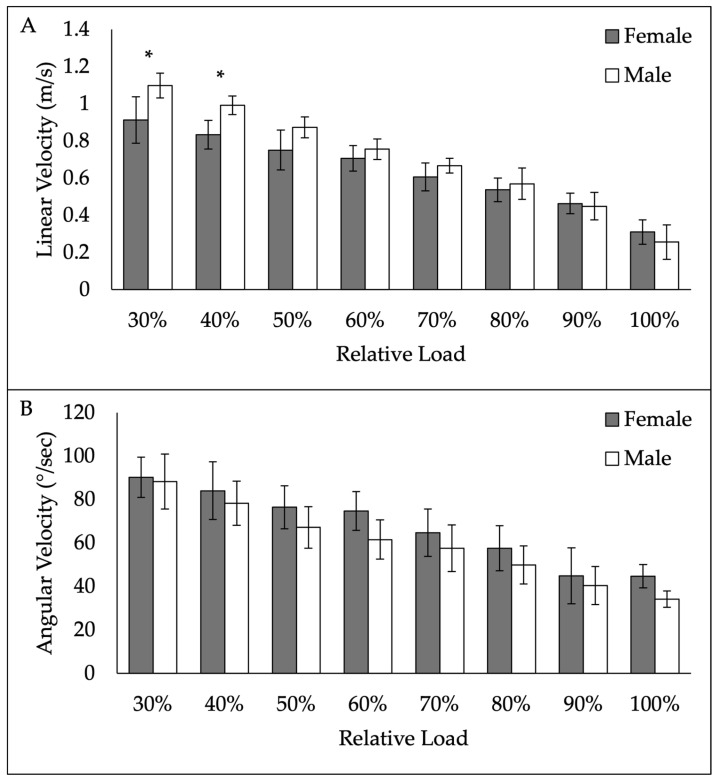 Figure 5
Peer Reviews
No public reviews on file for this paper yet. If you reviewed it on a platform where reviews are public (OpenReview, ICLR, NeurIPS, ICML), you can paste yours below so the community can read it here.
Videos
No videos yet. Explain this paper in a talk, walkthrough, or lecture? Add one.
Taxonomy
TopicsSports Performance and Training · Sports injuries and prevention · Cardiovascular and exercise physiology