Mechanically Activated Transition from Linear Viscoelasticity to Yielding: Correlation-Based Unification
Maxim S. Arzhakov, Irina G. Panova, Aleksandr A. Kiushov, Aleksandr A. Yaroslavov

TL;DR
This paper unifies the mechanical behavior of various materials during the transition from elastic to plastic deformation using correlation-based master curves.
Contribution
A novel correlation-based unification of mechanical response in the MAT region across diverse materials is proposed.
Findings
Quantitative correlations E0/Ey ≈ 1.55 and εy/ε0 ≈ 2.1 were established as yielding criteria.
A master curve unifies mechanical responses of plastics, foams, pastes, and simulations in the MAT region.
An algorithm for rapid analysis of plastic systems' mechanical response in the MAT region is proposed.
Abstract
The mechanically activated transition (MAT) from linear viscoelasticity to yielding is considered an essential part of the operational behavior of ductile materials. The MAT region is restricted by proportional limit at σ0 and ε0 and the yield point at σy and εy, or, in terms of this paper, E0=σ0/ε0 and ε0 and Ey=σy/εy and εy, respectively. This stage precedes yielding and controls the parameters of the yield point. For bulk plastic (co)polymers and cellular polymeric foams, the quantitative correlations between E0, ε0, Ey, and εy were determined. The ratios E0Ey=1.55±0.15 and εyε0=2.1±0.2 were specified as yielding criteria. For all the samples studied, their mechanical response within the MAT region was unified in terms of master curve constructed via re-calculation of the experimental “stress–strain” diagrams in the reduced coordinates lg E−lg E0lg E0−lg Ey=flg ε−lg ε0lg εy−lg ε0,…
Genes, proteins, chemicals, diseases, species, mutations and cell lines named across the full text — each resolved to its canonical identifier and authoritative record.
Click any figure to enlarge with its caption.
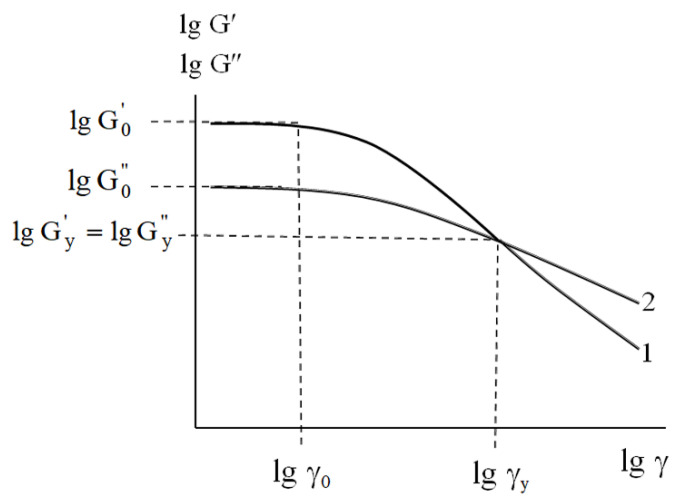 Figure 1
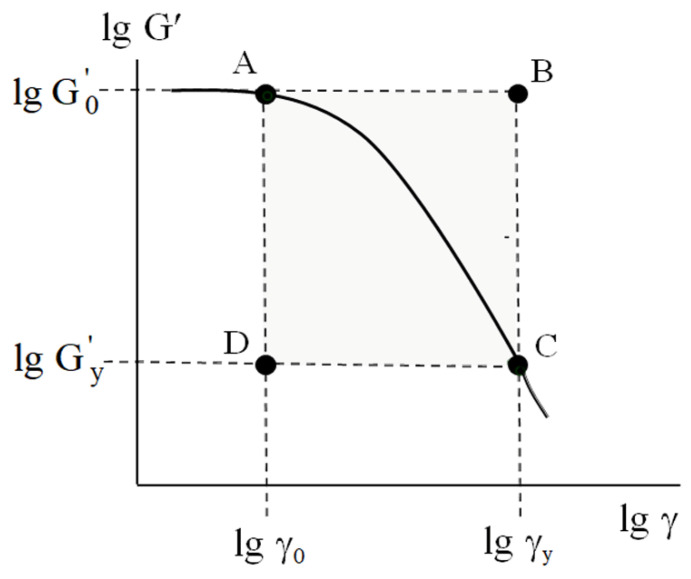 Figure 2
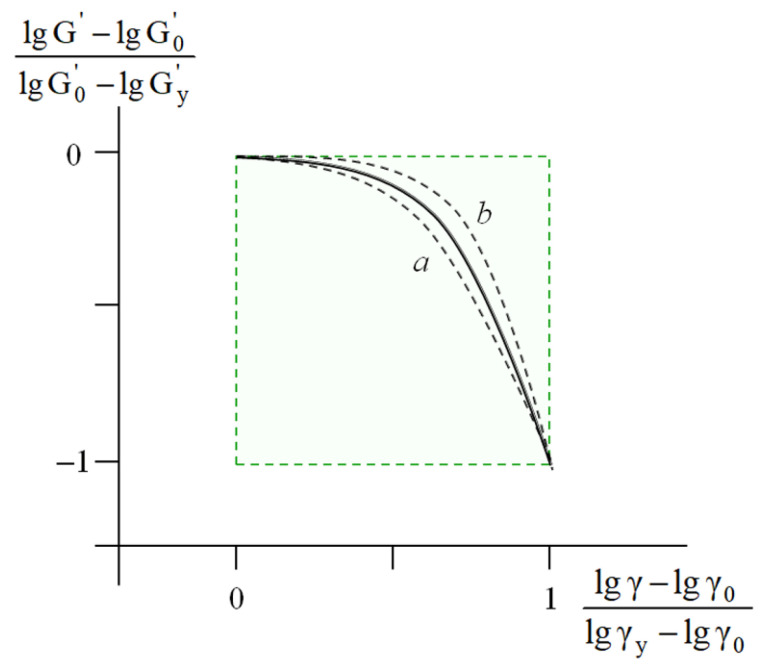 Figure 3
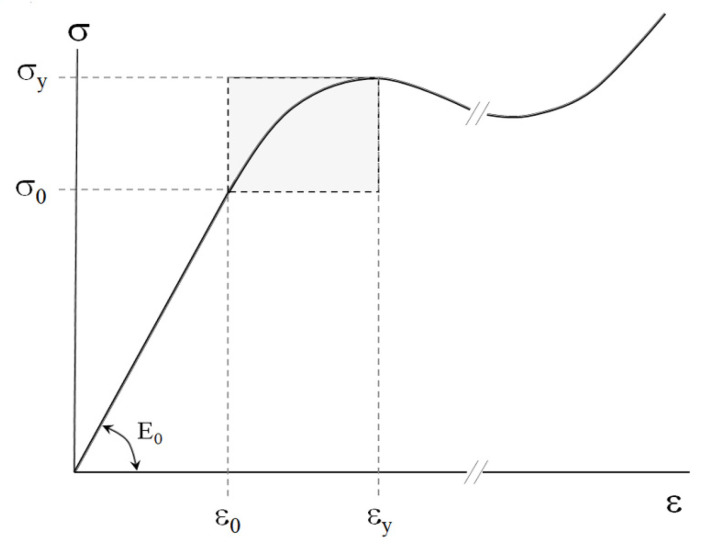 Figure 4
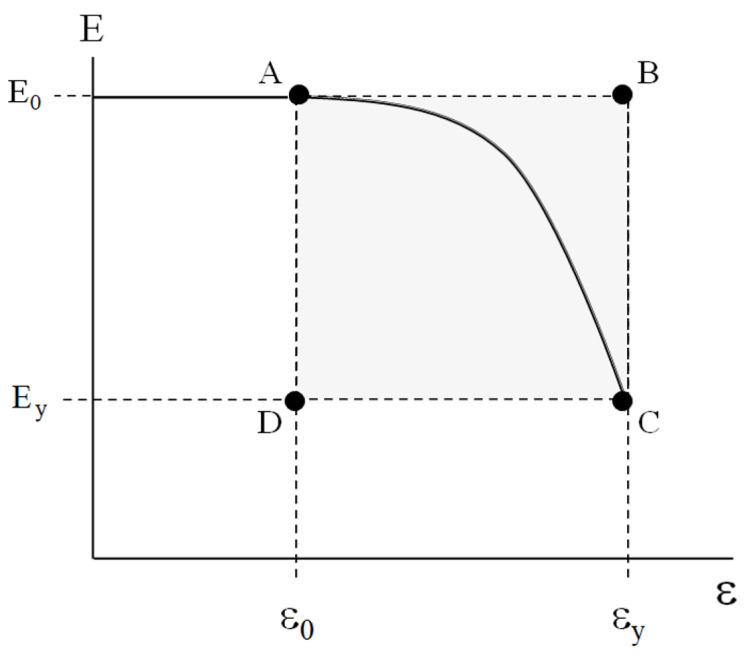 Figure 5
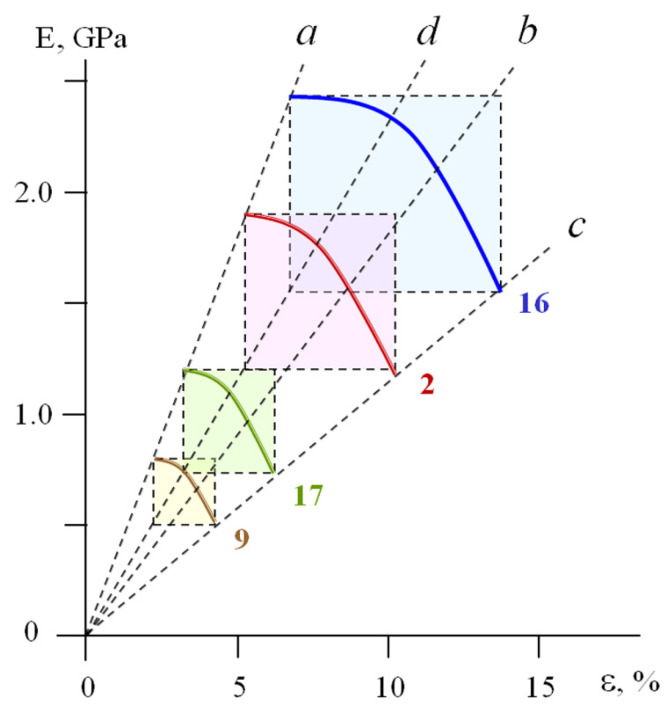 Figure 6
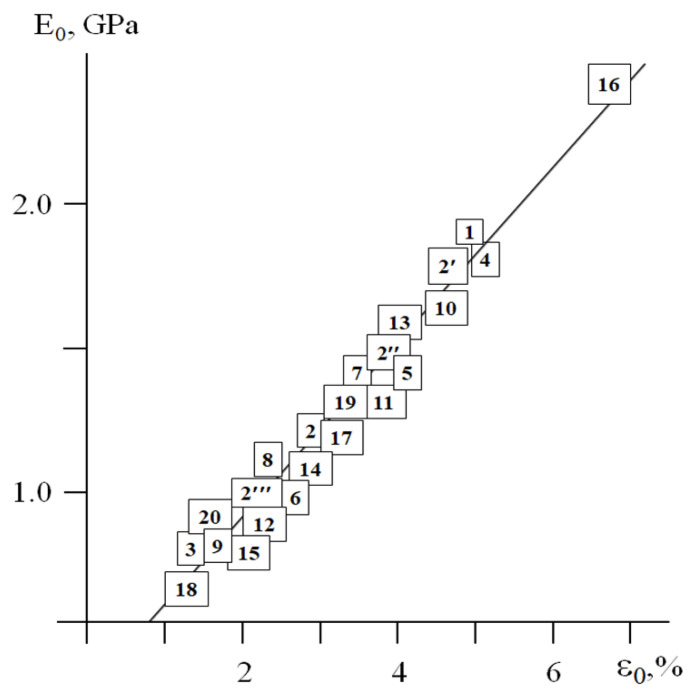 Figure 7
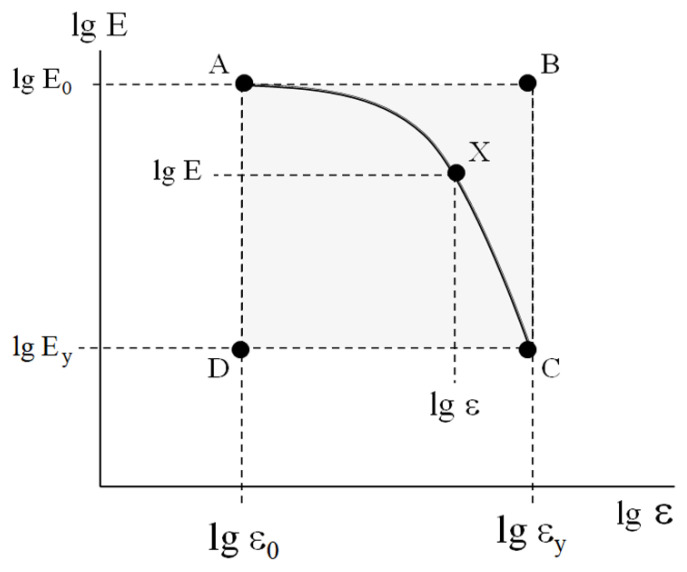 Figure 8
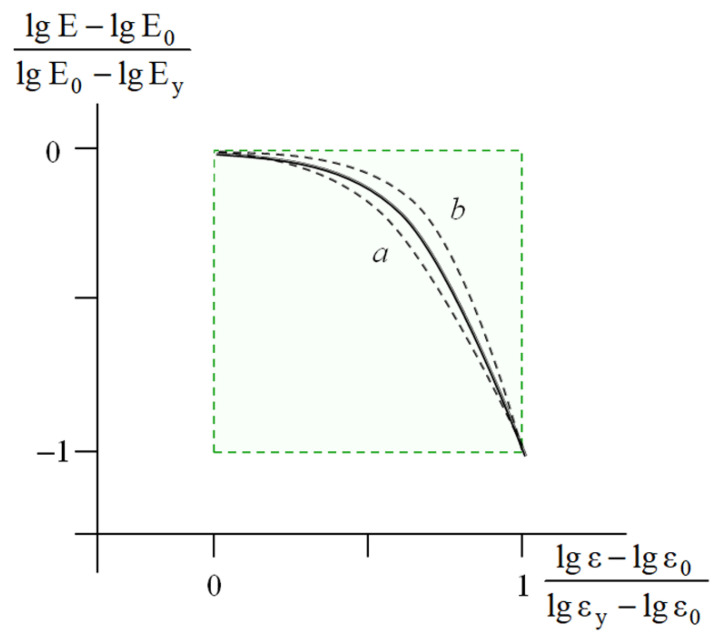 Figure 9
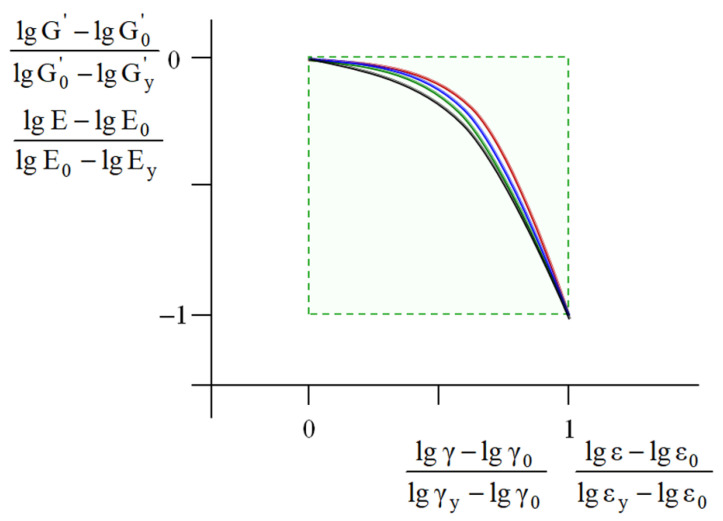 Figure 10
Peer Reviews
No public reviews on file for this paper yet. If you reviewed it on a platform where reviews are public (OpenReview, ICLR, NeurIPS, ICML), you can paste yours below so the community can read it here.
Videos
No videos yet. Explain this paper in a talk, walkthrough, or lecture? Add one.
Taxonomy
TopicsRheology and Fluid Dynamics Studies · Geotechnical Engineering and Soil Mechanics · Granular flow and fluidized beds