FortiNIDS: Defending Smart City IoT Infrastructures Against Transferable Adversarial Poisoning in Machine Learning-Based Intrusion Detection Systems
Abdulaziz Alajaji

TL;DR
This paper introduces FortiNIDS, a framework to defend AI-based intrusion detection systems in smart cities against adversarial attacks that poison training data.
Contribution
The novel FortiNIDS framework uses a surrogate neural network to generate transferable adversarial examples and evaluates targeted defenses like RONI.
Findings
Adversarial training and RONI improve detection accuracy under poisoning attacks.
Transferable adversarial examples significantly degrade model performance if left unaddressed.
FortiNIDS enhances system resilience in smart city IoT environments.
Abstract
In today’s digital era, cyberattacks are rapidly evolving, rendering traditional security mechanisms increasingly inadequate. The adoption of AI-based Network Intrusion Detection Systems (NIDS) has emerged as a promising solution, due to their ability to detect and respond to malicious activity using machine learning techniques. However, these systems remain vulnerable to adversarial threats, particularly data poisoning attacks, in which attackers manipulate training data to degrade model performance. In this work, we examine tree classifiers, Random Forest and Gradient Boosting, to model black box poisoning attacks. We introduce FortiNIDS, a robust framework that employs a surrogate neural network to generate adversarial perturbations that can transfer between models, leveraging the transferability of adversarial examples. In addition, we investigate defense strategies designed to…
Genes, proteins, chemicals, diseases, species, mutations and cell lines named across the full text — each resolved to its canonical identifier and authoritative record.
Click any figure to enlarge with its caption.
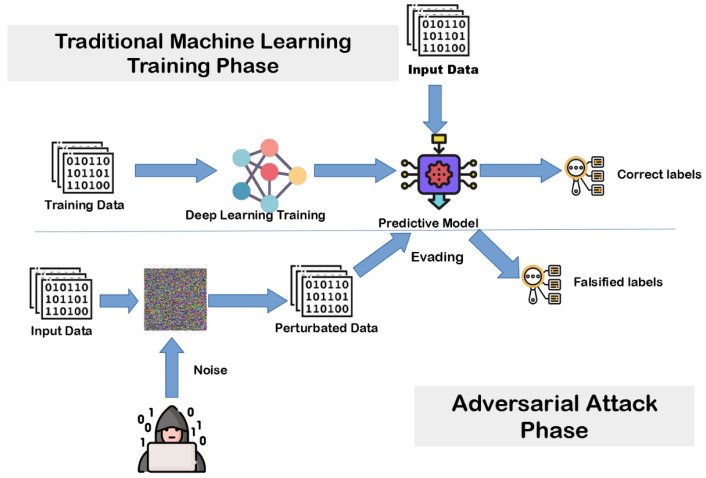 Figure 1
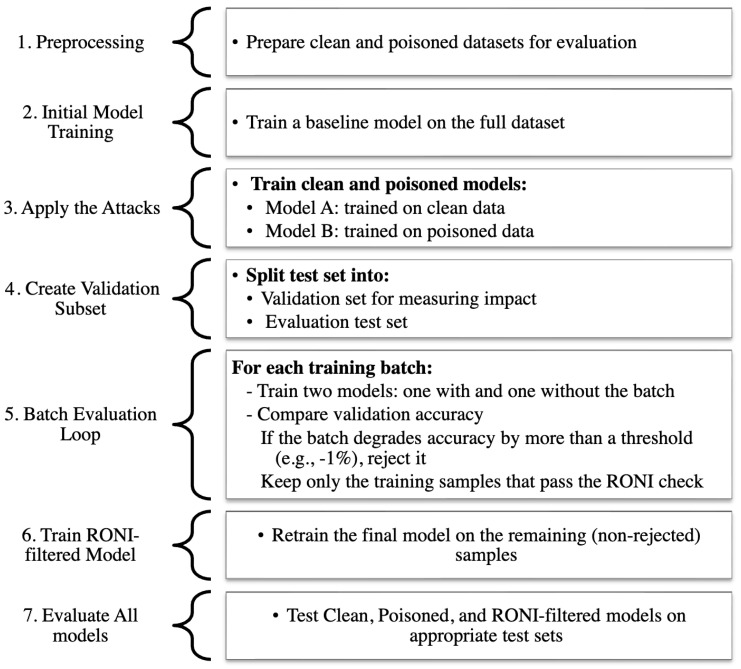 Figure 2
 Figure 3
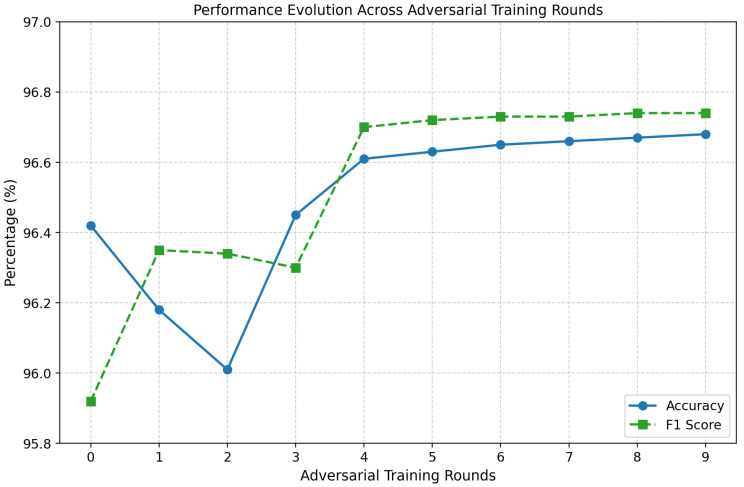 Figure 4
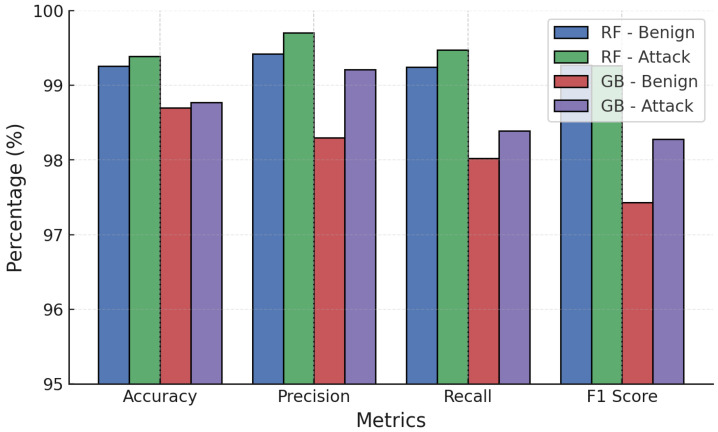 Figure 5
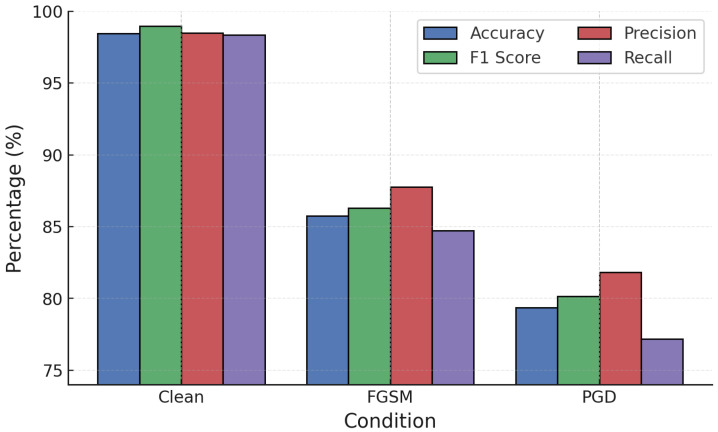 Figure 6
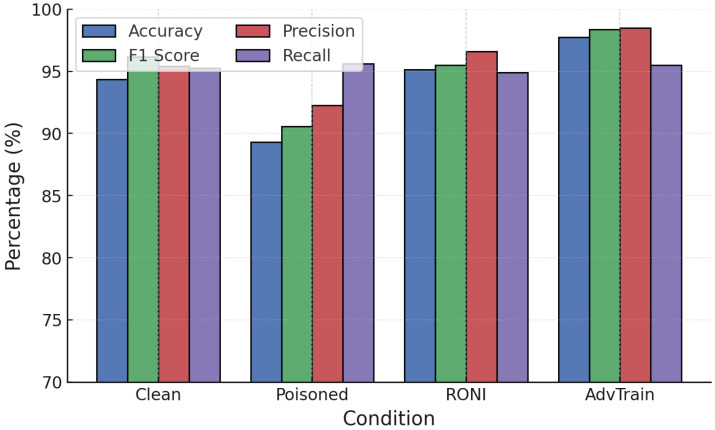 Figure 7
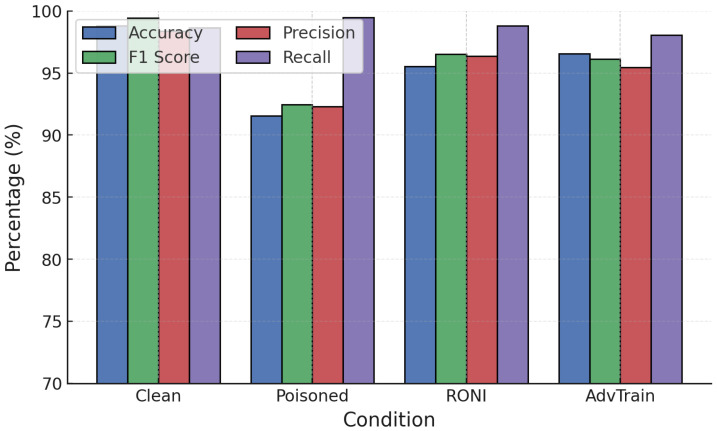 Figure 8
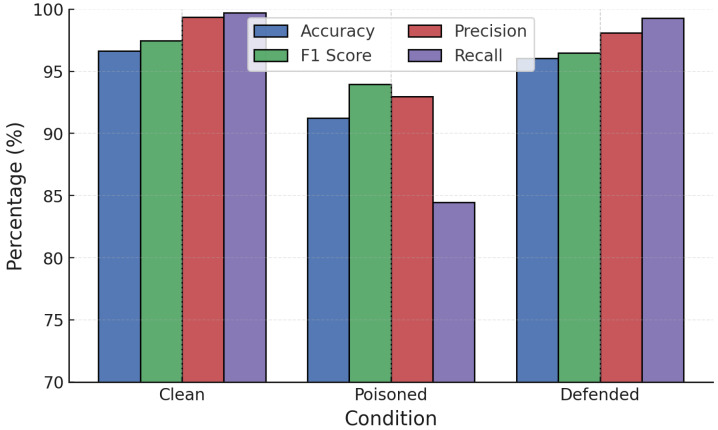 Figure 9
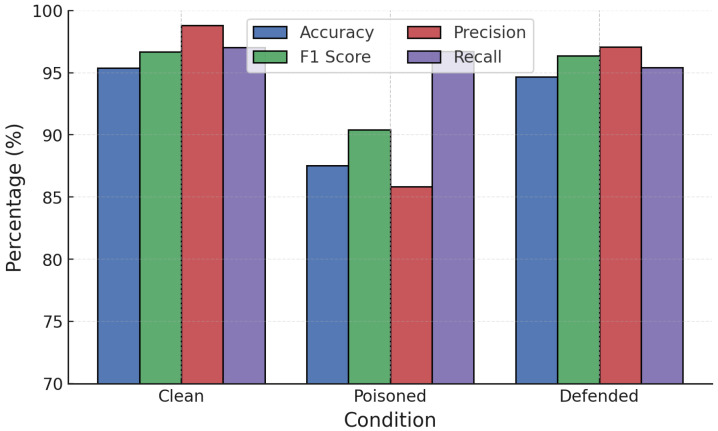 Figure 10
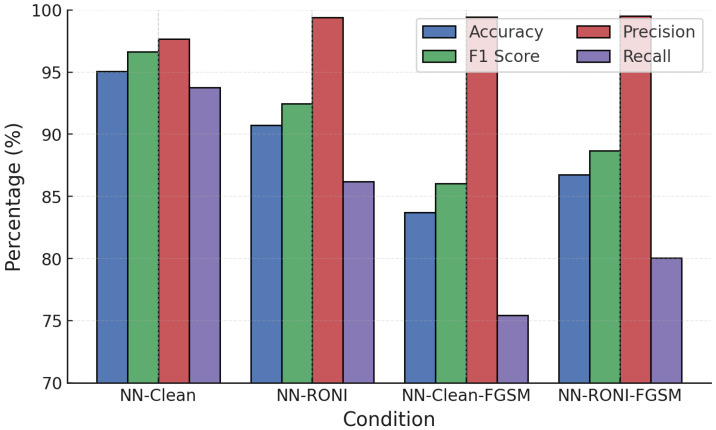 Figure 11
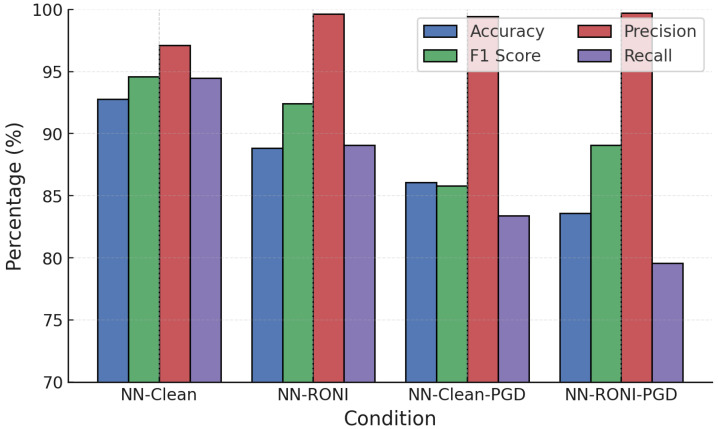 Figure 12
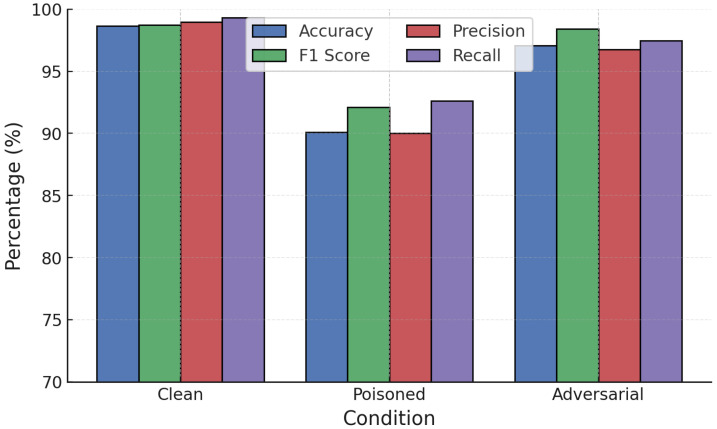 Figure 13
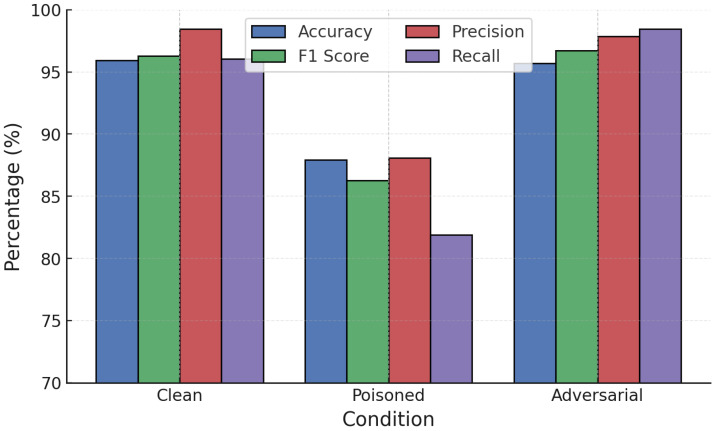 Figure 14
 Figure 15
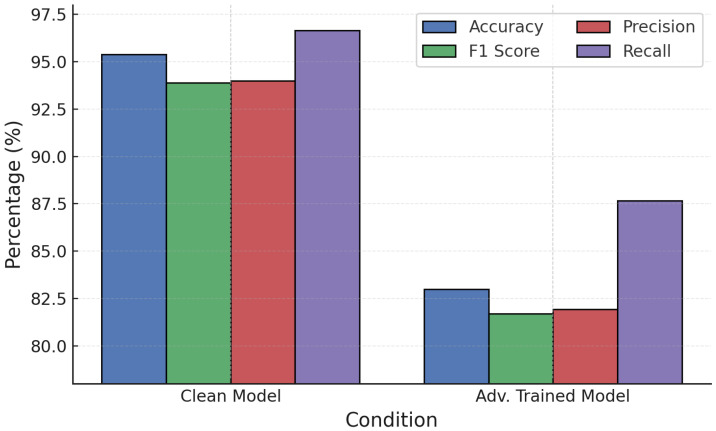 Figure 16
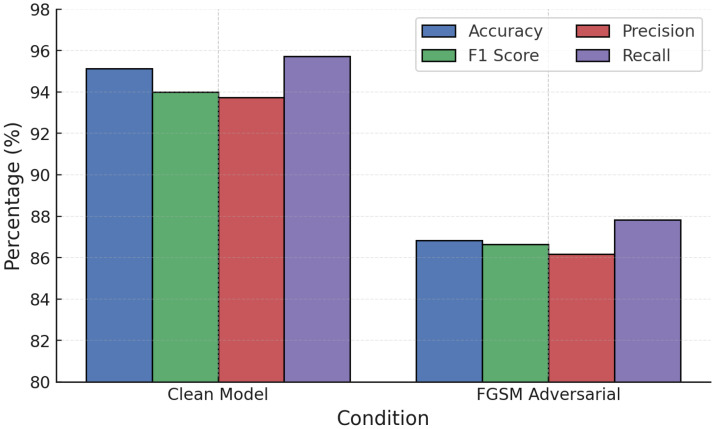 Figure 17
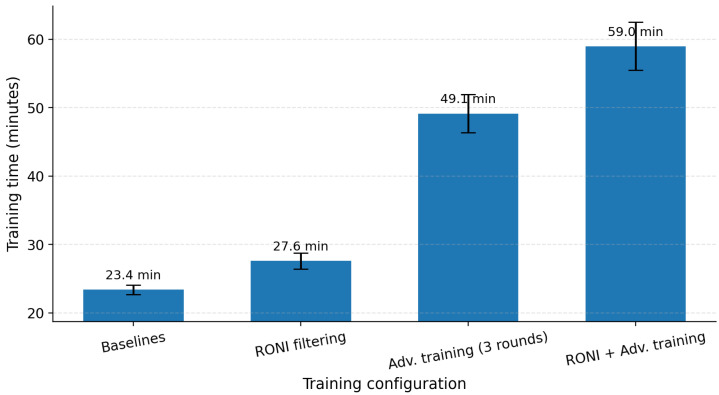 Figure 18
Peer Reviews
No public reviews on file for this paper yet. If you reviewed it on a platform where reviews are public (OpenReview, ICLR, NeurIPS, ICML), you can paste yours below so the community can read it here.
Videos
No videos yet. Explain this paper in a talk, walkthrough, or lecture? Add one.
Taxonomy
TopicsNetwork Security and Intrusion Detection · Adversarial Robustness in Machine Learning · Anomaly Detection Techniques and Applications