A Context-Adaptive Hyperspectral Sensor and Perception Management Architecture for Airborne Anomaly Detection
Linda Eckel, Peter Stütz

TL;DR
This paper introduces a new adaptive hyperspectral sensor system that improves airborne anomaly detection by adapting to environmental changes and using a large dataset for better performance.
Contribution
The novel hSPM architecture integrates sensor context extraction, band selection, and detector management for adaptive airborne anomaly detection.
Findings
hSPM improves anomaly detection performance by 28–204% compared to conventional methods.
The architecture reduces computation time by 70–99% while maintaining high accuracy.
A new large-scale airborne hyperspectral dataset with 1100 annotated samples is publicly released.
Abstract
The deployment of airborne hyperspectral sensors has expanded rapidly, driven by their ability to capture spectral information beyond the visual range and to reveal objects that remain obscured in conventional imaging. In scenarios where prior target signatures are unavailable, anomaly detection provides an effective alternative by identifying deviations from the spectral background. However, real-world reconnaissance and monitoring missions frequently take place in complex and dynamic environments, requiring anomaly detectors to demonstrate robustness and adaptability. These requirements have rarely been met in current research, as evaluations are still predominantly based on small, context-restricted datasets, offering only limited insights into detector performance under varying conditions. To address this gap, we propose a context-adaptive hyperspectral sensor and perception…
Genes, proteins, chemicals, diseases, species, mutations and cell lines named across the full text — each resolved to its canonical identifier and authoritative record.
Click any figure to enlarge with its caption.
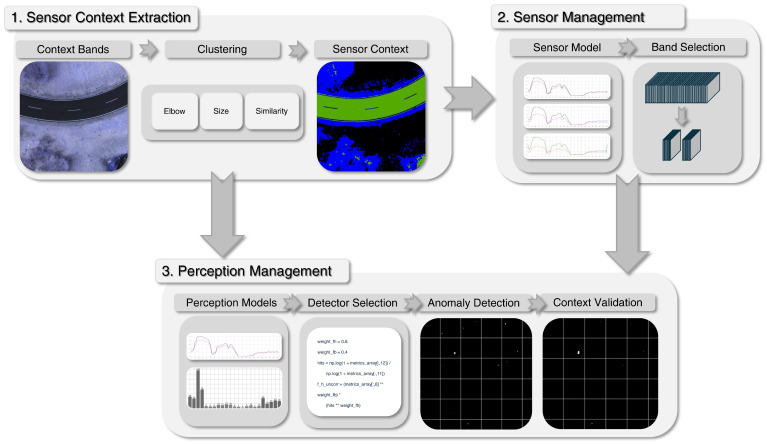 Figure 1
 Figure 2
 Figure 3
 Figure 4
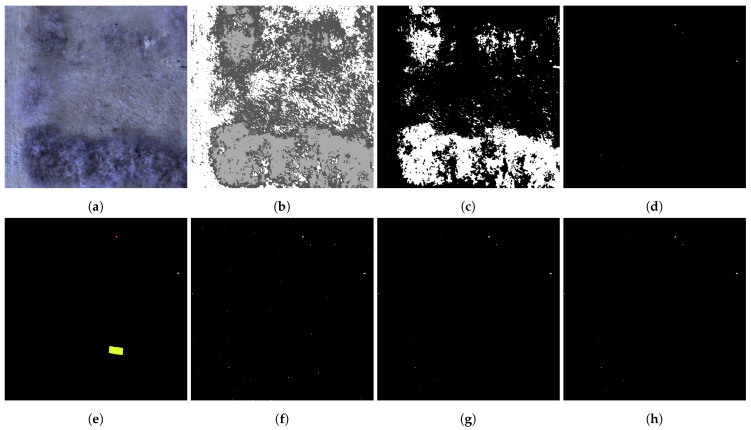 Figure 5
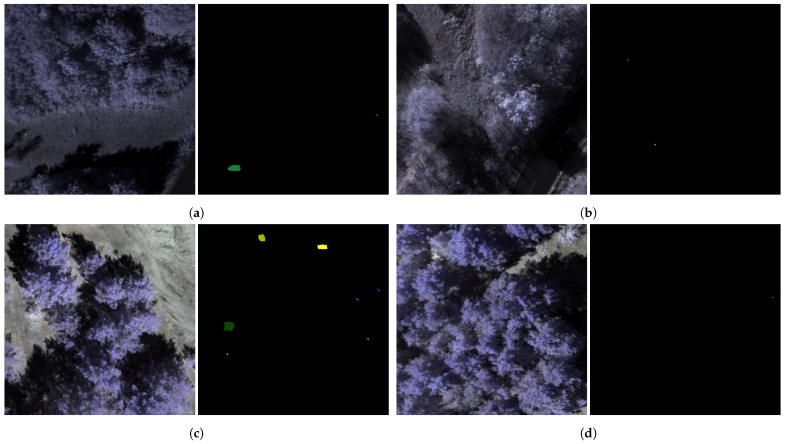 Figure 6
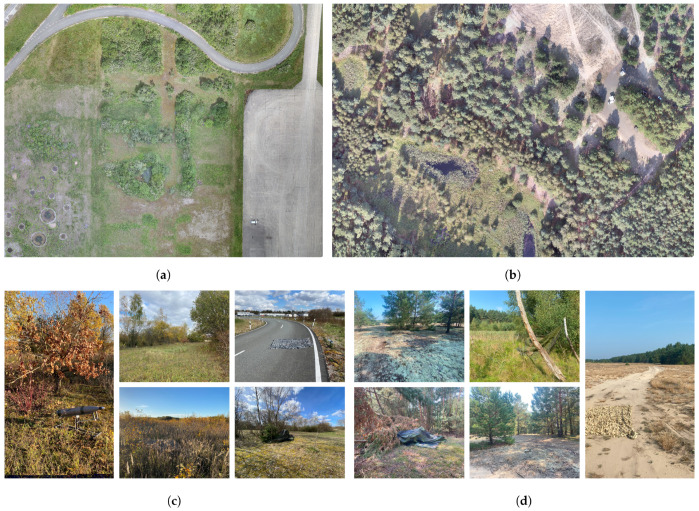 Figure 7
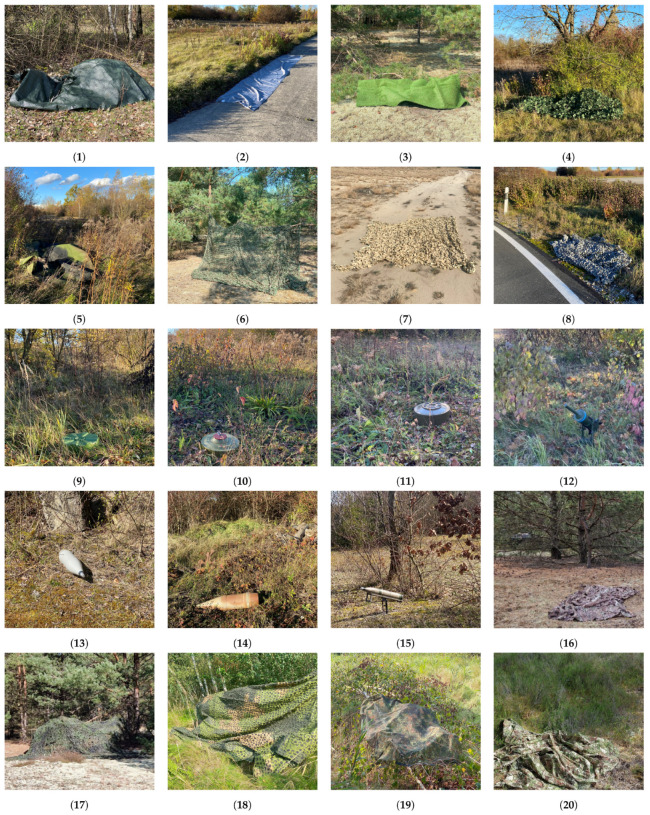 Figure 8
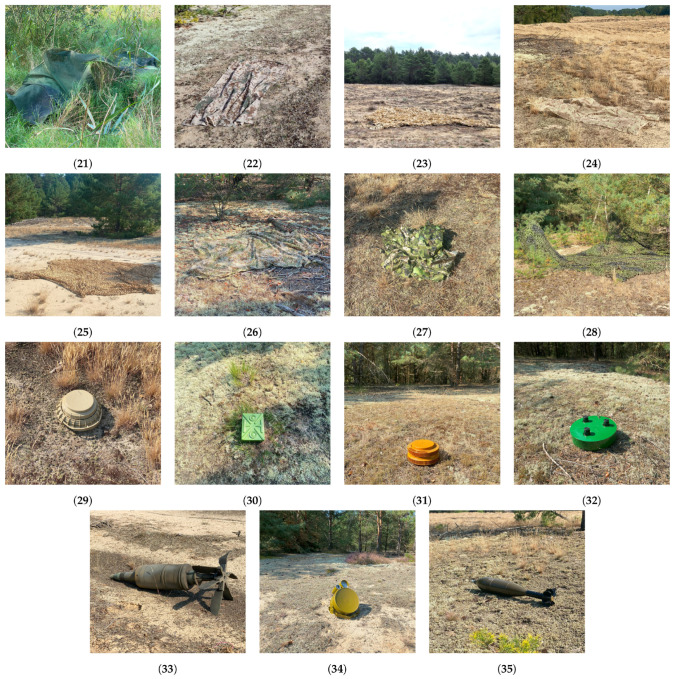 Figure 9
Peer Reviews
No public reviews on file for this paper yet. If you reviewed it on a platform where reviews are public (OpenReview, ICLR, NeurIPS, ICML), you can paste yours below so the community can read it here.
Videos
No videos yet. Explain this paper in a talk, walkthrough, or lecture? Add one.
Taxonomy
TopicsRemote-Sensing Image Classification · Infrared Target Detection Methodologies · Advanced Image and Video Retrieval Techniques