Automated Shoulder Girdle Rigidity Assessment in Parkinson’s Disease via an Integrated Model- and Data-Driven Approach
Fatemeh Khosrobeygi, Zahra Abouhadi, Ailar Mahdizadeh, Ahmad Ashoori, Negin Niksirat, Maryam S. Mirian, Martin J. McKeown

TL;DR
A new method combining biomechanical and data-driven features from wearable sensors accurately assesses shoulder rigidity in Parkinson’s disease, enabling remote monitoring and earlier diagnosis.
Contribution
A hybrid model-data-driven framework with weak supervision improves rigidity assessment accuracy and introduces interpretable biomarkers for Parkinson’s disease.
Findings
The hybrid framework achieved a strong correlation (r = 0.78) with UPDRS rigidity scores.
Classification accuracy improved by 10% over data-driven methods using damping ratio and maximum detail coefficient as key biomarkers.
The model challenges the assumption that rigidity is velocity-independent by showing velocity-dependent features are predictive.
Abstract
What are the main findings? A hybrid framework integrating model-driven (damping ratio, decay rate) and data-driven (maximum detail coefficient) features via weak supervision achieved a strong correlation (r = 0.78, p < 0.001) with UPDRS rigidity scores, outperforming traditional Wartenberg pendulum test metrics like maximum velocity.The integrated model improved PD/HC classification accuracy by 10% over data-driven methods, with damping ratio and maximum detail coefficient identified as highly predictive biomarkers. A hybrid framework integrating model-driven (damping ratio, decay rate) and data-driven (maximum detail coefficient) features via weak supervision achieved a strong correlation (r = 0.78, p < 0.001) with UPDRS rigidity scores, outperforming traditional Wartenberg pendulum test metrics like maximum velocity. The integrated model improved PD/HC classification accuracy by…
Genes, proteins, chemicals, diseases, species, mutations and cell lines named across the full text — each resolved to its canonical identifier and authoritative record.
Click any figure to enlarge with its caption.
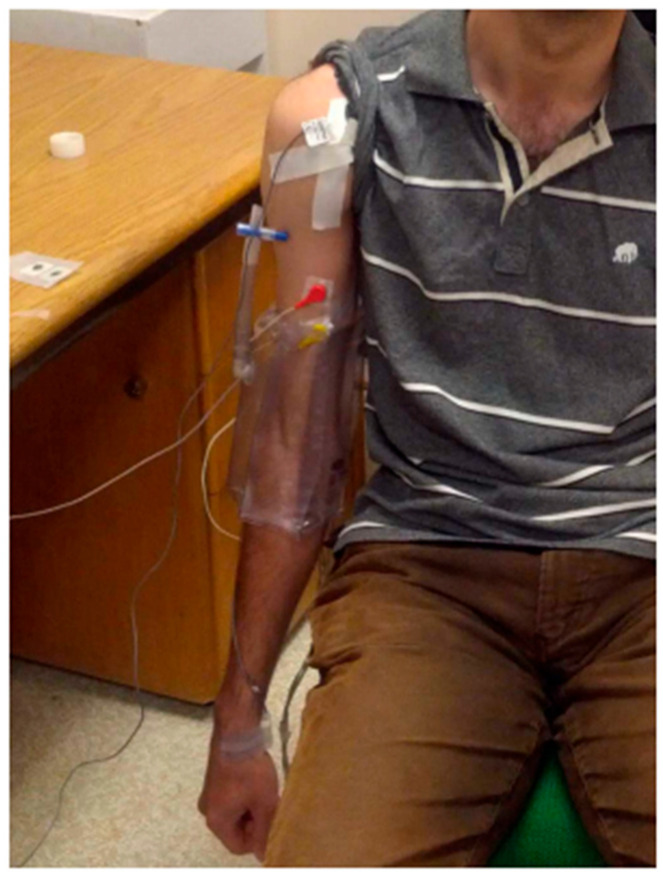 Figure 1
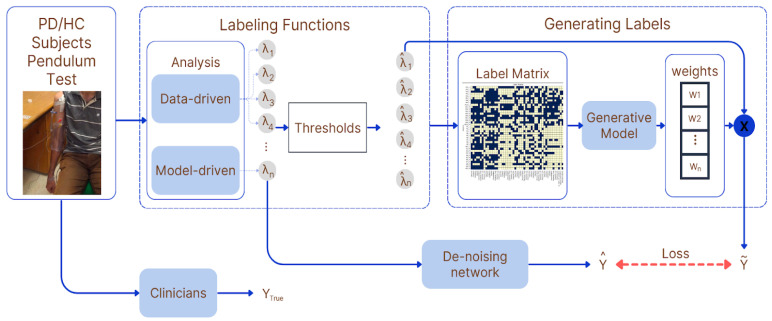 Figure 2
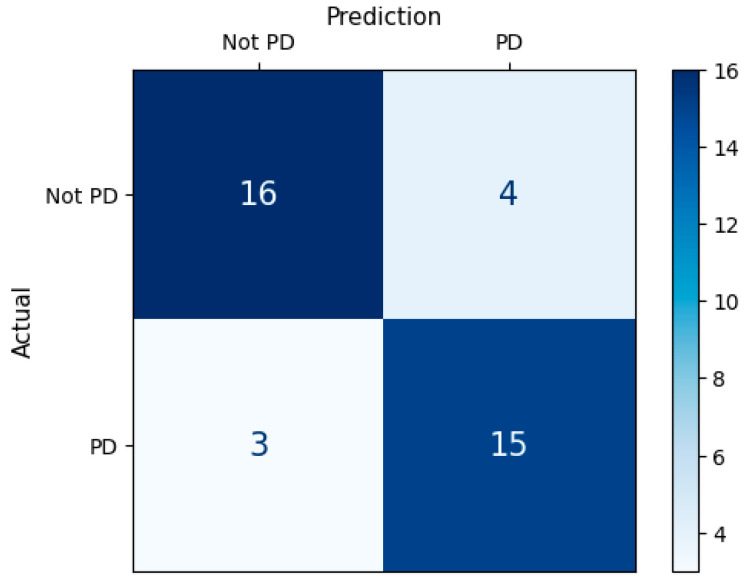 Figure 3
Peer Reviews
No public reviews on file for this paper yet. If you reviewed it on a platform where reviews are public (OpenReview, ICLR, NeurIPS, ICML), you can paste yours below so the community can read it here.
Videos
No videos yet. Explain this paper in a talk, walkthrough, or lecture? Add one.
Taxonomy
TopicsMuscle activation and electromyography studies · Parkinson's Disease Mechanisms and Treatments · Advanced Sensor and Energy Harvesting Materials