Two Faces of Indole-3-Carbinol—Analysis of Lipid Peroxidation Induced by Fenton Reaction Substrates in Porcine Ovary and Kidney Homogenates
Anna K. Skoczyńska, Jan Stępniak, Małgorzata Karbownik-Lewińska

TL;DR
This study shows that indole-3-carbinol can act as an antioxidant or pro-oxidant depending on its dose and the level of oxidative stress in porcine tissues.
Contribution
The study reveals the dual (antioxidant and pro-oxidant) effects of indole-3-carbinol in porcine tissues under varying oxidative stress conditions.
Findings
Indole-3-carbinol reduced lipid peroxidation in porcine ovary homogenates at high FeSO4 concentrations.
High doses of indole-3-carbinol induced pro-oxidant effects at low FeSO4 concentrations in both tissues.
Pro-oxidant activity was observed even in the absence of added Fenton reaction substrates at high indole-3-carbinol doses.
Abstract
Background: Indole-3-carbinol is an indole derivative which is commonly present in vegetables, which belong to Brassicaceae family and has many medicinal properties. This study aimed to investigate the antioxidant impact of indole-3-carbinol on damages caused by Fenton reaction substrates to lipid membranes (lipid peroxidation) of porcine kidneys and ovaries. Methods: Antioxidant effect of indole-3-carbinol was assessed using Lipid Peroxidation Assay. As damaging agents were used Fenton reaction substrates, i.e., FeSO4 at 11 different concentrations and H2O2. The concentrations of indole-3-carbinol were 0.0, 20.0, 10.0, 5.0, 1.0 and 0.5 mM. Results: Comparative analysis showed higher lipid peroxidation levels in kidney than ovary homogenates at 600–18.75 μM FeSO4. Indole-3-carbinol significantly reduced LPO in porcine ovary homogenates at higher FeSO4 concentrations (1200–300 μM) in a…
Genes, proteins, chemicals, diseases, species, mutations and cell lines named across the full text — each resolved to its canonical identifier and authoritative record.
Click any figure to enlarge with its caption.
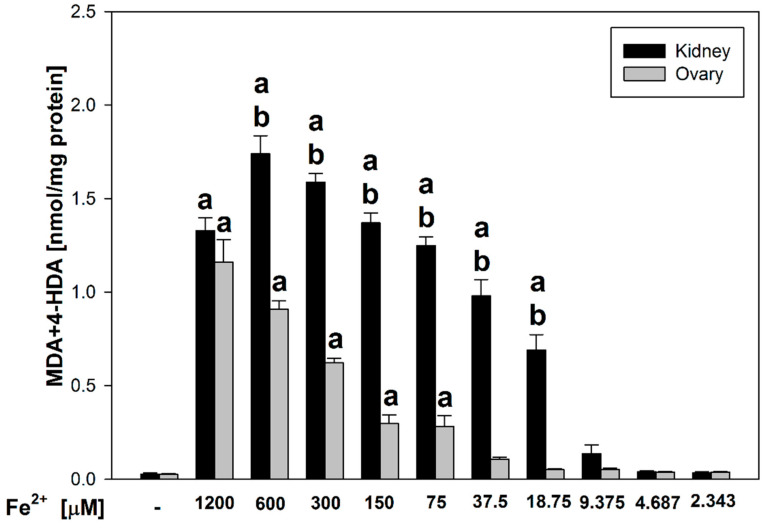 Figure 1
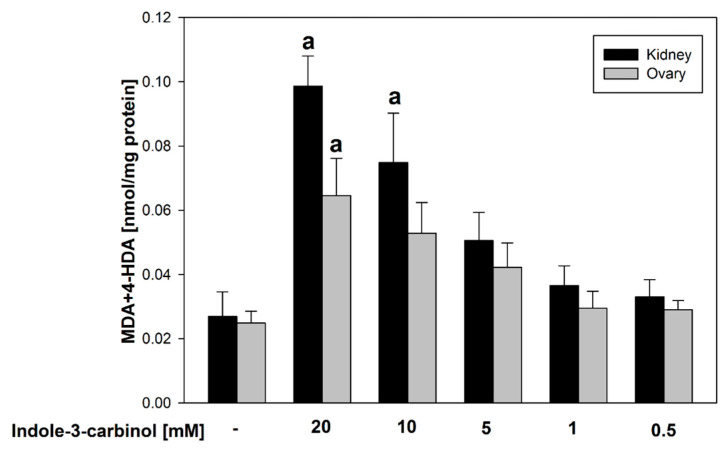 Figure 2
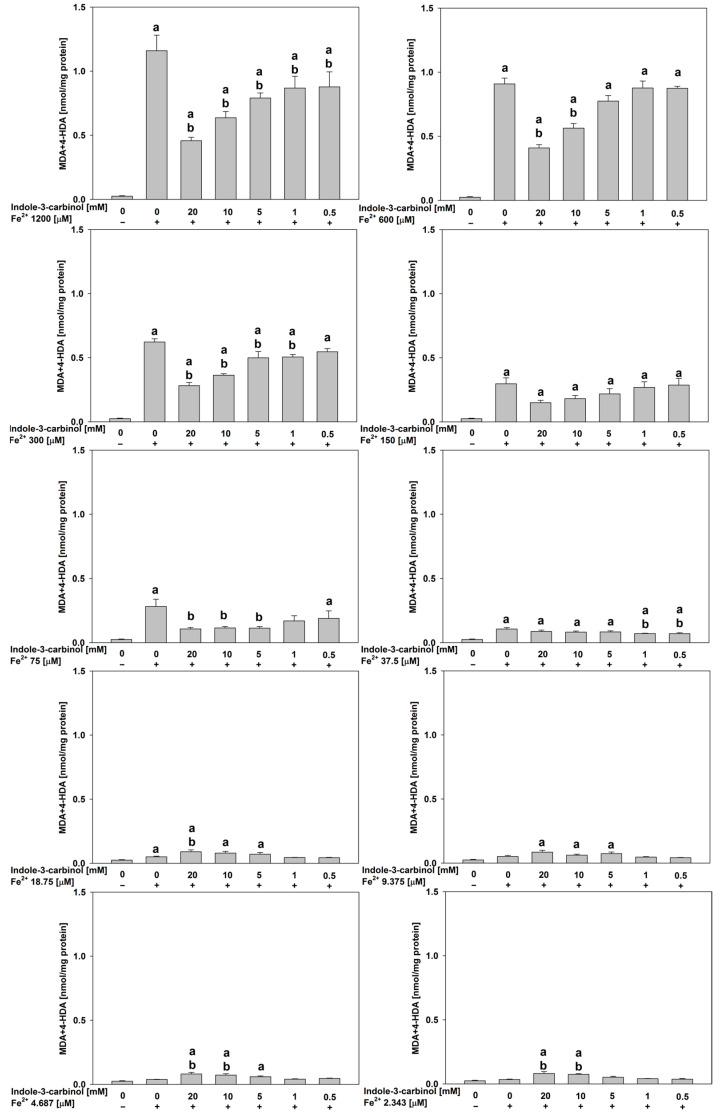 Figure 3
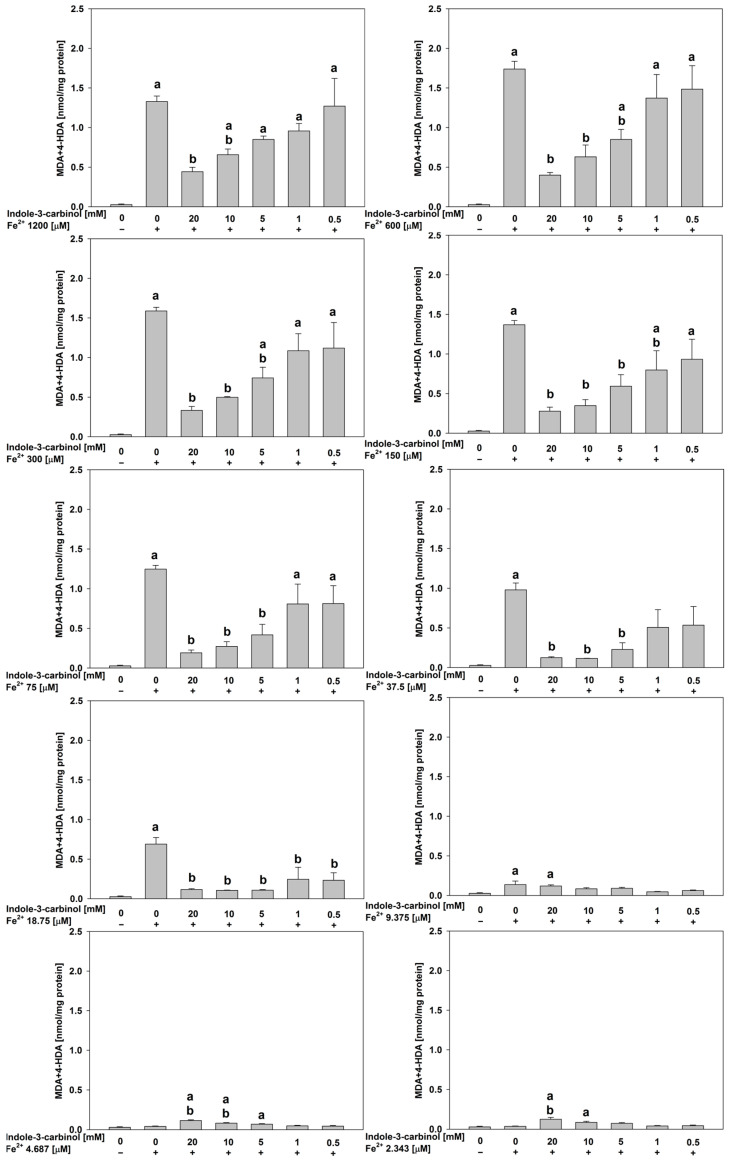 Figure 4
Peer Reviews
No public reviews on file for this paper yet. If you reviewed it on a platform where reviews are public (OpenReview, ICLR, NeurIPS, ICML), you can paste yours below so the community can read it here.
Videos
No videos yet. Explain this paper in a talk, walkthrough, or lecture? Add one.
Taxonomy
TopicsGenomics, phytochemicals, and oxidative stress · Free Radicals and Antioxidants · Glutathione Transferases and Polymorphisms