Lead Immobilization in Soil and Uptake Reduction in Brassica chinensis Using Sepiolite-Supported Manganese Ferrite
Fengzhuo Geng, Yaping Lyu, Liansheng Ma, Yin Zhou, Jiayue Shi, Roland Bol, Peng Zhang, Iseult Lynch, Xiuli Dang

TL;DR
A new material called sepiolite-supported manganese ferrite effectively reduces lead in soil and protects plants from lead uptake.
Contribution
The study introduces MnFe2O4/SEP as a novel and efficient lead immobilization material for soil remediation.
Findings
MnFe2O4/SEP reduced lead uptake in Brassica chinensis by 76% and increased chlorophyll content by 36%.
The material immobilized lead in soil through ion exchange, reducing available Pb by up to 83%.
XPS analysis confirmed chemisorption as the main Pb immobilization mechanism.
Abstract
Lead (Pb) in soil poses serious environmental and health risks, and its removal requires complex and costly treatment methods to meet strict regulatory standards. To effectively address this challenge, innovative and efficient techniques are essential. Sepiolite-supported MnFe2O4 (MnFe2O4/SEP) composites were synthesized via a chemical co-precipitation method. The effects of MnFe2O4/SEP on soil pH, cation exchange capacity (CEC), available Pb content, Pb2+ uptake, and the activities of antioxidant enzymes in Brassica chinensis (Pak Choi) were examined. MnFe2O4/SEP showed superior Pb2+ adsorption compared to SEP alone, fitting Langmuir models, Dubinin-Radushkevich (D-R) models, Temkin models and pseudo-second-order kinetics. The maximum adsorption capacities at 298, 308, and 318 K were 459, 500 and 549 mg·g−1, respectively. XPS analysis indicated that chemisorption achieved through ion…
Genes, proteins, chemicals, diseases, species, mutations and cell lines named across the full text — each resolved to its canonical identifier and authoritative record.
Click any figure to enlarge with its caption.
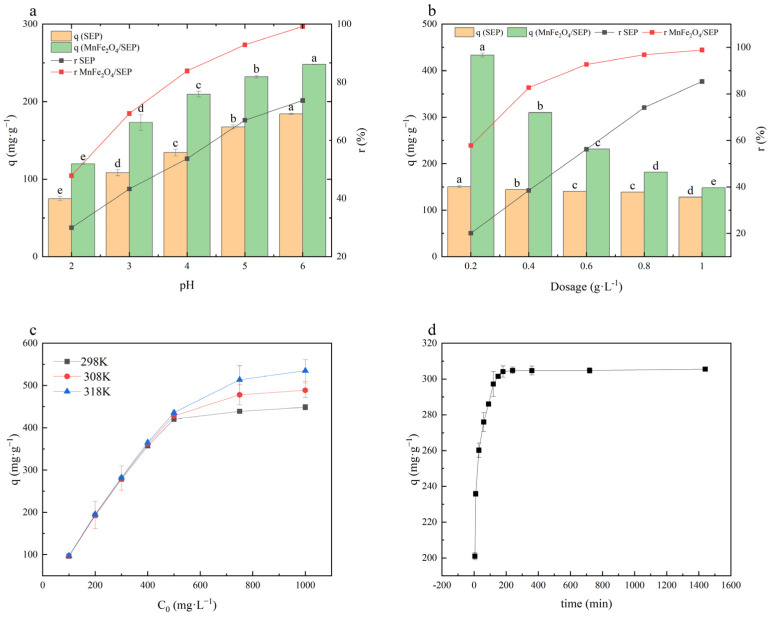 Figure 1
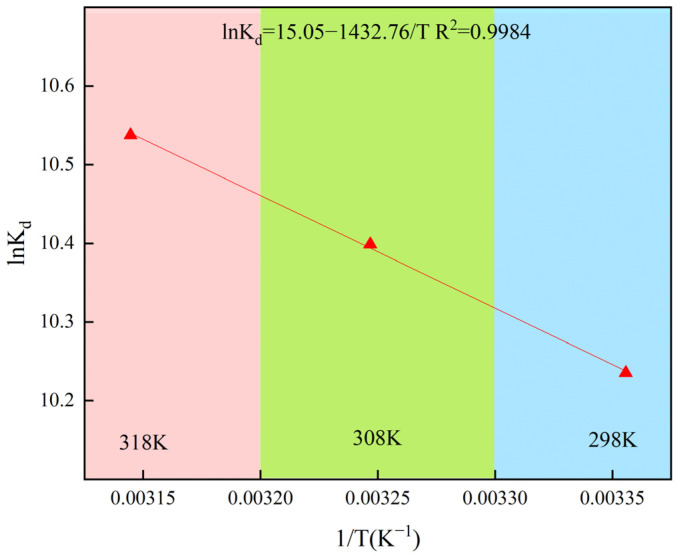 Figure 2
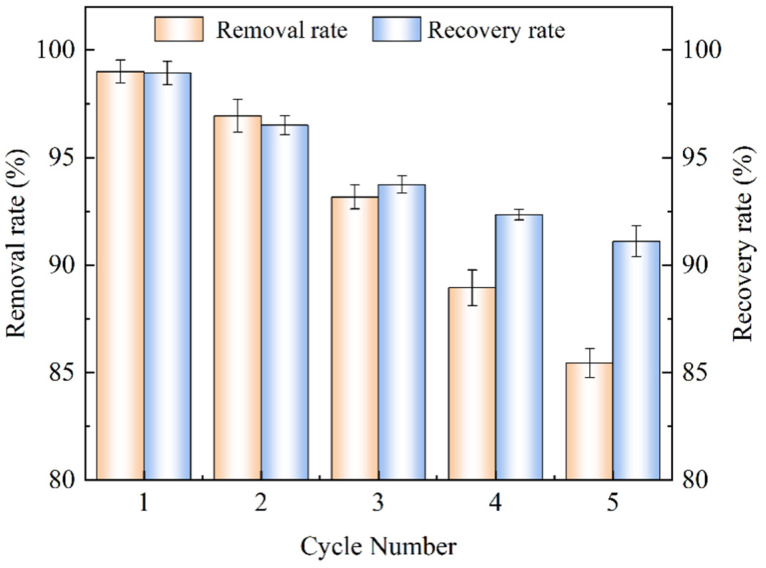 Figure 3
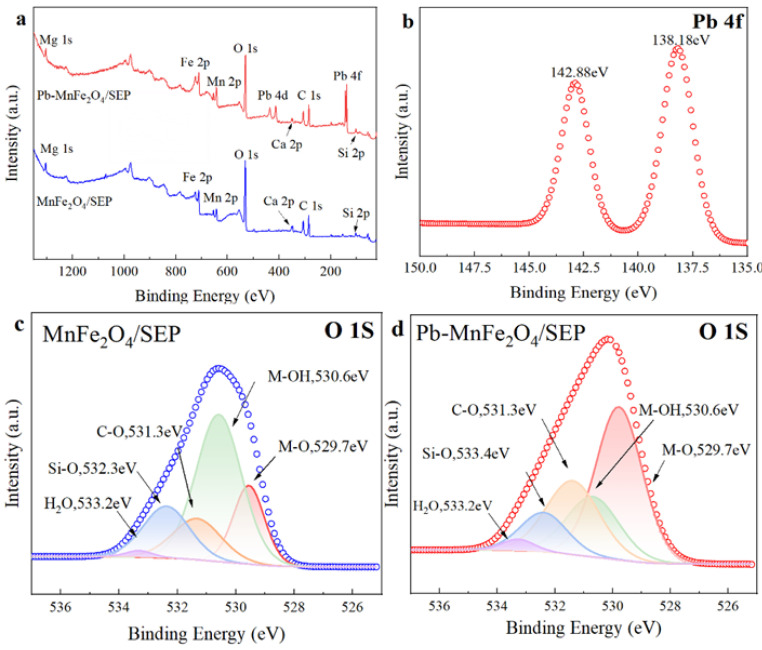 Figure 4
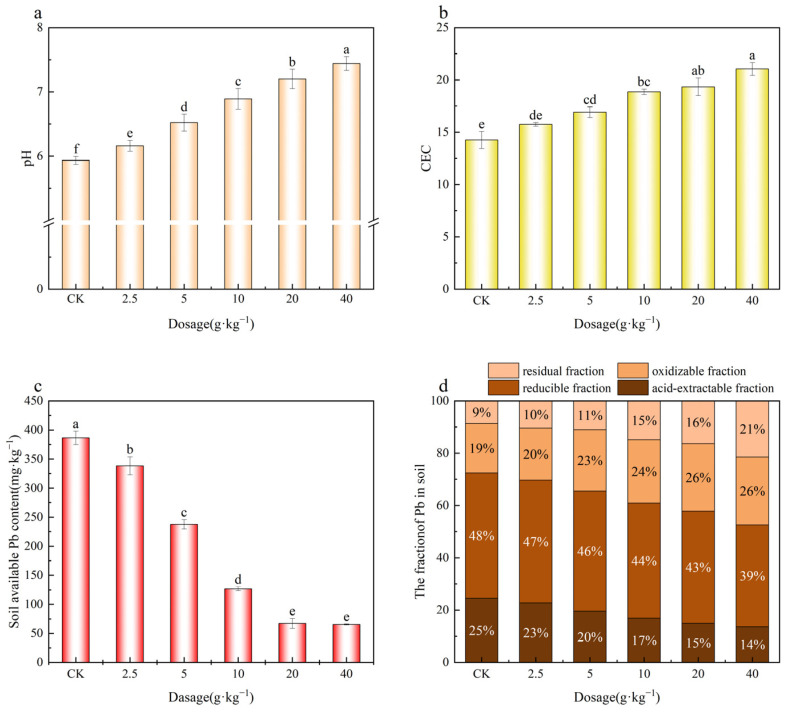 Figure 5
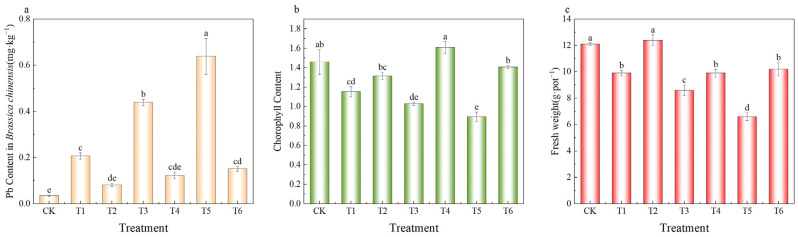 Figure 6
 Figure 7
Peer Reviews
No public reviews on file for this paper yet. If you reviewed it on a platform where reviews are public (OpenReview, ICLR, NeurIPS, ICML), you can paste yours below so the community can read it here.
Videos
No videos yet. Explain this paper in a talk, walkthrough, or lecture? Add one.
Taxonomy
TopicsHeavy metals in environment · Arsenic contamination and mitigation · Adsorption and biosorption for pollutant removal