Optimizing Volumetric Ratio and Supporting Electrolyte of Tiron-A/Tungstosilicic Acid Derived Redox Flow Battery
Yong Jin Cho, Jun-Hee Jeong, Byeong Wan Kwon

TL;DR
This paper explores how to optimize a redox flow battery using tiron-A and tungstosilicic acid to improve performance and stability.
Contribution
The study introduces a 3:1 volumetric ratio of tiron-A to TSA and identifies sulfuric acid as the optimal supporting electrolyte for improved battery performance.
Findings
Sulfuric acid outperformed sodium chloride and hydroxide in cell potential and resistance.
A 3:1 tiron-A:TSA ratio achieved highest discharge capacity and cycle stability.
Reduced ohmic and charge transfer resistance at the 3:1 ratio improved long-term performance.
Abstract
Redox flow batteries (RFBs) are a promising technology for large-scale energy storage due to their safety, scalability, and design flexibility. This study investigated a tiron-A (4,5-dihydroxybenzene-1,3-disulfonic acid)/tungstosilicic acid (TSA) RFB system, focusing on optimizing the supporting electrolyte and the volumetric ratio of the catholyte (tiron-A) to anolyte (TSA). Electrochemical characteristics, confirmed by CV and EIS, showed that sulfuric acid was the most suitable supporting electrolyte due to its excellent cell potential and lower ohmic resistance compared to sodium chloride and sodium hydroxide electrolytes. To address the inherent electron capacity imbalance between tiron-A (two electrons) and TSA (four electrons), various volumetric ratios were evaluated. The cell with the 3:1 tiron-A:TSA ratio exhibited optimal performance, achieving the highest discharge capacity,…
Genes, proteins, chemicals, diseases, species, mutations and cell lines named across the full text — each resolved to its canonical identifier and authoritative record.
Click any figure to enlarge with its caption.
 Figure 1
 Figure 2
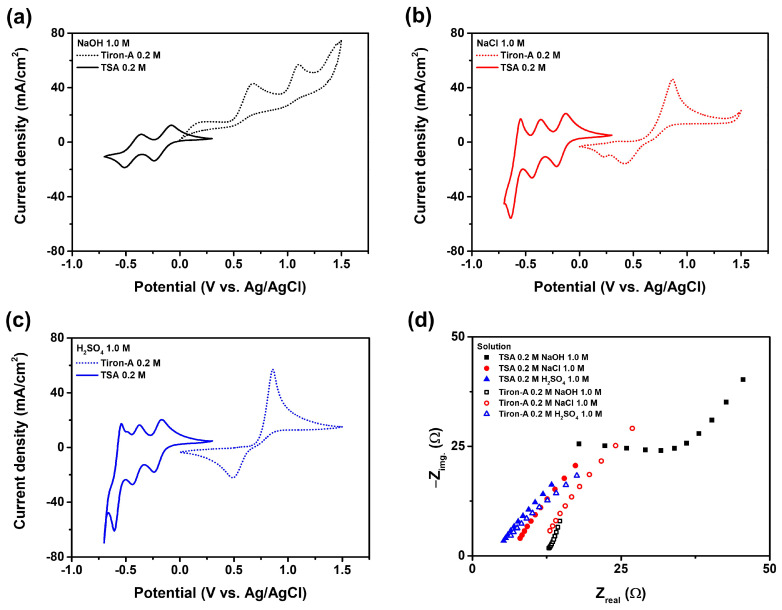 Figure 3
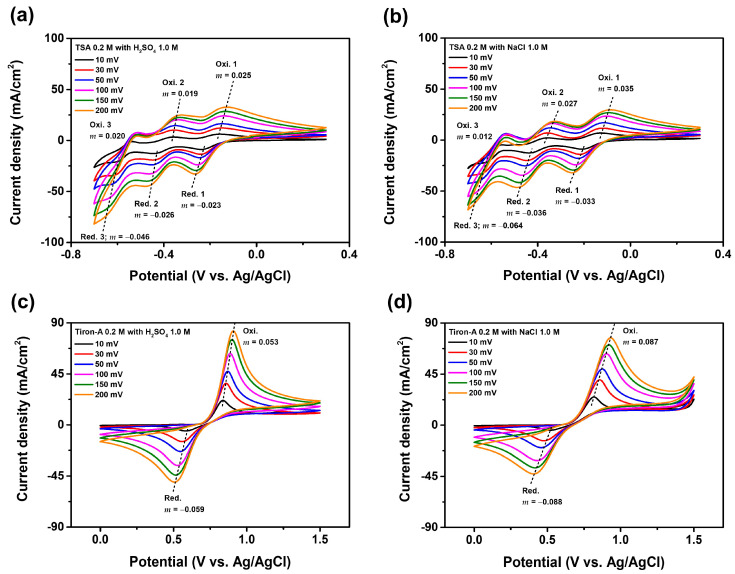 Figure 4
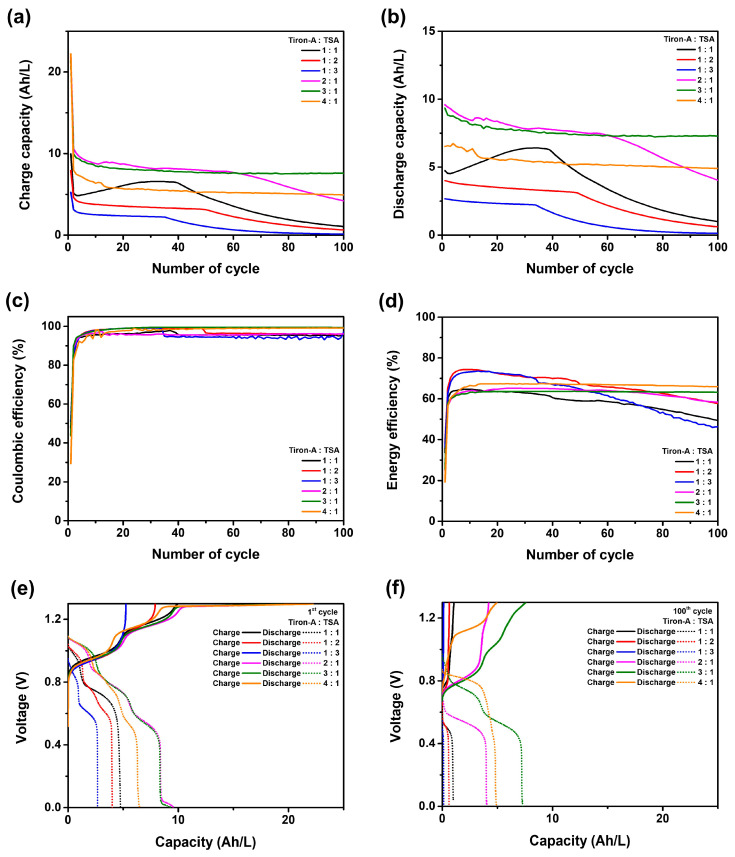 Figure 5
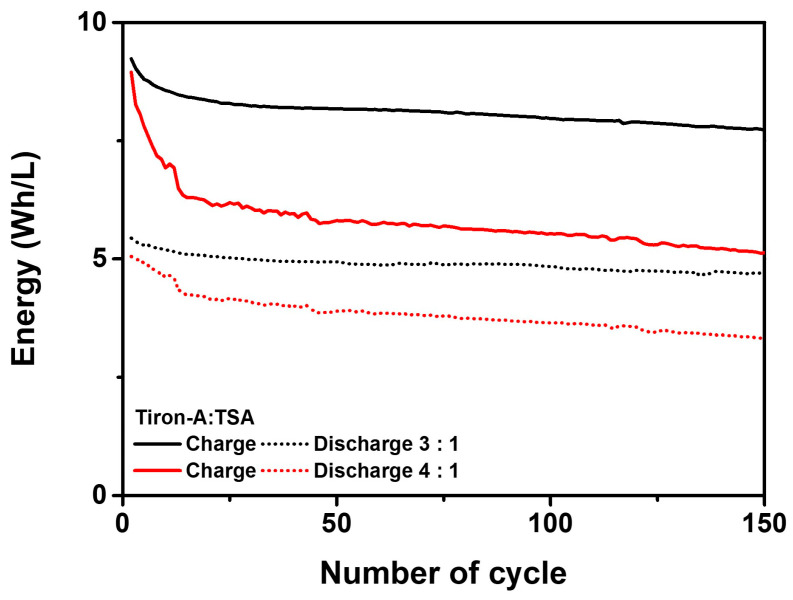 Figure 6
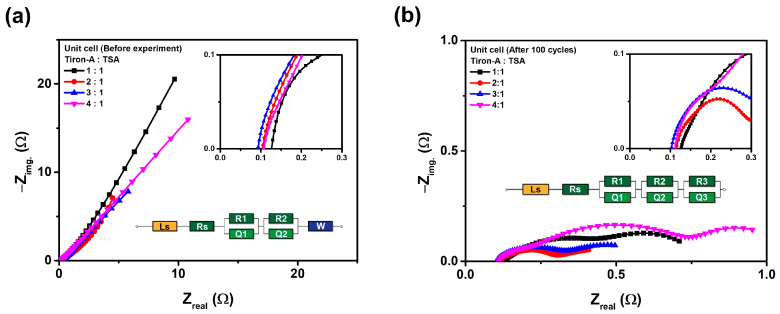 Figure 7
Peer Reviews
No public reviews on file for this paper yet. If you reviewed it on a platform where reviews are public (OpenReview, ICLR, NeurIPS, ICML), you can paste yours below so the community can read it here.
Videos
No videos yet. Explain this paper in a talk, walkthrough, or lecture? Add one.
Taxonomy
TopicsAdvanced battery technologies research · Supercapacitor Materials and Fabrication · Electrocatalysts for Energy Conversion