Design and Color Prediction of Anthracene-Based Dyes Based on Quantum Chemical Calculations
Yanyi Li, Jiahao Zhang, Mei Bai, Hao Li, Zengbo Ke, Chunsheng Zhou

TL;DR
This paper uses quantum calculations to predict the colors of anthracene-based dyes and provides a model for designing new pigments with high efficiency.
Contribution
The study introduces a computational model linking quantum calculations to color prediction for anthracene derivatives.
Findings
Frontier molecular orbital analysis showed an inverse correlation between conjugation extent and HOMO-LUMO energy gap.
TD-DFT calculations predicted excitation wavelengths of 438 nm, 441 nm, 464 nm, and 496 nm for four anthracene derivatives.
Complementary color theory predicted visual colors of yellow, yellow, red, and orange based on absorption characteristics.
Abstract
We systematically investigated the parent anthracene (abbreviated as en-1, C14H10) and three N,N′-disubstituted derivatives: the 1,5-diethylanthracene (en-2, C18H18), the 1,5-divinylanthracene (en-3, C18H14), and the 1,5-diphenylanthracene (en-4, C26H18), using a rigorous density functional theory (DFT)/time-dependent density functional theory (TD-DFT) approach. Following full geometric optimization and frequency validation (no imaginary frequencies), frontier molecular orbital analysis revealed an inverse correlation between conjugation extent and the HOMO-LUMO energy gap. Electrostatic potential (ESP) analysis further indicated a progressive increase in surface potential variance upon substitution, reflecting charge redistribution. TD-DFT calculations yielded vertical excitation wavelengths of 438 nm, 441 nm, 464 nm, and 496 nm for en-1, en-2, en-3, and en-4, respectively.…
Genes, proteins, chemicals, diseases, species, mutations and cell lines named across the full text — each resolved to its canonical identifier and authoritative record.
Click any figure to enlarge with its caption.
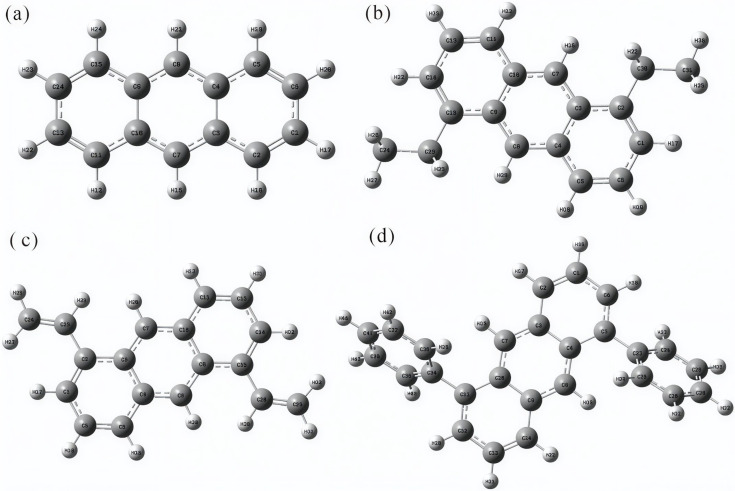 Figure 1
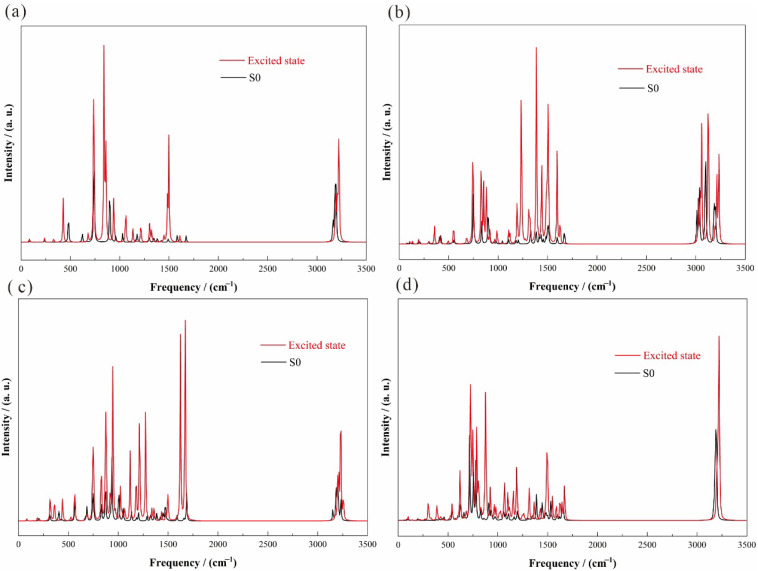 Figure 2
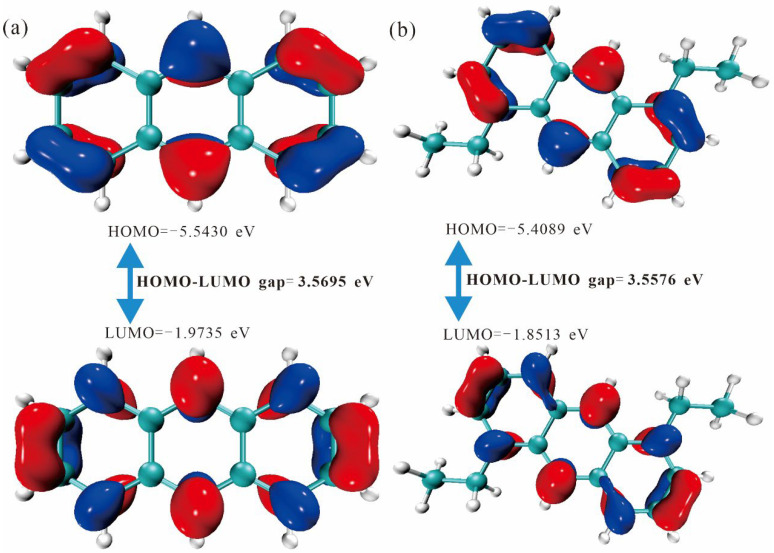 Figure 3
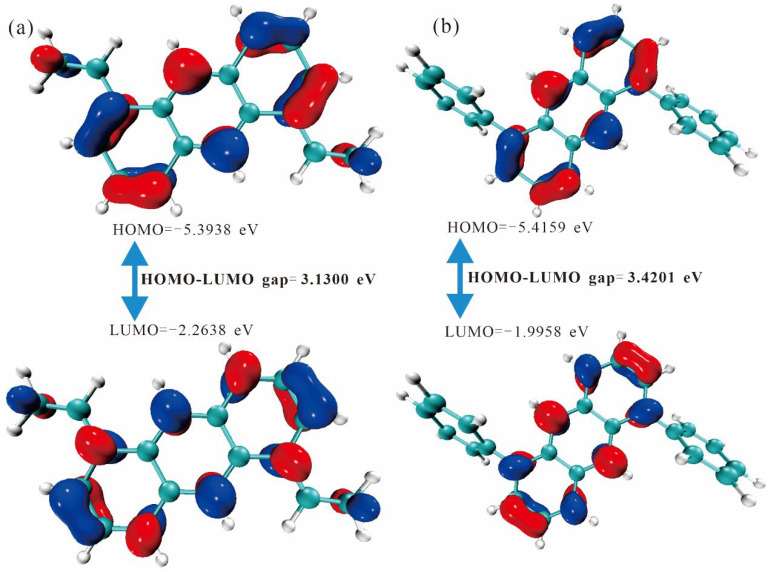 Figure 4
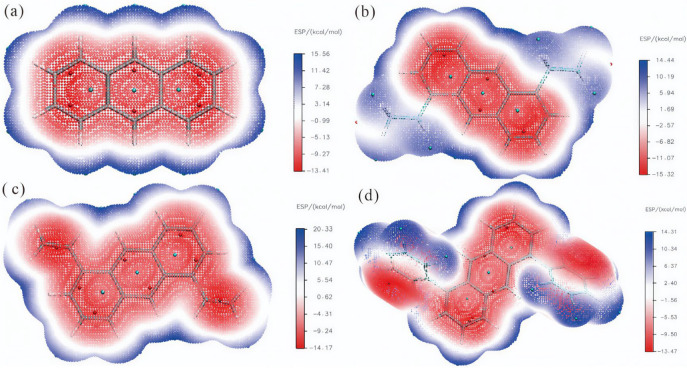 Figure 5
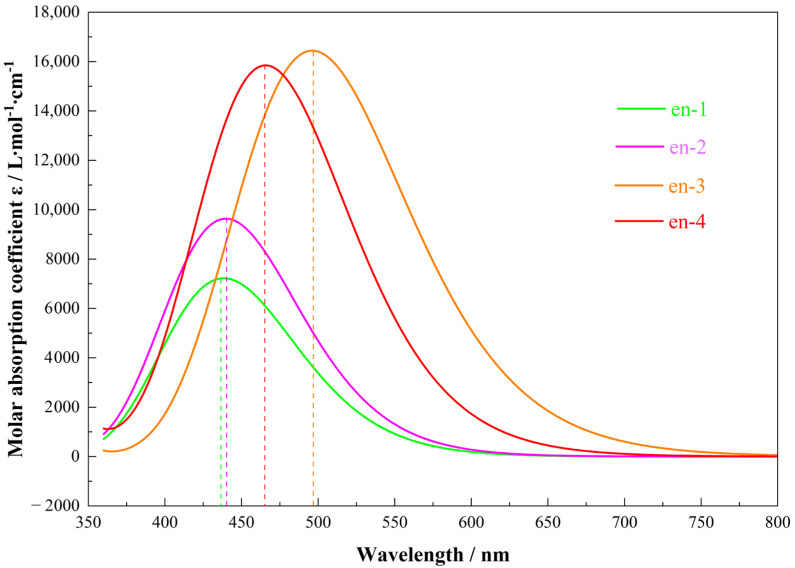 Figure 6
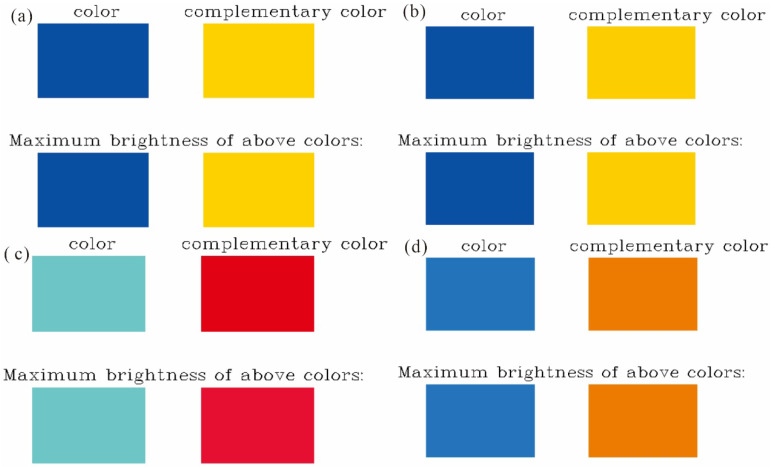 Figure 7
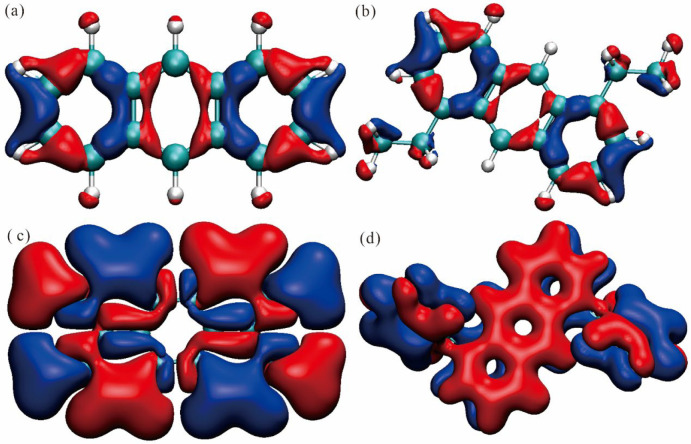 Figure 8
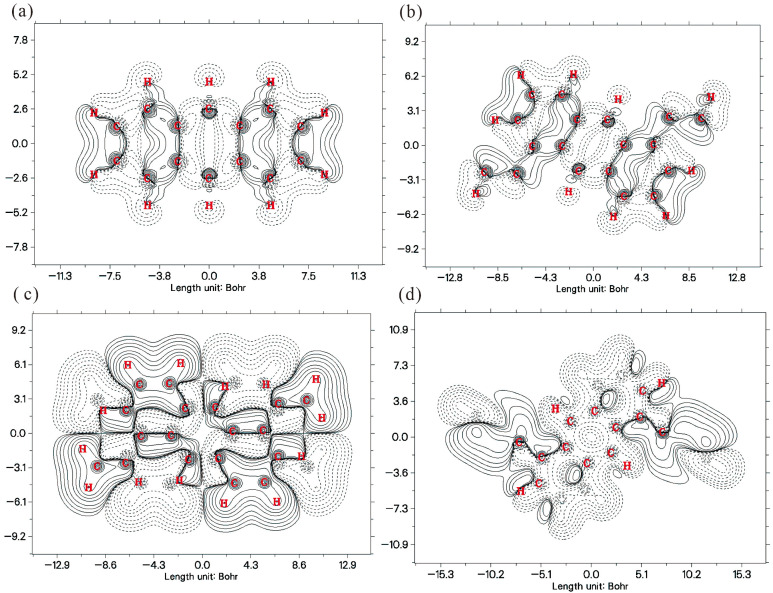 Figure 9
Peer Reviews
No public reviews on file for this paper yet. If you reviewed it on a platform where reviews are public (OpenReview, ICLR, NeurIPS, ICML), you can paste yours below so the community can read it here.
Videos
No videos yet. Explain this paper in a talk, walkthrough, or lecture? Add one.
Taxonomy
TopicsPhotochromic and Fluorescence Chemistry · Dyeing and Modifying Textile Fibers · Photochemistry and Electron Transfer Studies