Structural Basis for D3/D4-Selective Antagonism of Piperazinylalkyl Pyrazole/Isoxazole Analogs
Kwang-Eun Choi, Seong Hun Jang, Woo-Kyu Park, Kyoung Tai No, Hun Yeong Koh, Ae Nim Pae, Nam-Chul Cho

TL;DR
This paper explores how certain compounds can selectively target specific dopamine receptors, which could lead to better treatments for neurological disorders.
Contribution
The study identifies structural features that enable D4-selective antagonism through computational modeling and docking.
Findings
3D-QSAR models showed strong correlation and predictive values for D2, D3, and D4 subtypes.
Molecular docking confirmed that non-conserved residues influence binding affinity and subtype selectivity.
A spatial constraint in the D4 receptor's hydrophobic pocket explains its selectivity for certain ligands.
Abstract
Dopamine D2-like receptors, including D2, D3, and D4, are members of the aminergic G protein-coupled receptor (GPCR) family and are targets for neurological disorders. The development of subtype selective ligands is important for enhanced therapeutics and reduced side effects; however, it is challenging to design and develop selective ligands owing to the high degree of sequence homology among D2-like subtypes. To gain insight into the structural basis of subtype selectivity of piperazinylalkyl pyrazole/isoxazole analogs for D2-like dopamine receptors, we carried out 3D quantitative structure–activity relationship (3D-QSAR) and molecular docking studies. The 3D-QSAR models for the D2, D3, and D4 subtypes showed robust correlation coefficients (r2) of 0.960, 0.912, and 0.946, as well as reliable predictive values (Q2) of 0.511, 0.808, and 0.560, respectively. Contour map analysis…
Genes, proteins, chemicals, diseases, species, mutations and cell lines named across the full text — each resolved to its canonical identifier and authoritative record.
Click any figure to enlarge with its caption.
 Figure 1
 Figure 2
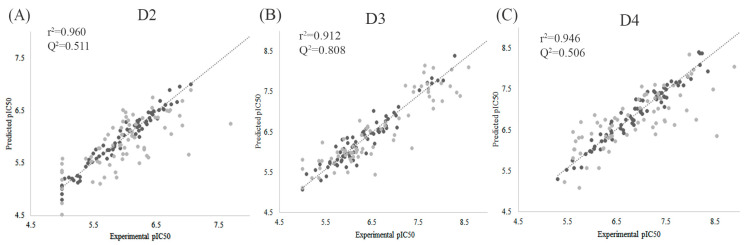 Figure 3
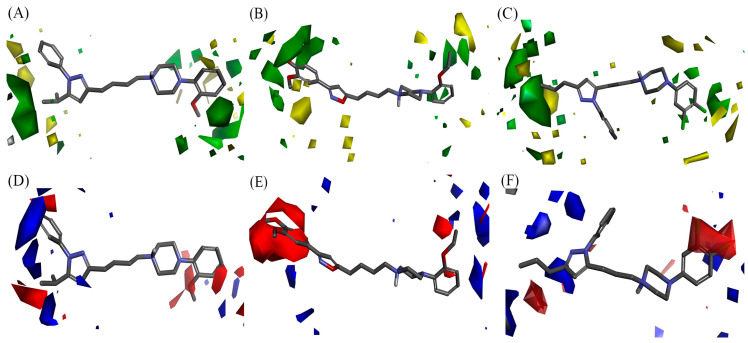 Figure 4
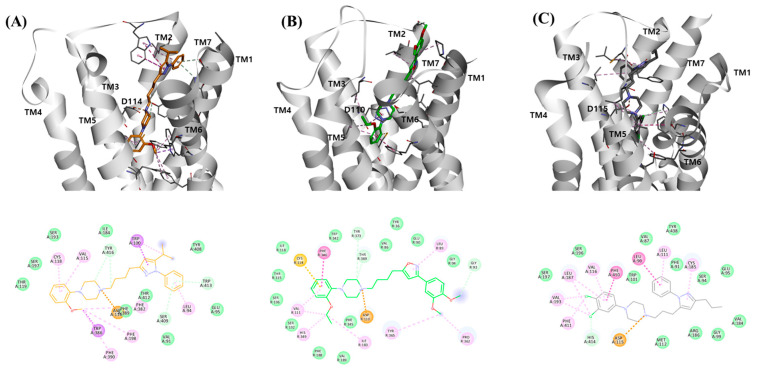 Figure 5
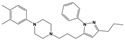 Figure 6
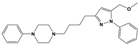 Figure 7
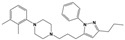 Figure 8
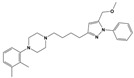 Figure 9
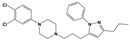 Figure 10
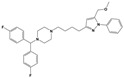 Figure 11
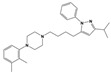 Figure 12
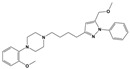 Figure 13
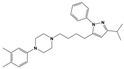 Figure 14
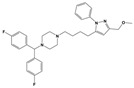 Figure 15
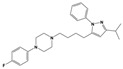 Figure 16
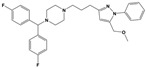 Figure 17
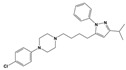 Figure 18
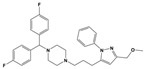 Figure 19
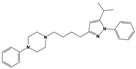 Figure 20
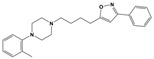 Figure 21
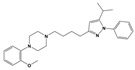 Figure 22
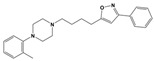 Figure 23
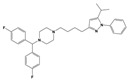 Figure 24
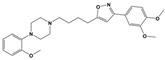 Figure 25
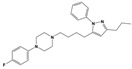 Figure 26
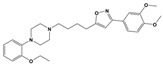 Figure 27
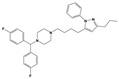 Figure 28
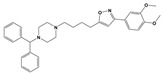 Figure 29
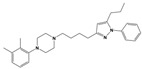 Figure 30
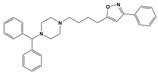 Figure 31
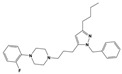 Figure 32
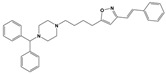 Figure 33
Peer Reviews
No public reviews on file for this paper yet. If you reviewed it on a platform where reviews are public (OpenReview, ICLR, NeurIPS, ICML), you can paste yours below so the community can read it here.
Videos
No videos yet. Explain this paper in a talk, walkthrough, or lecture? Add one.
Taxonomy
TopicsReceptor Mechanisms and Signaling · Neuropeptides and Animal Physiology · Computational Drug Discovery Methods